• KGS/USD = 0.01144 0%
  • KZT/USD = 0.00216 0%
  • TJS/USD = 0.10718 0.37%
  • UZS/USD = 0.00008 0%
  • TMT/USD = 0.28490 0%
  • KGS/USD = 0.01144 0%
  • KZT/USD = 0.00216 0%
  • TJS/USD = 0.10718 0.37%
  • UZS/USD = 0.00008 0%
  • TMT/USD = 0.28490 0%
  • KGS/USD = 0.01144 0%
  • KZT/USD = 0.00216 0%
  • TJS/USD = 0.10718 0.37%
  • UZS/USD = 0.00008 0%
  • TMT/USD = 0.28490 0%
  • KGS/USD = 0.01144 0%
  • KZT/USD = 0.00216 0%
  • TJS/USD = 0.10718 0.37%
  • UZS/USD = 0.00008 0%
  • TMT/USD = 0.28490 0%
  • KGS/USD = 0.01144 0%
  • KZT/USD = 0.00216 0%
  • TJS/USD = 0.10718 0.37%
  • UZS/USD = 0.00008 0%
  • TMT/USD = 0.28490 0%
  • KGS/USD = 0.01144 0%
  • KZT/USD = 0.00216 0%
  • TJS/USD = 0.10718 0.37%
  • UZS/USD = 0.00008 0%
  • TMT/USD = 0.28490 0%
  • KGS/USD = 0.01144 0%
  • KZT/USD = 0.00216 0%
  • TJS/USD = 0.10718 0.37%
  • UZS/USD = 0.00008 0%
  • TMT/USD = 0.28490 0%
  • KGS/USD = 0.01144 0%
  • KZT/USD = 0.00216 0%
  • TJS/USD = 0.10718 0.37%
  • UZS/USD = 0.00008 0%
  • TMT/USD = 0.28490 0%

Viewing results 79 - 84 of 563

Ziroat Mirziyoyeva Named Among World’s Top 100 Women in Oncology

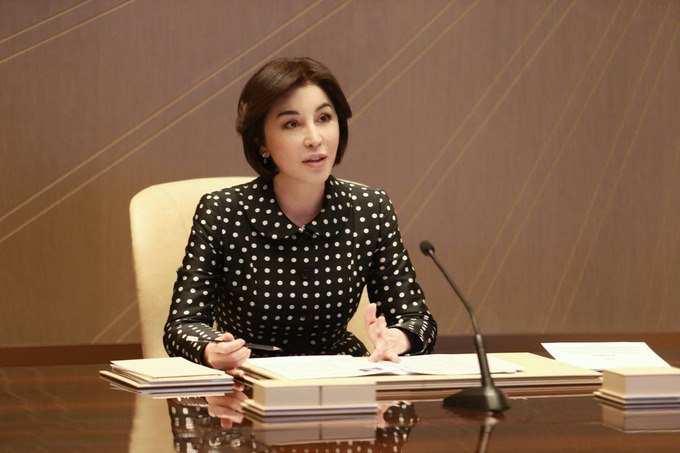
Ziroat Mirziyoyeva, the wife of Uzbekistan's President Shavkat Mirziyoyev, has been named one of the 100 most influential women in oncology by the international platform OncoDaily. Mirziyoyeva was recognized for her work as Chair of the Board of Trustees of the Zamin International Public Foundation, where she has supported initiatives focused on early detection and treatment of childhood cancers. Experts cited by OncoDaily highlighted her role in promoting international collaboration in pediatric oncology and advancing global efforts to improve survival rates for children with life-threatening illnesses. According to OncoDaily, Mirziyoyeva has emerged as a leading advocate for expanding access to cancer care for children in low and middle-income countries, where survival rates remain disproportionately low. The platform noted her leadership at a high-level forum at the United Nations General Assembly in September 2025, titled “Global Movement to Improve Survival and Reduce Suffering of Children with Cancer and Other Life-Threatening Diseases.” The event, co-hosted with the World Health Organization and St. Jude Children’s Research Hospital, called for urgent global action to increase survival rates for pediatric cancers. OncoDaily stated that her efforts have helped place Uzbekistan on the global health policy agenda, aligning the country with international goals to raise childhood cancer survival rates to 60 percent by 2030.

Central Asia’s Longevity Boom: More People Living Past 100

The number of people living beyond 100 continues to rise across Central Asia. Experts attribute the trend to better medical care, declining infant mortality rates, and overall improvements in living standards. However, the distribution of centenarians across the region remains uneven. Tajikistan: A Steady Increase According to the Social Insurance and Pension Agency, 415 citizens over the age of 100 are currently registered in Tajikistan. The country’s average life expectancy has reached 76.6 years. Among Tajikistan’s oldest residents are 120-year-old Marziyamoh Ibodova from Darvaz and 117-year-old Gulrakhat Nazarova from Dangara. Experts say rising life expectancy is closely linked to economic progress, advances in cardiovascular treatment, and improved access to healthcare. Uzbekistan: A Record-Breaking Claim Uzbekistan leads the region with 514 centenarians as of January 1, 2024, comprising 404 women and 110 men. The highest concentration is in the Kashkadarya Region, which is home to 92. One extraordinary case has drawn global attention. Khuvaydo Umarova (Toshmatova), a resident of Karakum mahalla in the Buvayda District, was officially recognized by Uzbekistan’s Ministry of Justice in September 2025 as having turned 130. [caption id="attachment_39103" align="aligncenter" width="680"] Khuvaydo Umarova; image: Uzbekistan Ministry of Justice[/caption] Born on January 1, 1895, her birth had gone unregistered for decades. Following verification of her documents, Khuvaydo-mum is now slated for entry into the Guinness Book of Records as the world’s oldest living person. Kazakhstan and Kyrgyzstan: Moderate Numbers Kazakhstan’s oldest known resident is a 115-year-old woman from the Ulytau Region. Most of the country’s centenarians live in Almaty (58), followed by the Turkestan Region (53) and the Almaty Region (37). In Kyrgyzstan, Deputy Health Minister Bubuzhan Arykbaeva reports approximately 300 citizens over 100 years old. This places the country fourth in Central Asia in terms of centenarian population. A Global Phenomenon Globally, an estimated 630,000 people are over the age of 100, according to recent United Nations data. Japan tops the list, accounting for one in five of the world’s centenarians. Life expectancy in Japan is 88 years for women and 82 for men, followed by the United States, China, and India. Doctors emphasize that longevity is often the result of consistent habits: regular physical activity like walking, sufficient sleep, a balanced diet, and routine medical check-ups. Avoiding smoking and alcohol is equally critical. Genetics also play a significant role, those with long-lived relatives have a higher chance of living to an advanced age.

Uzbek Restaurant in Nashville Recommended by Michelin Guide

It may not have yet earned a coveted star, but a small Uzbek restaurant in Nashville, Tennessee has impressed reviewers from Michelin. This month Uzbegim, on the city’s 28th Avenue North, was named on the Nashville Bib Gourmand list, which is composed by Michelin’s Guide. In its own words, a place on the Bib Gourmand list “acknowledges excellent food at more affordable prices”. The Central Asian diner, whose dishes are halal, appears alongside much bigger and more established spots. The accolade is a reward for the superb traditional Uzbek food offered by owner Ulugbek Fayziev, who opened his restaurant in the east of Nashville in late 2023. Uzbegim is located at the back of a pizzeria, which is owned by different Uzbeks who let Fayziev use their space. Michelin’s Guide mentions that Uzbegim “promises something different, specializing in authentic Uzbek cuisine in a space with a stunning patio. Originating in Islamic China and traveling across to the Middle East, this is a cuisine that features some of the usual suspects (think kebabs) as well as standouts like Uyghur-style, hand-cut noodles.” Nashville local Mark Reese is a fan of the restaurant. “Uzbegim has what I call Central Asian comfort food,” he tells The Times of Central Asia. “It serves chaikhona [cafe-style] plov with tender lamb, rice, raisins and carrots. Shashlik [kebab] with onions and vinegar. 'Kazan kabob' is a highlight with chunks of tender meat and potatoes cooked perfectly, fork tender. My favorite is the Uyghur laghmon [noodles], both boiled and fried. The noodles were freshly prepared with just enough spicy broth, meat and bell peppers to offset the noodles.” Reese is well acquainted with Uzbek cuisine: he has worked in Central Asia’s education and cultural spheres for 30 years, and was awarded Uzbekistan’s Order of Do'stlik for his English translation of Abdulla Qodiriy’s historical novel O’tkan Kunlar (Bygone Days). He explains to The Times of Central Asia: "Nashville is relatively new as an emerging place for Uzbeks and other Central Asians to live. Vanderbilt University is home to quite a few Uzbek students." Noting some links between this part of the southern United States and Uzbekistan, Reese adds: “Uzbeks have lived in Tennessee for decades, especially Memphis. Uzbeks are naturally attracted to an emerging city that has slowly become internationalized. Especially the Umarov family engage in philanthropic activities, including cancer research for children’s hospitals." Nashville's Uzbek diaspora may have discovered Uzbegim first, but since Michelin's review, new American customers are sure to wander in, to taste Central Asian comfort food for themselves.

UN Women and ACWA Power Partner to Advance Gender Equality in Uzbekistan

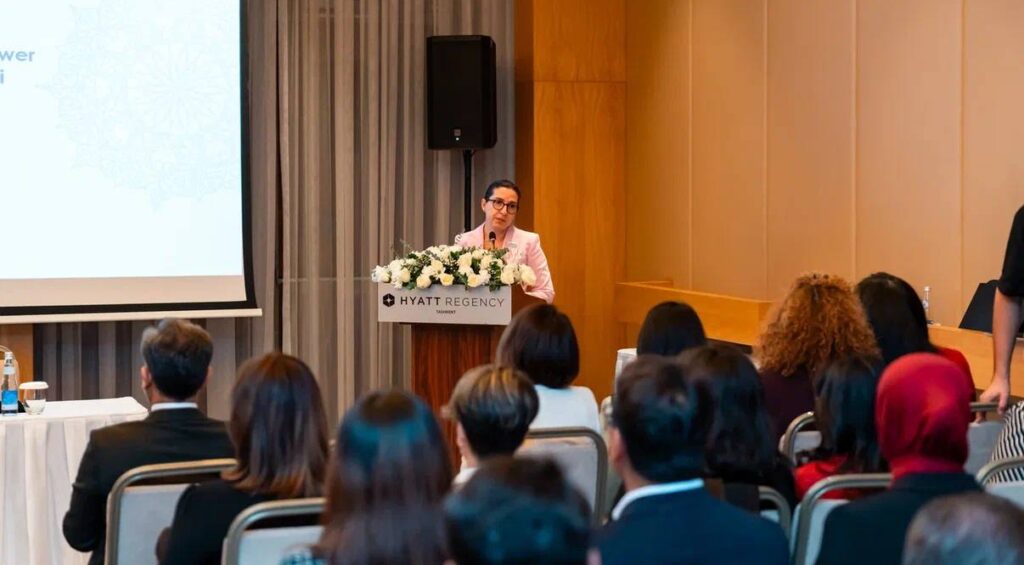
UN Women and ACWA Power Uzbekistan have signed a landmark agreement to promote women’s empowerment, marking the first-ever collaboration between a United Nations agency and a private company in Uzbekistan. As part of the 12-month partnership, ACWA Power will contribute $50,000 to support initiatives under UN Women’s Economic Empowerment (WEE) programme. The project seeks to strengthen women’s participation in education and the labor market through gender equality training, leadership development, and the launch of a pilot Gender Equality Curriculum at Shirin College. It also includes capacity-building in gender-based violence prevention and the organization of a national Women’s Empowerment Forum. [caption id="attachment_38684" align="aligncenter" width="1206"] Image: ACWA Power[/caption] UN Women, which officially began operations in Uzbekistan in May 2025, will provide technical expertise and training to support national gender equality goals. ACWA Power, Uzbekistan’s largest investor in renewable energy, will oversee project implementation and funding. The partnership aligns with Uzbekistan’s ongoing national reform agenda, particularly the Strategy for Achieving Gender Equality 2030 and the National Programme for Increasing the Activity of Women in Economic, Political, and Social Life (2022-2026). These initiatives aim to create equal opportunities and broaden women's participation in education, public service, and the economy. [caption id="attachment_38685" align="aligncenter" width="1206"] Image: ACWA Power[/caption] “Partnering with UN Women allows us to advance concrete initiatives that promote safer workplaces, fairer opportunities, and stronger representation of women in Uzbekistan,” said Dr. Jon Zaidi, Country General Manager of ACWA Power Uzbekistan. “By investing in training, curricula, and leadership development, we aim to help embed practices that benefit institutions, companies, and communities alike.” “This partnership demonstrates how private sector engagement can accelerate progress on gender equality,” added Ceren Guven Gures, Head of the UN Women Central Asia Liaison Office and Representative of the UN Women Kazakhstan Country Office. “With ACWA Power’s support, we will expand opportunities for women and strengthen protections in education and the workplace.”

Uzbekistan Introduces Visa-Free Travel for U.S. Citizens Starting January 2026

Uzbekistan will implement a visa-free regime for U.S. citizens beginning January 1, 2026, according to a presidential decree signed on November 3, 2025. The announcement was reported by UzA, the country’s official state news agency. Under the new policy, American citizens will be permitted to stay in Uzbekistan for up to 30 days without a visa from the date of entry. The measure aims to strengthen trade, economic, cultural, and humanitarian ties between the two countries, while also enhancing tourism. Since 2021, Uzbekistan has allowed visa-free entry for tourists aged 55 and older from the United States and several other nations, with a maximum stay of 30 days, according to Kun.uz. The expansion of this policy to include all U.S. citizens marks a major step in promoting bilateral travel and business engagement. The proposal to lift visa requirements for U.S. nationals was first introduced in May 2025 through a presidential decree focused on boosting foreign tourist inflows. The same document instructed the Ministry of Foreign Affairs to initiate negotiations with Washington on easing visa conditions for Uzbek citizens traveling to the United States. In a related development, the Uzbek government recently extended visa-free entry to citizens of six more countries, Bahrain, Qatar, Kuwait, Oman, Saudi Arabia, and Jordan, following a Cabinet of Ministers decision issued on October 21.

Uzbekistan Sends Over 20 Crop Varieties to Global Seed Vault in Norway

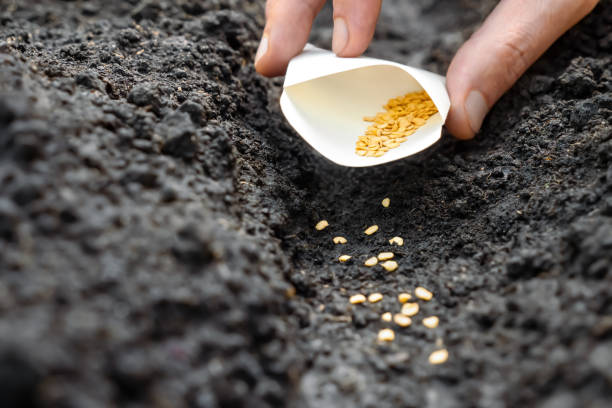
Uzbekistan has deposited more than 20 types of agricultural crop seeds, including varieties of watermelon, melon, and eggplant, into the Svalbard Global Seed Vault, the world’s most secure seed storage facility, located in the Norwegian archipelago of Svalbard, the Ministry of Agriculture has announced. According to the ministry, the seed samples represent ancient and local Uzbek crop varieties and were delivered through a joint effort involving Uzbekistan’s Ministry of Agriculture, the Scientific Research Institute of Plant Genetic Resources, the UN Food and Agriculture Organization (FAO), and the Nordic Genetic Resource Center (NordGen). Officials say the initiative marks a significant step in Uzbekistan’s efforts to preserve genetic diversity, strengthen its national gene pool, and contribute to global food security. The seeds deposited include traditional varieties of melon, watermelon, tomato, pepper, eggplant, carrot, onion, and wheat. Among these, the native “Qayroqtosh” wheat variety is of particular cultural and agricultural importance. Representatives from the Institute of Plant Genetic Resources emphasized that the initiative reflects Uzbekistan’s ongoing commitment to protecting plant biodiversity, supporting global food resilience, and safeguarding genetic material for future generations. The Svalbard Global Seed Vault, located deep within the Arctic permafrost and maintained at a constant temperature of -18°C, currently stores more than 1.1 million seed samples from around the world. Operated by the Norwegian government in partnership with the Crop Trust and NordGen, the vault provides a secure backup for global seed collections, offering protection against threats such as climate change, natural disasters, or geopolitical crises.