• KGS/USD = 0.01144 0%
  • KZT/USD = 0.00216 0%
  • TJS/USD = 0.10718 0.37%
  • UZS/USD = 0.00008 0%
  • TMT/USD = 0.28490 0%
  • KGS/USD = 0.01144 0%
  • KZT/USD = 0.00216 0%
  • TJS/USD = 0.10718 0.37%
  • UZS/USD = 0.00008 0%
  • TMT/USD = 0.28490 0%
  • KGS/USD = 0.01144 0%
  • KZT/USD = 0.00216 0%
  • TJS/USD = 0.10718 0.37%
  • UZS/USD = 0.00008 0%
  • TMT/USD = 0.28490 0%
  • KGS/USD = 0.01144 0%
  • KZT/USD = 0.00216 0%
  • TJS/USD = 0.10718 0.37%
  • UZS/USD = 0.00008 0%
  • TMT/USD = 0.28490 0%
  • KGS/USD = 0.01144 0%
  • KZT/USD = 0.00216 0%
  • TJS/USD = 0.10718 0.37%
  • UZS/USD = 0.00008 0%
  • TMT/USD = 0.28490 0%
  • KGS/USD = 0.01144 0%
  • KZT/USD = 0.00216 0%
  • TJS/USD = 0.10718 0.37%
  • UZS/USD = 0.00008 0%
  • TMT/USD = 0.28490 0%
  • KGS/USD = 0.01144 0%
  • KZT/USD = 0.00216 0%
  • TJS/USD = 0.10718 0.37%
  • UZS/USD = 0.00008 0%
  • TMT/USD = 0.28490 0%
  • KGS/USD = 0.01144 0%
  • KZT/USD = 0.00216 0%
  • TJS/USD = 0.10718 0.37%
  • UZS/USD = 0.00008 0%
  • TMT/USD = 0.28490 0%

Viewing results 73 - 78 of 563

Rare Antonov An-124 Cargo Plane Makes Brief Stop in Tashkent

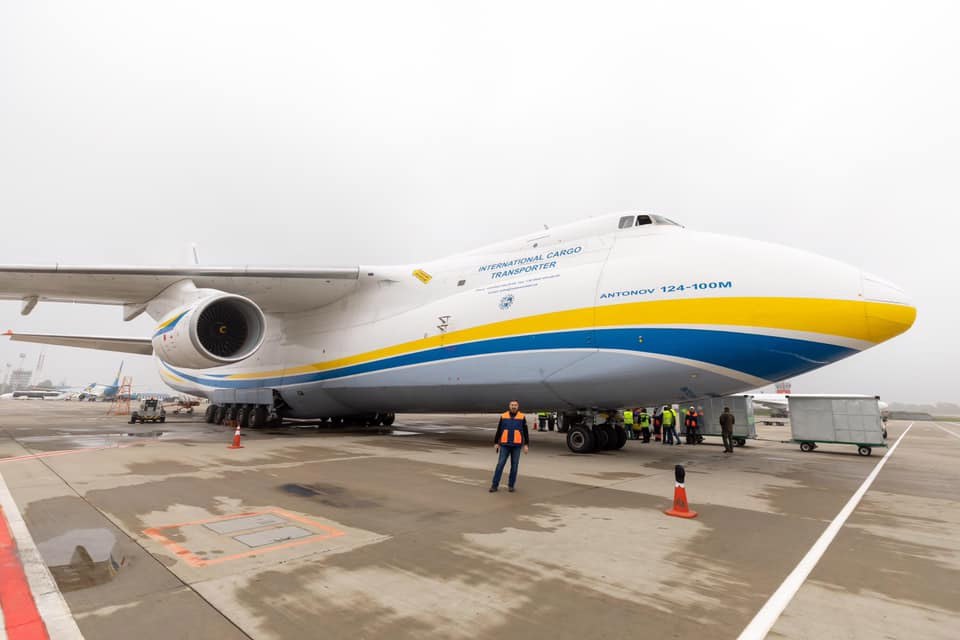
A rare sight drew the attention of aviation enthusiasts in Tashkent this week as an Antonov An-124-100M Ruslan, one of the world’s largest serially produced cargo aircraft, landed at Islam Karimov International Airport. According to Tashkent Sky News, the aircraft arrived from Urumqi and was registered as UR-82027. Notably, it bore the inscription “Be brave like Kharkiv”, a tribute to the resilience of the Ukrainian city under Russia's invasion. The An-124 remains a global leader in transporting oversized and heavy cargo. Capable of carrying between 120 and 150 tons, it features a cargo hold with a volume of approximately 1,050 cubic meters. The aircraft is equipped with both nose and tail cargo doors, each with built-in ramps, allowing simultaneous loading and unloading from either end, an advantage for complex logistics operations involving large or irregularly shaped equipment. Its robust design includes heavy-duty, multi-wheel landing gear, enabling it to land on less-developed airstrips. This operational flexibility makes the An-124 especially valuable in situations where access to major international airports is limited. Members of the Uzbekistan Spotters Team gathered at the airport to capture images of the aircraft during its brief stay. For local aviation enthusiasts, the visit offered a rare opportunity to photograph an iconic aircraft and share the experience with the global spotting community.

FIFA World Cup: Uzbekistan to Face Portugal and Colombia in Group K

Among the highlights for Uzbekistan at next year’s FIFA World Cup will be facing Portugal striker Cristiano Ronaldo in his last campaign in the event, to be held in Mexico, Canada and the United States. Uzbekistan, which has qualified for the World Cup for the first time and is ranked 50th in the FIFA rankings, is in the four-team group K, one of 12 groups in the draw that was announced on Friday in Washington D.C. Group K includes sixth-ranked Portugal; Colombia, which is 13th in the FIFA standings; and a fourth team that is yet to be decided. Either Jamaica, Democratic Republic of Congo or New Caledonia will take that last spot after facing each other in playoffs. A total of 48 teams are competing in the World Cup next year, up from 32 in previous contests. Ronaldo, 40, has said next year’s World Cup will be his last one. In Qatar in 2022, he became the first player to score at five World Cups. He currently plays for Al-Nassr in Saudi Arabia. Uzbekistan’s team is led by coach Fabio Cannavaro, a former defender who was captain of Italy’s winning team in the 2006 World Cup in Germany. Cannavaro replaced Timur Kapadze, an Uzbekistani former pro football player who led Uzbekistan’s national team to its first-ever qualification for the World Cup with a 0-0 draw against the United Arab Emirates in Abu Dhabi in June. “Everything” can happen in the World Cup, a smiling Cannavaro said after the draw was announced. “We are so happy because we are here,” the coach said, adding that he hoped the team would fight “until the end.”  

Central Asian Countries Agree to Recognize Each Other’s University Degrees

The governments of Kazakhstan, Kyrgyzstan, Tajikistan, Turkmenistan, and Uzbekistan have officially agreed to mutually recognize higher education diplomas issued within the region. Kazakhstan approved the relevant draft on November 12, as documented in an intergovernmental agreement. The initiative aims to create a unified educational space in Central Asia and eliminate barriers related to qualification recognition. Under the agreement, all five countries will automatically recognize university diplomas that are legally valid, officially accredited, and issued by state higher education institutions in any of the participating countries. Recognition will apply in three key areas: Employment in another Central Asian country Internships Continuing education at the next academic level However, qualifications must meet common higher education standards. Recognition may be denied only if substantial differences in the educational systems are identified. The agreement outlines a clear implementation mechanism: each country will appoint a designated authority responsible for diploma recognition and notify the depositary, which will in turn inform the other signatories. If the structure or authority of the appointed body changes, the state is required to issue an immediate notification through diplomatic channels. Despite agreeing on a shared framework, the countries still maintain varying standards for recognizing foreign university degrees. Uzbekistan, Kyrgyzstan, Turkmenistan, and Tajikistan have agreed to recognize diplomas from universities in any participating country, provided those institutions are legally operating and issue officially recognized state diplomas. Kazakhstan, however, has adopted stricter criteria. It will only recognize diplomas from regional universities that appear in the top 1,000 of the following international rankings: Quacquarelli Symonds World University Rankings (QS) Times Higher Education (THE) Academic Ranking of World Universities (ARWU) Diplomas from these universities will allow holders from participating countries to work, intern, or pursue further studies in Kazakhstan, subject to an application process. The agreement is expected to ease the movement of skilled professionals within Central Asia and reduce bureaucratic barriers to regional academic and professional mobility.

Uzbek Students Invited to First International PROD Software Engineering Competition

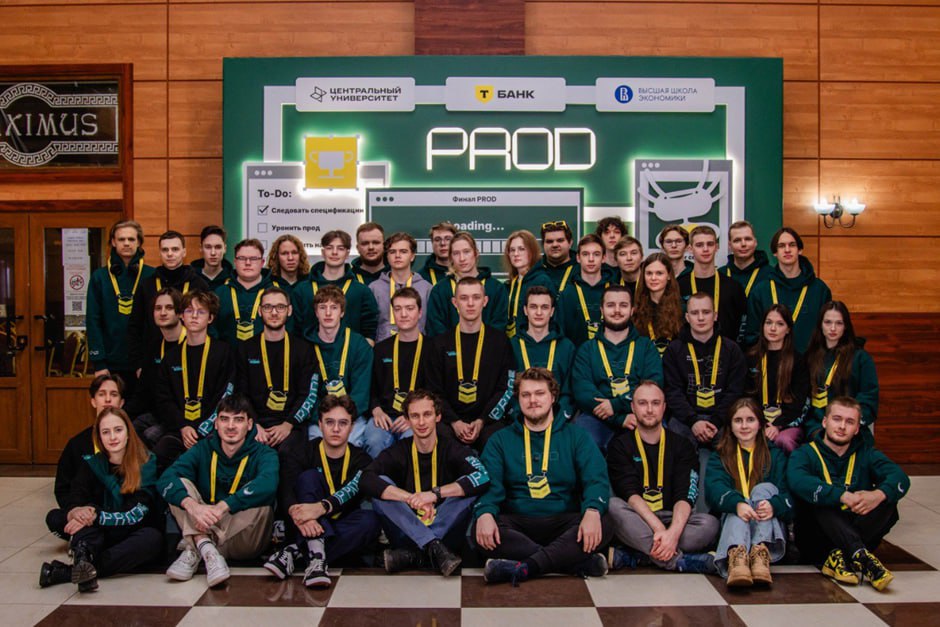
High school students in Uzbekistan are now eligible to participate in the inaugural international PROD software engineering competition, the organizers confirmed to The Times of Central Asia. The Olympiad is open to English-speaking students in grades 8–12 from any country and is designed to introduce participants to the principles of large-scale software development. It offers hands-on experience that reflects workflows used by leading global IT companies. Participants will work on real business cases, study automation in modern organizations, and develop digital solutions aimed at improving efficiency and streamlining operations. The format focuses on teamwork, analytical thinking, and cross-border collaboration. While most stages will take place online, finalists will be invited to Moscow for the team-based final stage, with accommodation and meals covered by the organizers. The competition is organized by major Russian institutions, with mentorship provided by experienced IT professionals who will guide students through the challenges and methodologies of contemporary digital product development. Registration is open until December 2 on the official PROD website. No prior programming experience is required, but participants should have a basic understanding of computer science and strong logical reasoning skills. This is the first time the competition is being held internationally, with parallel tracks in both English and Russian.

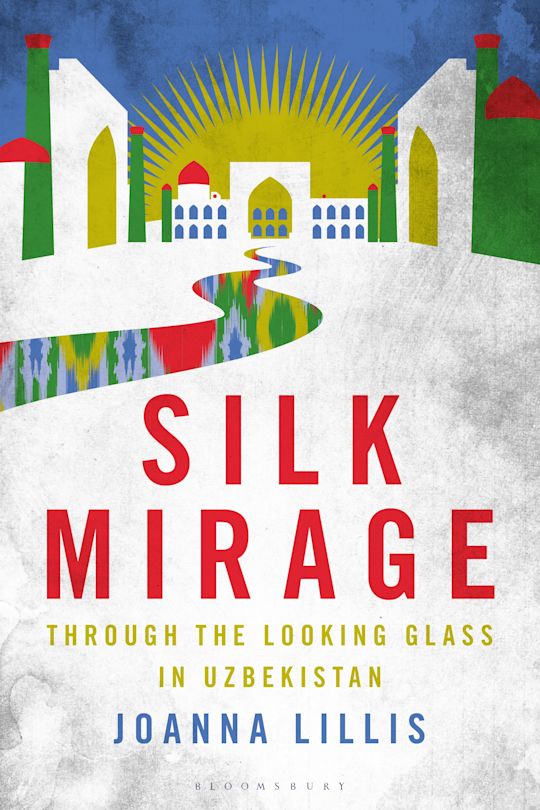
New Book Review: ‘Silk Mirage: Through the Looking Glass in Uzbekistan’ by Joanna Lillis

“Vibrant” and “brutal” are words that British journalist Joanna Lillis uses to describe Uzbekistan in her new book Silk Mirage: Through the Looking Glass in Uzbekistan, released this week through Bloomsbury. But they could just as easily be used to describe the book itself. In her own words, Lillis, a Central Asia correspondent for The Economist and other media, set out to create "a portrait of Uzbekistan from independence to the modern-day, dipping into history to demonstrate where the country came from and how it got where it is today, and offer clues about where it is going." She achieves this with a book that is clear-eyed and meticulously researched, detailing how Uzbekistan’s two 21st-century leaders, presidents Islam Karimov and Shavkat Mirziyoyev, have shaped the lives of Uzbekistan’s remarkable people. The book opens with a summary of the paranoia and violence of the Karimov era (1989-2016), told through Lillis’ experience of having recently arrived in Tashkent in 2001. She lived in the country until 2005, and has spent a lot of time in Uzbekistan thereafter. While the western media that reported on Karimov’s death in 2016 speculated on a battle behind the scenes to succeed him, Silk Mirage is clear that power was always going to pass to Miziyoyev, who had been Karimov's prime minister for the previous 14 years. Lillis does, though, memorably mention that "there may have been a fierce under-the-rug catfight." A recurring topic in Silk Mirage is the repression of the media in Uzbekistan, and local journalists’ need to self-censor and avoid uncomfortable issues. There is none of that in this absolutely fearless book. Lillis gives stark details of Karimov’s human rights abuses, particularly in accounts of the horrific Jaslyk prison. She also confronts his successor’s failure to eradicate some of the injustices in the present day.  When comparisons are made between life under Karimov, referred to as "Old Uzbekistan", and the New Uzbekistan of Mirziyoyev, the progress towards democracy is described as a qualified success. The country now has a parliament with younger, more accountable deputies; however, “opposition” is still a dirty word, and the proliferation of new political parties is misleading.  Economic reforms have led to the previous official corruption and black market profiteering being replaced with a state that is friendlier to local businesses and foreign investors alike. That being said, there are still restrictions on citizens’ rights. So, have Mirziyoyev’s plans for democracy and reforms been slowed down by systemic issues – the need for his government to first dismantle the dictatorship he inherited? Or is Karimov’s old ally too much of a product of Old Uzbekistan to fully stop the past from repeating? Lillis leaves the reader to decide for themself.  Silk Mirage dedicates chapters to events in Uzbekistan that have occasionally caught international attention. The last two decades have seen the authorities’ 2005 massacre of hundreds of people in the eastern city of Andijan, which was blamed on an ambiguous Islamist cult; outcries over forced labour and child labour in...

Medieval Wall Paintings Discovered at Ancient Kanka Site in Uzbekistan

Archaeologists in Uzbekistan have uncovered rare wall paintings dating back to the 10th-11th centuries at the ancient site of Kanka in the Tashkent region, according to a report by UzA. The excavation is being led by researchers from the Institute of History at the Academy of Sciences of Uzbekistan, with support from the Tashkent regional administration. Dilnoza Jamolova, the institute’s deputy director, stated that the mural fragments were discovered within the remains of a large caravanserai located in the shahristan (inner city) of ancient Kanka. The structure, situated approximately 60 meters south of the city’s southern gate, measures around 100 by 70 meters and is noted for its significant architectural features. Inside one of the caravanserai’s rooms, archaeologists found fragments of wall paintings that had fallen from the walls. The pieces, ranging from 15×20 to 30×35 centimeters, confirm that the building’s interior was once adorned with mural artwork. Experts say the discovery is notable evidence that wall painting, a tradition believed to have declined following the Arab conquest, experienced a revival in the Tashkent region during the 10th and 11th centuries. Similar wall paintings have been identified at other prominent Central Asian archaeological sites, including Samarkand and Ahsikent. The ongoing study, which involves restorers from the Samarkand Archaeological Institute under the Cultural Heritage Agency, also suggests the existence of a distinct mural art tradition in medieval Tashkent. In earlier excavations at Kanka in 2023, researchers discovered murals dating back to the 5th-7th centuries. The latest findings are expected to offer new insights into the cultural and artistic life of the region and to deepen scholarly understanding of Tashkent’s medieval heritage. Previously, The Times of Central Asia reported on another major archaeological discovery in southern Uzbekistan, where scientists found evidence that hunter-gatherer communities were harvesting wild barley as early as 9,200 years ago, challenging long-standing theories about the origins of agriculture in the ancient world.