• KGS/USD = 0.01144 0%
  • KZT/USD = 0.00216 0%
  • TJS/USD = 0.10718 0.37%
  • UZS/USD = 0.00008 0%
  • TMT/USD = 0.28490 0%
  • KGS/USD = 0.01144 0%
  • KZT/USD = 0.00216 0%
  • TJS/USD = 0.10718 0.37%
  • UZS/USD = 0.00008 0%
  • TMT/USD = 0.28490 0%
  • KGS/USD = 0.01144 0%
  • KZT/USD = 0.00216 0%
  • TJS/USD = 0.10718 0.37%
  • UZS/USD = 0.00008 0%
  • TMT/USD = 0.28490 0%
  • KGS/USD = 0.01144 0%
  • KZT/USD = 0.00216 0%
  • TJS/USD = 0.10718 0.37%
  • UZS/USD = 0.00008 0%
  • TMT/USD = 0.28490 0%
  • KGS/USD = 0.01144 0%
  • KZT/USD = 0.00216 0%
  • TJS/USD = 0.10718 0.37%
  • UZS/USD = 0.00008 0%
  • TMT/USD = 0.28490 0%
  • KGS/USD = 0.01144 0%
  • KZT/USD = 0.00216 0%
  • TJS/USD = 0.10718 0.37%
  • UZS/USD = 0.00008 0%
  • TMT/USD = 0.28490 0%
  • KGS/USD = 0.01144 0%
  • KZT/USD = 0.00216 0%
  • TJS/USD = 0.10718 0.37%
  • UZS/USD = 0.00008 0%
  • TMT/USD = 0.28490 0%
  • KGS/USD = 0.01144 0%
  • KZT/USD = 0.00216 0%
  • TJS/USD = 0.10718 0.37%
  • UZS/USD = 0.00008 0%
  • TMT/USD = 0.28490 0%

Viewing results 85 - 90 of 563

World Happiness Index: Central Asian Countries Stand Out With “Warm Social Climate”

Kazakhstan has been named the happiest country in Central Asia, according to the World Happiness Report 2025 published by the Oxford Wellbeing Centre. Ranking 43rd globally, Kazakhstan outperformed its regional neighbors in metrics such as social support, trust, and freedom of choice.  The report evaluates national well-being based on six key indicators: GDP per capita Social support (help from family, friends, and society) Healthy life expectancy Freedom to make life choices Generosity (willingness to help others) Perceived absence of corruption Kazakhstan scored 6.38 out of 10, demonstrating especially strong performance in trust and honesty. The country ranked 30th globally for the likelihood of returning a wallet to a neighbor and 42nd for returning it to a stranger. Uzbekistan followed at 53rd place with a score of 6.2. The country stood out for its high levels of charitable giving (29th) and public trust in law enforcement (19th). Kyrgyzstan ranked 75th with 5.9 points and was recognized as the regional leader in helping strangers. Tajikistan placed 90th with a score of 5.4 but made the global top four in volunteering, an indicator linked to longstanding traditions of mutual aid. Turkmenistan was excluded from the ranking due to insufficient data. The report highlights that Central Asian countries exhibit some of the world’s highest levels of kindness. The region's mutual aid index ranges from 0.30 to 0.36, compared to the global average of 0.33. “Despite economic differences, the region maintains strong social ties and a culture of collectivism, where helping others and participating in community life remain important values,” the report notes. According to the authors, happiness is influenced less by income than by trust, stability, and personal freedom. Central Asia, they conclude, fosters a “warm social climate,” where interpersonal kindness often offsets institutional shortcomings and economic hardship. Globally, Finland topped the 2025 rankings, followed by Denmark, Iceland, Sweden, and the Netherlands. At the bottom of the list were Sierra Leone (146th) and Afghanistan (147th), where happiness levels remain the lowest worldwide.

The Artistic Brilliance of Central Asia Takes Center Stage at Sotheby’s

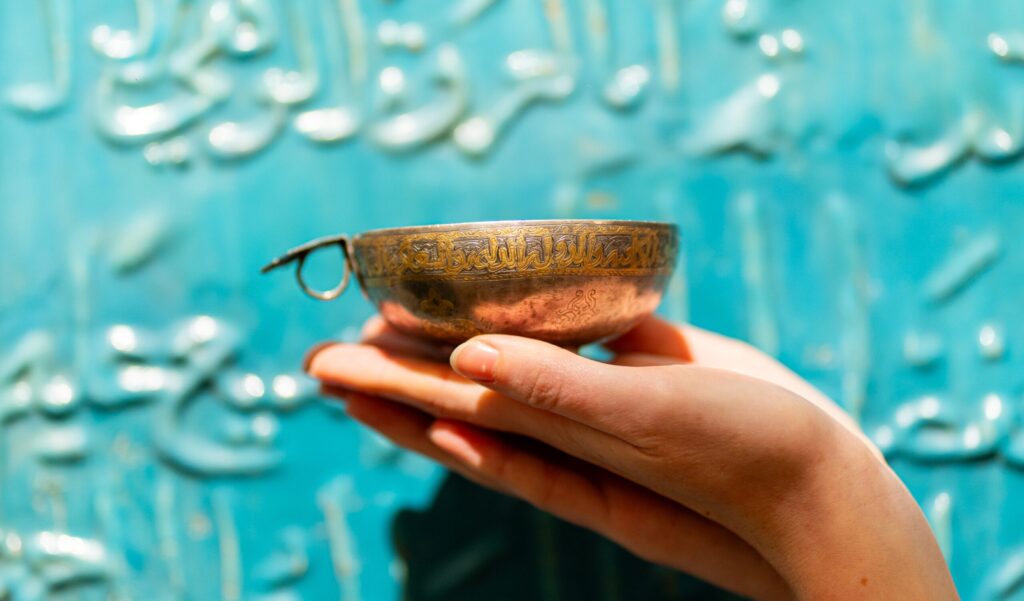
On October 29, Sotheby’s will host its Arts of the Islamic World and India sale, featuring a dazzling selection of manuscripts, ceramics, metalwork, and jewelry that together trace the creative reach of Central Asia across six centuries. The auction highlights how the region’s artists shaped Islamic visual culture from the early medieval period to the Timurid age. Among the most important works is a rare page from the monumental Baysunghur Qur’an, produced around 1400 in Herat or Samarkand. Another piece connects to the earlier Samanid Dynasty, whose rule from Bukhara and Tashkent fostered a flourishing of calligraphic pottery in the ninth and tenth centuries. The Arab geographer al-Maqdisi once praised the “large bowls from Shash,” an early name for Tashkent, noting their reputation throughout the Islamic world. [caption id="attachment_38298" align="aligncenter" width="1797"] A line from the 'Baysunghur Qur'an', attributed to 'Umar al-Aqta, Herat or Samarkand, circa 1400; image: Sotheby's[/caption] Two colorful Timurid mosaic tiles from the fourteenth or fifteenth century illustrate the architectural splendor of Samarkand and Herat. Their glazed patterns in cobalt, turquoise, and white once formed part of vast decorative panels in mosques and mausoleums. The geometric interlace and stylized foliage that define them became a visual signature of Timurid architecture, a style that spread from Central Asia to Persia and India. [caption id="attachment_38301" align="aligncenter" width="1346"] A Golden Horde turquoise and pearl-set gold belt or necklace, Pontic-Caspian Steppe, 14th century; image: Sotheby's[/caption] The Times of Central Asia spoke with Frankie Keyworth, a specialist in Islamic and Indian Art at Sotheby’s, for a closer look. TCA: How did manuscripts like the Baysunghur Qur’an serve as symbols of power and faith in the Timurid court, and what does its immense scale - a Qur’an so vast it took two people to turn a page - reveal about the empire’s ambition, artistry, and self-image? Keyworth: The manuscript was a hugely ambitious and challenging project, even just by the tools it would take to create, with monumental sheets of paper measuring 177 by 101cm., and a large pen whose nib would have to measure over 1cm. Displayed on a magnificent marble stand, the manuscript would be a staggering visual representation of the patron’s wealth and piety. Their subsequent use during public recitation reinforced the elite’s religious aspirations. The fact that this manuscript is unsurpassed by any other medieval Qur’an and remains so valued centuries after it was produced at the turn of the 15th century reveals the key role manuscripts played in the establishment of the Timurid dynastic image. [caption id="attachment_38299" align="aligncenter" width="1346"] A Timurid brass jug (mashrabe), Herat, Afghanistan, 15th-early 16th century; image: Sotheby's[/caption] TCA: A brass jug from Herat shaped like a Chinese vase, a ceramic bowl from Tashkent inscribed in Arabic script - these objects tell of traders, scholars, and artists linking worlds from Samarkand to Beijing long before globalization had a name. What can you tell us about how this trade transpired, and are there similarities to modern transport corridors? Keyworth: Trade via the so-called Silk Road endured for...

Uzbekistan’s Abdukodir Khusanov Judged Asia’s Joint Most Valuable Footballer

At just 21 years old, Uzbek defender Abdukodir Khusanov has been named as Asia’s joint most expensive footballer, with a current market valuation of €35 million, according to Transfermarkt’s latest update. This places him on par with Brighton's Japanese winger Kaoru Mitoma, whose value was recently revised down from €40 million to €35 million. Bayern Munich’s Kim Min-jae, a South Korean international, also saw a decrease, from €40 million to €32 million, making Khusanov the continent’s equal top-valued player with Mitoma. Khusanov’s meteoric rise follows his high-profile transfer to English champions Manchester City earlier this year. The long-term deal, reportedly valued at €40 million, marked a record for an Uzbek player and one of the largest fees ever paid for an Asian footballer. Manchester City confirmed the signing from French club RC Lens in January. British media reported that the deal includes performance-based bonuses, which could further increase its value. The central defender made 31 appearances for Lens after transferring from Belarusian side Energetik-BGU Minsk in 2023. Khusanov is the first player from Uzbekistan to play in the English Premier League, a landmark achievement that has garnered widespread attention in his home country. Manchester City officials praised his tactical awareness, composure under pressure, and pace, qualities he demonstrated throughout his Ligue 1 campaign.

Dinosaur Fossils Unearthed in Uzbekistan and Tajikistan Illuminate Central Asia’s Prehistoric Past

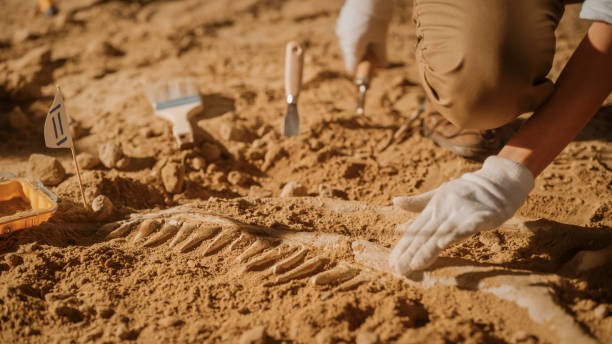
Rare dinosaur remains estimated to be around 75 million years old have been uncovered in Uzbekistan’s Karakalpakstan region, according to the State Geological Museum. The discovery adds to a growing body of paleontological evidence shedding light on Central Asia’s ancient ecosystems. On October 12, Akhmadjon Akhmedshaev, Director of the State Geological Museum, visited the excavation site near the Khodzhakul foothills in the Sultan Uvays mountain range, where the “Uzbek Geologiya Qidiruv” expedition had uncovered fossilized dinosaur bones during a geological survey. Found at a depth of approximately three meters, the remains are believed to belong to a large dinosaur from the Cretaceous period, dating back roughly 65-75 million years. The fossils include fragments of vertebrae, ribs, and leg bones, all remarkably well preserved. Scientists believe the find could offer valuable insights into the types of dinosaurs that once inhabited what is now western Uzbekistan. The region is thought to have been a humid, coastal environment during the late Cretaceous. The fossils are currently undergoing analysis at the State Geological Museum to determine their species and any potential connections to previously identified dinosaurs from Central Asia. Meanwhile, paleontologists from St. Petersburg State University have announced a second significant find, this time in Tajikistan. Researchers uncovered a well-preserved fragment of a duck-billed dinosaur skull. According to spbdnevnik.ru, the fossil’s exceptional condition may enable scientists to accurately identify the species and potentially describe a new genus. Comparative analysis is now underway with fossil collections from other countries to trace its evolutionary lineage.

Canadian Musician Releases Protest Song About Uzbek Student’s Experience with Wizz Air

Canadian singer-songwriter Dave Carroll, best known for his 2009 viral hit “United Breaks Guitars,” has released a new protest song titled “Don’t Fly Wizness Class,” inspired by the travel ordeal of Uzbek student Suhrob Ubaydullayev. The track and accompanying video, featuring Ubaydullayev himself, highlight his experience with Wizz Air in 2023 and raise broader concerns about discrimination and passenger rights. Carroll first gained international attention after United Airlines damaged his $3,500 Taylor guitar during a 2008 flight and refused to compensate him. In response, he released “United Breaks Guitars,” which amassed over 20 million views on YouTube and reportedly caused a $180 million drop in United’s stock value. The episode sparked industry-wide changes in customer service protocols. More than a decade later, Carroll has turned his attention to another case of alleged mistreatment, this time involving a 24-year-old Uzbek national. His latest song recounts how Ubaydullayev was denied boarding on a Wizz Air flight on August 31, 2023. “I had all my documents in order,” Ubaydullayev previously told The Times of Central Asia. “The staff checked them and returned them to me, but when I reached the gate, they suddenly said I couldn’t fly. No reason. No explanation.” According to Ubaydullayev, one airline employee asked, “Are you from Uzbekistan?” Upon confirming he was, he says he was denied boarding without further justification. What followed, he claims, was a humiliating ordeal: threats to call the police, warnings that the Uzbek embassy could not assist him, and refusal to provide any written explanation. Ubaydullayev had just completed a Work and Travel program in Europe and was returning home. After spending his savings on the now-cancelled flight, he borrowed money to reach Istanbul, where he was robbed and left stranded. “I met some Uzbek guys near the Sultan Ahmed Mosque who offered to help,” he said. “But they ended up taking my money and disappearing.” His journey home eventually took him through Kazan in Russia and Osh in Kyrgyzstan, before he reached the Uzbek city of Namangan, exhausted, indebted, and disillusioned. In May, during a visit to Canada, Ubaydullayev met Carroll in person. “He was kind and respectful,” Ubaydullayev told The Times of Central Asia. “Carroll listened to my story and was deeply moved.” Carroll then turned the young man’s experience into a song, aiming to bring attention to the broader issue of traveler discrimination. “My goal,” Ubaydullayev said, “is to ensure Wizz Air and other airlines stop discriminating against Uzbek citizens and start treating them with respect.”

First Uzbek Genome Project Reveals High Rate of Hereditary Mutations

Uzbek scientists have completed the country’s first full-scale human genome study, marking a significant milestone in both national science and global genomics. Conducted by researchers at the Center for Advanced Technologies, the study identified dozens of previously undocumented genetic mutations unique to the Uzbek population. The findings have been submitted to international genomic databases and signal Uzbekistan’s growing contribution to global biomedical research. The study revealed that 50% of children examined carried a hereditary mutation, and 86% were carriers of at least one defective gene, roughly double the global average. Experts linked the elevated rate to consanguineous marriages, which occur in up to a quarter of all unions in certain regions. Professor Shakhlo Turdikulova, Director of the Center for Advanced Technologies and head of the “1,000 Genomes of Uzbekistan” project, emphasized the significance of the findings. “For the first time, we have a clear picture of the genetic makeup of our people,” she said. “If most children carry hidden hereditary mutations, we cannot reverse this trend without a system of genetic counseling and preventive screening. That is why implementing premarital genetic testing programs is essential.” Beyond rare inherited conditions, the study found strong correlations between genetic mutations and common diseases such as diabetes, cardiovascular disorders, and cancer. More than half of the participants received precise genetic diagnoses, allowing physicians to tailor treatments more effectively. Roughly one-third of the mutations identified were previously unknown to global science. The “1,000 Genomes of Uzbekistan” project is part of a broader initiative to establish a national biobank and genetic map. Its goals include advancing personalized medicine, supporting pharmaceutical development, and enabling early disease detection. The Center for Advanced Technologies, which co-developed the ZF-UZ-VAC 2001 vaccine during the COVID-19 pandemic, continues to solidify Uzbekistan’s role as a regional leader in biotechnology and genetic science. Researchers believe the project’s results will help shape nationwide preventive healthcare strategies and improve the health outlook for future generations.