• KGS/USD = 0.01143 0%
  • KZT/USD = 0.00216 0%
  • TJS/USD = 0.10684 -0.28%
  • UZS/USD = 0.00008 0%
  • TMT/USD = 0.28571 0%
  • KGS/USD = 0.01143 0%
  • KZT/USD = 0.00216 0%
  • TJS/USD = 0.10684 -0.28%
  • UZS/USD = 0.00008 0%
  • TMT/USD = 0.28571 0%
  • KGS/USD = 0.01143 0%
  • KZT/USD = 0.00216 0%
  • TJS/USD = 0.10684 -0.28%
  • UZS/USD = 0.00008 0%
  • TMT/USD = 0.28571 0%
  • KGS/USD = 0.01143 0%
  • KZT/USD = 0.00216 0%
  • TJS/USD = 0.10684 -0.28%
  • UZS/USD = 0.00008 0%
  • TMT/USD = 0.28571 0%
  • KGS/USD = 0.01143 0%
  • KZT/USD = 0.00216 0%
  • TJS/USD = 0.10684 -0.28%
  • UZS/USD = 0.00008 0%
  • TMT/USD = 0.28571 0%
  • KGS/USD = 0.01143 0%
  • KZT/USD = 0.00216 0%
  • TJS/USD = 0.10684 -0.28%
  • UZS/USD = 0.00008 0%
  • TMT/USD = 0.28571 0%
  • KGS/USD = 0.01143 0%
  • KZT/USD = 0.00216 0%
  • TJS/USD = 0.10684 -0.28%
  • UZS/USD = 0.00008 0%
  • TMT/USD = 0.28571 0%
  • KGS/USD = 0.01143 0%
  • KZT/USD = 0.00216 0%
  • TJS/USD = 0.10684 -0.28%
  • UZS/USD = 0.00008 0%
  • TMT/USD = 0.28571 0%

Viewing results 97 - 102 of 563

Silk Road Shipwrecks: Virtual Museum Opens Maritime Section

One of Central Asia’s most engaging new cultural projects took on a new dimension last month. The Silk Road Virtual Museum, an online collection of over 20 exhibitions of pre-16th-century Eurasian life and art, has recently opened a section for the ancient trade route’s maritime history. An initiative by the Institute of Asian Studies at Leiden University in the Netherlands, the site allows visitors to move through themed rooms, just as they would wander through a physical museum. Beginning on a map of the world on the museum’s homepage, visitors click on the Silk Road locations that they wish to discover. Each pin on the map takes them to a video replicating a guided tour of art and artefacts from that place at a certain historical era. Just as in a real museum, each exhibit has an information panel explaining what the object is. Life on the Central Asian parts of the Silk Road is shown in exhibitions to Sogdian traders in Samarkand (6th-8th centuries), with camels often featuring in their ceramic art, and a room dedicated to ancient caravanserais (inns that provided lodging for travellers), including at Tash Rabat in Kyrgyzstan. Launched in 2024, the Silk Road Virtual Museum already displays over 1,300 objects in total. Their geographical reach mainly stretches from Venice to China, as the Silk Road is often imagined today – but there are collections from places as unexpected as Sweden and Indonesia.  With the launch of the maritime section on 16 September, their scope now spans seas as well as deserts. Virtual visitors can travel along the coasts of the Indian Ocean, where there are already seven shipwreck exhibitions, each with its own unique story. The project is managed by VirtualMuseum360 and supported by an international network of scholars, who aim to make the Silk Road’s many eras and strands accessible to people wherever they are in the world. The web pages have two advantages over traditional museums, in that they are free to access and open 24/7.  Leading the Silk Road Virtual Museum (SRVM) is Professor Richard Griffiths, the director of Leiden University’s ‘New Silk Roads’ programme. A distinguished economic historian who has specialised in the history of trade, during a spell teaching in the Chinese city of Chengdu, Griffiths took an interest in China’s Belt and Road Initiative. When he began to trace the policy’s history, he realised that the origins of China’s modern trade with the West can be found in the myths and realities of the ancient Silk Roads. The key to making SRVM work, he says, is collaboration. Griffiths tells The Times of Central Asia: “We’re not replacing real museums – we’re working alongside them. Everything we do depends on the knowledge of academics, archaeologists, and conservators. Together we can make heritage accessible to anyone, anywhere, without losing its depth or integrity.” “Our visitors are a real mix,” he adds. “Often people tell me they use SRVM before a trip, so that when they see objects in a real museum,...
The Unseen Animals of Central Asia: A Photography Exhibit by Bogna Wiltowska

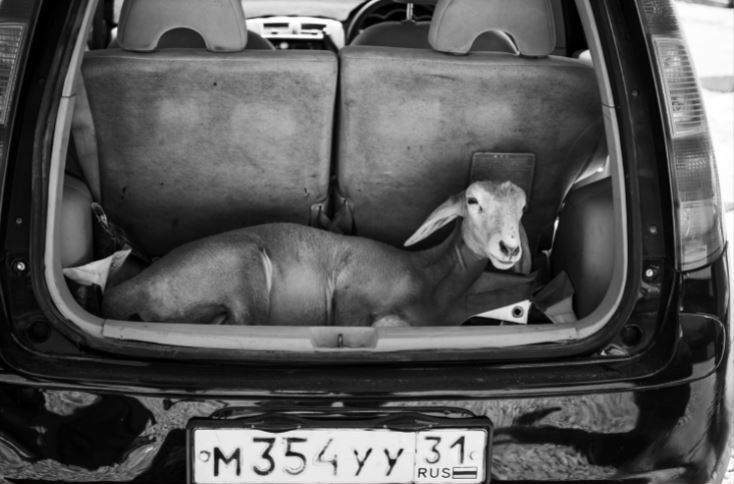
For six months, Polish photographer Bogna Wiltowska documented animals in farms and slaughterhouses in Central Asia as a We Animals Fellow. On World Farmed Animals Day (Oct 2nd), a virtual exhibition of her work will open, allowing everyone to witness the untold stories of the animals Bogna encountered in Kyrgyzstan and Kazakhstan - countries experiencing the gradual industrialization of animal agriculture. Explaining her choice to focus on animals in this yet unexplored region, Bogna said, “Until now, the lives of farmed animals in Central Asia have remained largely undocumented. At the same time, I knew that an animal advocacy movement led by passionate grassroots activists was slowly beginning to emerge there. This was the perfect moment to take a closer look at what was happening and give animals a voice in countries where they aren’t often considered.” [caption id="attachment_36666" align="aligncenter" width="734"] Image: Bogna Wiltowska[/caption] Every year, We Animals awards a small number of Animal Photojournalism Fellowships, which support up-and-coming photojournalists to tell the stories of animals used for food. Fellows work remotely with We Animals’ founder, award-winning photojournalist Jo-Anne McArthur, for approximately six months. The Fellow receives funding to cover project costs and a stipend for the duration of the Fellowship, totalling $6,500 CAD ($4,670). Based in Poland, Bogna is the Director of Investigations at the non-profit Otwarte Klatki and has worked in several countries documenting industrial farming and rescuing animals. Despite witnessing enormous suffering, she remains committed to a better world for animals. [caption id="attachment_36667" align="aligncenter" width="732"] Image: Bogna Wiltowska[/caption] Bogna was awarded the fellowship in recognition of her experience, well-planned project, and desire to grow in the field of animal photojournalism. Her project illuminates underrepresented animals and provides advocates in Central Asia with strong visuals for their work. Reflecting on this project, Bogna said, “The Fellowship was one of the most important experiences in my work for animals. After over a decade of working for animals and managing a large organization with an investigations team, I felt deeply tired and overwhelmed. The Fellowship placed me in a completely new role. This time, I was the one receiving support (instead of giving it), and I had the chance to learn from the best in areas where I had previously been self-taught.” [caption id="attachment_36668" align="aligncenter" width="1163"] Image: weanimals.org[/caption] The virtual exhibition will run from October 2nd to 31st, 2025. The free event is entirely virtual and available in English. It contains some graphic imagery.

From Rare Collectibles to Mainstream Chic: The Suzani’s American Story

At the turn of the century, a suzani, the traditional embroidered textile from Central Asia, was almost impossible to find in the United States. These pieces, once given as dowries in Uzbekistan and Tajikistan, were the kind of object you might stumble upon in the back room of a rug gallery or in the private collection of a well-traveled dealer. To collectors, they were mysterious and precious, valued partly for their rarity as much as their beauty. Today, in New York and across the U.S., suzanis are everywhere. They hang in boutique hotel lobbies, appear in glossy interior design magazines, and are sold by the dozen on Etsy and Instagram. The journey from rarity to ubiquity is both cause for celebration and reason for reflection, and reveals how cultural objects travel, are reinterpreted, and can carry heritage into new contexts. Rooted in family life and ritual, suzanis were traditionally embroidered by brides with circular and floral motifs, each stitch carrying symbolic meaning. They were displayed at weddings, passed down through generations, and treasured as heirlooms, remaining within Central Asian households for centuries before appearing on international auction blocks or design blogs. Shortly after the collapse of the Soviet Union, suzanis began appearing in the U.S., arriving primarily through Istanbul’s antique textile markets. These textiles - once private heirlooms - caught the eye of auction houses in London and New York as rare examples of artistry. As design editors and boutique retailers rediscovered their vibrant motifs and handmade quality, suzanis shifted from decorative obscurity to sought-after global accents. Collectors quickly prized their vivid palettes and dense embroidery, and museums displayed them as artifacts of a little-known artistic tradition. At auction houses, the most exceptional pieces commanded astonishing prices. For instance, a Shakhrisabz (Green City) suzani from eighteenth-century Uzbekistan was recently valued at up to £50,000 ($67,000) at Sotheby’s in London. As someone who once ran a family Persian rug gallery in the Midwest, I remember the excitement when a genuine suzani appeared. It was almost mythical, a piece that drew genuine excitement from serious buyers and curiosity from casual visitors. In New York, designers showcase suzanis as bedspreads, wall hangings, and upholstery, while fashion houses borrow their patterns for prints. The mainstream embrace is a sign that a once-overlooked textile is now celebrated as part of the city’s design vocabulary, and that Central Asian culture is being appreciated in new ways. Hand-embroidered suzanis take months of work, with their thread tension, symbolic motifs, and slight irregularities forming part of their beauty. Machine-made copies, now sold widely online, mimic the look but erase the artistry; selling for a fraction of the price, they may look authentic but have no connection to Central Asian makers or traditions. Yet the enduring appeal of hand-stitched suzanis shows that authenticity continues to matter, and that the artistry behind these textiles cannot be replaced by machines. As suzanis find their way into new settings, they show that traditions remain vibrant as they adapt and endure. Their symbols...

Global Conflicts Fuel a Wave of Cancellations in Central Asia’s Cultural Scene

On September 20, performers from Kazakhstan, Uzbekistan, Tajikistan, and Kyrgyzstan took part in the international “Intervision-2025” contest in Moscow, a music competition often described as the Eurasian counterpart to Eurovision. Originally launched in the 1970s by countries of the Eastern Bloc, Intervision has been periodically revived as a stage for showcasing regional talent and cultural diversity, with recent editions aiming to strengthen cultural exchange across Eurasia. At the event, last held in Sochi, Russia, in 2008, the Kyrgyz performers, Nomad, earned second place. But even as regional talent competes on the global stage, a parallel trend is intensifying at home: artists, especially Russians, are increasingly being “canceled” across Central Asia. The root cause, observers say, is Russia's war in Ukraine. Mounting Controversies Concert cancellations, particularly in Kazakhstan, have become so frequent that international artists are growing wary. On September 17, organizers for Canadian pop star The Weeknd announced the cancellation of his planned show in Almaty. They cited a broader pattern of artist cancellations in the country. “In light of recent events and online discussions, we have decided to consider hosting the concert elsewhere,” the statement read. Sources suggest the cancellation was indirectly linked to the backlash over an upcoming concert by Russian rapper Timati, who has publicly supported the war in Ukraine. The online campaign has reportedly cast a shadow over unrelated performances, including The Weeknd’s. At the same time, anti-war artists are also being blocked. Belarusian rapper Max Korzh saw his Almaty show canceled, despite his public criticism of the war. The decision may have been influenced by riots at his August concert in Warsaw, where Ukrainian Insurgent Army (UPA) symbols were seen. In Russia, the UPA is classified as an extremist group; in Poland, it is accused of wartime atrocities against Poles. Following the event, the Polish authorities deported 57 Ukrainians and 6 Belarusians. Kazakh officials, observers say, are keen to avoid similar controversies. The War’s Cultural Fallout Ideological divides are reshaping Central Asia’s cultural landscape. Once welcome, Russian performers now frequently face petitions and protests. In August, an online campaign demanded the cancellation of pop singer Polina Gagarina’s November concert in Kazakhstan. Petitioners argued her public support for Moscow’s policies contradicted international law and risked provoking social unrest. Russian rock singer Zemfira reportedly canceled her June concert at the request of venue owners. Other Russian artists, including Grigory Leps, Vladimir Presnyakov, and the Turetsky Choir, have been barred due to perceived support for the war. The “Zhara” music festival was also scrapped following online criticism, with the Kazakh Minister of Culture citing "political propaganda and attempts to divide society" as the reasons behind the decision. Meanwhile, anti-war comedians and musicians are facing hurdles. Maksim Galkin, designated a “foreign agent” by Russia and now living in Israel, has complained of bans in Kazakhstan. Outspoken rapper Alisher Morgenstern canceled concerts in Almaty and Astana last year, while both his and Leps’ shows were prohibited in Kyrgyzstan. Officials in Bishkek cited moral concerns, accusing Morgenstern of undermining “Kyrgyz traditions...

Uzbekistan Halves Child Poverty in Four Years

Uzbekistan has achieved a significant reduction in child poverty over the past four years. According to UNICEF Representative Regina Maria Castillo, the child poverty rate dropped from 21.5% in 2021 to just 11.4% in 2024, effectively cutting the figure in half. Speaking at an international forum in Namangan, Castillo credited deliberate government policy for the 10-percentage-point decline. She emphasized that government-funded social benefits, including child allowances and pensions, played a critical role in lifting families out of poverty. Without these support mechanisms, she noted, child poverty could have sharply increased during the same period. Castillo also highlighted the importance of universal state-provided services, such as education, healthcare, and child protection, as essential pillars for developing human capital. She stressed that prioritizing child poverty reduction within broader socio-economic policy is vital, adding that UNICEF stands ready to support the Uzbek government through a multi-sectoral approach. Reducing poverty has become a central national priority in Uzbekistan. President Shavkat Mirziyoyev has set an ambitious target: to lower the national poverty rate to 6% by the end of 2025 and to eradicate absolute poverty entirely by 2030. These goals build on substantial progress already achieved. According to official figures, approximately 7.5 million people have been lifted out of poverty in recent years. The national poverty rate declined to 8.9% in 2024, down from around 23% a few years prior. The World Bank estimates that poverty in Uzbekistan has halved since 2015, a rate of decline faster than the regional average. At the Namangan forum, Mirziyoyev announced that as of mid-2025, the poverty level had dropped further to 6.8%, placing the country on track to meet its 6% year-end target. “Thanks to consistent reforms, 7.5 million people have been lifted out of poverty… The objective is to reduce this to 6% by year-end,” he said. “By 2030, Uzbekistan has every opportunity to completely eradicate absolute poverty and we will definitely achieve this.” Several key drivers underpin the country's progress. Rising household incomes account for roughly 60% of the recent poverty reduction, according to the World Bank. With the economy nearly doubling in size over the past eight years, economic growth has translated into higher wages and job creation, lifting many families above the poverty line. Another major contributor has been the expansion and modernization of social benefit programs. Increased spending on pensions and direct aid has protected millions from falling into extreme hardship. Notably, during the COVID-19 pandemic, Uzbekistan mobilized $8 billion for free medical supplies and direct payments, which prevented an estimated 5.2 million people from falling into the “poverty trap.” Looking ahead, sustaining these gains will hinge on job creation and human-capital improvements, sharper targeting in social protection, and stronger climate resilience - especially in rural regions. UNICEF’s 2024 situation analysis likewise flags regional disparities in child poverty and stresses better services for large, low-income households. The World Bank’s climate assessments, meanwhile, warn that rising temperatures and mounting water stress could push vulnerable rural families back into poverty without quicker adaptation in agriculture...

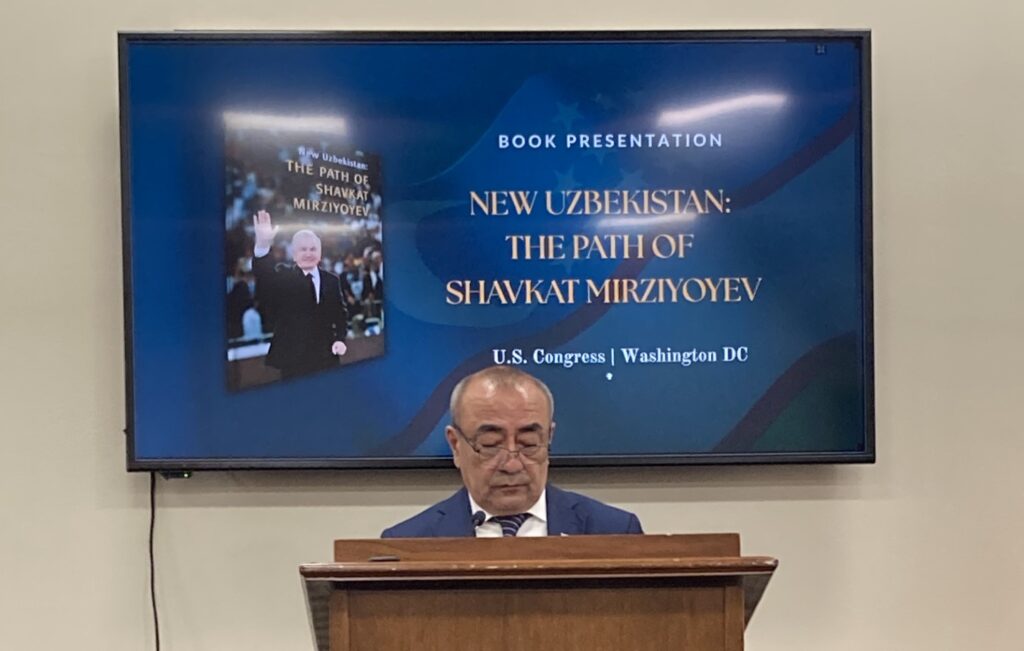
Book Launch at the U.S. Capitol: New Uzbekistan: The Path of Shavkat Mirziyoyev

On September 16, the Embassy of Uzbekistan in Washington, D.C., hosted a book launch at the Rayburn Building on Capitol Hill for New Uzbekistan: The Path of Shavkat Mirziyoyev. The event drew diplomats, congressional staff, and representatives from companies such as General Motors and Boeing. The keynote address was delivered by Sodyq Safayev, First Deputy Chairperson of Uzbekistan’s Senate. Other speakers included Husan Ermatov, the book’s Uzbek-language editor and advisor to Uzbekistan’s Ishonch newspaper; Eldor Aripov, Director of the Institute for Strategic and Regional Studies under the President of Uzbekistan; Lisa Choate, President and CEO of American Councils; and Elena Son, Executive Director of the American-Uzbekistan Chamber of Commerce. Speakers highlighted Uzbekistan’s recent trajectory, noting shifts from a state-controlled economy and limited international engagement (1993–2016) to more market-oriented policies and broader foreign relations (2017–present). They also framed today’s Uzbekistan as shaped by historical experiences and cultural development, which some described as an “Uzbek Renaissance.” According to the speakers, President Mirziyoyev has promoted reforms in areas including governance, socio-economic development, and international outreach. Safayev remarked: “this [book signing] is not just about diplomacy but about shared values, mutual understanding, and a common vision of the future. The book before you, authored by Qudratilla Rafiqov, Uzbek scholar and political scientist, is a chronicle of change, resilience, and hope. The most difficult part of this book is a [description of the] transformation of hearts and minds. Its central message is simple and powerful: the history of Uzbekistan is written by people through their interactions and aspirations. And justice lies at the heart of reform.” By justice, he clarified, he meant fairness—ensuring that citizens have opportunities for family stability, safety, and employment. While the book presents Uzbekistan’s current government agenda in a favorable light, it also introduces new readers to the President’s stated priorities: attracting investment, promoting rule of law and fairness, liberalizing the economy, restructuring social policies, contributing to global peace efforts, and maintaining pragmatic security and foreign policy strategies. Aripov emphasized that the book is “not really about reforms, or about a leader who has been able to initiate and implement large-scale transformation in a very short period of time. It is a testimony to a new era into which Uzbekistan is entering. Today, hopes are rising in Uzbekistan, a sense of national pride is strengthened, and ambitions are being achieved that only recently seemed unattainable. These changes are being felt by ordinary citizens. They see how their lives are improving, how opportunities are expanding, and how confidence in the future is becoming a reality. That is why this book is not only a chronicle of, but also a symbol of faith that Uzbekistan can become one of the centers of sustainable development, openness and cooperation in Eurasia and the wider world. Why do I believe this to be the case? Because, under my President, the country has moved from ‘guarded isolation’ to ‘post-purposeful openness,’ from managing risks to exporting stability, and from ad hoc transactions to rules-based cooperation.” The Uzbek Embassy,...