• KGS/USD = 0.01143 0%
  • KZT/USD = 0.00205 0%
  • TJS/USD = 0.10433 0%
  • UZS/USD = 0.00008 0%
  • TMT/USD = 0.28577 0%
  • KGS/USD = 0.01143 0%
  • KZT/USD = 0.00205 0%
  • TJS/USD = 0.10433 0%
  • UZS/USD = 0.00008 0%
  • TMT/USD = 0.28577 0%
  • KGS/USD = 0.01143 0%
  • KZT/USD = 0.00205 0%
  • TJS/USD = 0.10433 0%
  • UZS/USD = 0.00008 0%
  • TMT/USD = 0.28577 0%
  • KGS/USD = 0.01143 0%
  • KZT/USD = 0.00205 0%
  • TJS/USD = 0.10433 0%
  • UZS/USD = 0.00008 0%
  • TMT/USD = 0.28577 0%
  • KGS/USD = 0.01143 0%
  • KZT/USD = 0.00205 0%
  • TJS/USD = 0.10433 0%
  • UZS/USD = 0.00008 0%
  • TMT/USD = 0.28577 0%
  • KGS/USD = 0.01143 0%
  • KZT/USD = 0.00205 0%
  • TJS/USD = 0.10433 0%
  • UZS/USD = 0.00008 0%
  • TMT/USD = 0.28577 0%
  • KGS/USD = 0.01143 0%
  • KZT/USD = 0.00205 0%
  • TJS/USD = 0.10433 0%
  • UZS/USD = 0.00008 0%
  • TMT/USD = 0.28577 0%
  • KGS/USD = 0.01143 0%
  • KZT/USD = 0.00205 0%
  • TJS/USD = 0.10433 0%
  • UZS/USD = 0.00008 0%
  • TMT/USD = 0.28577 0%

Our People > Andrei Matveev

Andrei Matveev's Avatar

Journalist

Andrei Matveev is a journalist from Kazakhstan.

Articles

Kazakh Diplomacy: Why Tokayev Aligned Kazakhstan With the Abraham Accords

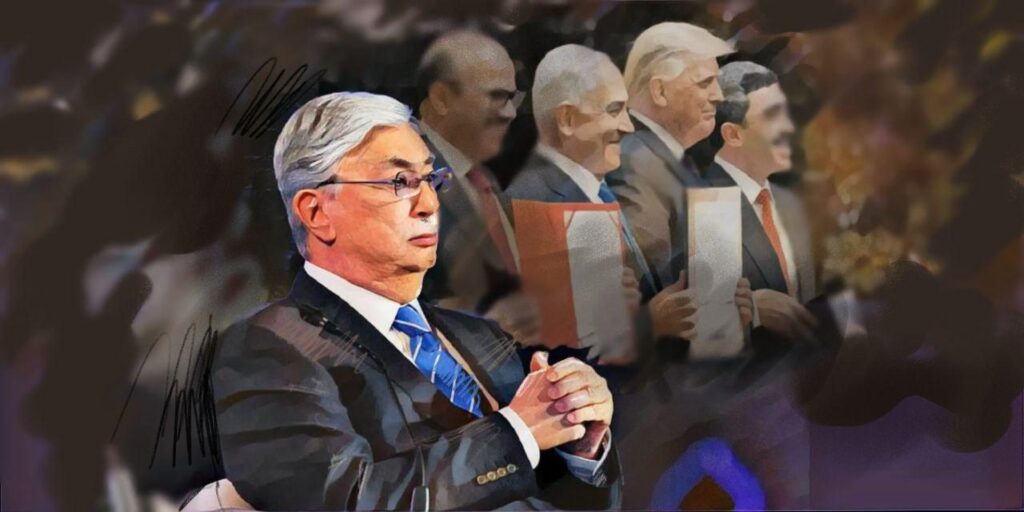
On November 6, 2025, President Kassym-Jomart Tokayev confirmed that Kazakhstan had formally acceded to the Abraham Accords, aligning the Central Asian state with the U.S.-brokered diplomatic framework. Launched during Trump’s first presidential term, the Abraham Accords seek to expand diplomatic normalization between Israel and Muslim-majority states. Initially signed in September 2020 by Israel and the United Arab Emirates, and separately by Israel and Bahrain, the Abraham Accords were later expanded to include Morocco and Sudan. Within the broader Abraham Accords framework, Washington continues to seek Saudi Arabia’s participation, a step viewed as diplomatically significant given the kingdom’s custodianship of two of Islam’s holiest sites. However, the process was derailed following the outbreak of the Gaza war in late 2023, triggered by a Hamas attack on Israel. Riyadh has since insisted that normalization can only proceed once there is meaningful progress toward establishing a Palestinian state. Kazakhstan, a secular state with a Muslim-majority population, has maintained diplomatic ties with Israel since April 1992. Embassies were opened in 1996, and bilateral relations have expanded steadily, including in trade, defense, and humanitarian fields. In 2016, Israeli Prime Minister Benjamin Netanyahu visited Kazakhstan, highlighting the strength of this relationship. These longstanding ties help explain why Kazakhstan’s accession did not mark a shift in its bilateral relationship with Israel. Because Kazakhstan established full diplomatic relations with Israel decades ago, several analysts have described the country’s accession to the Abraham Accords as largely symbolic. Uzbek political scientist Kamoliddin Rabbimov argues that the decision was a calculated gesture rather than a shift in Kazakhstan’s geopolitical orientation. “The question arises: is Kazakhstan really ready to weaken its relations with China, Turkey, and Russia in order to join the American-Israeli alliance? I don’t think so,” Rabbimov said. “President Tokayev most likely just formally supported Trump’s initiative by saying ‘yes’ without putting any real geopolitical meaning into it. Nevertheless, even such a ‘yes’ is capable of slightly upsetting the balance in Kazakhstan’s foreign policy.” Giorgio Cafiero, the CEO of Washington-based Gulf State Analytics, views the move as strategic positioning. “Given the Trump administration’s determination to expand the scope of the Abraham Accords, this move by Kazakhstan was a relatively easy way to win the White House’s favor.” German analysts at Kettner Edelmetalle emphasize Kazakhstan’s natural resource wealth as a key factor. “The country has significant deposits of minerals and rare earth elements, resources that are indispensable for modern technologies. By strengthening ties with Washington, Astana apparently hopes to attract more American investment in this strategically important sector.” Eldar Mamedov, non-resident fellow at the Queens Institute and a former senior advisor to the European Parliament, views the development through the lens of geopolitical balancing. “The Abraham Accords are merely a tool in Astana’s deliberate efforts to diversify its geopolitical dependence on Moscow and strengthen its strategic relations with the United States,” he writes. “Perceiving them as the beginning of a new, ideologically defined bloc misinterprets the fundamentally pragmatic and self-interested nature of Kazakhstan’s calculations.” Kazakhstan’s accession to the Abraham Accords reflects...

2 months ago

From Tehran to Tashkent: How Iran’s Crisis and U.S. Tariffs Reverberate Across Central Asia

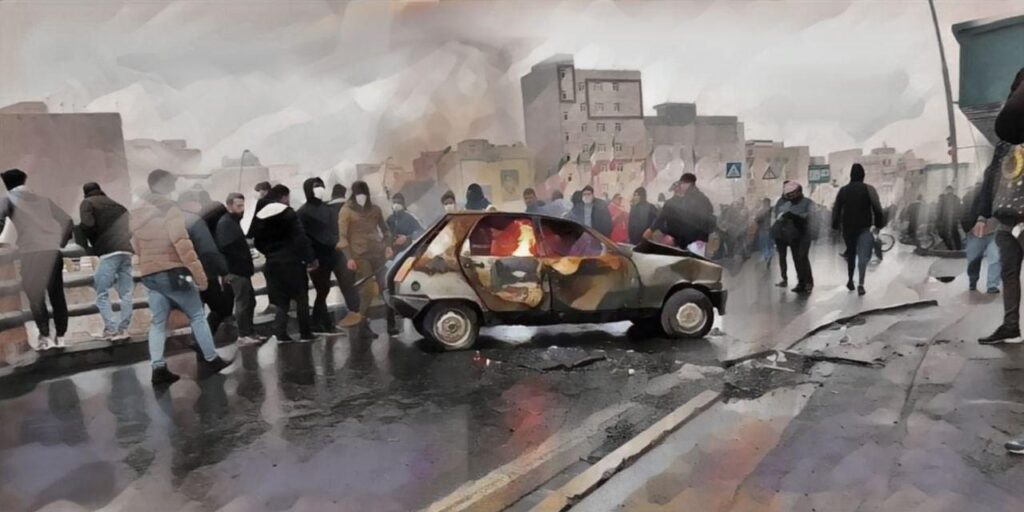
At the end of 2025, Iran once again emerged as a flashpoint on the global political map. Mass protests erupted across the country, fueled by spiraling inflation and economic hardship. At present, the Iranian rial has plummeted to the point where it is effectively worth less than the paper it's printed on. The current wave of unrest, already the largest and deadliest nationwide unrest Iran has seen since 2022, is not occurring in isolation. U.S. President Donald Trump has renewed what his administration describes as a policy of “maximum pressure” on Tehran, and his administration is now pursuing what observers have characterized as a strategy of “pushing the falling,” a move aimed at reshaping the political order of the Middle East. What might this mean for neighboring Central Asia? Tajik political analyst Muhammad Shamsuddinov argues the crisis must be viewed within a broader geopolitical context. “The situation in Iran is directly tied to Trump’s second-term pressure campaign,” Shamsuddinov said, referencing a string of destabilizing events. “These include the 12-day U.S.-Israel war against Iran and the reimposition of U.N. sanctions in September 2025," he added, referring to the 12-day June 2025 conflict between Israel and Iran, during which U.S. forces also struck Iranian nuclear facilities. "All of these have deepened the domestic crisis in Iran.” In a further escalation, on January 12, Trump announced 25% tariffs on countries conducting trade with Iran. The move appears targeted primarily at Russia, China, and India - Iran’s largest international partners, but also has implications for Central Asian economies. In the first nine months of 2025, trade between Kazakhstan and Iran grew by nearly 45%, reaching $310.8 million. Tajikistan, which maintains the closest economic ties to Tehran among Central Asian states, reported trade worth $430.7 million in the first eleven months of 2025, an increase of 28% over the same period in 2024. Uzbekistan, while less directly exposed to Iran than Kazakhstan or Tajikistan, has also moved cautiously in recent years to expand trade links with Tehran, making it sensitive to further sanctions pressure. Turkmenistan, meanwhile, faces its own exposure through gas swap arrangements involving Iran, which could become collateral damage of escalating regional tensions. Iranian investments in Tajikistan are also substantial. Among the most prominent projects is the Sangtuda-2 hydroelectric power plant, estimated at $256 million. The Iranian government contributed approximately $180 million, with an additional $36 million from an Iranian contractor. The remainder was financed by Tajikistan. According to official data, roughly 160 companies with Iranian capital are currently operating in Tajikistan across multiple sectors. In Kazakhstan, around 650 Iranian companies are registered, with over 350 operational, primarily in manufacturing, infrastructure, and agriculture. By contrast, trade between Iran and Russia, a strategic partner since the signing of a bilateral cooperation agreement in January 2025, increased by only 8% in the first nine months of 2025, according to official figures. Despite modest growth, Russian analysts view the figures optimistically. “Growth is happening under challenging geopolitical conditions, with sanctions, logistical restructuring, and financial hurdles,” said...

2 months ago

The Trump Factor: Why Central Asia Has Remained Silent on Iran’s Protests

The wave of protests that erupted in Iran in late December and spread to at least 27 of the country’s 31 provinces has become the largest since 2022, when mass demonstrations followed the death of 22-year-old Mahsa Amini in the custody of Iran’s morality police. The unrest has raised new concerns across the region about political stability, energy markets, and the risk of external intervention. Rights monitors say protests have been reported in hundreds of locations nationwide, with death and detention tolls still contested. Human rights groups and independent monitoring organizations estimate that dozens of people have been killed and more than 2,000 detained, while Iranian officials have offered varying accounts and blamed violence on what they describe as “rioters.” In Kazakhstan, observers are drawing comparisons to the country’s own January 2022 unrest, officially labeled an attempted coup that ended in a violent crackdown. But beyond the parallels with Kazakhstan’s ‘Qantar’ events, analysts are focusing on the wider implications, particularly the potential impact of Iran’s domestic turmoil on global oil markets. For Kazakhstan, the stakes are heightened by the country’s reliance on hydrocarbon exports and the sensitivity of global energy markets to supply shocks. Any sharp change in Iranian output, even if temporary, could place downward pressure on prices and complicate budget planning for oil-dependent economies across Central Asia. Kazakh financial analyst Rasul Rysmambetov has voiced concern that unrest in Iran could trigger a surge in oil production aimed at funding social spending, a move that could drive down global oil prices and harm Kazakhstan’s oil-dependent economy. “Iran could add half a million barrels a day within six months and cause oil prices to collapse, but it would not do so casually. The Middle East is very sensitive and knows how to negotiate. Still, if the protests persist, Tehran might ramp up production to finance social needs. [This would be] painful for Kazakhstan. If Venezuela is a bear cub, then Iran is a grizzly bear in the bushes with its oil,” Rysmambetov warned on his Telegram channel. While political unrest typically raises oil prices by increasing supply risk, analysts note that Iran’s response could be atypical. Faced with fiscal pressure, Tehran may opt to increase production to stabilize revenues, a move that would push prices lower despite heightened instability. Iran’s chronic social issues, exacerbated by inflation and the collapse of the national currency, have fueled public discontent for more than a decade. While the Iranian authorities acknowledge the severity of the economic crisis and have conceded that some demands are legitimate, they have also warned of further hardships. On January 5, the judiciary announced that no leniency would be shown toward those detained during the protests. Russian experts, meanwhile, have framed the unrest in geopolitical terms. Irina Fedorova of the Russian Academy of Sciences’ Institute of Oriental Studies cited renewed sanctions, critical shortages of water and electricity, and foreign interference as the root causes. However, she dismissed the likelihood of regime change, pointing to disunity among opposition factions. “The difference...

2 months ago

The Venezuela Effect: Oil, Sanctions, and Kazakhstan’s Strategic Dilemma

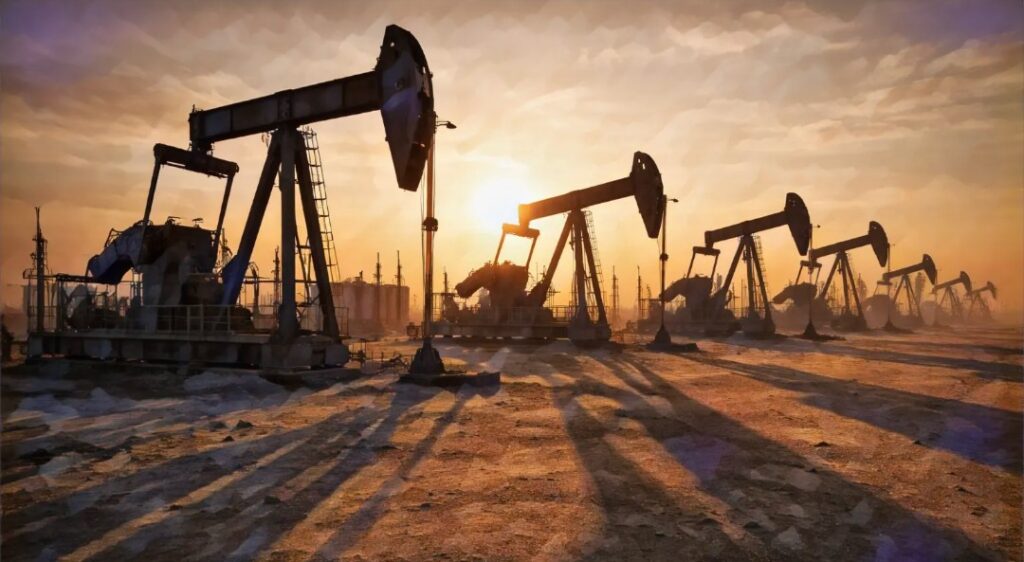
The start of 2026 was marked by political upheaval across two continents: fresh protests in Iran drawing comparisons among some Kazakh analysts to the country’s own Bloody January of 2022, and a U.S. military operation described by Washington as a law-enforcement action in Venezuela. The latter led to the arrest of Venezuelan President Nicolás Maduro and what some analysts are describing as a move toward far greater U.S. influence over Venezuela’s oil sector. Beyond its immediate implications for global oil supply and pricing, the geopolitical symbolism of the Venezuela operation is resonating in unexpected places, including Central Asia. Contrary to some early reports, the American intervention in Caracas was not bloodless. At least 40 Venezuelan security and military personnel were reportedly killed during the rapid offensive. Still, Kazakh political scientist Marat Shibutov argues that the perception of a swift and decisive U.S. action, especially in contrast to Russia’s grinding war in Ukraine, is symbolically damaging for Moscow. “This comparison with Russia’s prolonged conflict is not flattering,” Shibutov noted. “It creates a sensitive political backdrop for the Kremlin.” In Kazakhstan, where debates over foreign energy contracts have been simmering for years, the events in Venezuela are being closely watched. Political analyst Daniyar Ashimbayev referenced Astana’s past discussions about reviewing oil agreements with Western companies. “The topic of revising oil contracts is becoming less and less popular. At this rate, it could even be equated with extremism,” he commented ironically, underscoring how sensitive the issue has become. Some experts are also concerned that political shifts in Venezuela and Iran could destabilize the oil market in ways that would hit Kazakhstan’s economy hard. Kazakhstan derives a substantial share of its state budget revenues from the oil sector, making sustained price declines a direct fiscal risk rather than a purely market concern, analysts note. Energy analyst Olzhas Baidildinov points out that Venezuela holds the largest proven oil reserves in the world, approximately 300 billion barrels, more than 30 times Kazakhstan’s profitable reserves. “If liberal or Western-friendly governments come to power simultaneously in Venezuela and Iran, they could supply an additional 2-3 million barrels per day to the global market within the next 3-4 years,” he warned. Even without full regime change, he noted, easing sanctions or the return of “shadow exports” could push global prices down to $50-70 per barrel. “At such prices, it will be difficult to demonstrate economic growth and maintain momentum in Kazakhstan’s oil sector,” Baidildinov added. Financial analyst Arman Beisembayev offered a more bearish view. “If production volumes increase and the U.S. begins releasing more oil onto the market, including from Venezuela, then I’m afraid prices won’t stay at $60 per barrel. The base case is a drop to $50. A worst-case scenario could see prices at $40, or even lower.” But not everyone believes Venezuela can upend the market. Askar Ismailov, a Geneva-based advisor on Central Asia at the Global Gas Centre, remains skeptical. “Venezuelan crude is extremely heavy, difficult to extract, and expensive to transport. Historically, it depended on a...

2 months ago

Are Kazakhstan’s Small Businesses Really Leaving Over Taxes?

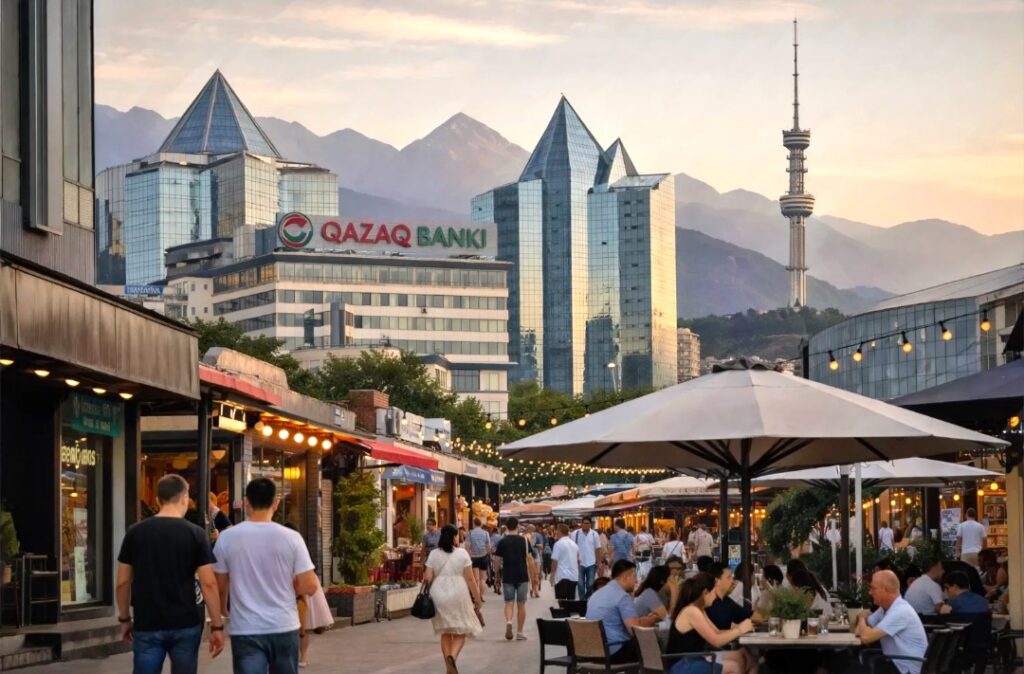
As Kazakhstan prepares for tax reforms set to take effect in 2026, a new wave of panic has surfaced in the national discourse, one suggesting that small businesses are facing a stark choice: shut down or relocate to neighboring countries promising more favorable tax environments. This narrative has gained traction twice in the second half of 2025. The first wave came in mid-autumn, triggered by reports suggesting that Kazakhstani entrepreneurs were looking to move operations to Kyrgyzstan or Uzbekistan. These claims quickly spread across Kazakh social networks, particularly Threads. However, early signs indicated that the alarm was not being sounded by small businesses themselves, but by representatives of the B2B services sector, especially consultants and accountants. Media outlets amplified comments that stirred fear, reinforcing what increasingly appeared to be media-driven panic. One such moment came in late September when the Kazakhstan Association of Tax Consultants hosted a presentation by its chairman, Saken Karin, titled “Tax Reality 2026: Opportunities and Risks.” Karin warned that the proposed reforms would “tear apart the B2B and B2C sectors,” criticizing state approaches to tax administration. Even then, experts argued that large-scale relocation of Kazakhstani businesses made little practical sense. “Which Kazakhstani businesses can realistically relocate to Kyrgyzstan? Probably only IT companies, which are location-independent. Most SMEs in Almaty rely on the quasi-public sector or the domestic market, which is considerably larger and wealthier than that of our neighbors,” said financier Rassul Rysmambetov. The numbers back this up: in 2024, the economy of Almaty alone reached $60 billion, compared to Kyrgyzstan’s national GDP of approximately $17.5 billion. Despite this, a second wave of panic is now gaining momentum, this time shifting focus to Uzbekistan as a destination for potential business migration. Once again, social networks, particularly Threads, are amplifying the noise, citing interviews such as one with tax expert Maxim Baryshev, who praised the tax systems of Uzbekistan and Kyrgyzstan. Baryshev represents the professional accounting organization Uchet.kz. His colleague, Uchet.kz manager Timur Abiev, has previously spoken out against what he views as unfounded panic surrounding tax reform. Despite growing anxiety on social media, government officials have yet to launch a strong counter-narrative. This lack of response reinforces the idea that panic is being stoked by peripheral sectors rather than the business community itself. When Finance Minister Madi Takiev was asked about claims of a mass relocation of small businesses to neighboring countries, he dismissed them as unfounded. He argued that tax thresholds and turnover requirements in those countries are broadly comparable to Kazakhstan’s and noted that businesses relocating abroad would still be subject to domestic taxation if their economic center of interest remained in Kazakhstan, making such moves economically unviable. As for the accounting industry, its vocal opposition to reform may be tied to structural weaknesses. Kazakhstan’s accounting sector has been slow to adapt to changing demands and is struggling to train enough professionals to meet market needs. The number of established training institutions remains small. A recent government meeting focused on SME support included plans...

3 months ago