
• KGS/USD = 0.01144 0%
  • KZT/USD = 0.00198 -0%
  • TJS/USD = 0.10857 -0.18%
  • UZS/USD = 0.00008 0%
  • TMT/USD = 0.28571 0%
  • KGS/USD = 0.01144 0%
  • KZT/USD = 0.00198 -0%
  • TJS/USD = 0.10857 -0.18%
  • UZS/USD = 0.00008 0%
  • TMT/USD = 0.28571 0%
  • KGS/USD = 0.01144 0%
  • KZT/USD = 0.00198 -0%
  • TJS/USD = 0.10857 -0.18%
  • UZS/USD = 0.00008 0%
  • TMT/USD = 0.28571 0%
  • KGS/USD = 0.01144 0%
  • KZT/USD = 0.00198 -0%
  • TJS/USD = 0.10857 -0.18%
  • UZS/USD = 0.00008 0%
  • TMT/USD = 0.28571 0%
  • KGS/USD = 0.01144 0%
  • KZT/USD = 0.00198 -0%
  • TJS/USD = 0.10857 -0.18%
  • UZS/USD = 0.00008 0%
  • TMT/USD = 0.28571 0%
  • KGS/USD = 0.01144 0%
  • KZT/USD = 0.00198 -0%
  • TJS/USD = 0.10857 -0.18%
  • UZS/USD = 0.00008 0%
  • TMT/USD = 0.28571 0%
  • KGS/USD = 0.01144 0%
  • KZT/USD = 0.00198 -0%
  • TJS/USD = 0.10857 -0.18%
  • UZS/USD = 0.00008 0%
  • TMT/USD = 0.28571 0%
  • KGS/USD = 0.01144 0%
  • KZT/USD = 0.00198 -0%
  • TJS/USD = 0.10857 -0.18%
  • UZS/USD = 0.00008 0%
  • TMT/USD = 0.28571 0%
05 December 2025

Our People > Anton Chipegin

Anton Chipegin's Avatar

Anton Chipegin

Anton was born and grew up in Bishkek, Kyrgyzstan. He worked as a television correspondent, editor and TV presenter on the main television channels of the republic, such as NTS and MIR 24, and also as an economic observer at international news agencies and other media resources of Kyrgyzstan.

Articles

Over Half a Million Tons of Cargo Blocked from Entering Kyrgyzstan in 2025 Over Phytosanitary Violations

In the first 11 months of 2025, Kyrgyzstan’s Department of Plant Protection, Quarantine, and Chemicalization detected 35 cases of non-compliance with phytosanitary requirements at border checkpoints. As a result, 562.5 tons of agricultural cargo were denied entry and returned to the countries of origin. According to the agency, authorities also blocked the import of more than 70,000 plant seedlings, over 11,000 flowers, and 136 cubic meters of lumber. Diplomatic notes regarding the violations were formally sent to China and the Netherlands. Violating shipments were either returned, destroyed, or decontaminated, the agency said. Officials emphasized that phytosanitary controls are a vital component of the country’s environmental safety strategy. These measures are intended to prevent the entry of dangerous quarantine organisms and to safeguard Kyrgyzstan’s agricultural sector and export capabilities. Border Challenges with Kazakhstan and Russia Despite efforts to maintain phytosanitary integrity, Kyrgyz exporters continue to face challenges at regional borders. A significant portion of Kyrgyz agricultural exports transit through Kazakhstan to reach Russia. However, Russian authorities frequently reject these shipments, citing non-compliance with their own import standards. This has led to growing criticism of Kyrgyz representatives at the Eurasian Economic Commission, with farmers accusing them of failing to effectively advocate for the interests of domestic producers. In response, the Department of Plant Protection and Quarantine has increased outreach to farmers and freight carriers, urging them to meet export quality standards and ensure that accompanying documents are completed correctly. Compounding the issue, cargo delays at the Kyrgyz-Kazakh border remain common, with transport operators sometimes waiting for several weeks. Similar bottlenecks occur periodically at the Kazakhstan-Russia border. Many Kyrgyz businesses view these delays as unjustified, given that Kyrgyzstan, Kazakhstan, and Russia are all members of the Eurasian Economic Union (EAEU), which guarantees the free movement of goods among member states.

17 hours ago

Kyrgyzstan Early Parliamentary Elections See 36.9% Voter Turnout

Kyrgyzstan held early parliamentary elections on November 30, with voter turnout reaching 36.9%, according to the Central Election Commission (CEC). Of the 4,294,000 registered voters, more than 1.5 million cast their ballots. Polling stations across the country and abroad closed at 8:00 p.m. local time. While an automated accounting system (AAS) was used during the voting process, Kyrgyz electoral law requires that electronic results be verified against manual counts. Members of precinct commissions conducted manual ballot counts after the polls closed. The CEC reported receiving 269 complaints regarding potential violations of electoral law during the campaign. These included 124 reports of campaign violations, 37 of the dissemination of defamatory information about candidates, eight related to the alleged use of administrative resources, 46 concerning possible vote buying, and 54 involving other types of violations. There were also reports of equipment malfunctions at several polling stations. Nevertheless, the CEC declared the elections valid. Elected candidates began receiving congratulations on December 1. The 2025 early elections marked a significant change in Kyrgyzstan’s electoral process. Party-list voting was fully abolished, and all candidates ran in single-mandate constituencies. President Sadyr Japarov cast his vote in Bishkek. He noted that the fully automated voting process this year significantly reduced opportunities for human interference in election outcomes. Japarov emphasized that citizens could vote using digital passports via the Tunduk app, and biometric registration took only a few minutes. While acknowledging that vote buying remains a challenge, Japarov stated that relevant authorities are responding quickly to any such incidents. He also noted that efforts to ensure the participation of Kyrgyz citizens abroad included doubling the number of overseas polling stations. A total of 100 polling sites were opened internationally, including in Russia, the United States, Kazakhstan, and several European countries.

4 days ago

Kyrgyz Authorities Tighten Control Over Meat Prices

Temporary state regulation of meat prices has been in effect in Kyrgyzstan for several months. Inspectors fine sellers who exceed the permissible price caps. The first violation typically results in a warning. The Ministry of Economy and Commerce recently extended the regulation. The price controls were due to expire last week, but officials argue that without oversight, rising meat prices could trigger an increase in the cost of other goods and the broader consumer basket. In Bishkek, the government has set maximum retail prices at $7.50 per kilogram for lamb and $7.70 for beef. Price caps in the regions are slightly lower. According to sellers, rising prices are driven not by profit motives but by external pressures, prolonged drought, higher fuel prices, increased transportation costs, and a surge in meat exports, especially to Uzbekistan. “Meat is indeed becoming more expensive, mainly because it is being exported abroad. We need to provide for ourselves first. When we sell at state-set prices, it becomes unprofitable, we operate at a loss. We still have to pay rent, electricity, patent fees, security, and water,” said Mirlan Tursunaliyev, a meat seller in Bishkek, speaking to The Times of Central Asia. He added that vendors hope the price caps will be revised to better reflect their operational costs. Officials from the Antimonopoly Regulation Service note that some sellers are unwilling to comply with legal requirements such as submitting documents, updating price tags, or paying fines. In some cases, enforcement raids are carried out jointly with police. According to the agency, meat prices in Kyrgyzstan typically rise between May and September. Authorities expect demand to decline toward the end of the year, as is customary in winter. A seasonal drop in demand could also bring down production costs.

2 weeks ago

Energy-Saving Measures Introduced in Kyrgyzstan: Who Will Be Affected?

Kyrgyzstan's Cabinet of Ministers has implemented a series of measures aimed at improving energy efficiency and ensuring the rational use of electricity. The move comes amid an electricity shortage caused by persistently low water levels in the country’s main reservoirs. What’s Happening? Officials have reported a record surge in electricity consumption this year, coupled with a continuing regional drought. In response, the government has ordered a restriction on indoor and outdoor lighting between 6p.m. and 6a.m. However, the Cabinet emphasized that the new measures will not apply to strategic facilities, 24-hour operations, or institutions responsible for defense, security, health care, social services, or other critical public functions. “These measures do not affect processes essential to the technological operation of buildings,” stated the government’s press service. According to official estimates, the restrictions could save approximately 40 million kilowatt-hours of electricity per month. This year, Kyrgyzstan has already recorded electricity consumption that exceeds last year’s figures by 1 billion kilowatt-hours. The government attributes the increased demand to the launch of new industrial enterprises, the expansion of social and educational institutions, and ongoing residential construction. The situation is further worsened by declining water inflow to the Naryn River, which feeds the Toktogul Reservoir and its namesake hydroelectric plant. The reservoir's water level is currently 2 billion cubic meters lower than it was during the same period last year. “The Cabinet’s primary objective is to ensure rational water use in the Toktogul Reservoir and reduce the load on the energy system,” the government said. The goal is to prevent the reservoir from reaching a critical low. Who Will Be Responsible? The Ministry of Energy has mandated that all government agencies and state-owned entities switch off power in the evenings and at night once staff have left their workplaces. Heads of municipal bodies and public institutions will bear personal responsibility for any violations of the new regulations. How Are Residents Responding? For now, residents in the private sector report that little has changed. However, there are growing concerns that household power limits may soon be tightened. “They say our electricity consumption will be restricted. It used to be capped at 5 kilowatts at a time, but now they’re talking about reducing it to 3. That would make things much harder, especially if it’s a cold winter,” said Alexander Verkholantsev, a resident of central Bishkek, who spoke with The Times of Central Asia. Authorities have already announced that electricity restrictions for residential consumers during peak hours will be in place from October 2025 through March 2026. Despite this, many households still exceed the 3-kilowatt threshold.

2 weeks ago

Kyrgyzstan Launches Autumn Sowing of Winter Crops on 250,000 Hectares

Kyrgyzstan has launched its autumn sowing campaign, with winter crops expected to cover 250,000 hectares, according to the Ministry of Water Resources, Agriculture, and Processing Industry. To date, over 81,000 hectares, approximately one-third of the planned area, have already been sown with wheat and barley. “Sowing is underway in all regions of the country. The necessary agricultural equipment has been deployed, and a sufficient amount of seed material has been provided to meet the targets,” the ministry said. Experts note that work is proceeding within optimal agrotechnical timelines, with the campaign scheduled for completion by the end of November. In the Chui and Issyk-Kul regions, more than 40% of the targeted areas have already been sown, despite the campaign beginning only a month ago. In an experimental effort, one farm in the Chui region sowed 50 hectares with the Canadian wheat variety “Jersey,” known for its high yield and grain quality. Farmers state that adherence to agrotechnical standards, including timely soil preparation and the application of modern cultivation techniques, is crucial for achieving strong harvests. In the Talas region, farmers have already cultivated more than a third of the targeted sowing area. Other regions across the country are also progressing on schedule.

3 weeks ago

Citizens of Central Asia Face New Entry Restrictions To Russia and the U.S.

Citizens of Central Asian countries are encountering a wave of new travel restrictions from two major global powers, Russia and the United States. In recent weeks, Moscow and Washington have both introduced or expanded measures that complicate entry for citizens of the region, raising concerns about migration rights, bilateral relations, and regional security. Russia Tightens Border Rules Starting June 30, 2025, citizens from visa-free countries, including Kazakhstan, will be required to obtain a special QR code to enter Russia. The code must be secured in advance via the Gosuslugi RuID app, at least 72 hours before travel, or four hours in emergency cases. The app is not yet operational, but Russian Prime Minister Mikhail Mishustin has confirmed its planned launch on the same date. While Russia maintains visa-free arrangements with over 30 countries, including Argentina, Brazil, Israel, and all CIS members, these new digital entry requirements apply broadly. Exceptions include citizens of countries already subject to visa regimes, diplomats, and citizens of Belarus, a Union State member. Additionally, as of January 1, 2025, the allowable visa-free stay in Russia for citizens of these countries has been reduced from 90 days per half-year to 90 days per calendar year. Many Kazakhstani travelers fear that the new rules will result in long queues and technical delays at border crossings. More broadly, critics point out that the move undermines the spirit of the Eurasian Economic Union (EAEU), whose member states, Kazakhstan, Kyrgyzstan, Armenia, Belarus, and Russia, are supposed to enjoy facilitated mobility. Response to the Crocus City Hall Attack The changes come in the wake of the March 22, 2024 terrorist attack at Moscow’s Crocus City Hall, which left at least 145 dead and more than 500 injured. The suspects in the attack were reportedly citizens of Tajikistan, sparking a wave of anti-migrant sentiment in Russia. According to Temur Umarov, a Berlin-based political analyst at the Carnegie Center, Russian authorities are prioritizing security over economic necessity. "Russia is doing everything possible to reduce the number of migrants from Central Asia," he said, noting the vital role these workers play in several Russian industries. Regional Backlash Public figures and officials in Kyrgyzstan, Uzbekistan, and Tajikistan have expressed frustration over Russia’s tightened migration policy. In Kyrgyzstan, the Ministry of Foreign Affairs lodged a formal protest with the Russian ambassador following a widely publicized incident in which Kyrgyz citizens were forcibly removed from a Moscow bathhouse. Member of Parliament Zhana Akayev strongly condemned the treatment of Kyrgyz nationals: “Partners and allies do not behave like this. They are humiliating our citizens,” he said. Tajik Foreign Minister Sirojiddin Muhriddin criticized Russia’s approach as inhumane and called for migration policies that respect mutual interests and fundamental rights. In Uzbekistan, several bloggers have gone further, calling for entry bans on Russian public figures, including Foreign Ministry spokeswoman Maria Zakharova, for alleged chauvinistic remarks. Kazakhstan has taken a more measured stance. Aibek Smadiyarov, a spokesman for the Kazakh Foreign Ministry, emphasized that the QR code system does not constitute a...

6 months ago

Lenin Falls in Osh: Central Asia Redefines Its Soviet Legacy

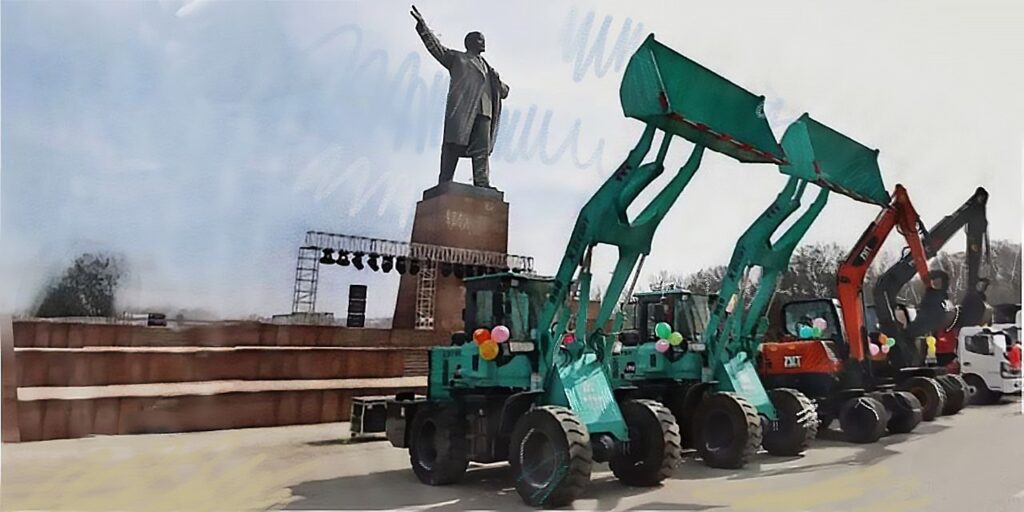
The recent removal of a towering 23-meter-tall monument to Vladimir Lenin in Osh, Kyrgyzstan, has ignited heated debate both domestically and abroad. While many are surprised the monument remained in place for more than three decades after the fall of the Soviet Union, its dismantling is part of a broader regional trend of de-Sovietization, a complex process involving the renaming of cities, removal of Soviet-era symbols, and the reassertion of national identity across Central Asia. A Symbol Removed, A Debate Ignited [caption id="attachment_32769" align="aligncenter" width="2560"] Lenin Monument in Osh, October 2024; image: TCA, Jonathan Campion[/caption] On June 7, Osh authorities dismantled what was once the tallest Lenin statue in Central Asia. Originally installed in 1975, the monument is to be relocated to a city park, according to the local government. Officials stressed the move was intended to improve the city’s architectural landscape, not to make a political statement, and have warned against "politicizing" the issue. Despite official reassurances, the move has sparked sharp reactions on social media and in the press, with Russian media outlets characterizing the relocation as an anti-Russian gesture. Generational divides have become apparent: younger residents tend to support the removal, while older citizens have expressed dismay over what they see as the erasure of history. “It’s a shame. It was more than a monument, it was part of our lives,” Elena, a local schoolteacher told The Times of Central Asia. “We joke that Lenin crossed the ‘red line’ and got demolished.” Irina Bayramukova, a 68-year-old public figure, called the decision a mistake. “The Lenin monument by Nikolai Tomsky was not only artistically significant, it represented an era. Removing it is like declaring war on those who identify with that past,” she told TCA. Kyrgyzstan, like other Central Asian republics, has been distancing itself from its Soviet legacy since gaining independence in 1991. One of the earliest symbolic moves was the renaming of the capital, once called Frunze after a Bolshevik military leader, back to Bishkek, a modified version of its pre-Soviet name. A Museum to Mikhail Frunze still stands in Bishkek, where the thatched-roof hut of his boyhood was purportedly transported brick by brick. A supporter of Stalin’s rival Zinoviev, when forced to undergo routine surgery by Uncle Joe in 1925, Frunze “mysteriously” died of chloroform anesthetic poisoning. Redefining History [caption id="attachment_32778" align="aligncenter" width="2560"] Lenin Monument in Bishkek; image: TCA, Stephen M. Bland[/caption] Originally erected in 1984 in the Central Square of Bishkek, a Lenin statue was relocated behind the State Historical Museum in 2003. As previously reported by TCA, earlier this year a debate on removing the monument altogether flared up. In 2022, the National Historical Museum of the Kyrgyz Republic in Bishkek finally reopened its doors after being closed in 2016 for renovations which were planned to take less than a year but ended up taking six years. Several government officials were charged with misappropriating funds designated for the renovations, with former Prime Minister Sapar Isakov sentenced to 18 years in prison. Reportedly, over...

6 months ago

Kyrgyz Security Agency Condemns Osh Mayor’s City Toll Plan

Kyrgyzstan’s State Committee for National Security (SCNS) has sharply criticized a controversial proposal by the mayor of Osh, the country's second-largest city, to introduce an entry fee for vehicles arriving from other regions. Mayor Jenishbek Toktorbayev raised the idea earlier this week during a municipal meeting focused on identifying new sources of revenue for the city budget. Arguing that Osh cannot rely indefinitely on central government support from Bishkek, Toktorbayev floated the possibility of charging motorists for access to the city. According to the mayor, Osh is home to over 500,000 residents, with the population exceeding 800,000 when accounting for daily inflows from neighboring areas. “About 56,000 vehicles enter Osh each day, leading to traffic jams, accidents, and air pollution,” he said. Toktorbayev proposed charging 50–100 KGS (approximately $0.60-$1.15) per car and 100-150 KGS per truck, estimating that such fees could generate around 2 million KGS daily. This could add up to an additional 3 billion KGS (roughly $34.5 million) in annual revenue for the city budget. However, the SCNS issued a strong rebuke, calling the idea unacceptable. In a statement cited by local media, the agency warned that the financial burden would disproportionately affect ordinary citizens, particularly low-income families. It added that higher delivery costs would likely be passed on to consumers, driving up prices for goods and services. The Committee urged all mayors and local officials to refrain from proposing such "crazy ideas" and instead focus on addressing the real challenges facing their constituents​. Following public backlash and the SCNS statement, the Osh municipal government's Facebook page, which previously contained details about the mayor’s proposal, has become inaccessible. The notion of charging vehicle entry fees is not new in Kyrgyzstan. Last year, a similar proposal was floated for Bishkek as a potential solution to the capital’s worsening traffic congestion. However, President Sadyr Japarov rejected the idea, instead ordering the expansion of road infrastructure and the construction of new parking facilities. The Times of Central Asia has previously reported on Mayor Toktorbayev’s active economic agenda. Notably, his urban development plans have sparked public opposition, including from the head of the Russian Orthodox Church in Kyrgyzstan, who urged city authorities not to demolish a historic cemetery to make way for a new road​.

8 months ago

USAID Freeze Leaves Central Asian NGOs in Limbo

On January 20, U.S. President Donald Trump signed an executive order suspending funding for most foreign aid programs for 90 days. The move has raised concerns among non-governmental organizations (NGOs) in Central Asia, particularly in Kazakhstan, which has long benefited from U.S. assistance. The order reads: “All heads of departments and agencies responsible for United States foreign development assistance programs shall immediately suspend new commitments and disbursements of development assistance funds to foreign countries and non-governmental implementing organizations, international organizations, and contractors pending a review of such programs for effectiveness and consistency with United States foreign policy to be conducted within 90 days of this order.” Following this directive, U.S. Secretary of State Marco Rubio instructed all diplomatic and consular agencies to issue “stop-work orders” for nearly all active foreign assistance programs. Impact on Kazakhstan and Central Asia According to reports, the funding freeze is expected to affect university grant programs, entrepreneurial initiatives, gender diversity projects, and environmental efforts. The Trump administration has justified the decision by citing the need to reassess spending priorities. Kazakhstan and other Central Asian countries have received U.S. aid for decades. USAID, in particular, has played a significant role in regional development. The agency’s website states: “In Kazakhstan, USAID promotes the U.S. government's Central Asia Strategy, which supports and strengthens the sovereignty and independence of Central Asian countries, both individually and collectively. It also promotes regional connectivity between Central Asia and Afghanistan, advances the rule of law and respect for human rights, and improves the climate for U.S. investment to foster greater regional stability and prosperity.” Since 1992, USAID has funded projects in Kazakhstan focusing on economic diversification, energy, environmental protection, healthcare, and support for media and NGOs. In addition to funding NGOs, USAID collaborates with KazAID, Kazakhstan’s foreign aid agency operating under the Ministry of Foreign Affairs. Reactions from NGO Leaders Denis Dzhivaga, director of the Kazakhstan International Bureau for Human Rights and Rule of Law (KIBHR), told The Times of Central Asia that the aid suspension had been anticipated. “Such a measure was expected," said Dzhivaga. "Even during the election campaign and Trump’s previous presidency, it was clear that he prioritized domestic policy over foreign influence. All NGOs working with USAID and receiving State Department assistance have received letters to halt projects.” However, Dzhivaga noted that KIBHR has limited cooperation with U.S. agencies, so the impact on his organization will be minimal. “In any case, this will negatively affect the NGO sector. The suspension is for three months pending an audit, but even USAID does not seem to know what will happen afterward. I don’t think U.S. assistance to Kazakhstan and Central Asia will stop entirely, but certain projects may be reconsidered - especially those related to discrimination, gender issues, and LGBT rights, as President Trump has already expressed opposition to such initiatives.” Replacing U.S. funding with alternative grants will be challenging, he added. “European donors are already struggling to finance Ukraine, so they are unlikely to allocate substantial funds elsewhere. Many U.S.-backed...

10 months ago

How Kazakhstan and Kyrgyzstan Have Reacted to Pavel Durov’s Arrest

Pavel Durov, the founder of Telegram, was arrested on August 24 at Le Bourget airport in Paris. He is suspected of illegal activities including enabling drug trafficking, crimes against minors, and fraud. His arrest has been met with shock around the world, especially in countries where censorship and internet control remain pressing. According to various sources, the French authorities suspect Durov of being involved in activities related to the distribution of illegal content through the Telegram messenger. The investigation concerns materials related to extremism, copyright infringement, and alleged assistance to criminal groups. The investigation lasted several months. In response, Telegram said that it has always strictly complied with the law, and is ready to cooperate with French authorities to clarify the situation, expressing hope for a fair investigation and Durov's speedy release. In Kazakhstan, where Durov has long been known for his stance against censorship, his arrest has not gone unnoticed. The Minister of Digital Development, Innovation and Aerospace Industry, Zhaslan Madiev, made a statement that said: “We had a positive experience interacting with the Telegram team. We have often successfully and promptly resolved issues related to the leakage of personal data, the fight against drug trafficking, and the suppression of other illegal activities in the messenger. The Telegram team has always demonstrated a willingness to cooperate to ensure the safety of citizens while remaining true to its principles of protecting privacy and freedom of speech.” He also noted that on his last visit to Kazakhstan, Pavel Durov became one of the trustees of the IQanat project, which aims to support rural children in Kazakhstan. The project has awarded 12 grants worth $365,000. Madiev continued: “He did not just allocate money but personally participated in studying the educational process, selecting children, familiarizing himself with their lives. I am grateful to Pavel's team for caring, and his sincere interest in the development of the children. We hope for a speedy resolution of this situation.” The Union of Journalists of Kazakhstan also expressed support for Durov, calling on the French authorities to ensure respect for his fundamental rights and freedoms, and to conduct an objective investigation into the case. “The detention of Telegram founder Pavel Durov has caused concern among all those who fight for freedom, democracy, and the principles of free speech. It is important to take into account that in several countries where officially registered independent democratic media regularly face persecution or cease to exist at all, where blocking of websites is regularly practiced, Telegram, created by Pavel Durov, is currently almost the only source of bringing to the public objective and reliable information free from censorship,” the statement said. The Union of Journalists of Kazakhstan recalled that in 2018, Pavel Durov received an award from the Union of Journalists of Kazakhstan, precisely for his principled position against censorship. His arrest could negatively affect freedom of speech and human rights in developing countries with fragile democracies. The response in Kyrgyzstan was more restrained than that of the Kazakhstani authorities. None...

1 year ago