• KGS/USD = 0.01143 0%
  • KZT/USD = 0.00216 0%
  • TJS/USD = 0.10633 -0.28%
  • UZS/USD = 0.00008 0%
  • TMT/USD = 0.28571 0%
  • KGS/USD = 0.01143 0%
  • KZT/USD = 0.00216 0%
  • TJS/USD = 0.10633 -0.28%
  • UZS/USD = 0.00008 0%
  • TMT/USD = 0.28571 0%
  • KGS/USD = 0.01143 0%
  • KZT/USD = 0.00216 0%
  • TJS/USD = 0.10633 -0.28%
  • UZS/USD = 0.00008 0%
  • TMT/USD = 0.28571 0%
  • KGS/USD = 0.01143 0%
  • KZT/USD = 0.00216 0%
  • TJS/USD = 0.10633 -0.28%
  • UZS/USD = 0.00008 0%
  • TMT/USD = 0.28571 0%
  • KGS/USD = 0.01143 0%
  • KZT/USD = 0.00216 0%
  • TJS/USD = 0.10633 -0.28%
  • UZS/USD = 0.00008 0%
  • TMT/USD = 0.28571 0%
  • KGS/USD = 0.01143 0%
  • KZT/USD = 0.00216 0%
  • TJS/USD = 0.10633 -0.28%
  • UZS/USD = 0.00008 0%
  • TMT/USD = 0.28571 0%
  • KGS/USD = 0.01143 0%
  • KZT/USD = 0.00216 0%
  • TJS/USD = 0.10633 -0.28%
  • UZS/USD = 0.00008 0%
  • TMT/USD = 0.28571 0%
  • KGS/USD = 0.01143 0%
  • KZT/USD = 0.00216 0%
  • TJS/USD = 0.10633 -0.28%
  • UZS/USD = 0.00008 0%
  • TMT/USD = 0.28571 0%

Our People > Bruce Pannier

Bruce Pannier's Avatar

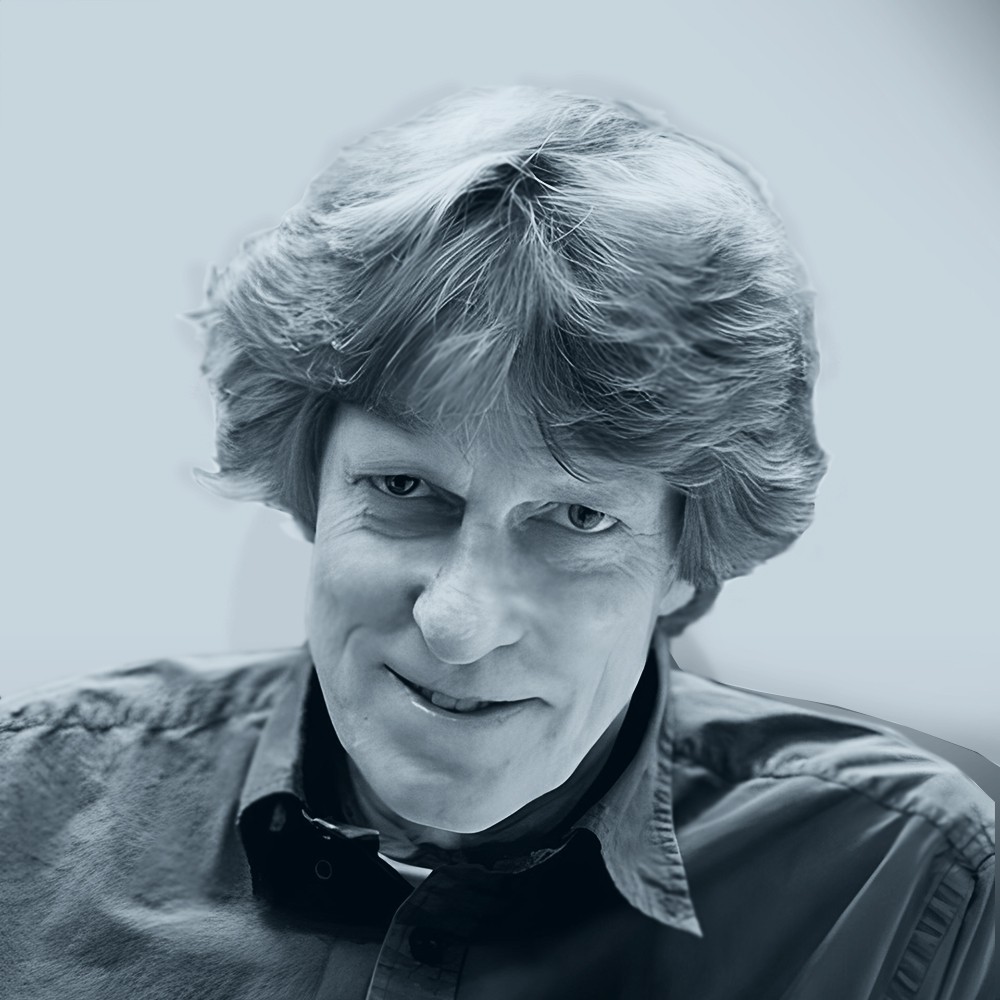
Bruce Pannier

Bruce Pannier is a Central Asia Fellow in the Eurasia Program at the Foreign Policy Research Institute, the advisory board at the Caspian Policy Center, and a longtime journalist and correspondent covering Central Asia. For a decade, he appeared regularly on the Majlis podcast for RFE/RL, and now broadcasts his Spotlight on Central Asia podcast in partnership with The Times of Central Asia.

Articles

Behind Turkmenistan’s Neutrality, Quiet U.S. Military Ties Endure

In late January, U.S. Special Envoy for South and Central Asia, Sergio Gor visited Turkmenistan. Accompanying Gor was U.S. Secretary of the Army Daniel Driscoll. Driscoll’s presence in Turkmenistan, a country with a roughly 1,150-kilometer border with Iran, sparked some speculation that his visit was related to escalating tensions between Washington and Tehran. But while it is unusual for any top foreign military officials to visit Turkmenistan, U.S. military officials have stopped by Turkmenistan relatively often over the course of the last 30 years. Neutral Turkmenistan A good trivia question about Central Asia is, which country was the first to join NATO’s Partnership for Peace (PfP) program? The answer is Turkmenistan, in May 1994, and NATO had just created the PfP program in January of that year. However, in December 1995, the UN approved giving Turkmenistan official status as a neutral country. Turkmenistan’s president at the time, Saparmurat Niyazov, said as part of that neutral status, Turkmenistan would not join any military blocs or join in aggression against another country. Then came the September 11, 2001, terrorist attacks on the United States and U.S. President George Bush Jr’s remark that “you’re either with us or against us.” Central Asia, with its nearly 2,400-kilometer border with Afghanistan, suddenly became a frontline in Washington’s campaign against terrorist groups inside Afghanistan. The other Central Asian countries, which had watched with dread as the Taliban advanced toward Central Asian borders, quickly expressed their support. Kyrgyzstan, Tajikistan, and Uzbekistan offered the use of military bases to the U.S. and NATO forces that were rapidly being assembled. Turkmenistan took a different position on events in Afghanistan. Remaining true to its UN-recognized neutrality status, Turkmenistan engaged with the Taliban and with the government of Burhanuddin Rabbani, whom the Taliban had ousted from power. A round of peace talks between the two Afghan parties was held in the Turkmen capital, Ashgabat, in March 1999. After 9/11, Turkmenistan agreed to allow U.S. planes carrying non-lethal cargo to transit through Turkmen airspace and to refuel at Ashgabat airport. But officially, that was as far as the Turkmen government was willing to become involved. The U.S. had already established a military connection with Turkmenistan. The head of the U.S. Central Command, General Tommy Franks, visited Turkmenistan in September 2000 and again in May 2001. U.S. Secretary of State Donald Rumsfeld visited Turkmenistan in April 2002. General Franks followed in August that year, promising to help Turkmenistan fight the illegal narcotics trade. The United States gave Turkmenistan two small naval patrol boats for use in the Caspian Sea in 2002, and in 2003, gave 40 Russian-made off-road vehicles to Turkmenistan’s border guards. Reports started to appear stating that Turkmenistan’s military cooperation with the United States was quietly deepening. The Turkmen government had said when agreeing to allow overflights and refueling that no foreign troops would be stationed in Turkmenistan. But it turned out that a small U.S. Air Force team, only about seven servicemen, was stationed in Ashgabat to help refuel U.S....

3 months ago

Uzbekistan Fires Counter-Narcotics Chief as Drug Trade Surges

In late January, Uzbek President Shavkat Mirziyoyev sacked a series of high-ranking officials in the Interior Ministry, National Guard, and the Emergency Situations Ministry. Their dismissals for corruption overshadowed the firing of the director of the Agency for Control of Narcotics and Illegal Firearms, who was let go for failing badly to combat illegal trafficking and use of drugs. Poor Results Ravshan Mamatov was appointed director of the National Center for Narcotics Control in August 2024. In July 2025, a presidential decree transformed the center into the Agency for Control of Narcotics and Illegal Firearms. On January 27, President Mirziyoyev criticized the work of the Narcotics Control Agency and warned Mamatov to engage in more than simply “analytical work and international cooperation.” Mirziyoyev dismissed Mamatov the next day, and it was not a surprise. Exactly two weeks earlier, Bahodir Kurbanov, the head of Uzbekistan’s State Security Service (SGB), spoke at a session of the country’s Security Council, chaired by President Mirziyoyev. Kurbanov detailed security measures along Uzbekistan’s borders, including the use of military surveillance drones. The security chief also spoke about illegal narcotics, noting the amount of drugs seized in 2024 was some 1,700 kilograms and that figure more than doubled to 3,600 kilograms in 2025. Kurbanov noted the 2025 figure included more than 180 kilograms of synthetic drugs and more than one million doses of psychotropic drugs. Additionally, the number of people arrested for illegal narcotics went from some 2,600 in 2024 to some 4,500 in 2025. In his January 27 comments, President Mirziyoyev said that during the last three months, the authorities in the capital Tashkent, had detained members from approximately 50 major narcotics trafficking groups and seized some 500 kilograms of illegal drugs. “Last year, more than 1,500 drug users were officially registered in the capital,” Mirziyoyev said, noting, “The saddest part is that the number of drug addicts living in the shadows is even higher.” The Uzbek president added that most were young people and that “in their quest to raise money, drug addicts naturally resort to crime.” Mirziyoyev also criticized the penal system, remarking that a significant number of people convicted for illegal narcotics were released from jail before serving even half their sentences. Mirziyoyev said that this has led to a 25% increase in the number of repeat offenders. Mamatov addressed Uzbekistan’s parliament on December 17, admitting the amount of synthetic drugs being seized had increased phenomenally during the last five years and that the number of crimes involving illegal narcotics had doubled during that time. Mamatov claimed that in a number of cases, “drug trafficking was being facilitated by officials,” though he did not name any specific officials. A Regional Problem The other Central Asian countries are facing the same problems as Uzbekistan. The amounts of drugs seized and people arrested have been growing in the last few years and continue to increase. Part of the problem is that the region’s counter-narcotics agencies are facing a new situation in combating the illegal drug...

3 months ago

Analysis: Three Decades of Parliamentary Reform in Central Asia — and What Changed

Kazakhstan’s President Kassym-Jomart Tokayev announced his reform plans on January 20, including structural changes to the government. Arguably, one of the least consequential of those changes is replacing the current bicameral parliament with a unicameral parliament. Across Central Asia, over the last 35 years, parliaments have repeatedly switched from unicameral to bicameral parliaments, or vice versa, the number of deputies has increased and decreased, and in some cases, parallel bodies have come into existence and later disappeared. Kazakhstan When the Soviet Union collapsed in late 1991, each of the former republics, including the Central Asian countries of Kazakhstan, Kyrgyzstan, Tajikistan, Turkmenistan, and Uzbekistan, had a unicameral, republican Supreme Soviet elected in 1990. These Supreme Soviets continued functioning after independence until 1994, and in the case of Kyrgyzstan and Tajikistan, until 1995. In Kazakhstan, in December 1993, the majority of the 360 deputies in the Supreme Soviet voted to dissolve the body. In March 1994, there were elections to the new parliament (Supreme Kenges) that had 177 seats. During the tumultuous year of 1995, the parliament was dissolved by then-President Nursultan Nazarbayev, who ruled by decree until snap parliamentary elections in December of that year. However, on August 29, 1995, voters approved a new constitution in a national referendum. That constitution created a bicameral parliament with 67 deputies in the Mazhilis, the lower house, and 50 deputies in the Senate, 10 of them directly appointed by the president. Deputies to the Mazhilis were chosen in popular elections. Senators were chosen in indirect elections involving deputies from local, provincial, and municipal councils of large cities. In the snap parliamentary elections of October 1999, 10 seats were added and chosen by party lists, while the original 67 continued to be contested in single-mandate districts. That structure lasted until 2007. Constitutional amendments adopted in late May that year increased the number of seats in the Mazhilis to 107, of which 98 were to be chosen by party lists. Nazarbayev’s Nur-Otan party won all 98 of the party list seats in the August elections. The remaining nine representatives came from the Assembly of Peoples of Kazakhstan, a group representing the various ethnic groups in Kazakhstan that Nazarbayev created in 1995. Eight additional members of the Assembly were given seats in the Senate. The Assembly held its own elections to fill those seats. Kazakhstan conducted a constitutional referendum in June 2022, in part aimed at mollifying discontent that lingered from the mass unrest in early January that year, which left 238 people dead. Some amendments stripped away powers in the executive branch that had accumulated during the 28 years Nazarbayev was president, and more power was given to parliament. Another amendment removed the nine Mazhilis seats reserved for members of the Assembly of Peoples of Kazakhstan. One amendment reduced the number of Senate members appointed by the president back to 10, after it had been raised to 15 under a 2007 amendment. Kyrgyzstan A referendum in Kyrgyzstan on constitutional amendments in October 1994 created a bicameral...

3 months ago

Kazakhstan Warns of Severe Water Shortages as Syr Darya Levels Drop

Kazakhstan’s Minister of Water Resources and Irrigation, Nurzhan Nurzhigitov, gave a sober warning to the country on January 13 that this year there could be significantly less water for agriculture in the southern parts of the country. Nurzhigitov said that as of January 12, there was 1.9 billion cubic meters (bcm) less water in the reservoirs of southern Kazakhstan than on that date in 2025. The Importance of the Syr-Darya These areas are part of the Syr Darya Basin. The Syr Darya is one of Central Asia’s two large rivers, the other being the Amu Darya to the south, which runs along the Central Asia-Afghan border. Equally alarming for Kazakhstan, Nurzhigitov noted that in the mountains of upstream neighboring countries, Kyrgyzstan and Tajikistan, where the Syr Darya originates, officials are also reporting low levels in reservoirs. According to the Kazakh Ministry of Water Resources and Irrigation, the reservoirs in those two countries are a combined 3.2 bcm lower than last year at this time. Kyrgyzstan’s Energy Minister Taalaybek Ibrayev said in November 2025 that the water level in the massive Toktogul reservoir was less than 11 bcm, nearly 2 bcm lower than in November 2024, and only at about 60% of its 19.5 bcm capacity. Water from the reservoir is released into the Naryn River, which eventually merges with the Syr Darya in Uzbekistan, and flows on further into Kazakhstan. The Toktogul hydropower plant (HPP) depends on that water to supply some 40% of Kyrgyzstan’s domestically-produced electricity, and Ibrayev called on Kyrgyzstan’s citizens to conserve electricity and help the water in Toktogul accumulate before the 2026 agriculture season. Tajikistan’s state power company, Barqi Tojik, also called in November for the country’s citizens to save electricity as the water level at the Nurek HPP’s reservoir was low. The Nurek reservoir uses water from the Vakhsh River that does not flow into the Syr Darya, but the water shortage problems at Nurek are similar throughout Tajikistan, including tributaries that do flow into the Syr Darya. Conservation and New Wells In Kazakhstan, Nurzhigitov said inspections and repairs of irrigation canals were currently underway. He also mentioned that in December, Deputy Prime Minister Kanat Bozumbayev had ordered officials in the Kyzylorda, Turkestan, and Zhambyl provinces to hold meetings with farmers and herders to discuss water conservation. There were also talks with farmers about planting crops that required less water. Water limits would be announced in February, Nurzhigitov said, and in March the Agriculture Ministry would decide how much land to sow for this year’s crops based on expected water supplies during the spring-summer period. Nurzhigitov added that work was being done to increase the use of underground water, which he claimed could amount to some 15.7 bcm of extra water for Kazakhstan annually. Currently, Nurzhigitov said, only some 7-10% of this underground water is being used. Bleak Forecast Kazakhstan gathered a record harvest in 2025, some 27.1 million tons of grain, despite planting less wheat. Given the reduction in precipitation in Central Asia in...

4 months ago

Deadly Clashes and Gold Mines Fuel Tensions on the Tajik-Afghan Border

Along a short strip of the Tajik-Afghan border, there has been a lot of activity in recent months, including the most serious incidents of cross-border violence in decades. Most of this activity has involved Tajikistan’s Shamsiddin Shohin district, a sparsely inhabited area where the population ekes out a living farming and herding in the foothills of the Pamir Mountains. Why the situation changed so suddenly is not entirely clear, but it is clear that the district is now the hot spot along the Tajik-Afghan frontier. A Dubious Post-Independence Reputation The Shamsiddin Shohin district is in Tajikistan’s southwestern Khatlon region. The district is located near the place where Afghan territory starts to make its northern-most protrusion. The elevation across most of the district is between 1,500-2,000 meters. The district is about 2,300 square kilometers and has a population of some 60,000. Shuroobad, population roughly 11,000, is the district capital, and the entire district was once called Shuroobad. It was renamed Shamsiddin Shohin in 2016 to honor the Tajik poet and satirist of the late 19th century, who was born in the area. Tajikistan and Afghanistan are divided by the Pyanj River, which further downstream merges with other rivers to become the Amu Darya, known to the Greeks as the Oxus, one of Central Asia’s two great rivers. [caption id="attachment_41640" align="aligncenter" width="2560"] The road to Shuroobad; image: TCA, Stephen M. Bland[/caption] The Tajik-Afghan frontier is about 1,360 kilometers. Some 70 kilometers is the southern border of the Shamsiddin Shohin district, but it is the first area, traveling downstream, where the current of the Pyanj River slows significantly. In the first years after the Bolshevik Revolution broke out, many Tajiks fled through what is now the Shamsiddin Shohin district into Afghanistan. Some seventy years later, thousands of Tajiks again fled through the district into Afghanistan when the newly independent state of Tajikistan was engulfed by civil war. The United Tajik Opposition (UTO), the group fighting against the Tajik government during the 1992-1997 civil war, made frequent use of the Shamsiddin Shohin area to bring weapons from Afghanistan. UTO fighters had safe havens in Afghanistan, and they often made their way through this district, retreating south of the border and returning via the district once they were rested and resupplied. There are only a few roads in the Shamsiddin Shohi district. The European Union funded the construction of the Friendship Bridge, which was completed in 2017, and connects the district to Afghanistan. It has often been closed by the Tajik authorities due to security concerns emanating from the Afghan side of the border. Anyone crossing illegally from Afghanistan into the Shamsiddin Shohin district could easily hide in the rugged hills and abundance of caves in the area, making it ideal for smugglers and other intruders. Aside from a few small villages along the banks, there are no settlements for 20 to 30 kilometers north of the river. Border posts were built during the time Tajikistan was a Soviet republic. Russian border guards remained in...

4 months ago