
• KGS/USD = 0.01144 0%
  • KZT/USD = 0.00205 0%
  • TJS/USD = 0.10685 -0.37%
  • UZS/USD = 0.00008 0%
  • TMT/USD = 0.28490 0%
  • KGS/USD = 0.01144 0%
  • KZT/USD = 0.00205 0%
  • TJS/USD = 0.10685 -0.37%
  • UZS/USD = 0.00008 0%
  • TMT/USD = 0.28490 0%
  • KGS/USD = 0.01144 0%
  • KZT/USD = 0.00205 0%
  • TJS/USD = 0.10685 -0.37%
  • UZS/USD = 0.00008 0%
  • TMT/USD = 0.28490 0%
  • KGS/USD = 0.01144 0%
  • KZT/USD = 0.00205 0%
  • TJS/USD = 0.10685 -0.37%
  • UZS/USD = 0.00008 0%
  • TMT/USD = 0.28490 0%
  • KGS/USD = 0.01144 0%
  • KZT/USD = 0.00205 0%
  • TJS/USD = 0.10685 -0.37%
  • UZS/USD = 0.00008 0%
  • TMT/USD = 0.28490 0%
  • KGS/USD = 0.01144 0%
  • KZT/USD = 0.00205 0%
  • TJS/USD = 0.10685 -0.37%
  • UZS/USD = 0.00008 0%
  • TMT/USD = 0.28490 0%
  • KGS/USD = 0.01144 0%
  • KZT/USD = 0.00205 0%
  • TJS/USD = 0.10685 -0.37%
  • UZS/USD = 0.00008 0%
  • TMT/USD = 0.28490 0%
  • KGS/USD = 0.01144 0%
  • KZT/USD = 0.00205 0%
  • TJS/USD = 0.10685 -0.37%
  • UZS/USD = 0.00008 0%
  • TMT/USD = 0.28490 0%

Our People > Bruce Pannier

Bruce Pannier's Avatar

Bruce Pannier

Bruce Pannier is a Central Asia Fellow in the Eurasia Program at the Foreign Policy Research Institute, the advisory board at the Caspian Policy Center, and a longtime journalist and correspondent covering Central Asia. For a decade, he appeared regularly on the Majlis podcast for RFE/RL, and now broadcasts his Spotlight on Central Asia podcast in partnership with The Times of Central Asia.

Articles

Montenegro Will Not Extradite NeMolchi Founder to Kazakhstan

The authorities in Montenegro have decided that the director of Kazakhstan’s NeMolchi.kz (Don’t be silent) foundation, Dina Smailova (Tansari), will not be deported to Kazakhstan, where she faces charges of knowingly disseminating false information, violation of privacy, and fraud. Smailova’s Legal Battles and Exile Since 2017, Smailova has faced a plethora of criminal cases. In 2021, she left Kazakhstan and relocated to Georgia. After she departed, Almaty police launched new inquiries against her. In June 2022, Smailova said that these investigations were opened “because I criticize the activities of the Almaty police, because I demand the resignation of the leadership, because I do not recognize the police who torture our people in their dungeons!” In early 2024, Smailova left Georgia and requested asylum in the European Union, and in April of that year, she was detained in Montenegro based on an Interpol warrant from Kazakhstan’s Interior Ministry. Kazakhstan and Montenegro do not have an extradition agreement, so Montenegrin officials needed time to consider the Kazakh authorities’ request to repatriate Smailova to Kazakhstan. Smailova was therefore quickly freed from custody but remained in Montenegro, and in July, she and her husband, Almat Mukhamedzhanov, were granted international protection status in the country, signaling that she was unlikely to be extradited. On September 4, Montenegro’s Supreme Court ruled to deny Kazakhstan’s request for her extradition, and on September 12, Smailova wrote on Facebook that the decision had come into force. NeMolchi.kz is an organization that defends the rights of women and children in Kazakhstan and reports on incidents of domestic violence, a problem that has become more visible in the country in recent years. Violence against women has become a priority issue for the Kazakh government, especially since the high-profile murder of a young woman named Saltanat Nukenova in 2023. The Nukenova Case and Public Outcry Saltanat Nukenova was killed in an Astana restaurant by her husband, Kuandyk Bishimbayev, a former Kazakh Minister of National Economy. Bishimbayev was convicted of taking bribes and, in March 2018, was sentenced to ten years in prison. His term was later reduced to four years, and he was eventually released early in December 2020. On November 9, 2023, Bishimbayev and Nukenova went to an Astana restaurant where they had a private room reserved. Bishimbayev and Nukenova quarreled, following which Bishimbayev severely beat his wife, then waited several hours while she lay dying from head injuries he inflicted on her before calling for medical help. Later that same month, it was reported that the police in East Kazakhstan Province had started investigating Smailova for fraud. Police questioned “hundreds” of people who had donated to NeMolchi.kz, on the suspicion that Smailova had used some of the donated money for personal purchases. Before the end of 2023, formal charges were lodged against Smailova, and Kazakhstan put out an international warrant for her arrest. Bishimbayev’s trial was televised and drew a huge audience in Kazakhstan. He was found guilty and sentenced to 24 years in prison. The details of the beating of...

9 months ago

Gold and Gunfire: Tajik-Taliban Tensions Flare on the Border

Tajik border guards and Taliban fighters have exchanged fire in an area along the Tajik-Afghan border. The incident happened on August 24 and is connected to a Chinese gold mining operation on the Afghan side of the border. The hostilities ended after a rare meeting between local Tajik and Taliban officials, though each side accused the other of harboring enemies. Gold Mining The Tajik authorities have been watching Afghanistan’s Dovang district in Afghanistan’s Badakhshan Province since the start of a gold mining operation there three years ago. Residents of Tajikistan’s Shamsiddin Shohin district, across the Pyanj River from Dovang, reported rising water levels in their area. Sodikjon Rahmonzoda, the head of the district branch of Tajikistan’s Ministry for Emergency Situations, stated that “On the opposite bank of the river, in Afghanistan, industrial gold mining started…. They built infrastructure (including) dams that direct water to our bank.” The Tajik authorities have been reinforcing the bank on the Tajik side of the river to prevent nearby villages from flooding. It is unclear if the two sides were previously in contact about the problems the diversion of water in the river was causing in Tajikistan. The other four Central Asian governments have all established a dialogue with the Taliban since they returned to power in August 2021. Kazakh, Kyrgyz, Turkmen, and Uzbek officials have visited Afghanistan, and Taliban representatives have visited Kazakhstan, Turkmenistan, and Uzbekistan (but so far, not Kyrgyzstan). The Tajik government has kept its contact with the Afghan militant group to a minimum, though several border crossing points are working again, and some bazaars on the Tajik side of the frontier have reopened to Afghan customers. Rising Tensions In May, Tajik authorities detained a group of Chinese and Afghans who drove across the river on excavators from the mining site in Dovang into Tajikistan. According to the Tajik authorities, the Chinese and Afghans were seeking to launder money in Tajikistan. On August 24, a group of Taliban arrived at the border area in Dovang. It is not clear what sparked the shooting, but Tajik border guards and Taliban fighters exchanged fire using heavy weapons. One Taliban fighter was reportedly killed, and four others were wounded. There were no reports of casualties among the Tajik border guards. Neither the Tajik government nor Taliban officials have commented on the clash. A Rare Meeting Following the shooting, the commander of the Tajik border guard unit in the Shamsiddin Shohin district led a group of soldiers across the border to Dovang to meet with the head of mining operations and other officials in Badakhshan Province. The two sides discussed the gold mining operation on the Afghan side of the border, but the conversation degenerated into accusations, with each side complaining that the other was sheltering and training their enemies. Both sides are correct. The Tajik government allows members of the National Resistance Front (NRF), including its leader Ahmad Masoud, to travel to and often stay in Tajikistan. The NRF is a group of mainly ethnic...

9 months ago

Rails Through the Mountains: Kyrgyzstan Expanding Network in All Directions

On August 25, in the remote village of Kosh-Dobo in central Kyrgyzstan, construction finally started on Kyrgyzstan’s section of a railway that will connect the country to China and Uzbekistan. It is one of the most important projects in Kyrgyzstan’s 34 years of independence. And it is not the only railway project in Kyrgyzstan, as the country is at last moving to better connect by rail, both internally and with its neighbors. Three Dormant Decades For the first 30 years of independence, no new railway tracks were laid in Kyrgyzstan, but that is now changing. Kyrgyzstan is about 90% mountainous. When Kyrgyzstan became independent in late 1991 after the collapse of the Soviet Union, there were two railways leading into Kyrgyzstan. Both came from Uzbekistan to the west. A northern line connected Uzbekistan’s capital, Tashkent, through southern Kazakhstan to Kyrgyzstan’s capital, Bishkek, and from there continued eastward to Issyk-Kul, a large lake and tourist area in the northeastern corner of the country. The other railway extended only a few dozen kilometers from the Uzbek border to Osh in southern Kyrgyzstan. The length of the two railways combined amounted to some 320 kilometers. Work started on the 186-kilometer Balykchy-Kochkor-Kara-Keche railway at the end of March 2022. Balykchy is located at the western tip of Issyk-Kul. Since Soviet times, it has been the last stop on the train that originates in Uzbekistan and travels through Bishkek. Kochkor is a village in Naryn Province, about 63 kilometers southwest of Balykchy. Some 120 kilometers further to the southwest is Kara-Keche, one of Kyrgyzstan’s primary coal-mining sites and the source of much of the coal used in the thermal power plant that supplies heat and electricity to Bishkek. Chairman of Kyrgyzstan’s Cabinet of Ministers Adylbek Ksaymaliyev said in May 2025 that there are already plans to connect this railway line to the China-Kyrgyzstan-China line being built through southern Naryn Province. The Eurasian Development Bank recently agreed to fund a feasibility study for extending the railway from Balykchy to the town of Cholpon-Ata, the main tourist town on the north shore of Issyk-Kul, with a stop at the Issyk-Kul airport at Tamchy. As it stands now, people headed to Cholpon-Ata by rail must switch from the train to car or bus at Balykchy to travel the remaining 80 kilometers to Cholpon-Ata. In May 2024, President Sadyr Japarov called for that railway line to eventually reach the town of Karakol, at the eastern end of Issyk-Kul, some 140 kilometers from Cholpon-Ata. Naryn is the biggest province in Kyrgyzstan in terms of territory, but its connections to the rest of the country are tenuous, particularly in the northeastern part of the province where Kochkor and Kara-Keche are located. Kosh-Dobo is in the southern part of Naryn Province, near the borders of the Jalal-Abad and Osh provinces. The village is located on the route of the long-awaited China-Kyrgyzstan-Uzbekistan (CKU) railway that will run from Kashgar in China’s Xinjiang region to Andijan, Uzbekistan. The project was first proposed some 30...

10 months ago

Melon Pyramids and Empty Pantries: Tajik and Turkmen Feasts Amid Everyday Shortages

Pyramids of various kinds of melons, fruits laid across the ground to form intricate, traditional patterns, as well as an abundance of fruit, dried fruit, nuts, and bread overflowing from tables, and even fountains, surrounding the edible ground arrangement, and grapes hanging from poles. As an advertisement for national products, a background for international events, or a gift for an ally, Tajikistan is gaining fame for elaborate displays of fruit. It is an amazing sight, with fruits and nuts arranged in patterns that cover large areas of the pavilions and gardens where foreign guests are being entertained. However, as good as these lavish presentations look and taste, these cornucopias are being exhibited in some of Central Asia’s poorest countries, and, unsurprisingly, there has been some discontent and some scandals. For Sale On August 16-17, there was an exhibition of Tajikistan’s products and crafts in the Kazakh capital, Astana, with melon pyramids taking center stage in an exhibition that also featured “over a thousand tons of products: fresh fruits and vegetables, nuts, [and] dried fruits.“It was a return performance for the Tajik “masters” who arrange the exhibitions. Astana hosted a fair of Tajik products in August 2023 that drew a big crowd, some of whom were overly anxious to get their hands on the goods. Dozens of people started taking melons and grapes from the pyramids, breaking shelves and decorations in the process. [caption id="attachment_35359" align="aligncenter" width="1597"] Tajik fair in Astana, 2023; image: public domain[/caption] Impress the Guests One of the most memorable grand displays of fruit occurred when Tajikistan hosted the summit of leaders from the Commonwealth of Independent States (CIS) on September 27, 2018. On the eve of the summit, Tajik President Emomali Rahmon walked his guests through a garden flanked by enough food to feed a small town for a month. It was the first time such a spread had been laid out for guests at an international gathering, with Rahmon seeming to appreciate having an agricultural background when hosting a diplomatic event. In July 2019, Rahmon met with then-Kyrgyz President Sooronbai Jeenbekov in the northern Tajik town of Isfara. Conflicts along the Kyrgyz-Tajik border were becoming increasingly deadly, and the two presidents met to discuss ways to ease tensions and resolve the festering problems along the frontier. While the two presidents talked, Rahmon guided Jeenbekov through “6 pyramids… of watermelons and melons, as well as almost 20 types of national breads.“ [caption id="attachment_35360" align="aligncenter" width="960"] Sooronbay Jeenbekov and Emomali Rahmon in Isfara; image: press service of the President of the Republic of Tajikistan[/caption] When Dushanbe hosted the Shanghai Cooperation Organization (SCO) summit in September 2021, the feast on the eve of the summit was every bit the equal of the CIS summit in 2018 and featured “huge pyramids of fragrant melons and watermelons, carpets of fresh fruit, grapes cascading like a waterfall, and even fountains of melons.” Rahmon brought his fruit feast to St. Petersburg in October 2022 when CIS leaders gathered for an informal CIS summit...

10 months ago

From Boom to Bust: Kyrgyzstan Grapples with Falling Birth Rate

The population of Central Asia when the Soviet Union collapsed in late 1991 and the five Central Asian republics became independent countries was some 50 million people. Thirty-four years later, the population of the region is about 80 million. However, in Kyrgyzstan, the birth rate has been declining in recent years, and it has officials confused and alarmed. The Data Kyrgyz parliamentary deputy Dastan Bekeshev raised the matter on August 7, noting the country has seen a steady fall in the number of babies born from 2019, when it reached a record of some 173,000, to about 140,000 in 2024. Bekeshev was responding to recently released figures from Kyrgyzstan’s National Statistics Committee that showed the birth rate for 2020 was 156,112, for 2021 it was 150,164, climbing a bit to 150,225 in 2022, then dropping to 145,977 in 2023, and 140,419 in 2024. According to the Health Ministry’s chief specialist on demography, Raisa Asylbasheva, there are currently some 1.8 million women in Kyrgyzstan considered to be of childbearing age. Asylbasheva said it could be cyclical and “in five years, possibly, there will be an increase.” Bekeshev, however, has pointed out that if the trend continues, “In 15-20 years, there will be fewer young people in the country who can work, pay taxes, and provide for pensioners.” The Reasons Among the statistics cited on birth rate, one catches the eye immediately: the average age of a mother giving birth in Kyrgyzstan in 2024 was 28.4 years old. Traditionally, people marry young in Central Asia, and new mothers are often in their late teens or early 20s. It is not uncommon, especially in rural areas, to encounter grandmothers who are not even 40 years old. Many factors potentially play into the reasons for this decline in birth rate, but the general consensus is that socio-economic conditions are the primary cause. Asylbasheva said young people are concentrating on their careers and choosing to marry later than was previously the case. “The literacy rate of the population is growing; young people are already planning a family, trying to create conditions for a child,” Asylbasheva explained. Asylbasheva also mentioned that difficulties in obtaining a family-sized flat or house are causing some young couples to wait before having children. Baktygul Bozgorpoyeva, director of the Alliance for Family Planning, said state support for young families is sorely lacking and there needs to be government programs to help mothers and fathers raise their children “from adolescence to adulthood.” According to Kyrgyzstan’s National Statistics Committee, the average monthly wage in Kyrgyzstan in 2025 is a little more than 40,000 som (about $458), though many people receive considerably less than that amount. Kyrgyzstan’s authorities do offer some financial help. Under the “Balaga Suyunchu” (Happy for a child) scheme established in 2018, the state provides a one-time payment to parents of 4,000 som (about $46) after the birth of each child. In the event of triplets or more babies, the state gives a one-time payment of 50,000 som (about $572) for...

10 months ago

Potential Mass Expulsion of Migrants Looms in Russia

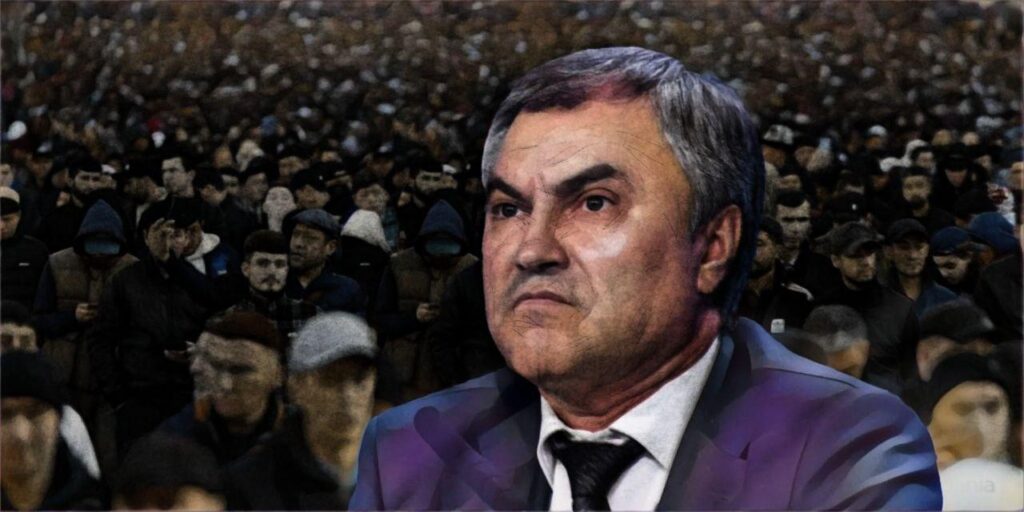
Russia introduced new regulations for foreign citizens in the country on February 5, and started keeping a list at the Interior Ministry of foreigners who are living or staying in Russia without proper documentation, the “controlled persons registry.” The rules are aimed at migrant laborers working in Russia, many of whom come from Central Asian countries. Russia has set a September 10 deadline for foreigners in the country to clear up all their paperwork with the authorities or face expulsion with a ban on re-entry. Judging by recent comments from Kyrgyzstan’s ambassador to Russia, Kubanychbek Bokontayev, many might not make that September 10 deadline. Needed but Not Desired Over the course of the last two decades, millions of citizens from Central Asian countries have worked in Russia. Most are from Kyrgyzstan, Tajikistan, and Uzbekistan. The remittances they send home have grown to the point where this money now accounts for nearly 40% of the GDP in Tajikistan, 24% in Kyrgyzstan, and 14% in Uzbekistan. Most of these remittances come from Russia. Russia badly needs the extra workers, and, until recently, the arrangement seemed to suit all parties. But the March 2024 terrorist attack on Moscow’s Crocus City Hall changed the situation. The Russian authorities detained and charged a group of Tajik nationals for the attack, and the always simmering xenophobia in Russia, particularly toward Central Asians, boiled over. New rules and restrictions have been imposed on migrant workers. Those that came into force in February this year were only the latest in a series of changes that already included mandatory fingerprinting and photographs upon entry to Russia, a reduction in the term of stay from 180 to 90 days, and an increasing list of infractions that provide grounds for deportation. In 2024, Russia expelled some 157,000 migrants who were in the country illegally, which, according to Russian Interior Minister Vladimir Kolokoltsev, was an increase of some 50% over 2023. The Clock Is Ticking At the start of February, just before the latest regulations came into effect, Russia’s Deputy Interior Minister Aleksandr Gorovoi said there were some 670,000 foreigners living illegally in Russia. Gorovoi added that more than half were women and children, “those who entered, but we do not see that they received a patent registered with the migration service… [or] that an employment agreement was concluded with them.” On July 24, Kyrgyz media outlet AKIpress published an interview with the Kyrgyz Ambassador to Russia, Bokontayev, in which he said that at the start of July, there were some 113,000 Kyrgyz citizens on the controlled persons registry, which he referred to as the “gray list.” He also said there were some 80,000 Kyrgyz citizens on the “black list” of people barred from entering Russia. In a separate interview with Radio Free Europe/Radio Liberty’s Kyrgyz Service published on July 25, Kyrgyzstan’s General Consul in Russia, Bakyt Asanaliyev, said that about 30% of the Kyrgyz citizens on the gray list are children. Ambassador Bokontayev said Kyrgyzstan’s embassy is working to make sure...

11 months ago

Tajikistan Escalates Deportations of Afghan Refugees Amid Growing Concerns

Afghans who fled to Tajikistan are keeping a low profile lately. Tajik authorities have started the latest wave of deportations, and this one looks to be bigger than the previous sweeps. “You Have 15 Days” At the beginning of July, Afghan refugees and asylum-seekers in Tajikistan received an SMS warning them to leave the country within 15 days or else they would be forcibly deported. Tajikistan’s government has not commented on these messages, but the detention of Afghans started not long after the messages were sent. So far, the only two places mentioned where Afghans were being apprehended were the Rudaki district outside of Dushanbe and the town of Vahdat, 26 kilometers from Dushanbe. Hundreds of Afghan refugees are known to be living in these two areas. Radio Free Europe/Radio Liberty’s Tajik Service, known locally as Ozodi, reported that journalists who went to the houses of Afghan refugees in Vahdat were stopped and turned away by men in military uniforms outside the homes. Some Afghan refugees in Vahdat spoke with Ozodi under the condition of anonymity and said that on July 15, several vans arrived and took away “dozens” of Afghan men, women, and children. One said Afghan refugees are staying inside their homes, fearing that if they go out, they will be detained and deported. Police “take the documents from Afghans and set a date for them to leave the country,” the refugee said, “For more than 20 days we have practically not stepped outside at all.” Local Tajiks confirmed that Afghans were being taken away and that many of those who remained were searching for new places to live to avoid being apprehended. The Tajik authorities did not say anything about the deportations until July 19, when the state news agency Khovar posted a text from the Press Center of the Border Troops of the State Committee for National Security. The statement said some “foreign citizens” had entered Tajikistan illegally, and a “certain number” of them engaged in illegal activities such as “narcotics trafficking, [spreading] the ideas of extremist movements,” or providing false information or documents to acquire refugee status. The office of the UN High Commissioner for Refugees (UNHCR) said that as of the end of 2024, there were 9,902 Afghan refugees registered in Tajikistan. However, Afghans have been fleeing their homeland and coming to Tajikistan for many years, and some estimates for the number of Afghans in Tajikistan run as high as 13,000. Something else which remains unclear about the Afghan refugees in Tajikistan is how many are ethnic Tajiks. Ostensibly, most of them could be since the ethnic Tajik population of Afghanistan is mainly found in areas adjacent to Tajikistan. Many who came to Tajikistan 10 or 15 years ago have assimilated and are likely not refugees or asylum seekers, but may not have obtained Tajik citizenship. It is unclear how many Afghan citizens have been detained and deported since the start of July, but they are just the latest to be sent back to...

11 months ago

Kyrgyz President Visits Tajikistan, Opening New Era of Friendship

Kyrgyzstan’s President Sadyr Japarov just concluded a two-day visit to Tajikistan. Rarely has the visit of one Central Asian leader to another Central Asian country been as welcome as Japarov’s trip to Tajikistan was. The two countries engaged in brief, but intense and devastating conflicts in late April 2021 and mid-September 2022, the only clashes between the militaries of the two Central Asian countries since the five Central Asian states became independent in late 1991. Judging by Japarov’s warm reception in the Tajik capital Dushanbe, the worst of times have passed in Kyrgyz-Tajik relations. A Year of Firsts Japarov, who has been in power in Kyrgyzstan since late 2020, was making his first state visit to Tajikistan on July 8-9. Japarov traveled to Tajikistan in June 2021, nearly two months after the first outbreak of hostilities along the Kyrgyz-Tajik border, to speak with Tajik President Emomali Rahmon about easing tensions along their common frontier. That June, a meeting was hastily arranged as an exercise in damage control, not a state visit, and in any case, the talks between the two presidents failed to head off even worse fighting in September of the next year. This first state visit by Japarov followed President Rahmon’s visit to the Kyrgyz capital in March 2025, the first state visit by Rahmon to Kyrgyzstan in nearly 12 years. During Rahmon’s meeting in March, Kyrgyzstan and Tajikistan signed the agreement delimiting the final disputed sections of their border, which both sides hope will end more than a decade of violence and destruction in the border area. That agreement led to the first-ever summit of the presidents of the three Central Asian countries that share the Ferghana Valley. Uzbek President Shavkat Mirziyoyev joined Japarov and Rahmon on March 31 in the northern Tajik city of Khujand to celebrate the agreement on all three countries’ borders and talk about future cooperation. Pomp and Ceremony Rahmon was at the Dushanbe airport to meet Japarov when the latter arrived on July 8. Tajikistan’s Honor Guard played the national anthems of both countries, followed by a 21-gun salute for Japarov, before the two presidents made their way to the Tajik capital to hold talks. The two leaders also visited a Kyrgyz-Tajik trade exhibit and attended a concert featuring performers from both countries dedicated to “Eternal Friendship.” Moving Forward Ahead of the Japarov-Rahmon meeting, The Times of Central Asia reported that trade between the two nations is starting to increase again. The figure for January-May trade between the two countries this year was a modest $6.35 million, but that is 15 times more than the meager $405,100 of bilateral trade during the first five months of 2024. Less than a decade ago, there were years when Kyrgyz-Tajik bilateral trade topped $50 million. Following the border agreement in March, two border crossings were reopened along the western sections of the Kyrgyz-Tajik frontier. During the meeting between the two presidents, it was announced that a third crossing had opened, the Tajvaron-Karamyk post connecting Kyrgyzstan’s...

11 months ago

From Migrant to Militant: Uzbekistan Sentences Jihadist

A district court in Uzbekistan just sentenced a 46-year-old Uzbek citizen, Obid Saparov from Kashkadarya Province, to 16 years in prison for joining the Islamic State of Khorasan Province (ISKP) militant group and being involved in a 2022 rocket attack on an Uzbek border city. Saparov’s involvement with Islamic militant groups predates the rocket attack by nearly a decade, and the evidence gathered by investigators offers a rare and fascinating look at this Uzbek citizen’s journey into jihadism. From Migrant Laborer to Islamic Militant The beginnings of Saparov’s radicalization are a common story for hundreds of Central Asian citizens who joined militant groups in the Middle East or Afghanistan. Saparov went to Ufa, Russia, as a migrant laborer in June 2013. He found audio and video material on the internet produced by extremist groups such as the Islamic Movement of Turkestan and the “Jihodchilar” (“Jihadists). Saparov came into contact with members of the Jihadists in Ufa and in August 2013 left Russia for Baku, and from there went to Zahedan, Iran, and in March 2014 crossed into Afghanistan and eventually reached the town of Mirali in Waziristan, Pakistan. There, according to Uzbek media reports, he joined the Islamic Movement of Turkestan. The name of this group is interesting because in a kun.uz report, it mentions that when Saparov was in Ufa, some of the extremist material he found online was based on the ideas of Tohir Yuldash. Yuldash helped found the Islamic Movement of Uzbekistan (IMU) terrorist organization and led the group until he was killed in a U.S. drone strike in Pakistan in August 2009. The IMU aimed to overthrow the Uzbek government and staged armed incursions into Uzbekistan in 1999 and 2000. The IMU were allies of the Taliban and were in Afghanistan when the U.S.-led military operations started in late 2001. The IMU suffered heavy losses, and the remnants of the group, including Yuldash, fled across the border into Pakistan. Ten Years of Militancy Saparov underwent training at camps in Pakistan after he arrived, and later worked in a militant “supply center.” According to the Uzbek media reports, the Islamic Movement of Turkestan splintered at the start of 2016, and Saparov joined a militant group from the Islamic State that was operating in Jalalabad, Afghanistan. The IMU was still based in Pakistan in August 2015 when its leader, Usman Ghazi, swore an oath to the Islamic State, and the IMU split. Part of the IMU followed Ghazi into Afghanistan (where most were killed in fighting in Zabul and Herat provinces), and most of the others went into northeastern Afghanistan. However, the ISKP did have a presence in Jalalabad that lasted until after the Taliban returned to power in August 2021. Uzbek investigators said Saparov joined the ISKP and was with the group from 2016 to 2024. Saparov was involved in staging attacks in Jalalabad, Kunduz, Mazar-i-Sharif, and Kabul. Saparov’s group fought against the Afghan government and foreign troops, and against the Taliban. Saparov was also engaged in...

11 months ago

Kyrgyzstan’s Parliament Advances Restrictive Version of Media Law

Kyrgyzstan’s parliament has ignored more than two years of work by a special commission and adopted a new media law that preserves restrictions on the registration of media outlets. The version parliament passed in its second and third readings on June 25 requires the mandatory registration of all media outlets, including online publications. The Cabinet of Ministers is given exclusive powers to determine the procedure for registration, re-registration, and the termination of media activities. Back to Square One? There were strong objections from media freedom and rights groups to the mandatory registration of media outlets, including online sites, when the draft bill was introduced nearly three years ago. Since Sadyr Japarov was elected president in January 2021, pressure on independent media outlets has been building. The presidential administration said Kyrgyzstan’s current media law, which dates back to 1992, was outdated, and submitted a draft of a new media law in September 2022. International and domestic criticism was so strong that the bill was withdrawn, and eventually, a commission with representatives of the media community, including independent media outlets, the government, civil society, and legal experts, was formed. The draft just approved by parliament was the sixth version of the bill, and, until June 16, it stated that registration for media outlets would be voluntary. On June 16, however, when the Kyrgyz parliament’s Committee on Social Policy was reviewing the bill, four Members of Parliament, Aibek Matkerimov, Ilimbek Kubanychbekov, Ernis Aidaraliev, and Sovetbek Rustambek uulu, introduced amendments. One of these changes removed voluntary registration for media outlets and replaced that with a clause specifying that a media outlet could only disseminate information after its registration with the Justice Ministry had been confirmed. The Media Action Platform of Kyrgyzstan, a coalition of media outlets and journalists, complained that the changes introduced by the four deputies negated those that had already been reached after negotiations. The Media Action Platform of Kyrgyzstan also questioned why deputies “who did not participate in the working group, were not present at the parliamentary hearings, and have no professional relationship with the media sphere,” were allowed to propose those amendments. These objections were apparently ignored when deputies voted on June 25. The Fate of Foreign-Sponsored Media Another of the changes from the four deputies stated, “a foreign citizen, stateless person, or foreign legal entity, as well as companies with more than 35% foreign participation, cannot act as founders of media and television organizations.” That replaces an article in the earlier text that set foreign participation at 50% or more and said only that they “cannot be founders of television organizations.” There are some 2,740 media outlets registered in Kyrgyzstan, and only a handful receive more than 35% of their funding from foreign sources. One is Radio Azattyk, the Kyrgyz service of the U.S. congressionally-funded Radio Free Europe/Radio Liberty (RFERL). Most of Kyrgyzstan’s presidents have expressed a dislike of Azattyk at one time or another, though the outlet continues to enjoy popularity in Kyrgyzstan according to various surveys. President Japarov has made his views...

12 months ago