• KGS/USD = 0.01143 0%
  • KZT/USD = 0.00205 0%
  • TJS/USD = 0.10433 0.1%
  • UZS/USD = 0.00008 0%
  • TMT/USD = 0.28577 0%
  • KGS/USD = 0.01143 0%
  • KZT/USD = 0.00205 0%
  • TJS/USD = 0.10433 0.1%
  • UZS/USD = 0.00008 0%
  • TMT/USD = 0.28577 0%
  • KGS/USD = 0.01143 0%
  • KZT/USD = 0.00205 0%
  • TJS/USD = 0.10433 0.1%
  • UZS/USD = 0.00008 0%
  • TMT/USD = 0.28577 0%
  • KGS/USD = 0.01143 0%
  • KZT/USD = 0.00205 0%
  • TJS/USD = 0.10433 0.1%
  • UZS/USD = 0.00008 0%
  • TMT/USD = 0.28577 0%
  • KGS/USD = 0.01143 0%
  • KZT/USD = 0.00205 0%
  • TJS/USD = 0.10433 0.1%
  • UZS/USD = 0.00008 0%
  • TMT/USD = 0.28577 0%
  • KGS/USD = 0.01143 0%
  • KZT/USD = 0.00205 0%
  • TJS/USD = 0.10433 0.1%
  • UZS/USD = 0.00008 0%
  • TMT/USD = 0.28577 0%
  • KGS/USD = 0.01143 0%
  • KZT/USD = 0.00205 0%
  • TJS/USD = 0.10433 0.1%
  • UZS/USD = 0.00008 0%
  • TMT/USD = 0.28577 0%
  • KGS/USD = 0.01143 0%
  • KZT/USD = 0.00205 0%
  • TJS/USD = 0.10433 0.1%
  • UZS/USD = 0.00008 0%
  • TMT/USD = 0.28577 0%

Our People > Bruce Pannier

Bruce Pannier's Avatar

Bruce Pannier

Bruce Pannier is a Central Asia Fellow in the Eurasia Program at the Foreign Policy Research Institute, the advisory board at the Caspian Policy Center, and a longtime journalist and correspondent covering Central Asia. For a decade, he appeared regularly on the Majlis podcast for RFE/RL, and now broadcasts his Spotlight on Central Asia podcast in partnership with The Times of Central Asia.

Articles

Historic Khujand Summit Paves Way for Peace in the Ferghana Valley

The presidents of Kyrgyzstan, Tajikistan, and Uzbekistan gathered in the northern Tajik city of Khujand on March 31 for a meeting that is decades overdue. Among the agreements the three signed were one fixing the border where their three countries meet. Prior to Uzbek President Shavkat Mirziyoyev’s arrival, Kyrgyzstan’s President Sadyr Japarov and Tajikistan’s President Emomali Rahmon exchanged ratified documents of the border agreement between the two countries. Rahmon and Japarov, via video link, also launched the Datka-Sughd power transmission line, a major step in the CASA-1000 project that aims for both their countries to supply electricity to Afghanistan and Pakistan. These agreements might not seem monumental, but they represent a major departure from the troubled past the three governments have had in their border areas. Trouble in Paradise The three countries share the Ferghana Valley, an area roughly the size of Costa Rica that is home to more than 20% of Central Asia’s population. Since the Central Asian states became independent in late 1991, the Ferghana Valley has also been the region’s hotbed of tension. The Ferghana Valley is the cradle of ancient Central Asian civilization. Some living there today say it was the location of the Garden of Eden, and it is not difficult to see why. The Valley is abundant in fruits and vegetables and has extensive arable and grazing land. It is surrounded by mountains to the north, east, and south, and the rivers that flow from these mountains supply ample water. Since independence, the Ferghana Valley has been the most dangerous place in all of Central Asia. The arbitrary borders Soviet mapmakers drew to divide Kyrgyzstan, Tajikistan, and Uzbekistan left many problems for the three after they became independent states. Agreement on where Kyrgyz-Uzbek border is came only in late 2022, and Kyrgyzstan and Tajikistan just signed the agreement on delimitation of their border on March 12. The Islamic Movement of Uzbekistan The roots of Islam lie deep in the Ferghana Valley. There were already calls for Shari’a law in Uzbekistan’s section of the valley just months after Uzbekistan declared its independence. The most serious security threat to Central Asia to date originated in the Ferghana Valley in 1999 and 2000. In early August 1999, a group of some 20 armed militants from the Islamic Movement of Uzbekistan (IMU) appeared in southern Kyrgyzstan, captured a village, and took the villagers and subsequent government negotiators hostage. The IMU leaders were from the eastern Uzbek city of Namangan. They were connected to the protests in Uzbekistan in late 1991 and later joined the Islamic opposition in neighboring Tajikistan’s 1992-1997 civil war. The peace accord that ended the civil war called for opposition fighters to either join the Tajik armed forces or disarm. There was no longer any need for the opposition’s foreign fighters, and the final phase of disarmament was underway by the summer of 1999. In mid-August, the Kyrgyz government paid a ransom for the hostages’ release and the departure of the IMU militants, but this...

12 months ago
Uzbekistan’s New Emphasis on the Military

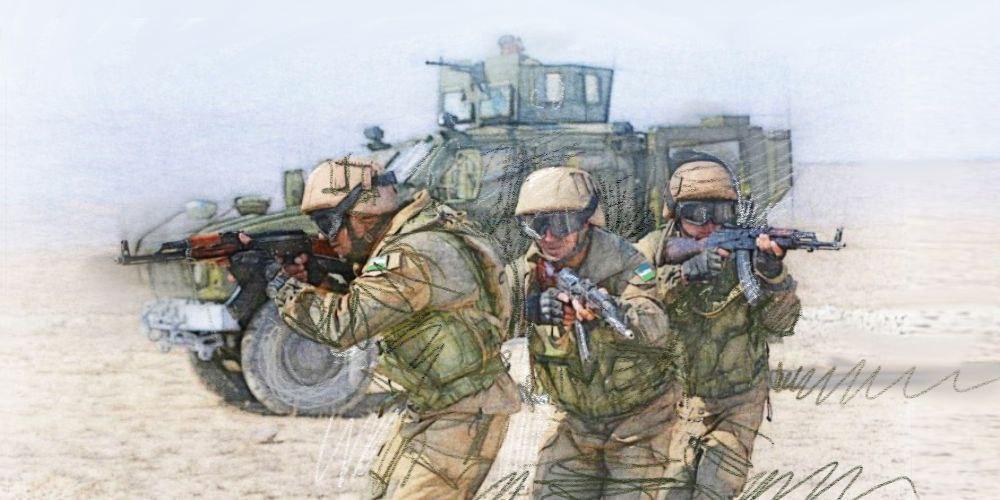
Uzbekistan has become Central Asia’s leader in terms of military spending. This raises some questions about why Uzbekistan has boosted its military spending, but it should also get the attention of Uzbekistan’s Central Asian neighbors. According to Global Firepower’s 2025 Military Strength ranking, Uzbekistan’s defense budget was a little more than $2.8 billion, ahead of Kazakhstan which spent just over $2 billion. Kazakhstan still ranked ahead of Uzbekistan in overall military strength, 57th and 58th, respectively, but in 2024, Global Firepower ranked Kazakhstan 58th and Uzbekistan 65th. Voice of America noted in a July 2024 report that military spending was generally increasing across Central Asia, a "development officials link to regional conflicts such as the war in Ukraine.” Kyrgyzstan and Tajikistan boosted their military spending after they fought brief but destructive battles against each at the end of April 2021, and again in mid-September 2022. In March 2023, Kamchybek Tashiyev, the head of Kyrgyzstan’s security service, said that since the 2021 conflict, his country had spent some $1 billion on military equipment, including military drones from Turkey. Global Firepower's 2025 report stated that Kyrgyzstan spent $221.8 million and Tajikistan $446 million on defense in 2024. Kyrgyzstan and Tajikistan are the poorest countries in Central Asia. Where is the Threat? Uzbekistan and more broadly Central Asia’s increase in defense spending raise the question of why is it necessary. Kyrgyzstan and Tajikistan’s surge in military spending was a reaction to the border conflicts of 2021 and 2022. The root cause of that fighting was disputed territories along their frontier, but this year the two countries finally signed a delimitation agreement and relations have improved. The Central Asian states have legitimate security concerns, most emanating from Afghanistan, though not necessarily from the Taliban. Despite occasional saber-rattling, the Taliban are unlikely to ever try to attack or invade any Central Asian country, and presently most of the Central Asian states have established an amiable business relationship with the Taliban. Militant groups operating in Afghanistan are the major concern. These groups based in Afghanistan are the main threats to the Central Asian governments and require the Central Asian states to develop counter-terrorism capabilities, something they have been doing since the late 1990s. The anti-aircraft systems and missiles the Central Asian states, including Uzbekistan, are purchasing are ill-suited to counter-terrorism operations. The timing of the significant increase in military spending came not long after Russia launched its full-scale invasion of Ukraine in late February 2022. Several Russian politicians and political commentators have spoken of reclaiming part of all of Kazakhstan in particular, but Uzbekistan has also been mentioned lately. It would be understandable for Kazakhstan and Uzbekistan to bolster their defenses in case the day comes when Russia looks to forcibly reincorporate Central Asia back into its empire. But Russia is listed second on Global Firepower’s ranking of military powers and the country’s defense budget in 2024 was some $126 billion. Without outside assistance, it is unlikely Kazakhstan or Uzbekistan could hold out for long against...

12 months ago

Opinion: What the Loss of RFE/RL Would Mean for Central Asia

The decision to terminate the federal grant agreement funding for Radio Free Europe/Radio Liberty (RFE/RL) is a crushing blow for hundreds of millions of people. These people know their governments are not telling them the full truth about what is happening in their countries or in the world outside. The objective information provided by RFE/RL has been important to people such as these. Perhaps as important, since the end of the Cold War, was the platform RFE/RL provides, whenever possible, for people in these countries to explain their views to the outside world. I know, because I worked at RFE/RL for 25 years covering Central Asia. RFE/RL was founded in 1950, and I didn’t show up there until 1997. I can only speak about what I saw and heard when I was an RFE/RL employee. My understanding of my tasks as an RFE/RL employee was that we were supposed to keep close track of what was happening in Central Asia, cover as many of the important topics of the region as possible, and make objective and accurate information on these topics available to the people in Central Asia. During Tajikistan’s 1992-1997 civil war, for example, RFE/RL’s Tajik service, Radio Ozodi, was the most trusted source of information for the people of Tajikistan. During the Coronavirus pandemic, the Turkmen government would not even allow the word COVID to be spoken and denied there were any cases of the virus in the country, leaving RFE/RL’s Turkmen service, Azatlyk, as one of the only sources of information for Turkmenistan’s people about the illness. I lived in Central Asia before joining RFE/RL, so I had some idea of what was important to people there. Calling for respect for fundamental rights is a big part of RFE/RL’s work. Read the constitutions of any Central Asian country and you will see enshrined there the right to freedom of speech, freedom of assembly, the right to freely receive or disseminate information, and much more. In practice, these rights are not always observed in Central Asia. In such a situations RFE/RL’s Central Asian services are a voice for those who, with good reason, are afraid to speak out publicly, or more importantly, for those who did speak out and are punished for that. At RFE/RL we looked for “impact stories,” testimony from people of the region about unfulfilled government promises, abuses, or state mismanagement that were hurting communities and individuals. Central Asian government officials are among the most faithful RFE/RL listeners, and often RFE/RL reports that raised social issues led officials to rectify the situation. Ramshackle buildings or schools were suddenly repaired, electricity or running water became accessible to city districts and rural areas, sufficient food became available to communities. The pleas of average citizens too often fell on deaf ears in government halls, but the criticism of an international organization such as RFE/RL, which was broadcasting to the entire country and Central Asian region, was too embarrassing for officials to ignore. This made RFE/RL unpopular with Central...

12 months ago

Kyrgyz-Tajik Border Agreement Seeks to End Years of Hostility

Kyrgyzstan and Tajikistan signed an agreement on March 13 that aims to put an end to tensions that have made their border the deadliest area in Central Asia for more than a decade. Underscoring the significance of this breakthrough was Tajikistan President Emomali Rahmon making his first state visit in nearly twelve years to the Kyrgyz capital Bishkek to sign the deal on the delimitation of the Kyrgyz-Tajik border. A Long-Standing Dispute Marking the border in the mountainous, sparsely inhabited eastern section of the two countries’ border was not difficult, and by 2011, some 520 kilometers had been demarcated. Reaching a final agreement on the western 487 kilometers, located in the Ferghana Valley and more densely populated, however, was far more complicated due to roads and canals that passed through both countries’ territories. Rahmon’s visit in May 2013 came a month after hundreds of residents of border communities clashed near the Kyrgyz village of Ak-Sai and Tajikistan’s Vorukh enclave. Such incidents were increasing, though at that time they were limited to fistfights, throwing sticks and stones, and vandalism of property, usually vehicles. In May 2013, Rahmon and then Kyrgyz President, Almazbek Atambayev, discussed measures to ease tensions along the border, but along the frontier, the meeting of the two presidents in the Kyrgyz capital made little difference. In January 2014, a Kyrgyz construction crew started work on a bypass road around the Tajikistan’s Vorukh enclave, and an argument broke out between border guards of the two countries. Insults led to an exchange of fire, during which Tajik border guards reportedly used grenade launchers and mortars. Five Kyrgyz and two Tajik border guards were wounded in the fighting. It was the first time weapons were used during border conflicts, but from that time on, disputes increasingly involved gunfire, increasing the number of casualties and sometimes resulting in deaths. Both governments sent additional troops and military equipment to the border area, adding fuel to the fire. On July 26, 2019, four days after another clash near the Vorukh enclave left one person dead and 27 injured, Rahmon met with then-Kyrgyz President Soronbai Jeenbekov in the Vorukh enclave. Again, there were promises of new steps to defuse tensions and hasten an agreement on border delimitation, but as had happened previously, it was not long before fights erupted, adding to the growing casualty list along the Kyrgyz-Tajik border. From Bad to Worse On April 28, 2021, Kyrgyz villagers spotted a group of Tajik citizens setting up a camera on a water intake station near the Kyrgyz village of Kok-Tash. An argument quickly led to large-scale clashes that spread along several sections of the Kyrgyz-Tajik border. Armed forces from the two countries used heavy machine guns, mortars, and armored vehicles. Tajikistan even sent helicopter gunships to attack one area in Kyrgyzstan. The fighting only lasted two days, but when it was over, 54 people were dead, hundreds were wounded, thousands were forced to flee the area, and there was damage to homes and other buildings....

1 year ago

Feminists in Kazakhstan Under Pressure Ahead of International Women’s Day

On March 8, the world marks the annual International Women’s Day, and in Kazakhstan’s commercial capital, Almaty, the authorities are again working to prevent public gatherings sponsored by feminist or LGBT groups. Since early February, several members of the feminist group, Feminita, have been detained in Almaty. Preemptive Measures Late March 3, an Almaty court sentenced Aktorgyn Akkenzhebalasy of the feminist group Feminita to ten days in jail after finding her guilty of violating the law on organization of peaceful assemblies. The charge dated back to May 2024, when six members of Feminita held an unsanctioned march in downtown Almaty, demanding a life sentence for former Minister of National Economy Kuandyk Bishimbayev. Bishimbayev beat his wife to death in a private room in an Almaty restaurant in November 2023. His trial from March to May 2024 was broadcast over television and widely watched by the public in Kazakhstan. Akkenzhebalasy was not the only Feminita activist to be jailed for participating in the May 2024 march. On February 28, Feminita co-founder Zhanar Sekerbayeva was jailed for ten days, meaning she would not be freed from jail until March 10, two days after International Women’s Day. Sekerbayeva and another Feminita co-founder, Gulzada Serzhan, were detained on February 13 after Bagila Baltabayeva, the leader of a group called Kazakhstan’s Union of Parents, and several other women burst into a Feminita meeting. Baltabayeva is also the author of a widely circulated petition against LGBT propaganda. Feminita activists said Baltabayeva called the police and complained that participants in the meeting were corrupting minors and had no permission to conduct their meeting. Kazakh independent media outlet Vlast cited witnesses as saying Baltabayeva also struck Akkenzhebalasy. All 25 of the Feminita members at the meeting were detained but quickly released except Sekerbayeva and Serzhan, who were kept at the police station for several hours and eventually charged with conducting public activities of an unregistered social organization. Baltabayeva and those who accompanied her to disrupt the meeting were not detained. On February 14, Feminita tried to have another meeting, but a group of women from the charity fund Rahym interrupted, calling the Feminita activists “foreign agents” and demanding they “get out!“ Again, police questioned the Feminita activists but not the Rahym members who burst into the meeting. On February 19, an Almaty court found Sekerbayeva and Serzhan guilty of holding a meeting of an unregistered organization and were each fined 393,000 tenge (about $1,500). The Kazakhstan International Bureau for Human Rights and Rule of Law released a statement noting Feminita had tried repeatedly to register with authorities but was always rejected. The statement also mentioned that Feminita activists had been attacked during meetings in other cities in Kazakhstan and that “All this happened with complete inaction or direct connivance of the police against the aggressors.” Women’s Day vs Women’s Rights There are no reports indicating that the authorities in Almaty, or officials in any other city in Kazakhstan, have approved any requests from feminist groups to conduct public...

1 year ago