• KGS/USD = 0.01144 0%
  • KZT/USD = 0.00210 0%
  • TJS/USD = 0.10559 0%
  • UZS/USD = 0.00008 0%
  • TMT/USD = 0.28530 0%
  • KGS/USD = 0.01144 0%
  • KZT/USD = 0.00210 0%
  • TJS/USD = 0.10559 0%
  • UZS/USD = 0.00008 0%
  • TMT/USD = 0.28530 0%
  • KGS/USD = 0.01144 0%
  • KZT/USD = 0.00210 0%
  • TJS/USD = 0.10559 0%
  • UZS/USD = 0.00008 0%
  • TMT/USD = 0.28530 0%
  • KGS/USD = 0.01144 0%
  • KZT/USD = 0.00210 0%
  • TJS/USD = 0.10559 0%
  • UZS/USD = 0.00008 0%
  • TMT/USD = 0.28530 0%
  • KGS/USD = 0.01144 0%
  • KZT/USD = 0.00210 0%
  • TJS/USD = 0.10559 0%
  • UZS/USD = 0.00008 0%
  • TMT/USD = 0.28530 0%
  • KGS/USD = 0.01144 0%
  • KZT/USD = 0.00210 0%
  • TJS/USD = 0.10559 0%
  • UZS/USD = 0.00008 0%
  • TMT/USD = 0.28530 0%
  • KGS/USD = 0.01144 0%
  • KZT/USD = 0.00210 0%
  • TJS/USD = 0.10559 0%
  • UZS/USD = 0.00008 0%
  • TMT/USD = 0.28530 0%
  • KGS/USD = 0.01144 0%
  • KZT/USD = 0.00210 0%
  • TJS/USD = 0.10559 0%
  • UZS/USD = 0.00008 0%
  • TMT/USD = 0.28530 0%

Our People > Dmitry Pokidaev

Dmitry Pokidaev's Avatar

Dmitry Pokidaev

Journalist

Dmitry Pokidaev is a journalist based in Astana, Kazakhstan, with experience at some of the country's top media outlets. Before his career in journalism, Pokidaev worked as an academic, teaching Russian language and literature.

Articles

Kazakh Lawmaker Proposes Tougher Penalties for Poaching

Kazakh Senator Andrei Lukin has called for tougher penalties for poaching amid a rise in violations, including illegal fish exports and document forgery. In a parliamentary inquiry, he urged a review of existing sanctions, greater transparency in industry subsidies through digital platforms, and stronger independence for relevant scientific organizations. Current legislation provides for fines of up to $27,000 and prison sentences of up to 10 years. However, Lukin argued that these measures are insufficient. According to his data, 84,000 tons of fish were seized from illegal trade between 2022 and 2025. At the same time, stocks of commercially important species are declining. In Lake Zaysan, pikeperch volumes fell from 9,300 to 4,000 tons, while carp has nearly disappeared. The senator also highlighted discrepancies between fishing quotas and export volumes. For example, with quotas set at 16,000 tons for 2022-2024, approximately 32,000 tons of pikeperch were exported, with a total value of around $115 million. He further criticized the effectiveness of the 2021-2030 fisheries development program. Of the $564 million allocated, only $38 million has been used. Cases of embezzlement of budget funds and the repeated use of documents in processing export licenses have also been identified. In response, Lukin proposed tightening export controls, ensuring compliance between quotas and actual catch volumes, and accelerating the rollout of the E-Fish digital system. The E-Fish system, mandatory since August 2025, automates the recording of catches and product turnover. According to the Ministry of Agriculture of Kazakhstan, more than 95% of market participants are registered in the system, which has reduced the shadow market by 2,000 tons. The Times of Central Asia previously reported on the expansion of state support for aquaculture, despite continued growth in fish production.

2 weeks ago

Kazakhstan to Launch Digital Schools Project

Kazakhstan will launch a pilot digital schools project, Qazaq Digital Mektebi, in September 2026, aimed at reducing disparities in educational quality between rural and urban schools. The initiative will target under-enrolled schools in seven regions, according to the Ministry of Education. The project provides for the use of AI technologies to support the teaching of natural sciences, mathematics, and humanities. The approach is intended to help students learn more independently while increasing engagement in the learning process. The pilot phase will be implemented in the North Kazakhstan, Kostanay, Akmola, Pavlodar, West Kazakhstan, Aktobe, and East Kazakhstan regions. Authorities are currently assessing schools’ technical readiness and digital infrastructure. Based on the pilot’s results, the government plans to develop a national educational platform offering digital content tailored for rural schools. The ministry is also considering integrating domestic IT solutions, including the Qalan.kz platform, which incorporates gamification and artificial intelligence elements and has more than 800,000 users. The project is a resident of the technology park Astana Hub. The ministry expects the initiative to improve access to quality education in rural areas and to form part of the country’s broader digital transformation strategy. The Times of Central Asia previously reported that Kazakhstan is accelerating the adoption of digital technologies across key sectors, including education.

2 weeks ago

Kazakhstan’s Central Bank Links Tenge Strengthening to Rising Oil Prices

Governor of the National Bank of Kazakhstan, Timur Suleimenov, has attributed the recent strengthening of the tenge to rising global oil prices, which have increased export revenues and boosted the supply of foreign currency on the domestic market. According to the regulator, the tenge appreciated by 3.9% in March, reaching 478.15 KZT to the dollar. The average daily trading volume on the Kazakhstan Stock Exchange increased from $335 million to $372 million, while total trading volume reached $6.7 billion. Currency sales from the National Fund totaled $400 million, supporting transfers to the state budget. In addition, approximately $391 million was supplied through the mandatory sale of foreign currency earnings by quasi-state sector entities. No foreign exchange interventions were conducted during the period. As a result, the National Fund accounted for about 6% of total trading volume, or roughly $22 million per day. Exporters remained the primary source of foreign currency supply, Suleimenov noted. “Kazakhstan’s main export is oil. Prices are rising, volumes remain unchanged, and accordingly, export revenues and currency supply are increasing,” he said. Preliminary estimates indicate that National Fund currency sales in April will total $300-400 million, broadly in line with March levels. Suleimenov also said the tenge remains stable despite earlier forecasts by some analysts suggesting a potential weakening to 1,000-2,000 KZT to the dollar. At the same time, he warned of inflationary risks linked to rising tariffs. According to him, the government plans to factor inflationary pressures into future adjustments of utility and fuel prices. As of April 1, the moratorium on increases in utility and fuel tariffs in Kazakhstan, introduced in October 2025, has expired. The Times of Central Asia previously reported that economist Aidarkhan Kusainov had suggested the tenge could weaken to 1,000 per dollar or even further, arguing that the national currency is overvalued.

2 weeks ago

Kazakhstan to Build Eight New Power Plants by 2030

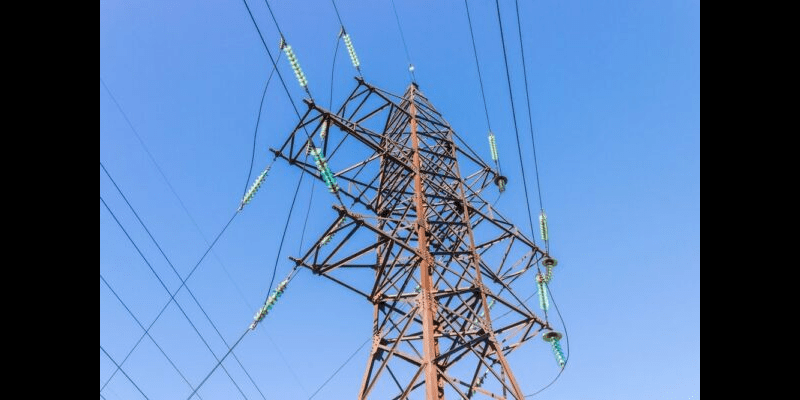
Kazakhstan plans to build eight new power plants and modernize 11 existing facilities by 2030 as part of a national project to expand coal-fired power generation. The project, approved in March, aims to meet growing electricity demand and modernize the country’s energy infrastructure, strengthening the stability of the Unified Power System. According to Kazakhstan’s Ministry of Energy, 7.8 GW of new and upgraded capacity is scheduled to be commissioned by 2030. This includes both newly constructed plants and modernisation of existing facilities . The new construction program, with a total capacity of 5.3 GW, includes projects in several key regions. Plans include a 700 MW condensing power plant in Kurchatov; the Ekibastuz GRES-3 plant with a capacity of 2,640 MW; thermal power plants in Karaganda (350 MW) and Ekibastuz (180 MW); as well as combined heat and power plants in Zhezkazgan (500 MW), Kokshetau (240 MW), Semey (360 MW), and Ust-Kamenogorsk (360 MW). The project also aims to improve the efficiency of existing capacity. According to ministry estimates, modernization will reduce equipment wear by 13%. The Ministry of Energy stated that the initiative is expected to provide a reliable energy base for industrial growth, support the development of the digital economy, and facilitate the adoption of AI technologies. Coal-fired generation, if modernized and compliant with environmental standards, will continue to play a key role in ensuring the country’s energy security. The Times of Central Asia previously reported that Kazakhstan plans to attract at least $15.5 billion in investment for the development of coal-fired power generation. The country is expected to fully meet domestic electricity demand by 2027 and achieve a sustainable surplus by 2029, enabling it to begin exporting electricity. At the same time, the government plans to create a “data center valley” in Pavlodar powered by coal-fired energy.

2 weeks ago

Plans Underway to Launch Humanoid Robot Production in Astana

Plans are underway to launch humanoid robot production in Astana at the Astana Hub International Technology Park, Minister of Digital Development and Artificial Intelligence Zhaslan Madiev announced at a government meeting. According to Madiev, Astana Hub remains a key institution for fostering innovative entrepreneurship in Kazakhstan. The technology park runs acceleration programs, including AI’preneurs, aimed at launching startups in the field of artificial intelligence. Since September 2024, 35 AI startups have been established through the program’s three cohorts. In collaboration with the city authorities, the Astana Innovations Accelerator program is also being implemented. It focuses on integrating startups into urban infrastructure and helping them secure commercial contracts. Following a competitive selection process, eight projects have received funding. The minister also reported that an “Exponential Cluster” is being developed at the technology park, an innovation platform designed to bring together science, startups, and industry. As part of this initiative, a network of technology centers is being created, covering areas such as robotics, unmanned systems, cybersecurity, medicine, and industrial applications. A humanoid robotics laboratory has already been launched at the Robotics Center. Projects include the development of teleoperation systems for robot control and the integration of robots with the AlemLLM language model for user interaction. Special attention is being given to unmanned technologies. According to Madiev, Kazakhstan plans to launch a pilot project for autonomous vehicles involving international companies in the second quarter of 2026. A separate private initiative to deploy delivery drones is also underway. At the Drone Center, construction of a “phygital” arena, combining physical and digital environments, and infrastructure for training unmanned aerial vehicle operators is nearing completion. All Astana Hub technology centers are expected to be operational by the end of the year. The ministry expects the cluster to support the launch of up to 500 startups annually, including more than 100 hardware projects, and to position Astana as a regional innovation hub. According to official data, by 2025 Astana Hub residents had created more than 32,500 jobs. A total of 537 companies export IT services to 111 countries, with export volumes reaching $681 million, an increase of 44% compared to the previous year. The Times of Central Asia previously reported that the Chinese company AgiBot plans to launch the production and deployment of industrial robots in Kazakhstan.

2 weeks ago