• KGS/USD = 0.01144 0%
  • KZT/USD = 0.00205 0%
  • TJS/USD = 0.10685 0%
  • UZS/USD = 0.00008 0%
  • TMT/USD = 0.28490 0%
  • KGS/USD = 0.01144 0%
  • KZT/USD = 0.00205 0%
  • TJS/USD = 0.10685 0%
  • UZS/USD = 0.00008 0%
  • TMT/USD = 0.28490 0%
  • KGS/USD = 0.01144 0%
  • KZT/USD = 0.00205 0%
  • TJS/USD = 0.10685 0%
  • UZS/USD = 0.00008 0%
  • TMT/USD = 0.28490 0%
  • KGS/USD = 0.01144 0%
  • KZT/USD = 0.00205 0%
  • TJS/USD = 0.10685 0%
  • UZS/USD = 0.00008 0%
  • TMT/USD = 0.28490 0%
  • KGS/USD = 0.01144 0%
  • KZT/USD = 0.00205 0%
  • TJS/USD = 0.10685 0%
  • UZS/USD = 0.00008 0%
  • TMT/USD = 0.28490 0%
  • KGS/USD = 0.01144 0%
  • KZT/USD = 0.00205 0%
  • TJS/USD = 0.10685 0%
  • UZS/USD = 0.00008 0%
  • TMT/USD = 0.28490 0%
  • KGS/USD = 0.01144 0%
  • KZT/USD = 0.00205 0%
  • TJS/USD = 0.10685 0%
  • UZS/USD = 0.00008 0%
  • TMT/USD = 0.28490 0%
  • KGS/USD = 0.01144 0%
  • KZT/USD = 0.00205 0%
  • TJS/USD = 0.10685 0%
  • UZS/USD = 0.00008 0%
  • TMT/USD = 0.28490 0%

Our People > Times of Central Asia

Times of Central Asia's Avatar

Articles

Heavy Rain and Mudflows Kill Four in Tajikistan

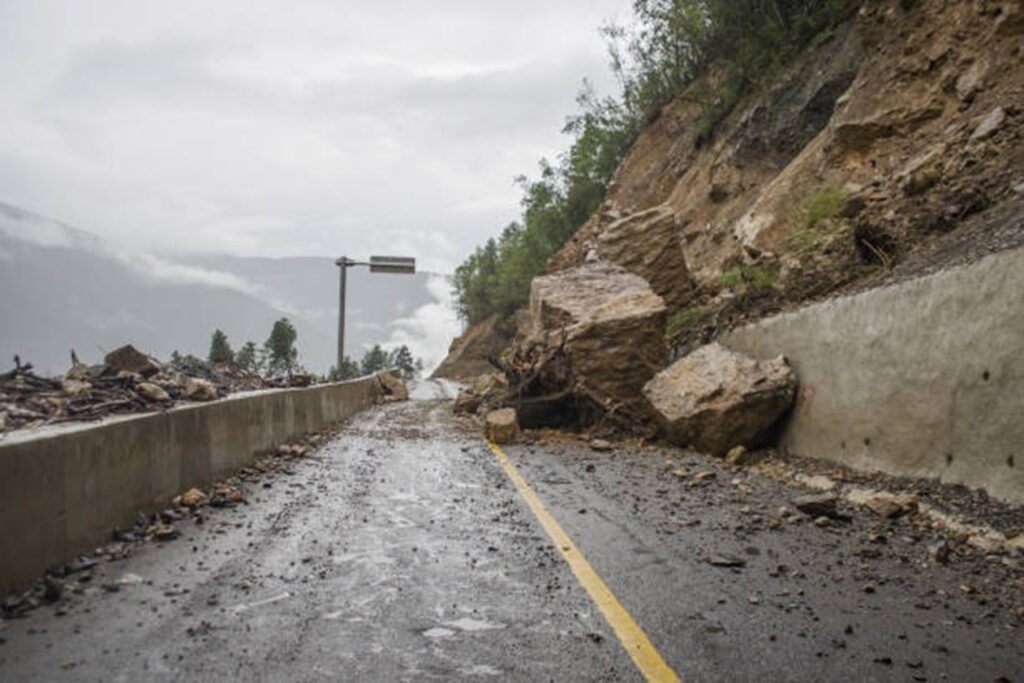
Heavy rain and landslides have swept parts of Tajikistan in recent days, killing at least four people and damaging dozens of homes, as well as roads and farmland. In one incident, a boat carrying students capsized in a river but all the passengers were rescued. Three people were killed and three others were hospitalized in the southern city of Kulob after an overnight deluge, the press office of Tajikistan’s presidency said on Saturday. President Emomali Rahmon expressed condolences and instructed top officials to go to the scene of the disaster and help affected families. Intense rainfall continued over the weekend. One person died and two others were seriously injured in a lightning strike in Kaduchi village on Sunday afternoon, according to Tajikistan’s Committee for Emergency Situations and Civil Defense. The victims were taken to a hospital in the western city of Tursunzoda. Mudflows damaged homes, roads, and other infrastructure in several villages and settlements. Some canals filled with mud, stones, and gravel before overflowing into nearby streets. Emergency workers brought in heavy machinery and pumps to clear debris and water. The boat that capsized on Sunday afternoon was carrying seven secondary school students and their class teacher on the Syr Darya River, which runs through the northern city of Khujand. The group had arrived at a cultural and entertainment park for the excursion. Boatmen and other people rescued the students, according to an official account.

1 month ago

Opinion: Kazakhstan’s Critical Minerals Promise Is Running Out of Time

Kazakhstan has long been defined by what lies beneath its soil. Oil, uranium, copper, zinc, lead, chromium, gold, and other minerals have shaped the country’s post-Soviet economy and supplied the budget, export revenues, and industrial base that supported three decades of state-building. That model is now entering a more complex phase. In the first quarter of 2026, Kazakhstan’s industrial output slipped as mining and quarrying fell by 11.4%, with crude oil production down 19.8%, natural gas output down 20%, and other mineral extraction down 15.1%, according to figures reported from the Bureau of National Statistics. The oil decline also reflected specific disruptions. Kazakhstan’s energy minister said oil and gas condensate production fell 20% year-on-year in the first quarter, while production at Tengiz had only recently resumed after an outage linked to a fire at a power unit. Reuters reported that the field’s restart was gradual. Those short-term shocks should not be confused with the whole story. They expose a deeper vulnerability: Kazakhstan has been highly successful at extracting known deposits, but far less successful at replacing them. The World Bank’s mining sector diagnostic put the problem plainly. Kazakhstan is underexplored, greenfield exploration has been almost non-existent for about 30 years, and much of the geological data inherited from the Soviet period is incomplete or outdated. This is not a story of geology alone. It is a story of institutions, incentives, and time. Deposits deplete whether governments plan for it or not. The difference between a mature resource economy and a vulnerable one is whether exploration, processing, regulation, and regional diversification keep pace with extraction. The Arithmetic of Depletion Kazakhstan still has one of the strongest mineral endowments in Eurasia. President Kassym-Jomart Tokayev has described rare and rare-earth metals as having “essentially become new oil,” and told the government to expand geological and geophysical exploration from 1.5 million square kilometers to at least 2.2 million by 2026, according to Akorda. OECD analysis published in 2026 underlines why the stakes are high. Kazakhstan’s metals mining sector accounted for 12.1% of GDP in 2024. The country is the world’s largest uranium producer, can currently export 21 of the 34 critical raw materials on the European Union’s official list, and has some of the world’s largest reserves of chromium, zinc, and lead. Yet reserve strength on paper does not remove the operational pressure at existing mines. In 2022, Kazakhstan’s prime minister warned that reserve growth for many minerals had not been compensated and that major metal deposits in eastern Kazakhstan, including Orlovskoye, Maleyevskoye, Tishinskoye, and Ridder-Sokolnoye, could be mined out within the next decade, according to the government’s own account of its 2023-2027 geology concept. Gold shows a similar tension between headline potential and mine-level pressure. Industry reporting has linked a fall in Kazakhstan’s 2025 mining output targets partly to changes at Vasilkovskoye, one of the country’s largest gold deposits, where operations are shifting from open-pit to underground mining as easily accessible ore becomes harder to extract. MINEX Forum reported that the transition reduced...

1 month ago

Tajikistan Hosts Grand Slam Judo, Wins Three Golds

Tajikistan showcased its world-class judo skills during the Dushanbe Grand Slam over the weekend, picking up three gold medals in a competition that featured 240 judoka, or practitioners of the martial art, from about three-dozen countries. While Russia topped the standings with three golds, three silvers and six bronze medals, Tajikistan’s second-place finish (three golds and one bronze) reflected the high priority of the sport in a country that is also promoting gushtingiri, a traditional form of Tajik wrestling that has some similarities to judo. Mongolia came third with two golds, two silvers and one bronze. Tajikistan’s capital has become a fixture on the international judo circuit in the last few years. The city hosted the 2024 World Junior Championships, and the Dushanbe Grand Slam was upgraded from Grand Prix status, making it a more prestigious tournament that awards a greater number of ranking points. Dushanbe will also host the World Judo Masters tournament on December 18-20, an event that Ismoil Mahmadzoir, president of the Tajikistan Judo Federation, has said will help Tajikistan’s judoka prepare for the Olympic Games in Los Angeles in 2028. Tajikistan’s emergence as a world judo power reflects years of investment and youth training in the sport, setting an example for the development of other sports in a country with relatively limited resources. Rasul Boqiev won Olympic bronze, the country’s first judo medal at the games, in Beijing in 2008. At the Paris Olympics in 2024, judokas Somon Makhmadbekov (in the -81kg weight category) and Temur Rakhimov (+100kg) also won bronze medals in their weight classes. The focus on judo in Tajikistan is sometimes associated with the legacy of gushtingiri, a traditional form of Tajik wrestling that has some similarities. In gushtingiri, a contestant tries to grab the belt of an opponent and execute a throw to the ground. While the sport goes back thousands of years in the wider region and has different names, the International Gushtingiri Federation was registered in 2022 in Switzerland, an international hub of sports associations, to standardize the rules and broaden its appeal. President Emomali Rahmon of Tajikistan is the honorary president of the federation, a sign of support for gushtingiri at the highest political level. At the May 1-3 Grand Slam in Dushanbe, Makhmadbekov – seventh in the world in his weight category - defeated Bernd Fasching of Austria for the gold, saying he was delighted to win in front of a home crowd. Makhmadbekov secured the world junior title in 2019. Tajikistan’s other gold medal winners in Dushanbe were Muhiddin Asadulloev, who is fourth in the world in his -73kg weight category, and Nurali Emomali (-66kg). Emomali is ranked second in the world in his category, and another Tajik athlete, Obid Zhebov, is just behind him in third place. Enthusiastic crowds at the Qasri Tennis area in Dushanbe delighted some of the athletes. Among them was Italian veteran Odette Giuffrida, who won gold in her -52kg category, according to tournament reports. “I wanted to compete in Dushanbe before I retire because...

1 month ago

Artist Aigerim Karibayeva on How Kazakhstan Is Searching for Its Visual Identity

Kazakh artist Aigerim Karibayeva is part of a new visual wave that seeks to blend traditional culture and contemporary aesthetics. Her distinctive style – bright, airy, almost spring-like imagery infused with ethnic motifs and scenes from everyday life – has moved beyond social media into major exhibition spaces. Her works are currently on display at the Kasteyev State Museum of Arts, where her solo exhibition My Sky Above Me recently opened. In an interview with The Times of Central Asia, she discusses how she coined the term “ethno-modernism,” why ethnic aesthetics is surging in popularity, and how Kazakhstan is searching for its own visual identity. TCA: Aigerim, you describe your work as “ethno-modernism.” How did you arrive at that concept? Aigerim Karibayeva: I started moving in this direction and sharing my work on Instagram several years ago. I quickly found my audience; there was strong interest from the media and many interviews. To talk about my work, I needed a term that would define it, something verbal. But I didn’t want to call it simply “contemporary art,” because that didn’t reflect the essence of what I do. I thought: why not call it “ethno-modernism”? I consulted the well-known art historian Olga Baturina, and she approved. The term immediately caught on. I now see it used in the press, on social media, and even in the profiles of young designers. Today, “ethno-modernism” is used to describe an entire wave of artists and designers, the boom we’ve been seeing over the past five years. TCA: Why do you think ethno-modernism has become so popular now? Aigerim Karibayeva: I think it’s been building for a long time. I’m trained as a graphic designer, so I have a strong visual awareness. I saw how interest in national style and ethnic elements gradually emerged in the country. First, businesses began using it in branding, then advertising picked it up, and eventually it spread into mass culture. Now, ethnic elements combined with modern aesthetics have become a visible part of everyday life. [caption id="attachment_48156" align="aligncenter" width="2000"] From a personal photo archive[/caption] TCA: That was especially noticeable during recent Nauryz celebrations – everyone seemed to be wearing ethnic-inspired clothing. Aigerim Karibayeva: Exactly. Everyone is searching for a new cultural code right now, artists, musicians, filmmakers, craftspeople. At first, you create something within your own circle, among fellow artists, and then it spreads outward. You start seeing and hearing it everywhere, for example, in new interpretations of Kazakh music. You recognize that mix, and it becomes a kind of key. You try to translate that same cultural fusion into your own work. I’ve had people tell me they were inspired by my work. One woman approached me and said that after seeing a traditional headpiece, a taqiya, in my illustration, she was inspired to start making them herself and  launched a successful business. That’s how this wave works, there’s a ripple effect, and everyone picks it up. TCA: There’s clearly strong demand for ethnic aesthetics right now. Aigerim...

1 month ago

Russia to Build University Campus in Bishkek

The Cabinet of Ministers of Kyrgyzstan has approved the reclassification of land in southern Bishkek for the construction of a new campus for the Kyrgyz-Russian Slavic University, the government said. The decree, signed on April 24 by Prime Minister Adylbek Kasymaliev, transfers the land from agricultural use to settlement status. The project is being implemented under an intergovernmental agreement between Kyrgyzstan and Russia following the state visit of Vladimir Putin to Bishkek in November 2025. It involves the construction of a university campus spanning approximately 30 hectares. Officials say the campus will form part of a long-term strategy to develop educational infrastructure and deepen humanitarian cooperation between the two countries. The new complex is designed to accommodate up to 15,000 students and will include academic, research, and social facilities in line with international higher education standards. Construction is expected to be completed by 2030, with funding to be provided jointly by both sides. It is part of a wider educational push by Russia to bolster the influence of Russian language in the region. Russian cultural organisation Evrasiya, a non-profit organisation linked to the Kremlin, has invested heavily in Kyrgyzstan since 2024. President Sadyr Japarov has instructed that the campus be equipped with modern facilities, while the Finance Ministry has been tasked with allocating funds for the necessary engineering infrastructure. Once the decree comes into force, local authorities will be required to terminate third-party rights to the land allocated for the project. Most of the site is currently state-owned, though part remains in private hands. Authorities also noted the need to comply with environmental, sanitary, and urban planning standards, including measures to improve seismic resilience – a perennial fear for Central Asian cities. The agreement on the campus construction was previously ratified by the parliaments of both countries, including Russia’s State Duma and the Federation Council.

1 month ago

Opinion: Uzbekistan’s Growth Story Has a Skills Problem

Uzbekistan has become one of Central Asia's strongest growth stories. GDP expanded by 6.5% in 2024, and the Asian Development Bank projects growth of 6.7% in 2026 and 6.8% in 2027. Industry, services, and foreign investment are all expanding. The World Bank says real GDP growth averaged around 6% a year between 2017 and 2025. Beneath that momentum, however, a quieter problem is taking shape. Uzbekistan may not yet be training enough workers for the economy it is trying to build. The issue is not a shortage of capital; it is a shortage of market-ready skills. The country has moved from an isolated, heavily state-controlled economy toward a more open and reform-driven model in less than a decade. But if education, vocational training, and private-sector demand do not align faster, Uzbekistan risks turning one of the region's strongest demographic advantages into a labor-market strain. A Dividend That Could Become a Deficit Uzbekistan is a young country in every sense. About 700,000 young people enter the job market each year, while the working-age population is expected to keep expanding for decades. In development economics, this kind of demographic concentration is often described as a dividend: a period when a large share of the population is of working age, productive, and capable of driving growth. The risk is that the dividend does not materialize automatically. It depends on whether young people can move into productive, formal, and better-paid work. If the workforce entering the economy is not equipped with the skills employers need, the same demographic pressure can feed into informality, underemployment, migration, and social strain. The official unemployment rate fell to 4.9% in the third quarter of 2025. That is a meaningful improvement. But around 760,000 people remained registered as job seekers, and the International Labour Organization has estimated informal employment at about 40% of the workforce. Remittances also remain a structural pillar of household income: according to Central Bank data cited by local media, inflows reached $18.9 billion in 2025, up from $14.8 billion in 2024. This is not the picture of a country that has already solved its human-capital challenge. It is the picture of a country racing against time. The Mismatch at the Heart of the Problem The core challenge is not a shortage of graduates. Higher education has expanded dramatically. According to Uzbekistan's National Statistics Committee, coverage among 18- to 23-year-olds reached 47.7% at the start of the 2024/2025 academic year, up from 8.3% in 2017. The number of higher education institutions has also grown rapidly. By conventional access metrics, this is an extraordinary achievement. But enrollment alone is not the measure that matters. Employers need workers who can solve practical problems, operate modern equipment, manage digital systems, and adapt quickly to changing production and service needs. Too many students are still moving through programs shaped by an older economic model: credential-heavy, theoretically oriented, and weakly connected to the needs of a modern labor market in IT, manufacturing, logistics, energy, tourism, and services. The student-financing system has...

1 month ago

Tashiyev Charged as Kyrgyzstan’s Elite Rift Deepens

Former head of Kyrgyzstan’s State Committee for National Security (GKNB), Kamchybek Tashiyev, has been charged under two articles of the criminal code, his lawyer said, amid signs of escalating political tension in the country. According to defense attorney Ikramidin Aitkulov, Tashiyev faces charges under Article 326, concerning forcible seizure or retention of power and actions aimed at forcibly changing the constitutional order, and Article 337, concerning abuse of office. The latter charge relates to alleged actions carried out for personal gain or for the benefit of others, and to conduct by a senior public official. A restraint measure has been imposed on Tashiyev in the form of a written undertaking not to leave his place of residence. After questioning at the Interior Ministry, he left the building late on April 29. His lawyer said the former official denies all charges. Tashiyev said he intends to defend himself through legal means. “I am innocent and, God willing, I will be acquitted,” he said in a statement. He also urged his supporters to remain calm and act within the law. Media reports suggest that former Prosecutor General Kurmankul Zulushev and former parliamentary speaker Nurlanbek Turgunbek uulu may also be linked to the same case, though their legal status remains unclear. The Interior Ministry has not publicly confirmed or denied reports that they were questioned. President Sadyr Japarov has previously said that any potential involvement by Tashiyev in the so-called “Letter of 75” should be determined by investigators and the courts. The letter, made public in February, urged Japarov and parliament to initiate an early presidential election, citing ambiguity over whether his current term should be treated under the six-year term in force at the time of his 2021 election or the five-year term introduced by the constitution adopted later that year. Tashiyev’s fall has been one of Kyrgyzstan’s most significant political ruptures since Japarov came to power after the 2020 upheaval. The two men had long been seen as the central tandem in Kyrgyz politics, with Japarov controlling the presidency and Tashiyev heading the security apparatus. That arrangement ended on February 10, when Japarov dismissed Tashiyev as GKNB chairman and deputy chairman of the Cabinet of Ministers. The official explanation was that the decision had been taken “in the interests of the state” and to prevent a split in society. The move was followed by a wider reshuffle inside the security services and parliament, where figures seen as close to Tashiyev came under pressure. The Times of Central Asia previously reported that Japarov’s decision appeared to have broken the Japarov-Tashiyev tandem that had shaped the country’s power structure since 2020. The political pressure on Tashiyev’s network intensified in March and April. Tashiyev returned to Kyrgyzstan in March after more than a month abroad and was questioned by the Interior Ministry in connection with Kyrgyzneftegaz, the state oil company. TCA previously reported that the State Tax Service had revived allegations involving the company and private entities linked to Tashiyev’s relatives or associates, while...

1 month ago

Kazakhstan’s Abraham Accords Dividend

Astana’s entry into the Abraham Accords is not the opening of a relationship with Israel so much as the re-platforming of one. Kazakhstan recognized Israel in the early 1990s and has maintained a functional, if understated, partnership since then. What has changed is the format. An existing bilateral channel is being placed inside diplomatic architecture with better access to political attention, private capital, and commercially useful networks. Kazakhstan announced its intention to join the Accords on November 6, 2025, ahead of President Kassym-Jomart Tokayev’s meeting with Donald Trump in Washington. The Times of Central Asia described Kazakhstan as the first Central Asian state and the only non-Middle Eastern or North African country to enter the framework. An official accession ceremony is still pending. For Kazakhstan, the value lies not in symbolism but in the Accords’ convening power. The Accords make Kazakhstan more legible to Israeli technology firms, Gulf investors, American policymakers, and the growing ecosystem of institutions and policy platforms built around regional economic integration. For Astana, this is the practical utility of membership. It does not need the Accords to talk to Israel. It can use them to widen the circle around specific projects. The formulation is also consistent with Kazakhstan’s foreign-policy habits. Astana has not presented the decision as a strategic turn against any other partner. Its Foreign Ministry said accession was made “solely in the interests of Kazakhstan,” and was consistent with a “balanced, constructive, and peaceful foreign policy.” The same statement reaffirmed support for a two-state settlement of the Middle East conflict. That wording appears carefully calibrated. It allows Astana to engage with a Trump-associated diplomatic framework while presenting the decision as an extension of Kazakhstan’s established multi-vector foreign policy, not a departure from it. The better interpretation is additive multi-vectorism in the form of another channel, another table, and another set of possible transactions. A Times of Central Asia analysis made this point directly, arguing that Kazakhstan’s aims include converting symbolic capital into policy traction, developing Gulf co-financing, and preserving equilibrium with Moscow and Beijing. The commercial agenda is already visible. Israeli Foreign Minister Gideon Sa’ar’s January 2026 visit to Astana, the first by an Israeli foreign minister in 16 years, produced a package of institutional and economic steps. A Kazakhstan-Israel business forum ran alongside the official meetings, and the sides identified a project map covering high-tech agriculture, water management, digital technologies, artificial intelligence, infrastructure, logistics, energy efficiency, renewables, healthcare, and pharmaceuticals. These sectors are not ornamental but match Kazakhstan’s own reform priorities of productivity, digital administration, non-resource growth, infrastructure modernization, and technology transfer. Israel’s appeal lies less in its market size than in its applied capability. Gulf participation, where available, adds scale and financing. The Accords can help package those elements into projects that are easier for companies, development institutions, and governments to recognize. Energy and infrastructure may become the most consequential tests. The Times of Central Asia has argued that the Accords could give Israeli firms a clearer political and legal framework for...

1 month ago

Opinion: Kazakhstan’s Human Capital Problem – How State Scholarships Are Building a Talent Pipeline for the West

Kazakhstan spends millions of dollars every year sending its brightest students to the world's best universities through two flagship programs: the Nazarbayev Intellectual Schools (NIS) and Bolashak. For NIS, the state invests millions with no public record of what becomes of its graduates once they enter foreign educational institutions. For Bolashak, the return figures look reassuring on paper, but only until one asks what happens the moment the obligation expires. For Kazakhstan’s economy, heavily reliant on oil and gas exports, human capital is what can bring the country to its goal of economic diversification through the ideas and skills that no natural resource can replicate. Students from Kazakhstan studying abroad, with access to the world’s best professors and cutting-edge technologies, are exactly the human capital the country cannot afford to lose. However, they are also the ones the government has been paying to send away without a sustainable retention strategy in place. Nazarbayev Intellectual Schools Founded in 2008, the Nazarbayev Intellectual Schools network offers an internationally recognized 12-year curriculum, directly compatible with many foreign university admissions systems. It also provides some of its students with grants covering the full cost of attendance. The state funds NIS generously: in 2023 alone, more than $37 million was invested into the network. The results are extraordinary: from 2010 to 2024, 654 students received offers from the top 100 universities in the world, with 32 of them from the Ivy League. However, which country these graduates end up in is a different question, and the available statistics offer no public answer to. One former NIS student, who received a full scholarship to study abroad, says, "I'm extremely grateful for all the resources that the NIS provided me with. However, after my graduation from the university, I will be moving to San Francisco to work as an AI engineer. It would take me at least seven years to make the same salary I'll be earning here in a year." Another says, "It is not only about the higher wages in the U.S. It’s about the opportunities and autonomy one gets. The research lab I've joined since graduation has far more funding and resources for the work I'm actually passionate about." Bolashak Program Unlike NIS, the Bolashak program, established in 1993 and widely regarded as one of the most generous scholarship programs in the world, does require its recipients to return. Graduates must work in Kazakhstan for up to four years or face financial penalties. On paper, this looks like a solution to the human capital problem. In practice, it is only a delay. While the state at least partially recovers its investment, it is developed markets that eventually inherit the talent. "After completing my requirement back home, I was able to get an American company to sponsor my visa," says one Bolashak recipient. "I moved to the U.S. shortly after." "I was offered a transfer to the European branch of my company," says another, one year after fulfilling their obligation. The Solution to the Brain...

1 month ago

Kazakhstan’s Auto Industry Expands Output Amid Strong Demand

Kazakhstan’s automotive industry is increasing production on the back of strong domestic demand and ongoing localization policies. However, the sector is expected to face challenges in expanding into export markets in the coming years. In 2025, the country produced approximately 171,000 vehicles, while sales reached around 235,000 units, according to industry data. The broader engineering sector has expanded 8.5-fold over the past decade, reaching a historic high. Automotive manufacturing accounts for about 41% of this segment, making it one of the key non-resource drivers of the economy. One of the main factors behind growth is demand for fleet renewal. According to Zhaslan Azenov, advisor to the president of the Kazakhstan Automobile Union, the country’s passenger car fleet totals around 5.9 million vehicles, with more than 40% older than 20 years. The share of domestically produced vehicles in total sales reached 69% in 2025, reflecting the strengthening of local production, Azenov told The Times of Central Asia. Kazakhstan currently has 11 automotive manufacturers in operation, with one additional project under development. Major production sites are located in Kostanay, Almaty, Semey, Kokshetau, Saran, and Uralsk. Among the most popular brands on the market are Hyundai, Chevrolet, and Kia. The Chevrolet Cobalt remains the top-selling model, followed by the Hyundai Tucson, Kia Sportage, Hyundai Mufasa, and Hyundai Elantra. “Among the most popular models, the absolute leader is the Chevrolet Cobalt. The top five also includes Hyundai Tucson, Kia Sportage, Hyundai Mufasa, and Hyundai Elantra,” the industry representative said. At the same time, the presence of Chinese manufacturers is growing rapidly. Their market share has increased from 2% in 2020 to 39% by the end of 2025, driven by aggressive market entry strategies and plans for localized production. Deepening localization remains a key priority. Projects are underway to produce automotive components domestically, including interior elements, body parts, technical systems, and electronics. This is expected to reduce dependence on imports and lower production costs. “Kazakhstan is transitioning from simple assembly to deep localization. Today, we have a number of production facilities for interior components such as seats, flooring, headliners, and mats. In exterior components, we produce bumpers, plastic parts, and mudguards; in technical systems, exhaust systems, cooling and heating systems, wiring harnesses, fuel and brake lines; as well as consumables such as batteries, tires, paints, and sealants. In electronics, we are developing multimedia systems,” Azenov said. The electric vehicle segment remains at an early stage of development. As of September 2025, just over 22,000 electric vehicles were registered in the country, including around 21,000 passenger cars. Industry growth has also been accompanied by rising employment. The number of workers in automotive manufacturing increased from around 2,000 in 2018 to more than 11,000 in 2025. “It should be noted that the industry’s growth has been accompanied by a significant increase in jobs. If in 2018 just over 2,000 people were employed in automotive manufacturing, by 2025 this figure exceeded 11,000,” Azenov added. According to industry forecasts, vehicle sales could reach around 247,000 units in 2026, while...

1 month ago