• KGS/USD = 0.01143 -0%
  • KZT/USD = 0.00193 -0%
  • TJS/USD = 0.10881 0%
  • UZS/USD = 0.00008 0%
  • TMT/USD = 0.28575 0%
  • KGS/USD = 0.01143 -0%
  • KZT/USD = 0.00193 -0%
  • TJS/USD = 0.10881 0%
  • UZS/USD = 0.00008 0%
  • TMT/USD = 0.28575 0%
  • KGS/USD = 0.01143 -0%
  • KZT/USD = 0.00193 -0%
  • TJS/USD = 0.10881 0%
  • UZS/USD = 0.00008 0%
  • TMT/USD = 0.28575 0%
  • KGS/USD = 0.01143 -0%
  • KZT/USD = 0.00193 -0%
  • TJS/USD = 0.10881 0%
  • UZS/USD = 0.00008 0%
  • TMT/USD = 0.28575 0%
  • KGS/USD = 0.01143 -0%
  • KZT/USD = 0.00193 -0%
  • TJS/USD = 0.10881 0%
  • UZS/USD = 0.00008 0%
  • TMT/USD = 0.28575 0%
  • KGS/USD = 0.01143 -0%
  • KZT/USD = 0.00193 -0%
  • TJS/USD = 0.10881 0%
  • UZS/USD = 0.00008 0%
  • TMT/USD = 0.28575 0%
  • KGS/USD = 0.01143 -0%
  • KZT/USD = 0.00193 -0%
  • TJS/USD = 0.10881 0%
  • UZS/USD = 0.00008 0%
  • TMT/USD = 0.28575 0%
  • KGS/USD = 0.01143 -0%
  • KZT/USD = 0.00193 -0%
  • TJS/USD = 0.10881 0%
  • UZS/USD = 0.00008 0%
  • TMT/USD = 0.28575 0%
21 December 2025

Our People > Javier M. Piedra

Javier M. Piedra's Avatar

Contributor

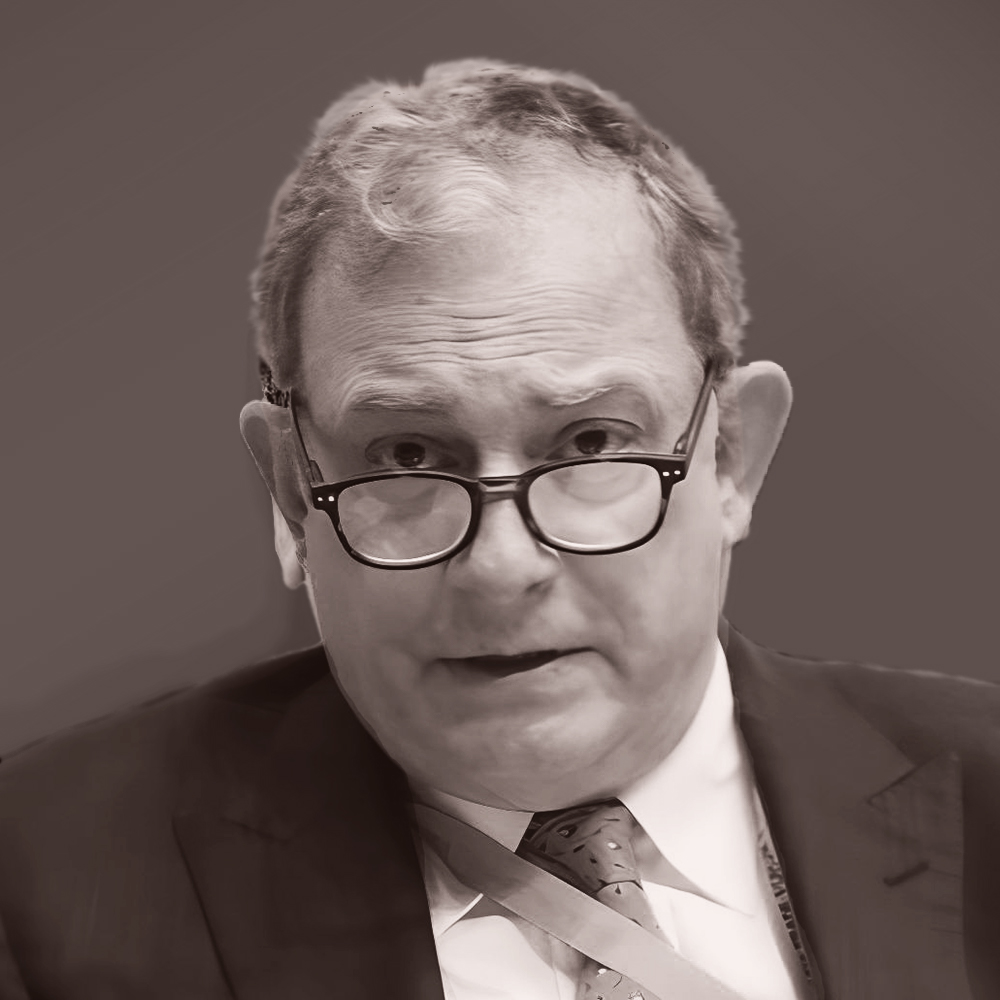
Javier M Piedra is a financial consultant with over 40 years of work experience in private and public sectors, international development, finance, marketing and advisory across multiple disciplines (corporate and retail banking, SMEs, hedge fund management, credit reporting, restructuring and sovereign and corporate risk management). He is former acting Assistant Administrator for Asia at USAID in President Trump's first administration.

Articles

Opinion: Gas, Geopolitics, and Realism: U.S.–Turkmenistan Talks Signal Shift

U.S. Secretary of State Marco Rubio and his Turkmen counterpart Rashid Meredov wrapped up bilateral consultations last week in Washington, DC. The encounter suggested a new awareness on Washington’s part of Turkmenistan’s pivotal geostrategic location in the heart of Central Asia and its status as a major hub of natural resources. Since becoming head of state in March 2022, Turkmenistan’s President Serdar Berdimuhamedov has shifted his country’s foreign policy from one of strategic isolation to what might be called practical realism, whereby priority is given to fair trade and investments that are in line with national interests and long-term development. Like the other Central Asian heads of state, Berdimuhamedov also champions a pragmatic, interest-based foreign policy. Consequently, they find the current, pragmatic U.S. administration with its concern to work out deals (presumably mutually beneficial ones) more congenial than its predecessor, with its penchant for geostrategic maneuvering and ideology. Secretary Rubio recently observed: “A mature foreign policy requires a balancing of interests - that’s a fact.” This way of thinking goes over well in smaller independent states such as Turkmenistan and other Central Asian countries, whose key national priorities include establishing their statehood on a firm basis and safeguarding their sovereignty amid the turbulent great power politics being played out in their vicinity. Oil and Gas Over the years, Berdimuhamedov has insisted that foreign entities seeking access to the country’s vast natural gas reserves must play by Ashgabat’s rules. Home to the world’s fourth-largest gas reserves, Turkmenistan invites foreign participation in its energy sector, provided that agreements are structured as win-win arrangements and don’t give suitors the geostrategic upper hand. In this context, it would make sense for Washington to get the word out about two upcoming conferences in Ashgabat: The Turkmenistan Investment Forum, September 18– 19, 2025, which will serve to attract long-term investment into the country's economy, and the 30th Oil & Gas of Turkmenistan – 2025 International Conference & EXPO (OGT 2025) on 22–24 October. Turkmenistan had a strong 2024 in terms of energy, producing 77.6 billion cubic meters of natural gas and 8.3 million tons of oil. The OGT 2025  will showcase the country’s resource potential and new investment opportunities, focusing on upstream projects such as the Galkynysh gas field and the Caspian blocks, as well as on initiatives in the areas of renewable energy, methane mitigation, and infrastructure modernization. Moreover, Ashgabat wants to expand its Trans-Caspian and north-south economic corridors and complete the Turkmenistan-Afghanistan-Pakistan-India (TAPI) gas pipeline, among other initiatives in transport and logistics. U.S. companies may want to explore these new opportunities. Travel Limitations to the U.S. Ashgabat is working with the U.S. Department of State to lift recently imposed restrictions on Turkmen citizens wishing to travel to the U.S. Both sides are aiming to ensure that applicants are properly screened before a visa is granted and that recipients comply with its terms. To further deepen ties, Washington should view Turkmenistan’s neutrality towards others on the global stage in security and foreign-policy matters not as an obstacle, but as an advantage that facilitates dialogue. While maintaining its advocacy for democratic principles,...

4 months ago

Kazakhstan Showcases Middle Power Role in Washington D.C.: Kazakh Ambassador Ashikbayev Spreads the Message

Like it or not, the world is moving away from unipolar dominance and entering an era of multipolarity where national interests increasingly counter the globalist ambitions of some major powers. In this evolving landscape, as the major powers adjust to new geopolitical realities, an increasing number of states are becoming more comfortable operating autonomously as sovereign nations. Against this backdrop, Kazakhstan is emerging as a middle power, conscious all the same of the risks associated with remaining neutral in the oft-times bitter rivalries between major powers. Over the past twenty years, Kazakhstan has consistently signaled that it will not be drawn into the strategic maneuverings of foreign powers, instead pursuing its own national interests in a measured fashion – rather like the other Central Asian states – so as not to undermine regional stability.  Accordingly, Astana offers good offices to foster dialogue and reconciliation among countries and blocs affected by conflict and/or heightened strategic competition. Murat Nurtleu, Kazakhstan’s Foreign Minister, underscores just that point: “In this era of geopolitical competition, Kazakhstan’s role as a bridge between East and West is more vital than ever.” These words not only highlight Kazakhstan’s confidence and expanding role as a rising middle power but aim to mitigate the potential consequences of great power overreach, whether in Central Asia or elsewhere. In a recent interview in Washington DC with this writer, Ambassador Yerzhan Ashikbayev of Kazakhstan to the United States elaborated: “Kazakhstan is a middle power, which means, broadly speaking, a country that holds an influential position in the international system, especially in Eurasia. Maintaining peaceful relations with our neighbors – major, middle, and minor powers – is a top priority for us. We work to shape outcomes beyond our own borders, keeping in mind our national interests, always fostering friendly and mutually beneficial ties – a modus vivendi – with our neighbors.” It is well-known that Astana’s global diplomatic strategy prioritizes fair trade and aims to strengthen inter-regional economic ties – especially in transport, logistics, finance, and communications. It views economic development – with an emphasis on building an economically stable middle class across ethnicities – as key to national unity and regional stability. It is less known that Kazakhstan, in its diplomatic pragmatism, winces at unequal power relations, preferring to focus on long-term equity outcomes over short-term efficiency in matters of economic development. Ambassador Ashikbayev emphasizes that “Kazakhstan’s foreign policy opens space where dialogue can flourish. Guided by pragmatism, we will concentrate on practical matters like communication, quality investment flows, fair commerce, energy, and critical minerals.” He insists that “for the international system to flourish, it should function well for all, promoting peace and the common good for the majority. That is what we export - peace.” U.S. Secretary of State Marcio Rubio also emphasizes the need to keep peace front and center: “President [Trump] wants to end wars.  He’s not a fan of wars.  He thinks wars are a waste of time and a waste of lives.  And we’re going to continue to do everything we can and engage...

4 months ago

In a New Light: Kazakhstan’s Evolving Relationship with Design and Atmosphere

For much of its recent history, Kazakhstan’s image has been shaped by the discourse of natural resource extraction — oil, gas, metals, the infrastructure to transport them, and the political influence they provide. But, a quiet transformation of its public and private spaces is underway, one not measured in barrels, commodity prices, or contracts, but by lighting or lights, which means ambience, illumination, aesthetics, and the atmosphere of lived space. Lighting, of all things, is central to human existence and part of its development story. It may seem peripheral, but in architecture, lighting is never neutral. It guides, reveals, softens, and dramatizes space. It also mirrors taste, cultural aspirations, and society’s choices. [caption id="attachment_34248" align="aligncenter" width="1200"] Astana Opera; image: Dilyara Abdirakhmanova[/caption] Light is the Language of Architecture and Space Some of Kazakhstan’s most emblematic public buildings already utilize the optimal use of lighting. The Astana Opera, for example, with its marble staircases and opulent chandeliers, is illuminated to bring out its grandeur and high culture. Its stage is masterfully lit so that musicians are inspired to give their best performances. Likewise, the Palace of Peace and Reconciliation, a crystalline pyramid designed by Foster + Partners, plays with transparency and glow, its stained-glass summit flickering between monument and mirage, giving voice to the need for peace in our time. Then there’s the Khan Shatyr Entertainment Center — part shopping mall, part climate-controlled urban experiment — which glows at night through its tensile skin - representing a range of civic and family-friendly amenities offering a comfortable and eye-pleasing microclimate for all. And then there’s the Hazrat Sultan Mosque, designed and lit for reverence and reflection. Daylight barrels through high arches; at dusk, soft interior light catches the tracery of Quranic calligraphy, domes, and minarets. The lighting is generous but subtle, quiet, and precise. In each of these cases, light isn’t an afterthought. It reaches out to the subconscious and makes daily human activity more pleasant. [caption id="attachment_34249" align="aligncenter" width="2000"] The Palace of Peace and Reconciliation; image: Foster + Partners[/caption] A Gap in Everyday Life Until recently, there has been little discussion in Central Asia about the link between lighting and its impact on the human person. Walking through many apartment buildings, offices, restaurants, and public lobbies, the atmosphere is flat, cold, and covered in uninspiring glare, often overpowering and at times blinding. These spaces may function, but they don’t resonate and are often uninviting. This state of affairs – the depressing nature of fluorescent grids – in the world of lighting is beginning to change, slowly, and unevenly. This shift towards ‘more welcoming’ lighting isn’t being driven by architects alone, or even by design schools. Demand comes from developers, hoteliers, homeowners, and restaurateurs who want to serve their clients better in an increasingly competitive environment. In this more mobile and inquisitive world, people want lighting that feels and works better for clients, employees, and oneself. A Market Beginning to Notice Enter enterprises like iSquare, a recently launched lighting design firm in Almaty. Its operating...

5 months ago

More Lennon, Less Lenin: Clerics to Huddle in Kazakhstan to Give Peace a Chance

In a world wracked by war, mistrust, and political gridlock, spiritual leaders from across the globe will gather on September 17–18, 2025, in Astana for the Eighth Congress of Leaders of World and Traditional Religions. The event aims to rekindle the hope of peace, not through the exercise of geopolitical power alone, but by revisiting transcendent truths and moral values. Convened under the patronage of President Kassym-Jomart Tokayev, the Congress is more than a ceremonial dialogue among clerics. Organizers and participants describe it as an urgent appeal to depoliticize religion, recalibrate diplomacy, and — channeling John Lennon — "give peace a chance." As the principal architect of the Congress, Kazakhstan President Kassym-Jomart Tokayev is expected to deliver a speech this September that is as optimistic as his keynote at the opening ceremony of the seventh Congress in 2023, despite deepening diplomatic challenges. Two years ago, he said, “Unfortunately, tension, mutual distrust, and even hostility are returning to international relations. What can we rely on to counter today’s challenges? History provides only one answer: goodwill, dialogue, and cooperation. There are no other guarantees of success. Threats, sanctions, and the use of force do not solve problems… We must turn to humanistic ideals, the main custodians of which are, of course, traditional religions.” This year’s gathering will once again feature a mosaic of spiritual leaders — from representatives of the Vatican and al-Azhar to leaders of Judaism, Buddhism, Hinduism, and Orthodox Christianity. While their theological traditions may differ, their shared focus will be on promoting compassion, truth, and mutual respect in a fractured world. “The world is spiraling into confrontation because it has lost the language of empathy and the grammar of reason,” Kazakhstan's former Ambassador to India and Senior Advisor at the International Centre for Interfaith and Interreligious Dialogue, Bulat Sarsenbayev, told The Times of Central Asia in an interview. “The Congress in Astana is not about theology alone — it is about restoring sanity in geopolitics.” A Platform for Peace According to Maulen Ashimbayev, Speaker of the Kazakh Senate and Chief of the Secretariat of the Congress, the event can serve to help heal an increasingly fractured global landscape. Visiting China in January, Ashimbayev stated that, "The world faces today a rather complicated geopolitical situation. New challenges and problems arise. In these conditions, the collective and united efforts of religious, political, and public leaders to promote a culture of peace and dialogue are gaining importance. The VIII Congress of Leaders of World and Traditional Religions will be dedicated to this very goal.” From Ceremony to Substance This year, the Congress is set to explicitly condemn religious extremism and the weaponization of faith, distinguishing between politicized religion and authentic spiritual leadership. Rather than allowing the precept that “might is right” and faith to be hijacked by ideologues, the forum will call for religion to be a bridge-builder, not a wedge, and for diplomats to engage in genuine dialogue in a spirit of compromise, not one-sided diktat. Past participants have included Pope...

5 months ago

Opinion: As Kazakhstan-China Trade Booms, Tokayev and XI Strengthen Relations

On June 16th, Kazakhstan’s President Tokayev hosted Chinese President Xi Jinping and the presidents of Kyrgyzstan, Tajikistan, Turkmenistan, and Uzbekistan in Astana at the second China-Central Asia Summit. The six countries signed the 'Treaty of Permanent Good-Neighborliness and Friendly Cooperation', which reinforced their strategic cooperation in multiple areas, particularly in trade and investment. Aggregate China-Central Asia trade is up 10.4% this year. Kazakhstan is a pivotal player in transcontinental Eurasian trade and integration. Its geographic location, multimodal transport networks, and strategic partnerships with neighboring countries, particularly China, position Kazakhstan as Central Asia’s primary overland gateway to Europe and West Asia. It’s no surprise, therefore, that President Xi Jinping visited Astana – his sixth trip to Kazakhstan and sixteenth to Central Asia. Over the past two decades, Kazakhstan has reclaimed its historic role as a nation of merchants and intermediaries, revitalizing trade routes like the middle corridor and logistics hubs such as Khorgos Gateway—a dry port facilitating container transshipment between Chinese and Kazakh railways en route to Europe. These are just two examples of infrastructure projects in Kazakhstan; there are many more in development. In Astana, Presidents Tokayev and Xi underscored the importance of further socio-economic progress arising from enhanced economic linkages. Tokayev reiterated Kazakhstan’s support for mutually beneficial business opportunities, emphasizing the principle of national sovereignty and independence. Recent trade figures reflect the robust economic ties in infrastructure and connectivity. Kazakhstan’s construction sector, driven by investments in transport, are poised to increase by 6.8% in 2025, according to Kazakhstani economists. Sino-Central Asian trade, according to China’s General Administration of Customs, reached $94.8 billion in 2024, with Kazakhstan accounting for 46% of that total—$43.8 billion—making it China’s largest partner in the region. This contrasts with Uzbekistan, Turkmenistan, and Tajikistan's combined total of $28.1 billion, and Kyrgyzstan’s $22.7 billion, driven largely by re-exports and gold. Kazakhstan remains the anchor economy in Central Asia – the strategic hinge between China and the West – as confirmed not only by the volumes of freight entering and leaving Kazakhstan, but by its upstream and downstream economic benefits, causing a multiplier effect across the country. Over 80% of land cargo from China to Europe passes through Kazakhstan. What factors have led to this development? A key factor has been global demand for raw materials, but that’s only part of the story. What stands out as the principal driver of Kazakhstan’s success in boosting trade over the past 20 years was its commitment soon after independence in 1991 to invest in transport and logistics, while creating a regulatory and legal framework in parallel to facilitate operability. In other words, Kazakhstan’s success is no accident. It was the country in Central Asia to embrace economic liberalization not as ideology, but as a pragmatic approach to address the inefficiencies of a centralized command economy. This visionary approach facilitated economic liberalization, including getting rid of oppressive centralized planning and embracing private capital and deregulation without relinquishing sovereignty. Kazakhstan also pushed ahead in developing a banking sector that over time provided a...

6 months ago