• KGS/USD = 0.01143 0%
  • KZT/USD = 0.00200 0%
  • TJS/USD = 0.10593 0.09%
  • UZS/USD = 0.00008 0%
  • TMT/USD = 0.28575 0%
  • KGS/USD = 0.01143 0%
  • KZT/USD = 0.00200 0%
  • TJS/USD = 0.10593 0.09%
  • UZS/USD = 0.00008 0%
  • TMT/USD = 0.28575 0%
  • KGS/USD = 0.01143 0%
  • KZT/USD = 0.00200 0%
  • TJS/USD = 0.10593 0.09%
  • UZS/USD = 0.00008 0%
  • TMT/USD = 0.28575 0%
  • KGS/USD = 0.01143 0%
  • KZT/USD = 0.00200 0%
  • TJS/USD = 0.10593 0.09%
  • UZS/USD = 0.00008 0%
  • TMT/USD = 0.28575 0%
  • KGS/USD = 0.01143 0%
  • KZT/USD = 0.00200 0%
  • TJS/USD = 0.10593 0.09%
  • UZS/USD = 0.00008 0%
  • TMT/USD = 0.28575 0%
  • KGS/USD = 0.01143 0%
  • KZT/USD = 0.00200 0%
  • TJS/USD = 0.10593 0.09%
  • UZS/USD = 0.00008 0%
  • TMT/USD = 0.28575 0%
  • KGS/USD = 0.01143 0%
  • KZT/USD = 0.00200 0%
  • TJS/USD = 0.10593 0.09%
  • UZS/USD = 0.00008 0%
  • TMT/USD = 0.28575 0%
  • KGS/USD = 0.01143 0%
  • KZT/USD = 0.00200 0%
  • TJS/USD = 0.10593 0.09%
  • UZS/USD = 0.00008 0%
  • TMT/USD = 0.28575 0%
21 February 2026

Our People > Ola Fiedorczuk

Ola Fiedorczuk's Avatar

Ola Fiedorczuk

Journalist and Social Media Manager

Ola Fiedorczuk is a freelance journalist, radio personality, presenter, podcaster, musicologist, and social media manager.

Articles

The Language Nobody Wants to Speak About: Russian’s Uneasy Place in Central Asia’s Cultural Conversation

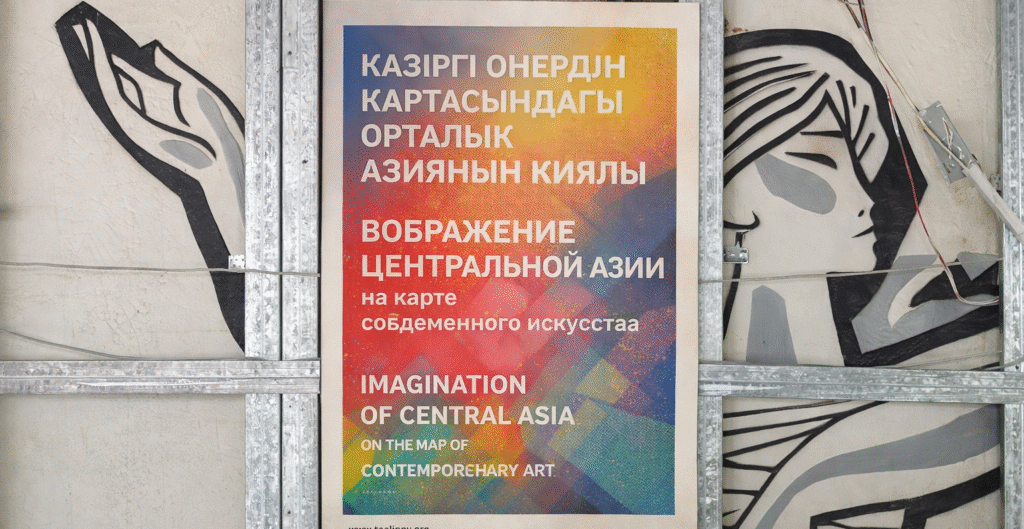
Rhetoric in segments of the Russian media has sharpened debates over sovereignty and influence across Central Asia, pushing these concerns beyond policy circles and into everyday conversations. The region is reassessing not only pipelines and alliances, but language itself. In politics, this shift is visible and symbolic. In culture, it is more difficult to discern. The Russian language still shapes how Central Asian art is funded, circulated, and institutionally processed, even as institutions distance themselves from Moscow’s influence. This contradiction sits at the heart of contemporary cultural life in the region. Artists produce work rooted in Kazakh, Uzbek, Kyrgyz, Tajik, or Turkmen histories. They title exhibitions in local languages. They speak passionately about decolonial futures and cultural sovereignty. But when the catalogue is written, the grant application submitted, or the curatorial text sent abroad, the language quietly shifts. First to Russian, sometimes to English, and only occasionally does it remain in the local language. This is not nostalgia, but a structural inheritance. Russian remains the shared professional language of much of the urban cultural sector. Edward Lemon, President of the Oxus Society for Central Asian Affairs, argues that the language’s endurance reflects both ideology and pragmatism. “While local languages have become much more widespread as the Central Asian republics have strengthened their nationhood and as there has been an increase in anti-Russian sentiments since the invasion of Ukraine, Russian language use remains widespread,” Lemon told TCA. “Despite the ideological imperative to reduce reliance on Russian, there are some pragmatic reasons why it remains prominent. High levels of migration to Russia, particularly from Uzbekistan, Kyrgyzstan, and Kazakhstan, mean that a basic competence in the language is essential to survival for many Central Asians. Russian remains a language of interethnic communication, particularly in Kazakhstan, where ethnic Russians, for the most part, are reluctant to speak Kazakh. While English has become more widespread and some of the Central Asian languages are mutually intelligible, Russian retains a status as a diplomatic, business, and civil society language for those working in multiple countries. Russia also remains a language of education. Over 200,000 Central Asians study in Russia, by far the largest destination in the world. Russian-language schools remain prominent at every level in Central Asia, from kindergarten to graduate schools. In short, while the usage of Russian is in slow decline, its position is relatively entrenched.” For cultural institutions, this reality means that distancing from Moscow politically does not automatically sever the linguistic infrastructure through which grants are written, exhibitions travel, and contracts are signed. Naima Morelli, an arts writer focused on contemporary art across Asia-Pacific and the Middle East, argues that the issue is less about elimination than coexistence. “For me, it makes sense that Russian continues to function as a practical operating language across Central Asia’s cultural infrastructure, as an inherited connective tissue of sorts. In the hypothesis of getting rid of it, the most obvious alternative for a shared language for exchanges across countries in Central Asia is English, which the global...

22 hours ago

Beyond the Yurt: Rethinking Nomadism in Kazakh Contemporary Art

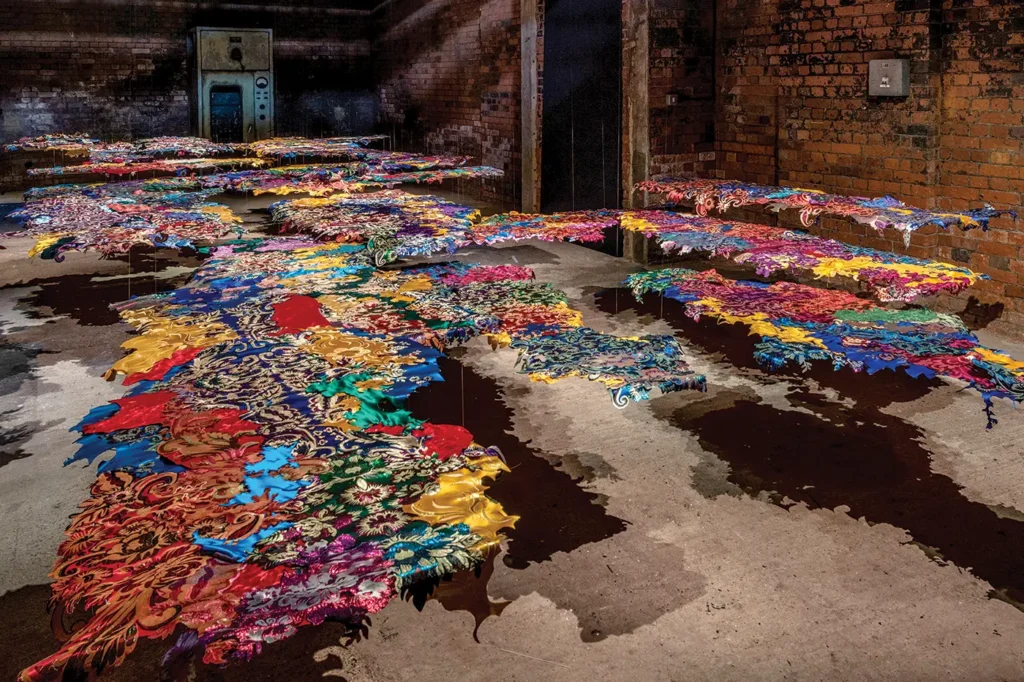
At a moment when Kazakhstan is building new cultural institutions and asking bigger questions about what contemporary art should do, one curator has been quietly learning how power, taste, and narrative are shaped inside major museums. Akmaral Kulbatyrova, the first representative of Kazakhstan to receive the U.S.-based ArtTable Fellowship, spent 2025 working in the Exhibitions and Curatorial Projects Department at The Bass Museum of Art in Miami Beach, gaining rare inside access to how global exhibitions are conceived and positioned. Her work sits at the intersection of institutional practice and cultural repair, focused on reframing nomadic culture, Central Asian heritage, and Kazakh craft not as static tradition but as a current language. Akmaral’s experience links ambition and execution, showing how local histories can enter international spaces without being flattened. In this interview with The Times of Central Asia, we asked her what comes next. TCA: Nomadic imagery has become central to Kazakhstan’s national identity since independence. How are contemporary artists reshaping these symbols, and why does that matter for how the country sees itself today? AK: Kazakh contemporary artists briefly challenged Kazakh art in early avant-garde experiments in the 1960s. However, it stopped because of the huge presence of Socialist Realism, which was one of the movements where symbols like horses and yurts prevailed. Most of the contemporary artists reshape not the symbols; they reimagine nomadic culture, contextualizing pre-Soviet culture through researching how it changed over time. Many artists look back to pre-Soviet nomadic practices to explore how these traditions were disrupted by colonial and Soviet policies, yet continue to influence Kazakh identity today. By using installation, performance, and video, they move beyond decoration and folklore to show nomadism as a living culture rather than a museum image or symbols. This matters because it helps Kazakhstan see itself not through simplified national symbols, but as a society shaped by change, cultural mixing, and an ongoing negotiation between past and present. [caption id="attachment_42899" align="aligncenter" width="1536"] Qyz Zhibek, designed by Nikolai Vladimirovich Tsivchinsky and Moldakhmet Syzdykovich Kenbaev, 1971; image: TCA[/caption] TCA: Nomadism now circulates widely in pop culture, often detached from its historical meaning. Why does contemporary art provide a more critical way to examine what nomadic identity represents? AK: It’s typical that symbolic images prevail in pop culture, especially for countries that have not experienced a long artistic tradition. It is one of the ways to be acknowledged by the privileged cultures through the symbols that are easy to recognize and quickly signal national identity. In Kazakhstan, these images became important after independence, as they cover the main question of cultural uniqueness after colonial influence. Contemporary art takes slower and more contextual approaches rather than easy recognition. That’s why most modern scholars criticize symbolic language and would like to see art that explores unresolved histories and how nations were challenged or used their experience to construct their identity. [caption id="attachment_42900" align="aligncenter" width="750"] Anvar Musrepov, IKEA KZ; image courtesy of the Aspan Gallery[/caption] TCA: Many artists use nomadic motifs with irony rather...

3 weeks ago

La Tregua: A Bridge Across Wars and Worlds – An Interview with Director Miguel Ángel Vivas

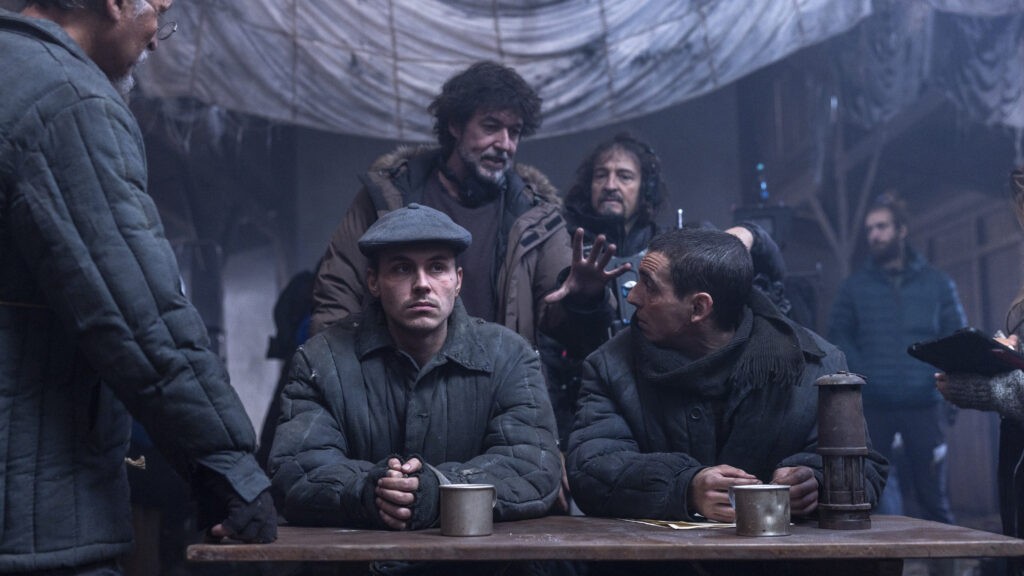
In the misty green heart of Bizkaia, where mountains rise like ancient sentinels and the air carries the scent of rain and earth, a remarkable filmmaking journey unfurled. This is where director Miguel Ángel Vivas Moreno, known for Money Heist (La Casa de Papel), Cicatriz, Desaparecidos, and Secuestrados, reconstructed one of the most haunting landscapes of the twentieth century: a Soviet gulag on the distant Kazakh steppe. His new film, La Tregua (The Truce), invites viewers into a story based on actual events that unfolded far from Spain, but holds deep ties to its history. It traces the ordeal of Spanish prisoners during World War II who fell into Soviet hands and were compelled to endure the harsh, frozen conditions of a labor camp. Their struggle becomes a bridge between past and present, between countries and cultures, and between two men who must learn to recognize each other beyond the uniforms that once made them enemies. [caption id="attachment_40358" align="aligncenter" width="2560"] All images courtesy of the production[/caption] The project is an unprecedented Spanish-Kazakh co-production from Spassk 99, AIE, Amanat Capital, LTD, and Umaifilm, LLP. This partnership gives the film a reach that feels genuinely cross-continental. It is a motion picture passport that opens a window onto a forgotten corner of global history. At the center of the story are Miguel Herrán and Arón Piper, who step into the roles of Reyes and Salgado. The characters appear as ideological enemies; having fought on opposing sides during the Spanish Civil War, both carry heavy psychological baggage. Inside the camp, their former certainties fall away. What begins as uneasy coexistence becomes an inward journey shaped by hunger, fear, and the starkness of their new reality. Executive producer César Benítez recalls searching for two actors capable of expressing both the physical exhaustion of imprisonment and the spark of hope that keeps a person standing. He says that the moment he saw Miguel and Arón together, he recognized that rare blend of fragility and fire. Miguel Ángel Vivas talked to TCA to break down the challenges and highlights behind the production. [caption id="attachment_40356" align="aligncenter" width="2560"] All images courtesy of the production[/caption] TCA: The story is fictional, but it is based on real events in Kazakhstan. Can you explain the historical context and how it inspired La Tregua? Miguel: The story begins with a documentary about Spaniards in the Soviet gulags. That’s where we discovered that republicans and fascists shared the same prison two years after the Spanish Civil War ended. It struck us as a fascinating starting point for a human story about the relationships that formed between them. [caption id="attachment_40357" align="aligncenter" width="2560"] All images courtesy of the production[/caption] TCA: The premise is intriguing: how two fighters on opposite sides of the Spanish Civil War end up in a gulag in Kazakhstan. In an increasingly polarized world, is there a lesson in the film to help heal the wounds that divide Spain, or even the world in general? Miguel: That was the idea! In such a...

3 months ago

The Artistic Brilliance of Central Asia Takes Center Stage at Sotheby’s

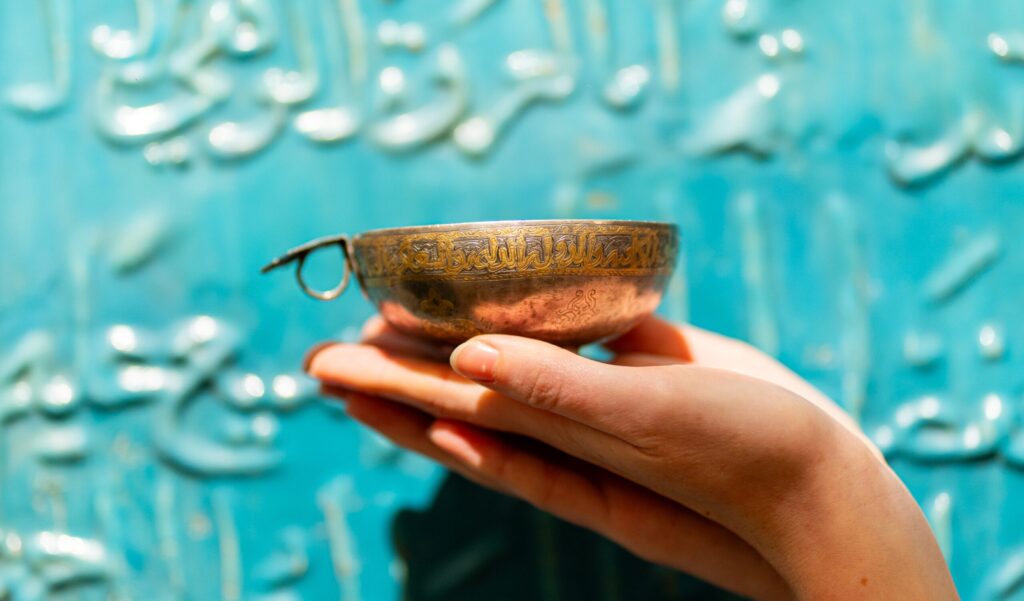
On October 29, Sotheby’s will host its Arts of the Islamic World and India sale, featuring a dazzling selection of manuscripts, ceramics, metalwork, and jewelry that together trace the creative reach of Central Asia across six centuries. The auction highlights how the region’s artists shaped Islamic visual culture from the early medieval period to the Timurid age. Among the most important works is a rare page from the monumental Baysunghur Qur’an, produced around 1400 in Herat or Samarkand. Another piece connects to the earlier Samanid Dynasty, whose rule from Bukhara and Tashkent fostered a flourishing of calligraphic pottery in the ninth and tenth centuries. The Arab geographer al-Maqdisi once praised the “large bowls from Shash,” an early name for Tashkent, noting their reputation throughout the Islamic world. [caption id="attachment_38298" align="aligncenter" width="1797"] A line from the 'Baysunghur Qur'an', attributed to 'Umar al-Aqta, Herat or Samarkand, circa 1400; image: Sotheby's[/caption] Two colorful Timurid mosaic tiles from the fourteenth or fifteenth century illustrate the architectural splendor of Samarkand and Herat. Their glazed patterns in cobalt, turquoise, and white once formed part of vast decorative panels in mosques and mausoleums. The geometric interlace and stylized foliage that define them became a visual signature of Timurid architecture, a style that spread from Central Asia to Persia and India. [caption id="attachment_38301" align="aligncenter" width="1346"] A Golden Horde turquoise and pearl-set gold belt or necklace, Pontic-Caspian Steppe, 14th century; image: Sotheby's[/caption] The Times of Central Asia spoke with Frankie Keyworth, a specialist in Islamic and Indian Art at Sotheby’s, for a closer look. TCA: How did manuscripts like the Baysunghur Qur’an serve as symbols of power and faith in the Timurid court, and what does its immense scale - a Qur’an so vast it took two people to turn a page - reveal about the empire’s ambition, artistry, and self-image? Keyworth: The manuscript was a hugely ambitious and challenging project, even just by the tools it would take to create, with monumental sheets of paper measuring 177 by 101cm., and a large pen whose nib would have to measure over 1cm. Displayed on a magnificent marble stand, the manuscript would be a staggering visual representation of the patron’s wealth and piety. Their subsequent use during public recitation reinforced the elite’s religious aspirations. The fact that this manuscript is unsurpassed by any other medieval Qur’an and remains so valued centuries after it was produced at the turn of the 15th century reveals the key role manuscripts played in the establishment of the Timurid dynastic image. [caption id="attachment_38299" align="aligncenter" width="1346"] A Timurid brass jug (mashrabe), Herat, Afghanistan, 15th-early 16th century; image: Sotheby's[/caption] TCA: A brass jug from Herat shaped like a Chinese vase, a ceramic bowl from Tashkent inscribed in Arabic script - these objects tell of traders, scholars, and artists linking worlds from Samarkand to Beijing long before globalization had a name. What can you tell us about how this trade transpired, and are there similarities to modern transport corridors? Keyworth: Trade via the so-called Silk Road endured for...

4 months ago

In The Kitchen: A Reflection of Taste and Art, Savoring the Color of Flavor

In the culinary world, all eyes have turned towards Almaty, as the city becomes the stage for In the Kitchen: Anniversary Edition, an international project uniting haute cuisine and contemporary art. This year’s edition centers on Austrian conceptual artist Norbert Brunner-Lienz, whose work explores how language and reflection shape perception, turning words and images into immersive experiences. At Laureate Grand Café, his installation has become the heart of a three-night gastro-performance. Mirrored surfaces invite guests to see themselves within the art, blurring the line between viewer and participant. Each reflection reveals the unseen link between seeing and being seen, transforming perception into part of the artwork. Light and meaning shift with every glance. [caption id="attachment_38089" align="alignnone" width="1600"] Image: Ilyas Otan[/caption] Brunner, who lives and works between Vienna and New York, is personally presenting the project in Almaty, with guests having the opportunity to meet him, learn about his creative philosophy, and experience how his art connects the visual, linguistic, and culinary worlds. The gastronomic performance is led by Michelin-starred twin chefs Dominik Sato and Fabio Toffolon from The Chedi Andermatt in Switzerland. Inspired by the Japanese concept of ichi-go ichi-e, the art of treasuring each unrepeatable moment, their menu transforms dining into a multisensory journey. Completing the team is Yoshiko Sato, pastry chef at The Japanese (two MICHELIN stars), celebrated for desserts that balance technical mastery with grace and feeling. [caption id="attachment_38090" align="aligncenter" width="1600"] Image: Ilyas Otan[/caption] Education plays a key role in this edition. Students from Almaty Technological University (ATU) will attend free masterclasses with the Michelin-starred chefs. Workshops are being held at both the Laureate Grand Café and ATU, giving young chefs direct access to the world of haute cuisine. Among the special guests are Giliola Masseroni, owner of Gioielleria Maison “Giglio” in Cremona, Italy; Olga Daniele, founder of 365 ART in Switzerland; and Ainur Akhmetova, founder of Laureate Grand Café and co-founder of In the Kitchen. Olga Daniele imagined In the Kitchen as a dialogue between art and gastronomy, where creative thought is served alongside taste and texture. In collaboration with Ainur Akhmetova, she brings this vision to Kazakhstan, weaving together good food with art to create an experience that speaks to all the senses. [caption id="attachment_38091" align="aligncenter" width="1600"] Image: Ilyas Otan[/caption] Their partnership rethinks how we encounter art and eating: not as separate disciplines, but as intertwined forms of expression that reveal how creation lives in every brush stroke, flavour, and idea. A forthcoming book of culinary art will capture this collaboration, inviting readers to engage with these themes further. In the Kitchen: Anniversary Edition unfolds as a shared act of creation, where food becomes a language and creativity takes shape in the exchange between those who make and those who taste. The event will be held at the Laureate Grand Café, 85 Bogenbai Batyr St., Almaty, from October 23–25, 2025.

4 months ago

Turkmenistan Contains ‘Gate to Hell’ Fire After Decades of Inferno

The fiery spectacle of the Darvaza Gas Crater, feared and revered as the 'Gate to Hell,' has dimmed significantly after over fifty years of continuous burning. Turkmenistan’s government announced that the massive blaze, located in the heart of the Karakum Desert, is now largely under control, marking a historic milestone in environmental and resource management efforts for the country. A Fiery Origin The story of the Darvaza Gas Crater began in 1971 when Soviet scientists attempted to study and manage methane leaks in the desert. Digging into what they believed was a minor pocket of natural gas, they inadvertently pierced a massive underground gas field. When the drilling rig and associated equipment suddenly collapsed into the cavern below, toxic gases began escaping uncontrollably. To prevent the spread of noxious fumes, the team decided to ignite the methane, hoping it would burn out in a matter of days. They were wrong. Instead of a quick resolution, the crater transformed into the longest-burning man-made fire, its eerie yellow flames licking at the edges of the 200-meter-wide pit. Visible from miles away, the burning crater became a bizarre and otherworldly landmark, attracting adventurers, scientists, and tourists alike. From 'Gate to Hell' to 'Shining of Karakum' [caption id="attachment_32708" align="aligncenter" width="2560"] Image: TCA, Stephen M. Bland[/caption] Now officially named the 'Shining of Karakum,' the Darvaza Gas Crater has been both a source of national pride and a symbol of environmental mismanagement. The flames and the heat haze rising from the crater have drawn global attention, but they have also brought concerns. Methane seepage from the pit has been a major environmental issue, contributing to greenhouse gas emissions. Furthermore, some locals living in the harsh desert environment have long argued that the crater should be extinguished, citing health risks and economic losses due to the wastage of valuable natural gas. A Turning Point in Fire Containment The efforts to extinguish the 'Gate to Hell' reached a decisive turning point in January 2022, when then-President Gurbanguly Berdimuhamedov ordered action to put out the flames, emphasizing the detrimental effects of the blaze on the environment and the squandered financial potential of the escaping gas. However, earlier attempts over the decades failed to curtail the inferno. This time, Turkmengaz, the state energy company, launched a sustained effort involving drilling additional wells around the crater to capture and divert the methane. According to Irina Luryeva, a director at Turkmengaz, these operations have significantly reduced the volume and intensity of the fire. “Whereas before, a massive glow from the blaze was visible for miles, today only faint combustion remains,” Luryeva stated. Independent satellite data confirmed the success, showing a threefold reduction in methane emissions from the site. Global Collaboration and Environmental Initiatives The containment of the Darvaza blaze is a result not just of national initiative but also of international collaboration. In March 2024, Turkmenistan partnered with the United Nations Environment Programme (UNEP) to address methane emissions comprehensively. The project included advanced monitoring technologies and strategies to manage methane leaks across...

9 months ago

Unveiling the Magic: Behind the Scenes of “Baikonur”

Space continues to capture our imagination and inspire our stories, as we try to make sense of this vast final frontier. In the last part of our series on Baikonur, we explore its depiction within cinema. In 2011, German filmmaker, Veit Helmer released Baikonur, a story about space, scavenging and misguided love that was shot within the region. TCA spoke to him about filming in this heavily restricted landscape.   TCA: What was the inspiration behind your film, Baikonur? What drew you to this subject matter? Helmer: I was fascinated by the actual place, or what I knew about it; a hidden city with such a glorious past. Whilst researching, I found out about the scavengers who collect the pieces which fall on the steppe when the rockets are heading to space. To tell both stories at the same time intrigued me: space exploration and hunting for scrap metal. TCA: Given you also directed Absurdistan and Tuvalu, would it be fair to say you’re drawn to far-flung places? Helmer: Yes, I love to explore and find locations which haven’t been filmed before. But compared to the locations of my previous films - Tuvalu, which was shot in Bulgaria, and Absurdistan, which was shot in Azerbaijan - to travel to Baikonur was a much longer journey. [caption id="attachment_21684" align="aligncenter" width="2560"] Still from the film, "Baikonur," Alexander Asochakov as "Gagarin" leaving, villagers standing near yurt; image: Veit Helmer[/caption]   TCA: As stated in the tagline of your film, “Whatever falls from heaven, you may keep. So goes the unwritten law of the Kazakh seppe. A law avidly adhered to by the inhabitants of a small village, who collect the space debris that falls downrange from the nearby Baikonur space station.” The village scavengers portrayed in your film are based in reality; how did you find out about them, and what was your experience with them? Helmer: It was very funny reading the first review from Kazakhstan, where a young journalist wrote that the film is based on the old Kazakh law “Whatever falls from heaven, you may keep,” which in reality was an invention by my screenwriter, Sergey Ashkenazy. But as this fable seems to feel so real, I never tried to dispel that myth. When writing the screenplay, Sergey and me went to Zheskaskan and the surrounding steppe, talking to the hunters of the scrap metal. It was not an ideal moment, because Roscosmos started to collect the debris themselves and the local villagers’ activity became illegal. The new reality was not villages against each other, but villagers against Roscosmos. [caption id="attachment_21685" align="aligncenter" width="2560"] Still from the film, "Baikonur," Alexander Asochakov as "Gagarin" (center) cleaning assembly hall in Baikonur ; image: Veit Helmer[/caption]   TCA: As a Western filmmaker you were granted a unique opportunity to film within Baikonur - what did you observe of the landscape? What were the highlights of this experience? Helmer: There was a saying among the early cosmonauts that the Central Asian steppe was for them...

2 years ago

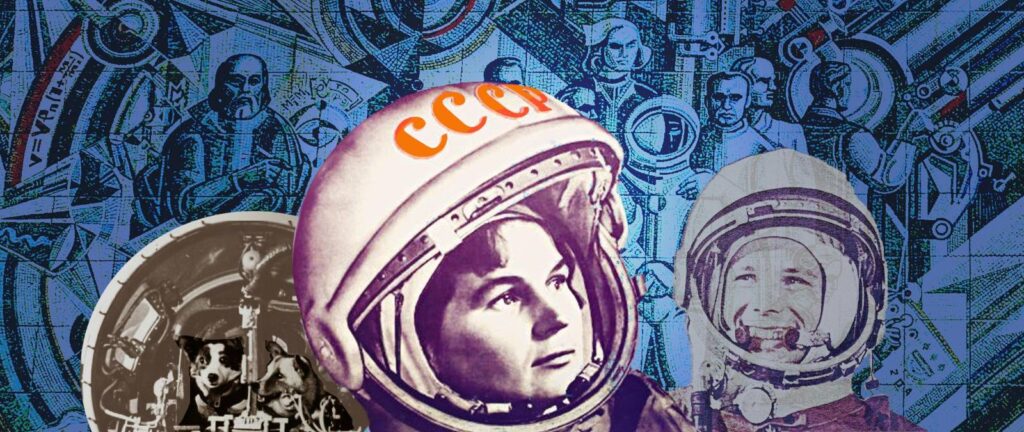
Baikonur: An Alternative Journey Into Space

The moon landing is imprinted on the Western collective psyche, but Baikonur is not. Like most children growing up in the U.S., I watched William Shatner on Star Trek, and when we think of space, we think of Neil Armstrong and NASA, not Kazakhstan. However, on April 12, 1961, the first man in space, Yuri Gagarin, took off from the Baikonur Cosmodrome in what is now Kazakhstan. Like WWII, however, space is the subject of parallel narratives, and the “Space Race” was an integral part of the Cold War.   Baikonur Is a Place of Firsts Baikonur is a place of firsts - the first artificial satellite, Sputnik 1, the first dog, Laika, the first higher living organisms to survive a journey to outer space, Belka and Strelka, the first man, Yuri Gagarin, and the first woman, Valentina Tereshkova, all took off from Baikonur. Originally constructed during the Cold War as a missile test site, the area was chosen for several reasons; it’s isolation from densely populated areas and proximity to the equator made it easier to launch rockets, and the flat landscape ensured radio signals would not be disrupted. The battle for control over space between the U.S. and the Soviet Union was both ideological and military in nature. Baikonur was baptized in Cold War misinformation tactics. Located thirty kilometers south of the launch facilities, the closest town was originally known as Tyuratam. In 1961, Soviet officials swapped its name with a town located some 350 kilometers away, “Baikonur,” to misdirect Western intelligence. A fake spaceport constructed from plywood was erected in the “real” Baikonur to deceive enemy spy planes. In the early 1960s, the Soviet Union's covert actions allowed it to advance its space program faster than the United States, which faced public and media scrutiny. While U.S. space missions were broadcast live, exposing any failings, the USSR could operate clandestinely, protecting its missile technology and maintaining a strategic edge. A key example is the R7 rocket used to launch Yuri Gagarin into space; the largest intercontinental ballistic missile of its time, its details were closely guarded. [caption id="attachment_21512" align="aligncenter" width="1622"] Fifty year commemorative stamp of the first woman in space, Kazakhstan, 2013[/caption]   “Space Race” Propaganda Another tool of Cold War propaganda was the flight of Valentina Tereshkova, the “First Lady of Space.” Prior to her journey to the stars in June 1963, Tereshkova had worked on an assembly line in a textiles factory. Her parachuting experience with a local paramilitary flying club proved crucial in her selection. In her three-day flight, the every-woman clocked up more space hours than all American astronauts up to that time combined. Tereshkova may have been a propaganda tool dispatched for Western audiences as proof of gender equality in the USSR, but it would be a nineteen year wait for the next female cosmonaut. In 2007, at the age of seventy, Tereshkova volunteered for a one-way mission to Mars. Having turned to politics as her primary concern following her spaceflight, in...

2 years ago