• KGS/USD = 0.01144 0%
  • KZT/USD = 0.00204 0%
  • TJS/USD = 0.10731 0%
  • UZS/USD = 0.00008 0%
  • TMT/USD = 0.28490 0%
  • KGS/USD = 0.01144 0%
  • KZT/USD = 0.00204 0%
  • TJS/USD = 0.10731 0%
  • UZS/USD = 0.00008 0%
  • TMT/USD = 0.28490 0%
  • KGS/USD = 0.01144 0%
  • KZT/USD = 0.00204 0%
  • TJS/USD = 0.10731 0%
  • UZS/USD = 0.00008 0%
  • TMT/USD = 0.28490 0%
  • KGS/USD = 0.01144 0%
  • KZT/USD = 0.00204 0%
  • TJS/USD = 0.10731 0%
  • UZS/USD = 0.00008 0%
  • TMT/USD = 0.28490 0%
  • KGS/USD = 0.01144 0%
  • KZT/USD = 0.00204 0%
  • TJS/USD = 0.10731 0%
  • UZS/USD = 0.00008 0%
  • TMT/USD = 0.28490 0%
  • KGS/USD = 0.01144 0%
  • KZT/USD = 0.00204 0%
  • TJS/USD = 0.10731 0%
  • UZS/USD = 0.00008 0%
  • TMT/USD = 0.28490 0%
  • KGS/USD = 0.01144 0%
  • KZT/USD = 0.00204 0%
  • TJS/USD = 0.10731 0%
  • UZS/USD = 0.00008 0%
  • TMT/USD = 0.28490 0%
  • KGS/USD = 0.01144 0%
  • KZT/USD = 0.00204 0%
  • TJS/USD = 0.10731 0%
  • UZS/USD = 0.00008 0%
  • TMT/USD = 0.28490 0%

Our People > Ola Fiedorczuk

Ola Fiedorczuk's Avatar

Ola Fiedorczuk

Journalist and Social Media Manager

Ola Fiedorczuk is a freelance journalist, radio personality, presenter, podcaster, musicologist, and social media manager.

Articles

Bold Pavilions, Big Statements: Central Asia at Osaka Expo 2025

On a sweltering August day, The Times of Central Asia arrived at the Osaka Expo 2025. The theme, "Designing Future Society for Our Lives," set the stage for a carnival of new ideas and technology. Pavilions buzzed with invention, each one a world of its own. Central Asia turned heads - with all five countries represented - with vibrant stalls, bustling booths, and grand castle-like showpieces that drew crowds from every corner. [caption id="attachment_35420" align="aligncenter" width="2560"] Kazakhstan Pavilion; image: TCA, Stephen M. Bland[/caption] Kazakhstan’s pavilion presents the theme “Born Bold” in the “Connecting Lives” zone, alongside South Korea, Germany, Luxembourg, Nepal, Azerbaijan, Iran, Monaco, and Türkiye. At its heart rises the shanyrak, the sacred crown of the yurt, once a symbol of roots and now a beacon of unity, mirroring the Expo’s spirit of innovation and shared horizons. The story begins with the essence of the Kazakh people. Generations, history, culture, and traditions unfold from the Kazakh Khanate and the vast steppe to Abai’s poetry and the nation’s sporting heroes. It is a narrative of memory and strength, where the past is not closed, but carried forward as a living value. [video width="1280" height="720" mp4="https://timesca.com/wp-content/uploads/2025/08/KZ1-REMOVE-AUDIO-Videobolt.net_.mp4"][/video] From history, the focus shifts to unity. Every guest becomes part of the experience as their face is woven into a digital mosaic, a vivid symbol of belonging. Interactive technologies present Kazakhstan as a country where diversity does not divide but connects. From past to present, the spotlight then falls on a Kazakhstan that is inventive and future-ready. Visitors explore the country’s energy transition, green initiatives, digitalization, and work in artificial intelligence, alongside its rise as an investment hub. [caption id="attachment_35413" align="aligncenter" width="2560"] Prolonging life - ALEM at the EXPO; image: TCA, Stephen M. Bland[/caption] The final chapter places pride and place on the groundbreaking ALEM (Astana Life Ex-situ Machine) developed by Kazakh scientists. Created by the Heart Center Foundation, it is already redefining the possibilities of transplantation. The window for organ transplants is short, from just a few hours for a heart or lungs to more than a day for a kidney. ALEM changes the game. By replicating the body’s internal conditions, it can keep a donor heart alive for 24 hours, opening new possibilities. Only a few models currently exist, including the one on display in the pavilion. [caption id="attachment_35414" align="aligncenter" width="2560"] The Turkmenistan Pavilion; image: TCA, Stephen M. Bland[/caption] The Turkmenistan Pavilion dazzles with three lavish floors beneath an iconic, rounded-triangular ceiling that symbolizes circulation, sustainability, and the flow of life. On the ground level, an epic immersive video left the Japanese audience gasping as it honored Turkmenistan’s great men, legendary horses, and loyal dogs, while women appeared only in fleeting roles. [video width="1280" height="720" mp4="https://timesca.com/wp-content/uploads/2025/08/TK1.mp4"][/video] The second-floor shifts to the present, celebrating modern achievements, from the smart city of Arkadag to advances in industry, finance, and science. The space unfolds as an eclectic mix of books, jewelry, rugs, and even everyday objects like bottles of oil. At its center, a glowing...

10 months ago

From Tashkent to Tennessee: Uzbek Stories Bridge Worlds in Nashville Debut

Uzbekistan's literary luminaries will make their first appearance at the Southern Festival of Books in Nashville, Tennessee. Now in its 37th year, this iconic event is one of the biggest and most celebrated literary festivals in the U.S., and this year, attendees will get a taste of Uzbek storytelling. Avid readers will dive into the vibrant and poetic world of Uzbek literature, where Southern hospitality meets Central Asian artistry. “Nashville is a publishing powerhouse — we love our books here,” Mark Reese, the organizer behind the showcase, told The Times of Central Asia. “I’m proud that my city has come together to support this exciting cultural exchange and open the door to new literary voices.” Reese partnered with Akbar Toshtemurov, founder of Booktopia in Tashkent, to bring the vision to life. “Booktopia is a natural ally in the effort to spread awareness of Uzbek literature abroad through professional translation,” Reese said. “Akbar Toshtemurov has sponsored the translation of over fifty English-language titles into Uzbek and brings deep expertise to the table.” [caption id="attachment_34419" align="aligncenter" width="1152"] Mark Reese - image courtesy of the subject[/caption] Among the featured writers is Abdulla Qodiriy, one of Uzbekistan’s most revered authors. His novel Oʻtkan Kunlar (Bygone Days) — a cornerstone of Uzbekistan’s literary heritage — will be central to the presentation. “Qodiriy will certainly be a focal point,” Reese said, “but I expect other authors, both past and contemporary, to have a seat at my table.” Reese has spent over 30 years bridging cultures. He has created education programs across Central Asia and the U.S., spearheaded eLearning, curriculum reform, and translation projects. As the founding director of the Center for Regional Studies at the U.S. Naval Academy, he crafted top-tier academic content, cementing his legacy in cultural diplomacy. His efforts to promote the Uzbek language and culture, including his English translation of Oʻtkan Kunlar, earned him Uzbekistan’s Presidential Order of Doʻstlik. “My career in Uzbekistan started with the Peace Corps in 1994,” Reese told TCA. “I served in Kokand as one of the first volunteers in the city as an English teacher. “What has always fascinated me and that I’ve admired are the layers of culture that inform each other - Uzbekistan’s rich ecumenical heritage — it has everything from petroglyphs, Zoroastrianism, Buddhism, Christianity, and Islam. Being able to witness the birth of a republic is an extremely rare experience as well. I’ve been a student of Uzbekistan ever since.” TCA: How did you come across Uzbek literature, and what universal themes might appeal to a U.S. audience? “Kokand is known as the center of literary Uzbek, which is mainly attributed to Umar Khon and Nodira. So, I learned the Kokand dialect of Uzbek. The University of Washington’s graduate program in Near Eastern Languages and Civilizations, as well as Tashkent’s Sharqshunoslik University, underpinned my academic knowledge.” TCA: What inspired you to feature Abdulla Qodiriy’s work at the festival? “Uzbekistan suffers from a structured soft power presence abroad. Thirty-plus years of independence, and their narrative still...

11 months ago

The Hearth of Hospitality: The Importance of the Chaikhana in Central Asia

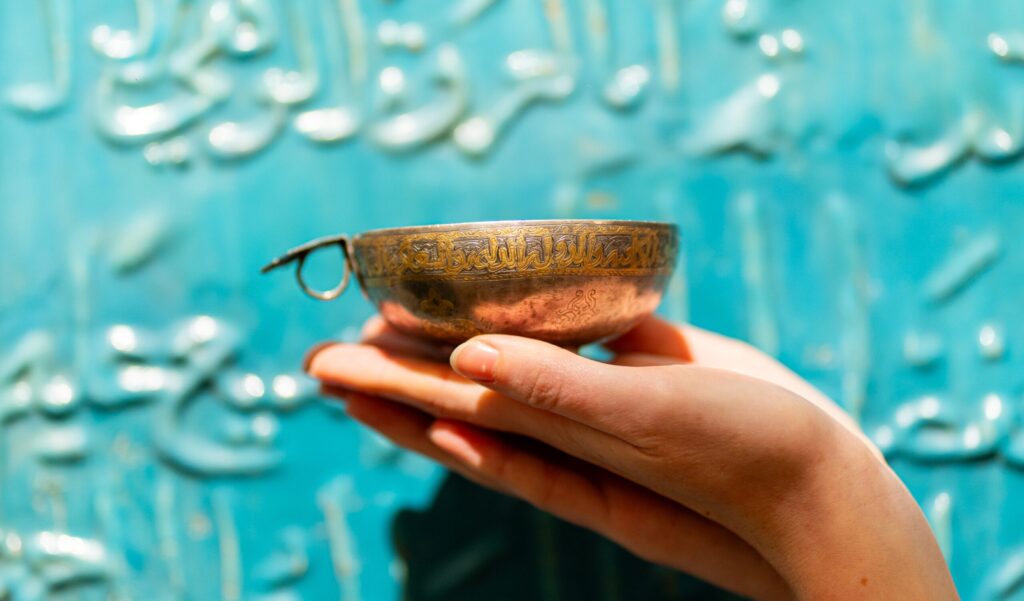
“Every meal begins with tea and ends with tea. Every guest is welcomed with tea. Every festival and every ceremony – from the celebration of birth to wedding to funeral – must feature tea” - Ketan Desai. Across Central Asia, the chaikhana, or teahouse, holds a cherished place in the region’s social and cultural fabric. Beyond serving cups of steaming tea, it represents history, hospitality, and a space where the rhythms of daily life unfold. For Central Asians, tea isn’t just a drink; it’s a way of life. Every pour, sup, and serving is steeped in tradition. Green tea is considered supreme in the east, while black tea holds court in the west. The offering of tea isn’t just polite, it’s a heartfelt symbol of welcoming and friendship, and to turn it down is practically a cultural crime. Tea is always poured into a piala, a small ceramic or porcelain bowl similar to the Chinese gaiwan or the Japanese chaiwan, but with its own unique steeped allure. A Link to History [caption id="attachment_33095" align="aligncenter" width="1024"] Chaikhana, Samarkand, 1905; image: Prokudin-Gorskiĭ[/caption] The chaikhana has roots stretching back centuries, intertwined with the history of the Silk Road. These teahouses sprang up along trade routes as places where merchants, travelers, and locals could rest and exchange goods, ideas, and stories. Over time, chaikhanas became hubs of cultural exchange, bearing silent witness to the blending of a rich tapestry of traditions. Central Asia is a region shaped by the collapse of the Soviet Union and subsequent episodes of democratization, political coercion, and repression. Throughout history, the chaikhana also played a role in the region’s intellectual life. Much like coffeehouses in Europe, these spaces often served as platforms for debate, poetry readings, and the airing of progressive ideas. These venues often feature private rooms with enclosed spaces or pull-down shades and outdoor spots with canopies or yurt-like structures, ensuring discretion for guests. Unlike typical restaurants or cafes, which rarely offer such private arrangements, teahouses allow organizations to hold meetings comfortably and confidentially. Teahouses serve a dual purpose by balancing privacy with public engagement, making them invaluable to those seeking both discretion and societal visibility. [caption id="attachment_33096" align="aligncenter" width="1019"] Bukhara Chaikhana; image: Joepyrek[/caption] Teahouses serve as neutral spaces where the general public and government can freely interact. They offer a safe space for open discussions, even for government employees, highlighting their unique role in fostering dialogue. The subversive potential of teahouses cannot be overlooked, as debates frequently occurred outside formal governmental frameworks. They have quietly allowed people to organize and challenge institutional power in subtle yet meaningful ways. Tradition and Architecture Chaikhanas are more than just teahouses; they’re cultural treasures enriched by stunning architecture. From simple wooden benches in rural areas to urban teahouses adorned with intricate carvings, colorful tiles, and ornate patterns, these spaces are as much about artistry as they are about tea. The interiors feature low tables and cushions, encouraging leisurely conversations and fostering a warm, communal atmosphere. Whether beside a flowing stream...

12 months ago

Turkmenistan Contains ‘Gate to Hell’ Fire After Decades of Inferno

The fiery spectacle of the Darvaza Gas Crater, feared and revered as the 'Gate to Hell,' has dimmed significantly after over fifty years of continuous burning. Turkmenistan’s government announced that the massive blaze, located in the heart of the Karakum Desert, is now largely under control, marking a historic milestone in environmental and resource management efforts for the country. A Fiery Origin The story of the Darvaza Gas Crater began in 1971 when Soviet scientists attempted to study and manage methane leaks in the desert. Digging into what they believed was a minor pocket of natural gas, they inadvertently pierced a massive underground gas field. When the drilling rig and associated equipment suddenly collapsed into the cavern below, toxic gases began escaping uncontrollably. To prevent the spread of noxious fumes, the team decided to ignite the methane, hoping it would burn out in a matter of days. They were wrong. Instead of a quick resolution, the crater transformed into the longest-burning man-made fire, its eerie yellow flames licking at the edges of the 200-meter-wide pit. Visible from miles away, the burning crater became a bizarre and otherworldly landmark, attracting adventurers, scientists, and tourists alike. From 'Gate to Hell' to 'Shining of Karakum' [caption id="attachment_32708" align="aligncenter" width="2560"] Image: TCA, Stephen M. Bland[/caption] Now officially named the 'Shining of Karakum,' the Darvaza Gas Crater has been both a source of national pride and a symbol of environmental mismanagement. The flames and the heat haze rising from the crater have drawn global attention, but they have also brought concerns. Methane seepage from the pit has been a major environmental issue, contributing to greenhouse gas emissions. Furthermore, some locals living in the harsh desert environment have long argued that the crater should be extinguished, citing health risks and economic losses due to the wastage of valuable natural gas. A Turning Point in Fire Containment The efforts to extinguish the 'Gate to Hell' reached a decisive turning point in January 2022, when then-President Gurbanguly Berdimuhamedov ordered action to put out the flames, emphasizing the detrimental effects of the blaze on the environment and the squandered financial potential of the escaping gas. However, earlier attempts over the decades failed to curtail the inferno. This time, Turkmengaz, the state energy company, launched a sustained effort involving drilling additional wells around the crater to capture and divert the methane. According to Irina Luryeva, a director at Turkmengaz, these operations have significantly reduced the volume and intensity of the fire. “Whereas before, a massive glow from the blaze was visible for miles, today only faint combustion remains,” Luryeva stated. Independent satellite data confirmed the success, showing a threefold reduction in methane emissions from the site. Global Collaboration and Environmental Initiatives The containment of the Darvaza blaze is a result not just of national initiative but also of international collaboration. In March 2024, Turkmenistan partnered with the United Nations Environment Programme (UNEP) to address methane emissions comprehensively. The project included advanced monitoring technologies and strategies to manage methane leaks across...

1 year ago

The Ruthless History of the Great Game in Central Asia

In the so-called New Great Game, Central Asia is no longer a mere backdrop; with its strategic location, massive oil and gas reserves, and newfound deposits of critical raw materials, it’s a key player. In stark contrast to events in the 19th century, this time, Central Asia finds itself courted by four great powers - China, the EU, the U.S., and Russia - instead of caught in the crosshairs of conquest. The region finds itself with agency. However, the original Great Game was anything but fair play. Comprising vast steppes, nomadic horsemen, descendants of Genghis Khan’s Great Horde, and a lone nation of Persians, during the 19th century, the once-thriving Silk Road states became entangled in a high-stakes battle of expansion and espionage between Britain and Russia. Afghanistan became the buffer zone, while the rest of the region fell under Russian control, vanishing behind what became known as the “Iron Curtain” for almost a century. The term “Great Game” was first coined by British intelligence officer Arthur Conolly in the 19th century, during his travels through the fiercely contested region between the Caucasus and the Khyber. He used it in a letter to describe the geopolitical chessboard unfolding before him. While Conolly introduced the idea, it was Rudyard Kipling who made it famous in his 1904 novel Kim, depicting the contest as the epic power clash between Tsarist Russia and the British Empire over India. Conolly’s reports impressed both Calcutta and London, highlighting Afghanistan’s strategic importance. Britain pledged to win over Afghan leaders — through diplomacy, if possible, and by force, if necessary. The Afghan rulers found themselves caught in a barrage of imperial ambition, as the British and Russian Empires played on their vulnerabilities to serve their own strategic goals. Former Ambassador Sergio Romano summed it up perfectly in I Luoghi della Storia: "The Afghans spent much of the 19th century locked in a diplomatic and military chess match with the great powers — the infamous 'Great Game,' where the key move was turning the Russians against the Brits and the Brits against the Russians." The Great Game can be said to have been initiated on January 12, 1830, when Lord Ellenborough, President of the Board of Control for India, instructed Lord William Bentinck, the Governor-General, to create a new trade route to the Emirate of Bukhara. Britain aimed to dominate Afghanistan, turning it into a protectorate, while using the Ottoman Empire, Persian Empire, Khanate of Khiva, and Emirate of Bukhara as buffer states. This strategy was designed to safeguard India and key British sea trade routes, blocking Russia from accessing the Persian Gulf or the Indian Ocean. Russia countered by proposing Afghanistan as a neutral zone. The ensuing conflicts included the disastrous First Anglo-Afghan War (1838), the First Anglo-Sikh War (1845), the Second Anglo-Sikh War (1848), the Second Anglo-Afghan War (1878), and Russia’s annexation of Kokand. At the start of the Central Asian power struggle, both Britain and Russia had scant knowledge of the region's people, terrain, or...

1 year ago

Segiz: Exploring Kazakhstan’s Beauty on the Road Less Traveled

The Times of Central Asia’s cinematographer for the World Nomad Games, Ilyas Otan, is on a mission to put Kazakhstan's tourism on the map. An independent film producer and fixer, Otan took a bold step to showcase his vision, producing Segiz with director Almas Maksut, a captivating short documentary that brings together eight international travelers to uncover the secrets of a mysterious mountain lake in Central Asia. The film premiered at the 2021 Eurasian Film Festival and snagged the Best Documentary award at Czechia's International Road Movie Festival. Now, it is available to stream. A Werner Herzog quote opens the film, setting the tone for a brooding, atmospheric nod to late sixties and early seventies indie cinema. It’s not about the plot or commercial tourism — it’s all about ambiance, feelings, and the road less traveled. The narrator paints Kazakhstan as a land steeped in epic history, from Genghis Khan's sweeping conquests to the first nuclear test. Then the adventurers are introduced, and lured by the wild unknown they share what drove them to wander off the beaten path. A vivid taste of Kazakhstan’s rich culture and rugged beauty, this film dives headlong into an existence deeply connected to nature. Sampling the charms of nomadic life such as camel milk, majestic falcons, galloping horses, and cozying up in yurts. It’s a meat lover's paradise — not exactly a menu for vegans, vegetarians, or the fainthearted. The soundtrack amplifies the sixties' folky vibe, layering guitars, ukuleles, kalimbas, lutes, shakers, drums, harmonicas, and flutes for immersive incidental music. Two of the travelers, both talented singers and musicians, perform 20th-century ballads on the move, transporting listeners to long-lost worlds and forgotten eras. It’s rare to see a short documentary road movie about Kazakhstan hit streaming platforms. You can now catch this unique short film on TV+, Megogo and venture into the pioneer tourism of Kazakhstan today. [video width="1920" height="1080" mp4="https://timesca.com/wp-content/uploads/2025/03/Trailer-SEGIZ.mp4"][/video]

1 year ago

Eagles, Heritage, and History: A Glimpse into Kazakhstan’s Ancient Art of Falconry

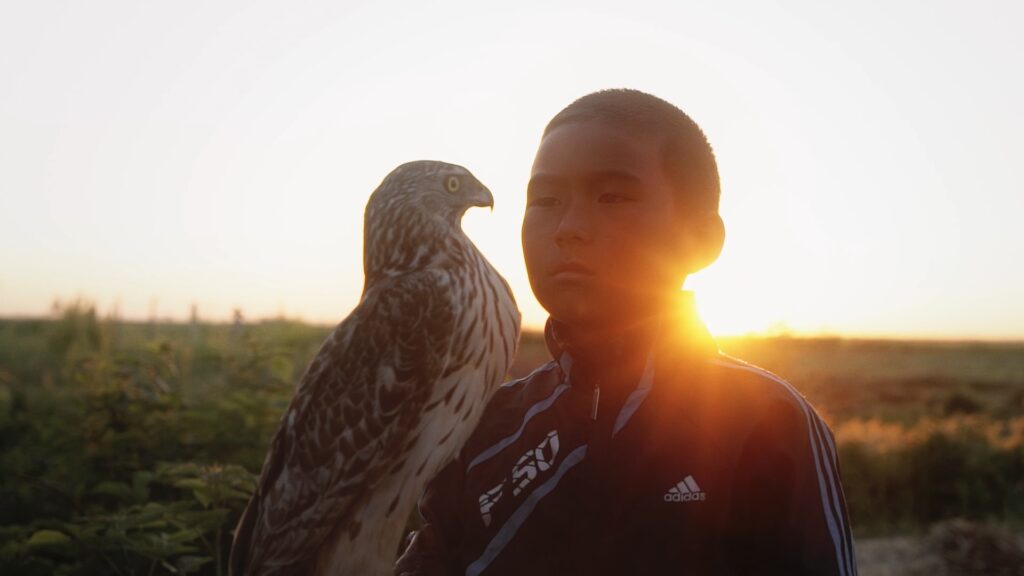
Inspired by TCA’s coverage of the 2024 World Nomad Games and the incredible showcase of falconry events, I reflected on a visit to the Sunkar Entertainment Complex near Almaty, Kazakhstan. Established during the Soviet era, the complex was originally designed as a mountain retreat for workers, featuring saunas, horseback riding, skiing, and other snow sports. However, its defining feature today is the bird sanctuary founded in the 1990s to conserve the region's dwindling population of birds of prey. The sanctuary serves as both a conservation effort and an entertainment venue, highlighting the delicate balance between preserving natural heritage and creating an engaging visitor experience. A practice the beginnings of which are shrouded in mystery, many experts trace the origins of falconry back to the steppes of Mongolia, dating between 4000 and 6000 BCE. Bronze Age cave paintings suggest falconry was already established, and a third millennium BCE pottery shard from Tell Chuera, modern-day Syria, depicts a bird of prey. The oldest visuals of falcons, however, are etched into rocks from the Altai Mountains, spanning Central and East Asia, circa 1000 BCE. Finding information on falconry in Europe and the Middle East is easy, but uncovering its ties to Kazakhstan's nomadic traditions proves more challenging. A podcast featuring two generations of a Kazakh family from the Altai Mountains sheds light through oral traditions. This narrative highlights falconry as more than a sport – it's a historical bond between humans and birds of prey, offering profound insights into nomadic heritage. [caption id="attachment_29223" align="aligncenter" width="1600"] Hunting with birds at the World Nomad Games, Astana, 2024; image: TCA, Stephen M. Bland[/caption] The Golden Eagle, often called the "Empress of the Sky," holds a divine status in falconry. Renowned for its ability to stare directly at the sun without harm, it's a symbol of freedom and pride for the Kazakh people. The Kazakh language boasts a staggering vocabulary for falconry, exceeding 1,500 unique terms. Its importance is also immortalized on Kazakhstan's national flag, echoing the legacy of Genghis Khan, whose banner also featured an eagle at its center. This speaks to his passion for falconry, a tradition vividly documented by Marco Polo, who described eagle hunting with Khan's grandson as early as the 1100s. The bond between humans and birds was so blurred that in ancient times, a nursing mother could share her milk with golden eagle chicks, even when her own child faced food scarcity. The Siberian golden eagle, or burgut, is among the largest of its kind. The formidable females, favored for hunting, boast wingspans of two meters and talons stretching up to six centimeters. Weighing over six kilograms, these birds demand not just expertise but also exceptional strength and courage from their handlers. Female eagles are traditionally captured before they learn to fly – old enough to survive outside the nest, but still nest-bound. They’re considered larger and more reliable hunters once tamed compared to their smaller, less-predictable male counterparts. Breaking eagles is a foundational skill in falconry, requiring meticulous preparation and...

1 year ago

Silk Roads Exhibition: Beating Heart of the Ancient World

On a gloomy winter’s day, The Times of Central Asia visited the Silk Roads Exhibition at the British Museum. The sight of a significant queue wrapped around the museum for entry was startling. Once inside, the exhibit thronged with visitors snaking their way to peruse artifacts arranged by region and era. Concerned about blocking display views as you read descriptions? No need to worry — thick guidebooks with full narratives greeted you at the entrance to borrow during your visit. The exhibition envisions the Silk Road as the beating heart of the ancient world, with arteries stretching across seas, mountains, and deserts. With over 300 artifacts spread across five geographical zones, it can be hard to know where to start. I observed a nearby gentleman in tweed who offered a simple tip: start with a place that interests you and go from there. Then I overheard that he was going to Cairo. New partnerships with Uzbekistan’s Art and Culture Development Foundation (ACDF) and Tajikistan’s museums had seen fresh items loaned to the exhibit. These collaborations highlight Central Asia's important role in this sweeping narrative, helping to connect the dots in this continent-spanning story. Immersed in the culture and history, I couldn’t help but wonder — what did the audience think? After a few unsuccessful attempts, I spoke with an English visitor named Georgie Bennett. [caption id="attachment_27908" align="aligncenter" width="2029"] Georgie Bennett visiting the Silk Roads Exhibition; image: TCA, Stephen M. Bland[/caption] TCA: What drew you here today? I think the thing for me is I have a really poor knowledge and understanding of this bit of history. So, I heard the exhibition was on and some of my friends already booked tickets, I said yes, I’ll absolutely come along because… I wanted to learn more. TCA: What’s the one item that’s caught your eye the most? I really like the story of the silk princess; it was a very humanizing story about this lady who’s newly married and brings the knowledge of how to make silk to her husband’s kingdom… I feel like I've learned so much. I’m enjoying it, though I almost wish I had a notebook and pen because I'm getting a general impression without knowing any of the details. [caption id="attachment_27909" align="aligncenter" width="2560"] Charred wooden door panel from Kafir Kala, near Samarkand, Uzbekistan, circa AD 500, on loan from the State Museum reserve[/caption] The Times of Central Asia also spoke to one of the curators, Luk Yu-Ping to delve deeper into the Silk Road experience. TCA: Globalism is considered a modern concept of interconnectivity, but looking at the vast connections and influence within the Silk Road Exhibition it’s implied that this concept may have been prevalent in the past along these trade routes. Could you expand on this? This exhibition highlights the movement of people, objects, and ideas across Asia, Africa, and Europe during the period 500 to 1000 CE. The focus is not only on trade but also other ways of contact and exchange. Audiences might be...

1 year ago

A Synthesis of Sounds: How the Silk Road Became the Melting Pot of Music in the Soviet Empire

As a DJ, radio podcaster and music enthusiast, I love discovering hidden retro gems like Nuggets-style compilations. There is an unspoken agreement on an era’s sounds depending on the artist’s breaking into the mainstream at the time. Then there are the obscure cuts and one hit wonders that for some reason didn’t make it big upon release, but dated well or were ahead of their time and found an audience at a later date. On other occasions, it’s about geography; if it had been premiered in a different part of the world, it would have been successful or far more celebrated than it was. In my search for such sounds, I feel it shouldn’t be limited by location; good music has no boundaries. [caption id="attachment_25764" align="aligncenter" width="950"] Yalla band, commemorative stamp, Uzbekistan, 2021 [/caption] There are many compilations touching upon niche genres and moments in time which can transport one to sonically experience a particular era. As a Westerner trying to peek behind the Iron Curtain to gauge the music and arts scene of the 1970’s and 80’s, what flickered across the Cold War barriers seemed controlled, state-approved, and mostly a mystery. It was a delight to learn that under this supposed monochromic blanket, a dynamic underground music scene was flourishing in regions that had a long history of cultural fusion. SYNTHESIZING THE SILK ROADS: Uzbek Disco, Tajik Folktronica, Uyghur Rock & Crimean Tatar Jazz from 1980s Soviet Central Asia features musicians from countries such as Uzbekistan, Tajikistan, and Kazakhstan, who were creating a unique sound that stood apart from anything else being produced in the USSR. TCA spoke to Ostinato record label boss Vik Sohonie about the release. TCA: How does this statement by Peter Frankopan quoted in your liner notes - “The bridge between east and west is the very crossroads of civilization” - relate to or define the music you chose? The music itself is the greatest evidence we have to this argument, because you can hear the cultures of Europe, South Asia, East Asia, West Asia - the Middle East - all mixed into it. Indeed, Central Asia was influenced by all of these regions musically given its unique geography, but it has also influenced the cultures of so many of those parts of the world. During the era of the Silk Roads and the "golden age" of the region, its musical theory, as stated in the liner notes, influenced the music of Europe. [caption id="attachment_25766" align="aligncenter" width="2172"] Natalia Nurumkhamedova album cover[/caption] TCA: How did World War II and Stalin create the circumstances behind the Tashkent and Uzbekistan scene? When the Nazis invaded the Soviet Union, Stalin put the best and brightest minds on trains bound for Soviet Central Asia, mainly Uzbekistan and its capital, Tashkent. There were recording engineers on board who went on to set up one of the biggest press plants in the Soviet Union that produced millions of records. A little-known story of World War II - the evacuation from the Eastern...

2 years ago

Unveiling the Magic: Behind the Scenes of “Baikonur”

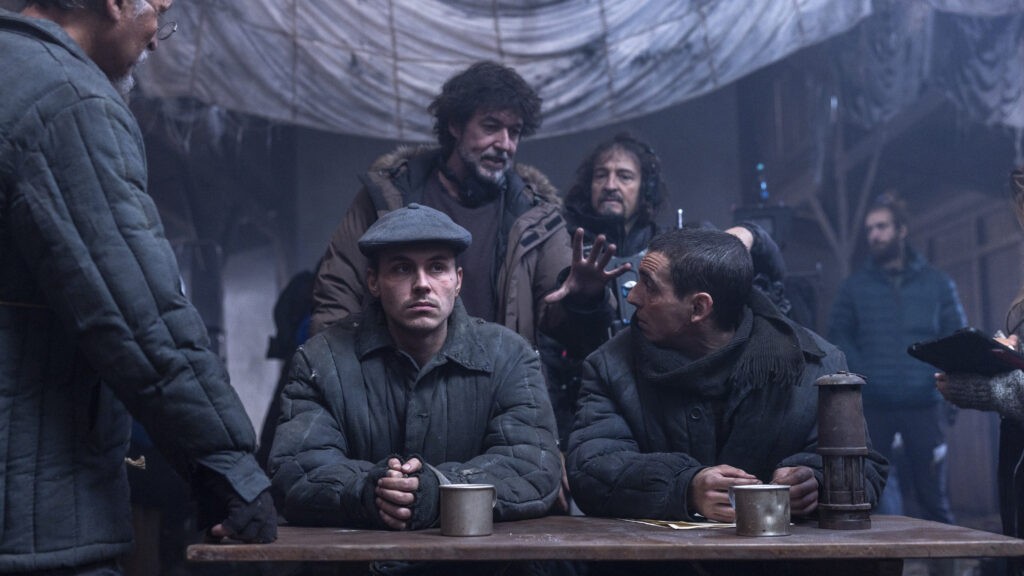
Space continues to capture our imagination and inspire our stories, as we try to make sense of this vast final frontier. In the last part of our series on Baikonur, we explore its depiction within cinema. In 2011, German filmmaker, Veit Helmer released Baikonur, a story about space, scavenging and misguided love that was shot within the region. TCA spoke to him about filming in this heavily restricted landscape.   TCA: What was the inspiration behind your film, Baikonur? What drew you to this subject matter? Helmer: I was fascinated by the actual place, or what I knew about it; a hidden city with such a glorious past. Whilst researching, I found out about the scavengers who collect the pieces which fall on the steppe when the rockets are heading to space. To tell both stories at the same time intrigued me: space exploration and hunting for scrap metal. TCA: Given you also directed Absurdistan and Tuvalu, would it be fair to say you’re drawn to far-flung places? Helmer: Yes, I love to explore and find locations which haven’t been filmed before. But compared to the locations of my previous films - Tuvalu, which was shot in Bulgaria, and Absurdistan, which was shot in Azerbaijan - to travel to Baikonur was a much longer journey. [caption id="attachment_21684" align="aligncenter" width="2560"] Still from the film, "Baikonur," Alexander Asochakov as "Gagarin" leaving, villagers standing near yurt; image: Veit Helmer[/caption]   TCA: As stated in the tagline of your film, “Whatever falls from heaven, you may keep. So goes the unwritten law of the Kazakh seppe. A law avidly adhered to by the inhabitants of a small village, who collect the space debris that falls downrange from the nearby Baikonur space station.” The village scavengers portrayed in your film are based in reality; how did you find out about them, and what was your experience with them? Helmer: It was very funny reading the first review from Kazakhstan, where a young journalist wrote that the film is based on the old Kazakh law “Whatever falls from heaven, you may keep,” which in reality was an invention by my screenwriter, Sergey Ashkenazy. But as this fable seems to feel so real, I never tried to dispel that myth. When writing the screenplay, Sergey and me went to Zheskaskan and the surrounding steppe, talking to the hunters of the scrap metal. It was not an ideal moment, because Roscosmos started to collect the debris themselves and the local villagers’ activity became illegal. The new reality was not villages against each other, but villagers against Roscosmos. [caption id="attachment_21685" align="aligncenter" width="2560"] Still from the film, "Baikonur," Alexander Asochakov as "Gagarin" (center) cleaning assembly hall in Baikonur ; image: Veit Helmer[/caption]   TCA: As a Western filmmaker you were granted a unique opportunity to film within Baikonur - what did you observe of the landscape? What were the highlights of this experience? Helmer: There was a saying among the early cosmonauts that the Central Asian steppe was for them...

2 years ago