• KGS/USD = 0.01144 0%
  • KZT/USD = 0.00207 0%
  • TJS/USD = 0.10440 -0.19%
  • UZS/USD = 0.00008 0%
  • TMT/USD = 0.28490 0%
  • KGS/USD = 0.01144 0%
  • KZT/USD = 0.00207 0%
  • TJS/USD = 0.10440 -0.19%
  • UZS/USD = 0.00008 0%
  • TMT/USD = 0.28490 0%
  • KGS/USD = 0.01144 0%
  • KZT/USD = 0.00207 0%
  • TJS/USD = 0.10440 -0.19%
  • UZS/USD = 0.00008 0%
  • TMT/USD = 0.28490 0%
  • KGS/USD = 0.01144 0%
  • KZT/USD = 0.00207 0%
  • TJS/USD = 0.10440 -0.19%
  • UZS/USD = 0.00008 0%
  • TMT/USD = 0.28490 0%
  • KGS/USD = 0.01144 0%
  • KZT/USD = 0.00207 0%
  • TJS/USD = 0.10440 -0.19%
  • UZS/USD = 0.00008 0%
  • TMT/USD = 0.28490 0%
  • KGS/USD = 0.01144 0%
  • KZT/USD = 0.00207 0%
  • TJS/USD = 0.10440 -0.19%
  • UZS/USD = 0.00008 0%
  • TMT/USD = 0.28490 0%
  • KGS/USD = 0.01144 0%
  • KZT/USD = 0.00207 0%
  • TJS/USD = 0.10440 -0.19%
  • UZS/USD = 0.00008 0%
  • TMT/USD = 0.28490 0%
  • KGS/USD = 0.01144 0%
  • KZT/USD = 0.00207 0%
  • TJS/USD = 0.10440 -0.19%
  • UZS/USD = 0.00008 0%
  • TMT/USD = 0.28490 0%

Our People > Dr. Robert M. Cutler

Dr. Robert M. Cutler's Avatar

Dr. Robert M. Cutler

Senior Editor and Contributor

Robert M. Cutler has written and consulted on Central Asian affairs for over 30 years at all levels. He was a founding member of the Central Eurasian Studies Society’s executive board and founding editor of its Perspectives publication. He has written for Asia Times, Foreign Policy Magazine, The National Interest, Euractiv, Radio Free Europe, National Post (Toronto), FSU Oil & Gas Monitor, and many other outlets.

He directs the NATO Association of Canada’s Energy Security Program, where he is also senior fellow, and is a practitioner member at the University of Waterloo’s Institute for Complexity and Innovation. Educated at MIT, the Graduate Institute of International Studies (Geneva), and the University of Michigan, he was for many years a senior researcher at Carleton University’s Institute of European, Russian, and Eurasian Studies, and is past chairman of the Montreal Press Club’s Board of Directors.

Articles

Who Will Build Kazakhstan’s Nuclear Power Plant?

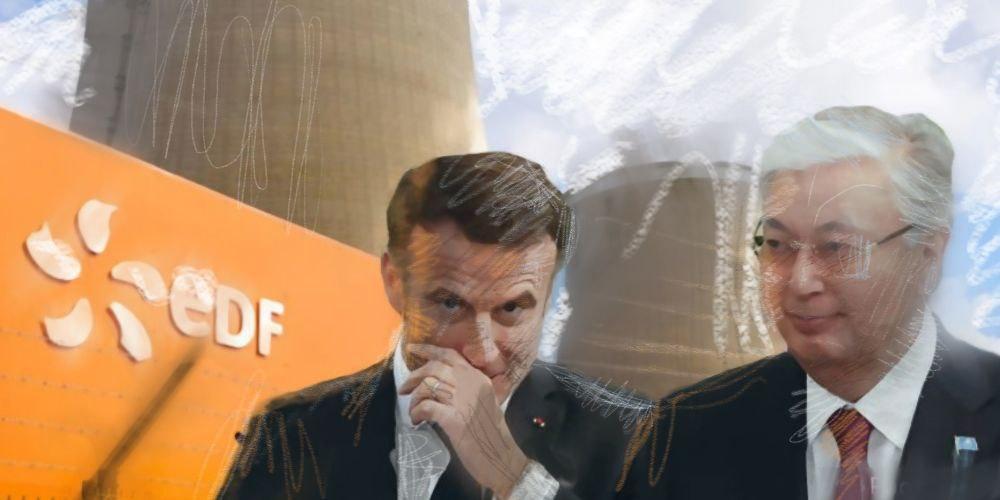
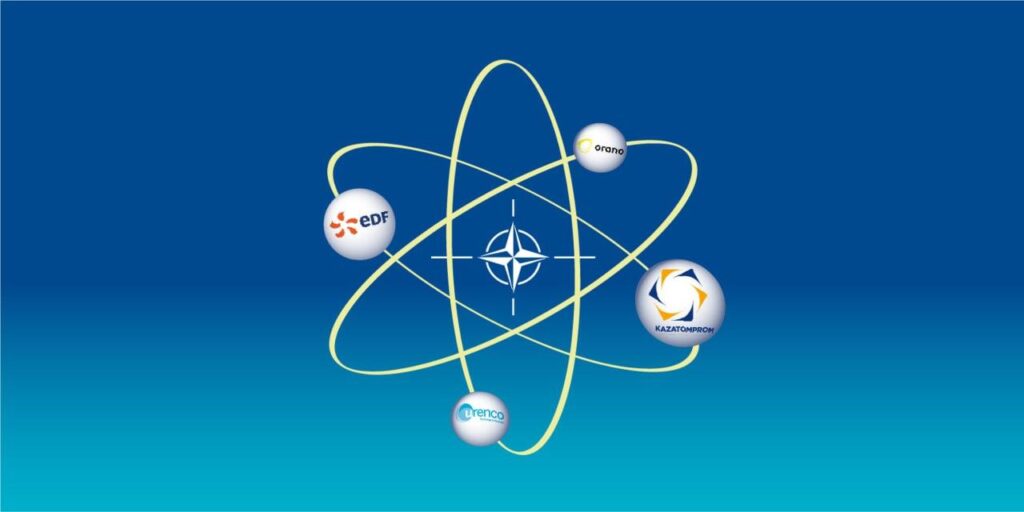
There are three generally discussed possibilities for construction of Kazakhstan’s newly approved nuclear power plant (NPP). One is that Russia is sole contractor. Another is that China is sole contractor. Each of these choices has its own rationale yet also geo-economic and geopolitical drawbacks for Kazakhstan. Third, Kazakhstan’s President Kassym-Jomart Tokayev has publicly stated that he favors an international consortium with participation by companies from China, France, Russia, and South Korea. This option, however, faces logistical challenges, particularly in dividing responsibilities among consortium members and determining the sourcing of critical components. Tokayev has already discussed with France’s President Emmanuel Macron the possible participation of the French companies Orano and EDF in particular. Orano focuses on various aspects of the nuclear fuel cycle, including uranium mining, enrichment, and waste management. EDF specializes in design, construction, and operational management. This opens the door to a fourth possibility. Orano, EDF and the British-German firm Urenco together can provide all the NPP construction and management services necessary to realize the project. But Kazatomprom, which focuses on mainly on mining and processing, has not been mentioned in any of these schemes. Such an alternative approach, involving Western companies like Orano, EDF, and Urenco, could ensure comprehensive services with strong Western involvement, possibly including Kazatomprom, thus boosting local capacity and creating a "demonstration project" for broader natural resource collaboration within NATO frameworks. This kind of partnership could help Kazakhstan reduce its dependency on single external actors, thereby enhancing its strategic autonomy. Moreover, by involving Kazatomprom, the project could focus on knowledge transfer and capacity building, fostering local expertise and reducing external dependencies over time. It is reasonable that an offer to take Kazatomprom into a Western consortium and to make capacity building in Kazakhstan, at Kazatomprom and elsewhere, an explicit goal of the project, would be welcome in Astana. Cooperation via NATO platforms could likewise offer Kazakhstan access not only to technical specialists from NATO countries but also to more joint training exercises and workshops, to complement an exchange of knowledge on best practices in nuclear safety and energy resilience. And that would be only a “demonstration project” for the constructive expansion of the energy component of NATO’s Partnership for Peace (PfP) into broader natural-resource and rare-earth domains. Indeed, there is no reason even to wait for the NPP project. Central Asia, especially Kazakhstan, is a periodic table of the elements, especially rare-earth elements, and their exploration and development has been under way for some time. Building upon the energy-security successes through NATO's PfP, this proposal suggests expanding cooperation with Caspian region Partner countries into the mining sector, specifically for rare-earth elements critical to defense. Extending PfP to include these resources aligns with NATO's and Partners' core security goals, offering broader opportunities to secure the supply chain and enhance collective defense capabilities. This extension also presents a strategic avenue to mitigate risks associated with supply disruptions and geopolitical tensions. Leveraging the extensive experience of partnership in energy security, NATO and its Partner countries could begin with...

1 year ago
Azerbaijan and Kazakhstan Stand Out at COP29

The 29th United Nations Climate Change Conference (COP29), held in Baku from November 11–22, 2024, has underscored the critical role of Azerbaijan and Kazakhstan in advancing Caspian Sea regional energy transitions. Both countries leveraged their positions along the Middle Corridor to present ambitious renewable and nuclear energy strategies.   Azerbaijan: Renewables and the Middle Corridor Azerbaijan, the host and chair of COP29, has positioned itself as a renewable energy connector between Central Asia and Europe. Its energy strategy reflects a pragmatic approach to transitioning from hydrocarbons, which accounted for 88% of government revenues in 2023, to a diversified portfolio incorporating solar, wind, and hydropower. Azerbaijan has prioritized key renewable energy projects to align with its goal of achieving a 30% renewable share in its electricity mix by 2030. Among these is the operational Garadagh Solar Power Plant, a 230-megawatt (MW) facility developed by the UAE's Masdar, which generates 500 million kilowatt-hours (kWh) annually. Complementing this is the planned Alat Solar Project, a 400-MW solar installation expected to be operational by 2027. These projects aim to bolster domestic electricity supply and expand Azerbaijan’s capacity to export renewable energy. The Caspian Offshore Wind Initiative, backed by the European Bank for Reconstruction and Development (EBRD), seeks to harness the Caspian Sea’s favorable wind conditions. A 1-gigawatt (GW) wind farm is under preliminary study, with construction anticipated to begin by 2026. This project could transform Azerbaijan into a renewable energy hub for the Middle Corridor, particularly as Europe reduces its dependency on Russian energy.   Kazakhstan: Nuclear Ambitions and Renewable Diversification Kazakhstan’s energy strategy focuses on nuclear power and renewables, driven by the need to reduce coal dependency, which still accounts for two thirds of its electricity generation. The government’s approval of its first nuclear power plant, following a nationwide referendum in October 2024, is central to this strategy. The planned nuclear reactor, located near Lake Balkhash, will generate 1.2-GW of electricity, replacing approximately 20% of coal-fired generation. This initiative complements Kazakhstan’s status as the world’s largest uranium producer, supplying over 40% of global demand and generating $3.6 billion in export revenues in 2023. Potential consortium members for the project include South Korea’s KEPCO, France’s Orano and EDF, China’s CNNC, and Russia's Rosatom, although economic-sanctions issues complicate Russia’s involvement in the nuclear sector. Kazakhstan is simultaneously scaling up renewable energy projects, with several key initiatives underway. The Zhanatas Wind Farm, operational since 2022, produces 100-MW of power, and the Shelek Solar Park, a 200-MW solar facility near Almaty, is expected to come online in late 2025. Together, these projects aim to increase renewables to 15% of Kazakhstan’s electricity mix by 2030, quintupling the level from 2023.   The Trans-Caspian Electricity Cable Project At the COP29 conference, Azerbaijan and Kazakhstan, along with Uzbekistan, announced an ambitious trans-Caspian electricity cable project through an underwater transmission system. This infrastructure initiative, estimated to cost $2.5 billion, seeks to establish an electricity corridor linking Central Asia with European markets, representing a significant step in regional energy integration. The project...

1 year ago

Tokayev and Macron Forge New Path for French Investments in Kazakhstan

The Paris summit between Kazakhstan’s President Kassym-Jomart Tokayev and France’s President Emmanuel Macron was a significant event in their countries' evolving bilateral relations. The high-level discussions were centered on deepening cooperation across trade, economic investment, cultural, and humanitarian issues. The talks have reaffirmed and broadened existing frameworks, foretokening robust and diversified collaboration. The historical foundation of Kazakh-French relations, particularly in the economic sphere, has long been strong. French multinational corporations, such as TotalEnergies, have played significant roles in Kazakhstan’s major energy projects, including the Kashagan oil field. At the recently concluded summit, President Tokayev held meetings with prominent French business figures, seeking to enhance investment flows and economic partnerships across the renewable energy, infrastructure, and technology sectors. France recognizes Kazakhstan’s strategic significance in Central Asia and seeks to deepen the partnership, which also complements Europe’s generally expanding engagement with the region. The summit builds on a series of annual encounters that sustain the momentum in Kazakhstan–France relations. In November 2023, a year after President Tokayev’s trip to France in November 2022, President Macron made an official visit to Kazakhstan. This visit highlighted the shared interests between the two countries and underscored the importance of their growing cooperation. The meeting not only strengthened political dialogue but also laid the groundwork for further economic, cultural, and technological collaboration, reflecting a commitment to long-term partnership. The regularity of summits between Kazakhstan and France, besides indicating the pragmatic nature of their relationship, speaks to the personal rapport between Tokayev and Macron. The sustained, high-level engagement indicates a mutual appreciation for reliable and constructive diplomacy. The Paris summit continues the momentum and deepens the strategic significance of relations between Kazakhstan and France relations, as the new agreements demonstrate their common intention to leverage shared interests in pursuit of more comprehensive cooperation. At the 2022 meetings, 25 economic agreements were signed amounting to a value of $3 billion, according to Kazakhstan’s Ministry of Foreign Affairs. If we include the agreements signed at the 2023 meetings, then the newest agreements bring the overall total to $6.4 billion. Bilateral trade reached $4 billion from January to August this year, representing a 44.7 percent increase compared to the same period in 2023. Kazakhstan’s exports to France for the same period rose by 45.2 percent to $2.7 billion for the first eight months of 2024. These exports were heavily concentrated in crude oil and uranium. Just ahead of Tokayev's visit to Paris, the city hosted the 13th meeting of the Kazakhstan–France Business Council. Twenty-four documents were signed there, worth $2 billion, which spanned the agro-industrial, information-technology, light industry, medicine and mining sectors, not to mention a continuing interest in the energy sector. Kazakhstan’s proactive engagement, including its receptivity to French participation in the NPP consortium is in the line of the country's balanced and pragmatic approach to international partnerships. For France, this partnership deepens its footprint in Central Asia while also promoting the policy goals of broader energy diversification and geopolitical influence.  Kazakhstan represents 90 percent of France’s trade with...

1 year ago

Inside Kazakhstan’s Nuclear Power Play

Kazakhstan recently held a referendum in which approximately 71% of voters supported the initiative to construct the country's first nuclear power plant (NPP). This project is part of Kazakhstan's broader strategy to diversify its energy mix, reduce dependence on coal, and address chronic energy shortages that have affected the country for years. As the world's largest uranium producer, Kazakhstan has abundant natural resources that make nuclear power a viable and strategic option. The government views nuclear power as crucial for enhancing energy independence and security, while also contributing to environmental sustainability by reducing greenhouse gas emissions. The goal is for nuclear energy to contribute about 5% of the national generation mix by 2035, marking a significant shift towards cleaner energy sources.   A strategic opportunity for Kazakhstan The NPP project is expected to be undertaken by an international consortium, the members of which are yet to be selected. Kazakhstan's balanced multi-vector foreign policy encourages the involvement of various potential partners, such as Russia's Rosatom, China's National Nuclear Corporation, South Korea's Hydro & Nuclear Power, and France's EDF. Kazakhstan's strategy for involving an international consortium aims to reduce potential geopolitical risks, particularly concerning Russia's Rosatom. Rosatom is a key player in the nuclear energy sector, but Western sanctions against Russian companies raise concerns about its involvement in Kazakhstan's project. By involving multiple international partners, Kazakhstan aims to prevent overreliance on any single country, such as Russia, and maintain a diversified approach to foreign relations. This approach allows Kazakhstan to leverage advanced technologies from multiple sources, foster innovation, improve efficiency, and reduce risks associated with the NPP's construction and operation. It also ensures that the best practices from leading global enterprises can be integrated into the project, enhancing overall safety and performance. Moreover, the involvement of international partners is likely to facilitate knowledge transfer, enabling Kazakhstan to build domestic expertise in nuclear energy. The estimated cost for the NPP is between $10 and $12 billion, with the expectation that contractors will secure financing. An international consortium could attract investment from multiple sources, including their own countries, thereby reducing Kazakhstan's financial burden for the project, inculcating resilience against uncertainties such as currency fluctuations, and distributing the risks among several stakeholders. As sanctions against Rosatom and broader economic concerns make sole reliance on Russian intolerably risky, attracting investment from multiple international stakeholders will also enable Kazakhstan to spread financial risks, thus enhancing the project's viability. A key strategic opportunity for Kazakhstan is to develop self-sufficiency in uranium enrichment. As the world's largest producer of uranium, Kazakhstan has the potential to enrich its own yellowcake, i.e., impure uranium obtained by processing uranium ore. Developing this capability would reduce Kazakhstan's dependence on Russia for enriched uranium imports and significantly enhance its energy independence. Japan serves as a relevant model for this, as it enriches uranium domestically under international safeguards for civilian nuclear use. Kazakhstan could pursue a similar approach under International Atomic Energy Agency (IAEA) supervision, ensuring compliance with its non-proliferation commitments under the Nuclear Non-Proliferation...

1 year ago

Central Asia’s Increasing Profile in Global Climate Policy

Between 11 and 22 November, the 29th Conference of the Parties (COP29) to the United Nations Framework Convention on Climate Change (UNFCCC) will take place in Baku, Azerbaijan. In the run-up to this global event, Central Asian countries have been continuing their integration into the cooperative implementation of the global energy and environmental agenda. Such measures include, but are not limited to, commitments to reducing methane emissions, contributions to green supply chains, and — for Kazakhstan in particular — its nuclear policy based on multi-vector diplomacy. One may anticipate their especially enhanced presence in view of the fact that several them have strategic-partner relations with Azerbaijan, which is cooperating with them also in the implementation of the Trans-Caspian International Trade Corridor (TITR or "Middle Corridor"). The Central Asian states are using their implementation of global energy and environmental priorities as an instrument to integrate further into the international system. Following their participation at COP28 (30 November – 23 December 2023, in Dubai, United Arab Emirates), all five of them signed the Global Methane Pledge to reduce methane emissions by at least 30% by 2030. They have also stepped up their contributions to green supply chains, signalling their ambitions to become more important players in global geoeconomics. At the same time, these initiatives also seek to promote domestic economic diversification. Kazakhstan, in particular, continues to play a central role with its multi-vector approach, notably in the nuclear energy sector, positioning itself at the intersection of sustainability and global energy security. Kazakhstan holds 12% of global uranium reserves. It became the world’s leading producer in 2009 and in 2022 accounted for 43% of global production. In Central Asia, Uzbekistan has a Rosatom-sponsored NPP project under way, as does Kyrgyzstan. Along with Kazakhstan, Uzbekistan and Turkmenistan in particular actively engaged in discussions on climate policy at COP28, acknowledging the need to balance their resource-rich economies with global sustainability goals. One of the key outcomes was the region's collective involvement in the Global Methane Pledge. Global environmental policy bodies have assessed that methane emissions are a significant concern for global climate policy. The effect of this assessment will be to load still greater financial burdens on oil and gas companies by making development of hydrocarbon deposits, and the transmission of hydrocarbon resources to market, more expensive. Kazakhstan’s commitment to cutting methane emissions by 30% by 2030 exemplifies this shift, signalling a readiness to reform domestic industries in line with global climate targets. Turkmenistan has the highest methane emissions intensity in the region, but challenges remain in terms of monitoring and implementation. Uzbekistan’s leadership was also highlighted at COP28. The country’s ambitious plans to scale up solar and wind energy by 2030 align with broader regional goals of reducing dependence on hydrocarbons. This is Tashkent's (and the region's) way of enhancing their profile as "good global citizens" as policy decisions by political bodies at the international level increasingly emphasize decarbonization. Uzbekistan has made strides in "green supply chains" by focusing on the renewable energy sector...

1 year ago