• KGS/USD = 0.01144 0%
  • KZT/USD = 0.00212 0%
  • TJS/USD = 0.10549 -0.28%
  • UZS/USD = 0.00008 0%
  • TMT/USD = 0.28530 0%
  • KGS/USD = 0.01144 0%
  • KZT/USD = 0.00212 0%
  • TJS/USD = 0.10549 -0.28%
  • UZS/USD = 0.00008 0%
  • TMT/USD = 0.28530 0%
  • KGS/USD = 0.01144 0%
  • KZT/USD = 0.00212 0%
  • TJS/USD = 0.10549 -0.28%
  • UZS/USD = 0.00008 0%
  • TMT/USD = 0.28530 0%
  • KGS/USD = 0.01144 0%
  • KZT/USD = 0.00212 0%
  • TJS/USD = 0.10549 -0.28%
  • UZS/USD = 0.00008 0%
  • TMT/USD = 0.28530 0%
  • KGS/USD = 0.01144 0%
  • KZT/USD = 0.00212 0%
  • TJS/USD = 0.10549 -0.28%
  • UZS/USD = 0.00008 0%
  • TMT/USD = 0.28530 0%
  • KGS/USD = 0.01144 0%
  • KZT/USD = 0.00212 0%
  • TJS/USD = 0.10549 -0.28%
  • UZS/USD = 0.00008 0%
  • TMT/USD = 0.28530 0%
  • KGS/USD = 0.01144 0%
  • KZT/USD = 0.00212 0%
  • TJS/USD = 0.10549 -0.28%
  • UZS/USD = 0.00008 0%
  • TMT/USD = 0.28530 0%
  • KGS/USD = 0.01144 0%
  • KZT/USD = 0.00212 0%
  • TJS/USD = 0.10549 -0.28%
  • UZS/USD = 0.00008 0%
  • TMT/USD = 0.28530 0%

Our People > Sadokat Jalolova

Sadokat Jalolova's Avatar

Sadokat Jalolova

Journalist

Jalolova has worked as a reporter for some time in local newspapers and websites in Uzbekistan, and has enriched her knowledge in the field of journalism through courses at the University of Michigan, Johns Hopkins University, and the University of Amsterdam on the Coursera platform.

Articles

Charges Reclassified for Defendants in Crocus Terror Attack Case

The charges against the four defendants in the Crocus City Hall terrorist attack case have been reclassified, lawyer Alexander Yarin has told Russia's state-owned TASS news agency. “Aminchon and Dilovar Islomov, their father Isroil Islomov, and Alisher Kasimov are now charged under Part 3 of Article 205.1 of the Russian Criminal Code,” Yarin stated. Previously, the defendants were charged under paragraph “b” of Part 3 of Article 205 of the Criminal Code, which pertains to a terrorist act resulting in a fatality. The updated charges now reflect involvement in actions that facilitated the commission of a terrorist act. As previously reported by TCA, the terrorist attack at Crocus City Hall, located on the outskirts of Moscow, resulted in 144 fatalities and 551 injuries. The incident has created a climate of fear among Central Asian migrants living in Russia. In the aftermath of the attack, Tajik migrants have faced a surge of hostility and aggression, further exacerbating tensions within the migrant community.

1 year ago
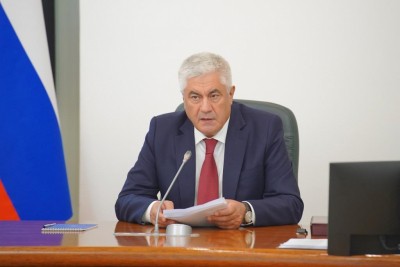
Russian Interior Minister Reports Drop in Crimes Linked to Tajik Citizens

Russian Interior Minister Vladimir Kolokoltsev announced a decline in crimes involving Tajik citizens in the Russian Federation during a joint meeting of the Russian and Tajik Interior Ministries in Moscow. This reduction includes both offenses committed by and against Tajik nationals, a trend Kolokoltsev emphasized should continue. One notable achievement highlighted was the resolution of a 30-year-old murder case in Sughd, which was solved through coordinated information-sharing between Russian and Tajik law enforcement agencies. Strengthening Bilateral Cooperation During the meeting, Kolokoltsev and Tajik Interior Minister Rahimzoda Ramazon Hamro approved a 2025 cooperation plan. The agreement includes measures to combat transnational crime, enhance collaboration between investigative units, share intelligence, and address drug trafficking. Rahimzoda stressed that ongoing cooperation strengthens security and improves the performance of law enforcement agencies in both countries. Tajik officials highlighted that joint events and initiatives have been held annually since the partnership began. Addressing Migration and Citizens’ Rights Kolokoltsev also referred to his May 2024 visit to Dushanbe, where discussions revolved around migration issues and the establishment of the Russian Interior Ministry’s passport and visa service. These efforts aim to enhance conditions for Tajik citizens living in Russia while safeguarding their rights and interests.

1 year ago

Uzbekistan Enacts Law on “Undesirable” Foreigners

On November 15 a new law regulating foreign citizens deemed "undesirable" came into effect in Uzbekistan. The government claims that the strict measures, previously reported on by The Times of Central Asia in June, are aimed at safeguarding the country’s "sovereignty, security, and unity". The legislative process began on June 25 when Uzbekistan’s Legislative Chamber of the Oliy Majlis (parliament) approved amendments to the law on the legal status of foreign citizens and stateless persons. These amendments introduced the concept of “undesirable elements” among foreign nationals. The Senate subsequently approved the legislation on September 21, paving the way for its implementation. Under the new law, foreign citizens and stateless persons can be classified as undesirable if they can be said to: • Threaten Uzbekistan’s sovereignty, security, or unity; • Incite enmity or hostility; or • Disrespect the honor, dignity, or history of the Uzbek people. Those designated as undesirable face a five-year ban on entering Uzbekistan, opening bank accounts, purchasing property, participating in privatizations, or engaging in financial and contractual transactions. They are, however, permitted to sell or transfer any property they own within the country. If the grounds for being deemed undesirable are not addressed during the five-year ban, the restriction is automatically extended for another five years. Conversely, individuals may apply for early removal from the list if they resolve the identified issues or if the government recommends their delisting. Individuals deemed undesirable must leave Uzbekistan voluntarily within 10 days of receiving notification. Failure to comply will result in forcible deportation.

1 year ago

Uzbekistan’s Public Debt Projected to Reach $45.1 Billion by 2025

According to the “Budget for Citizens” publication issued by Uzbekistan’s Ministry of Economy and Finance, Uzbekistan’s public debt is projected to reach $45.1 billion by the end of 2025. Updated estimates indicate that state debt will amount to $39.7 billion by the end of this year, rising to $45.1 billion, equivalent to 36.7% of GDP, in 2025. The publication’s primary focus is forecasting revenues, expenditure, and deficits in the state budget for 2025. State budget revenues are projected at 308,547 billion UZS ($24.19 billion), with the economy expected to grow by 6% in 2025, increasing to 6.1% in 2026 and 6.3% in 2027. State budget expenditure for 2025 is planned at 344,576 billion UZS ($27.02 billion), with 52% being allocated to social spending. The report provides detailed information on budget allocations by ministries and departments, their alignment with national sustainable development goals, and their impact on climate change. It also outlines how funds will be classified under development programs, ensuring transparency and adherence to Uzbekistan’s broader policy objectives.

1 year ago

Uzbekistan Shares Rehabilitation Model for Returnees at UN Event

On November 11, 2024, a high-level event titled “Effective Rehabilitation and Reintegration of Returnees from North-Eastern Syria – Uzbekistan’s Experience: From Global to Local” took place at the UN Headquarters in Geneva. The event highlighted Uzbekistan’s successful approach to rehabilitating and reintegrating individuals returning from conflict zones, particularly through the work of the Regional Expert Council, established in 2024 at the initiative of President Shavkat Mirziyoyev. Vladimir Voronkov, head of the UN Counter-Terrorism Office, commended Uzbekistan’s efforts. “UN member states urgently need to develop strategies for rehabilitation and reintegration based on the experience of Uzbekistan. The Tashkent model aims to ensure the rights and dignity of the individual, which is important in these processes,” Voronkov stated. Khalid Koser, Director of the Global Community Engagement and Resilience Fund, described Uzbekistan’s model as a roadmap for other nations. He emphasized that the approach has proven to be effective, humane, and respectful of human rights in returning citizens from conflict zones. A focal point of the conference was the Regional Expert Council on Rehabilitation and Reintegration, established under the UN Office of Counter-Terrorism. The Council, based in Tashkent, aims to bring together Central Asian experts to share their knowledge and develop programs to assist reintegrated individuals in rebuilding their lives. “I am convinced that the Council, established in Tashkent at the initiative of the President of Uzbekistan, will contribute to strengthening the exchange of best practices and lessons learned in this area,” said Natalia Gherman, Head of the UN Security Council Counter-Terrorism Committee Executive Directorate. The Times of Central Asia has previously reported that Kazakhstan, Kyrgyzstan, Tajikistan, and Uzbekistan are collectively improving support systems for women and children returning from conflict zones, such as Iraq and Syria.

1 year ago