
• KGS/USD = 0.01144 0%
  • KZT/USD = 0.00212 0%
  • TJS/USD = 0.10549 -0.28%
  • UZS/USD = 0.00008 0%
  • TMT/USD = 0.28530 0%
  • KGS/USD = 0.01144 0%
  • KZT/USD = 0.00212 0%
  • TJS/USD = 0.10549 -0.28%
  • UZS/USD = 0.00008 0%
  • TMT/USD = 0.28530 0%
  • KGS/USD = 0.01144 0%
  • KZT/USD = 0.00212 0%
  • TJS/USD = 0.10549 -0.28%
  • UZS/USD = 0.00008 0%
  • TMT/USD = 0.28530 0%
  • KGS/USD = 0.01144 0%
  • KZT/USD = 0.00212 0%
  • TJS/USD = 0.10549 -0.28%
  • UZS/USD = 0.00008 0%
  • TMT/USD = 0.28530 0%
  • KGS/USD = 0.01144 0%
  • KZT/USD = 0.00212 0%
  • TJS/USD = 0.10549 -0.28%
  • UZS/USD = 0.00008 0%
  • TMT/USD = 0.28530 0%
  • KGS/USD = 0.01144 0%
  • KZT/USD = 0.00212 0%
  • TJS/USD = 0.10549 -0.28%
  • UZS/USD = 0.00008 0%
  • TMT/USD = 0.28530 0%
  • KGS/USD = 0.01144 0%
  • KZT/USD = 0.00212 0%
  • TJS/USD = 0.10549 -0.28%
  • UZS/USD = 0.00008 0%
  • TMT/USD = 0.28530 0%
  • KGS/USD = 0.01144 0%
  • KZT/USD = 0.00212 0%
  • TJS/USD = 0.10549 -0.28%
  • UZS/USD = 0.00008 0%
  • TMT/USD = 0.28530 0%

Our People > Sadokat Jalolova

Sadokat Jalolova's Avatar

Sadokat Jalolova

Journalist

Jalolova has worked as a reporter for some time in local newspapers and websites in Uzbekistan, and has enriched her knowledge in the field of journalism through courses at the University of Michigan, Johns Hopkins University, and the University of Amsterdam on the Coursera platform.

Articles

Uzbek Man Suspected of Kidnapping Italian Businessman Arrested

An Uzbek citizen has been detained in Italy on charges of orchestrating the kidnapping of Italian businessman Stefano Guidotti in Moscow. In June this year Guidotti was abducted and held hostage. According to Italian investigators, the alleged mastermind is a 44-year-old Uzbek national living near Ravenna, who holds a Russian passport. The suspect had previously worked for Guidotti’s business. The Bologna prosecutor’s office identified the Uzbek citizen as the primary organizer of the crime. Reports indicate he also personally initiated negotiations to establish a ransom for the release of Guidotti, who serves as the general director of the Russian office of SIAD Group. SIAD is one of Europe’s largest manufacturers of industrial gases. The kidnapping took place on the morning of June 28, when three men seized Guidotti in the courtyard of a residence in central Moscow. He was handcuffed, a bag was placed over his head, and he was forced into a car. Russian police rescued him the following day in the country's Bryansk region. The abductors reportedly included three Russian nationals and one foreigner.

1 year ago
Uzbekistan and Germany Partner on Green Industrialization with €3 Million Grant

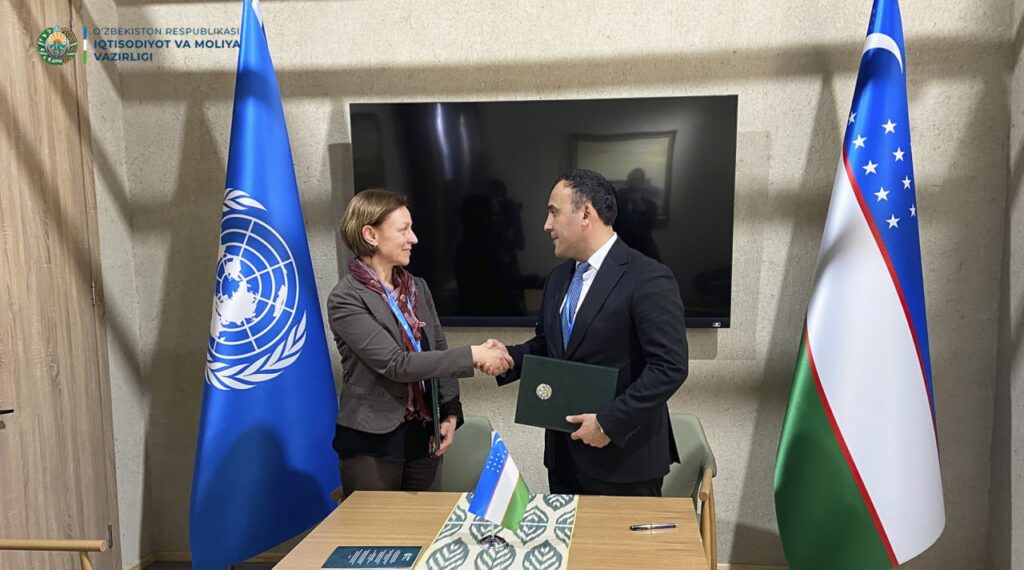
On November 13, at the 29th UN Climate Change Conference (COP29) in Azerbaijan's capital Baku, Uzbekistan's Ministry of Economy and Finance signed a memorandum with the German International Cooperation Society (GIZ) to secure additional funding for a project aimed at supporting the private sector in green industrialization. As part of the initiative, Germany has allocated €9 million to help Uzbekistan’s private sector transition to a green economy. The project is designed to assist the Uzbek government in implementing economic reforms and fostering sustainable economic development, focusing on enhancing the capacity of both the public and private sectors to adopt green industrialization practices. The initiative will also provide technical expertise in measuring and certifying greenhouse gas emissions, supporting Uzbekistan’s participation in international carbon trading mechanisms, and aligning with the European Union’s Cross-Border Adjustment Mechanism (CBAM). Additionally, it aims to promote resource-saving and sustainable production by encouraging the private sector to adopt green technologies, including circular economy practices and green industrial park models. To further bolster the project, a €3 million grant was approved during the conference. This funding will complement the ongoing initiative, titled “Support to the Private Sector and Advice on Economic Policy in Uzbekistan.”

1 year ago

Strategic Partnership Dialogue: U.S. Allocates $500,000 for Registan Square Preservation

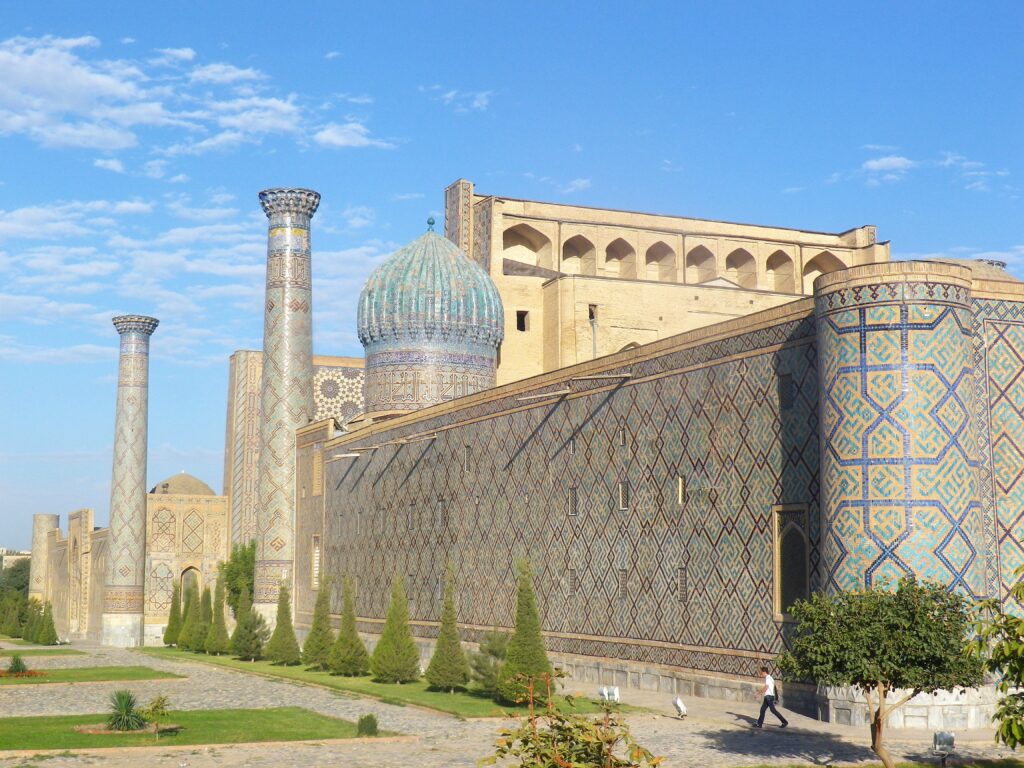
On November 13, the latest meeting of the U.S.-Uzbekistan Strategic Partnership Dialogue took place in Washington, D.C. Key participants included U.S. Assistant Secretary of State for South and Central Asia, Donald Lu, Uzbekistan's Deputy Foreign Minister, Muzaffar Madrahimov, and the ambassadors of both countries. The delegations discussed the expanding partnership between Uzbekistan and the United States, focusing on economic development, human rights, security, and cultural ties. The United States reaffirmed its steadfast support for Uzbekistan’s independence, sovereignty, and territorial integrity. At the meeting, both sides emphasized the importance of maintaining close consultations and celebrated new areas of collaboration. Notable progress was highlighted in critical minerals production and efforts to modernize Uzbekistan’s natural gas infrastructure. This follows the signing of a Critical Minerals Memorandum of Understanding (MOU) in September and Uzbekistan’s entry into the Minerals Security Partnership. The delegations also underscored their commitment to diversifying trade and investment, advancing agricultural reforms in Uzbekistan, empowering women economically, addressing the climate crisis, and supporting the transition to clean energy. The United States commended Uzbekistan for adopting USAID-supported English language textbooks and teachers' manuals for public schools. Efforts to expand sustainable economic opportunities for women in Uzbekistan were similarly praised. Both nations highlighted the strength of their cultural ties, with the U.S. expressing gratitude for Uzbekistan’s leadership in archaeology and cultural preservation. As part of these efforts, the U.S. State Department announced a $500,000 allocation from the U.S. Ambassador's Fund for the Preservation of Cultural Heritage. The funding will support conservation efforts at Registan Square, a UNESCO World Heritage site in Samarkand.

1 year ago

Uzbekistan Aims to Export 10-15 Billion kWh of Electricity to Europe by 2030

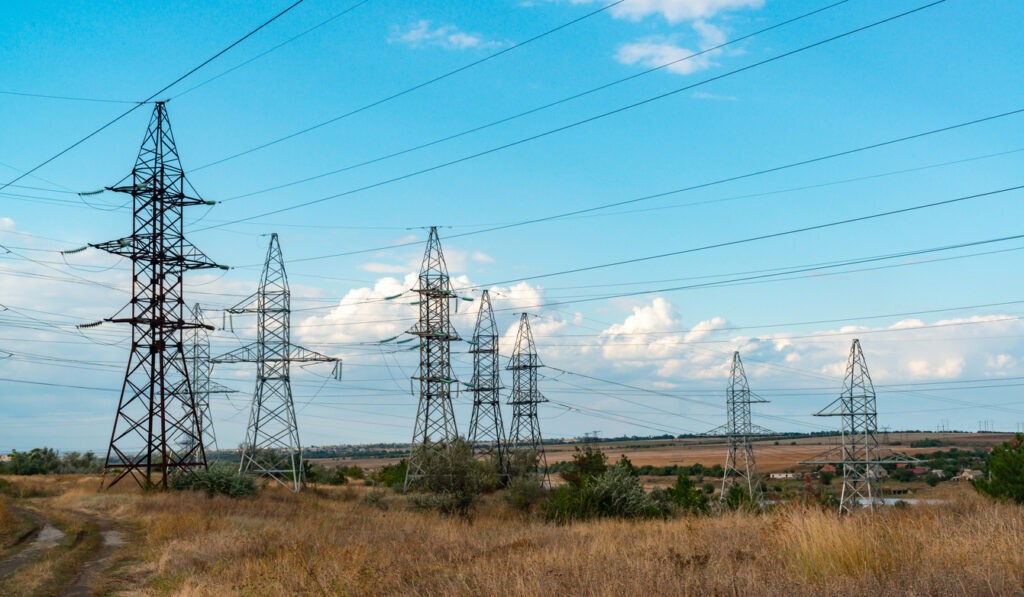
Uzbekistan plans to export 10-15 billion kWh of electricity abroad by 2030, according to Deputy Minister of Energy Umid Mamadaminov, who discussed the initiative in an interview on November 6 during the “Days of European Economy in Uzbekistan” forum. “In 2030, electricity demand is projected to be around 120-125 billion kWh. Our generation capacity will reach approximately 135 billion kWh. Once the necessary infrastructure is ready, we’ll be able to export electricity to Europe,” Mamadaminov explained. At a meeting in Astana in August, Uzbekistan outlined plans to start exporting surplus electricity to Europe by 2030. Energy Minister Jurabek Mirzamahmudov noted that if the joint project with Kazakhstan and Azerbaijan to lay a cable under the Caspian Sea is successful, Uzbekistan will be able to transmit excess energy to Europe. Mirzamahmudov said that renewable energy capacity would exceed 4 GW by the end of this year and is expected to reach over 20 GW by 2030, with 2-5 GW available for export. In the summer, Uzbekistan, Kazakhstan, and Azerbaijan agreed on a draft strategic partnership to develop and transmit green energy. The agreement includes terms for a preliminary feasibility study, which is being developed by the Italian company CESI. “We selected CESI to handle the project’s feasibility study,” Mamadaminov stated. “The study will take about a year and a half to complete, with an expected finish date by the end of 2025. Following this, construction will begin based on the study. The project requires around 2,500 km of HVDC (high-voltage direct current) cable, which will be costly—exceeding $2 billion.” Mamadaminov added that the electricity price will be market-driven but is expected to start at around 4-5 cents per kilowatt.

1 year ago

Kazakhstan Leads Central Asia in AI Readiness

According to IMF data analyzed by Ranking.kz, Kazakhstan ranks as the leading Central Asian country in global artificial intelligence (AI) readiness, while Uzbekistan and Tajikistan are at the bottom of the regional standings. The AI readiness index, which covers 174 countries, evaluates factors such as digital infrastructure, human capital, technological innovation, and legal regulation. It draws on data from the World Bank, the International Labor Organization, and other sources. Kazakhstan ranks within the top 50 countries for AI readiness, holding 48th place with an index score of 0.55, just behind Russia, which ranks 47th. McKinsey & Company has noted Kazakhstan’s use of AI to enhance public services, particularly through geographic information systems and spatial data. For instance, Kazakhstan has employed a statistical model that integrates geographic, demographic, and economic data to assess infrastructure needs across 6,293 villages, identifying 3,500 villages with the highest potential to cover 90% of the rural population. This approach enables the government to deliver essential services and infrastructure more effectively to rural areas. Following Kazakhstan in 48th place, with a noticeable gap, is Kyrgyzstan (99th with 0.43). Tajikistan ranks 123rd with an index of 0.37, and neighboring Uzbekistan is in 131st place with an index of 0.35, placing it last among Central Asian and EAEU countries. Turkmenistan was not included in the IMF index.

1 year ago