• KGS/USD = 0.01144 0%
  • KZT/USD = 0.00208 0%
  • TJS/USD = 0.10439 0%
  • UZS/USD = 0.00008 0%
  • TMT/USD = 0.28571 0%
  • KGS/USD = 0.01144 0%
  • KZT/USD = 0.00208 0%
  • TJS/USD = 0.10439 0%
  • UZS/USD = 0.00008 0%
  • TMT/USD = 0.28571 0%
  • KGS/USD = 0.01144 0%
  • KZT/USD = 0.00208 0%
  • TJS/USD = 0.10439 0%
  • UZS/USD = 0.00008 0%
  • TMT/USD = 0.28571 0%
  • KGS/USD = 0.01144 0%
  • KZT/USD = 0.00208 0%
  • TJS/USD = 0.10439 0%
  • UZS/USD = 0.00008 0%
  • TMT/USD = 0.28571 0%
  • KGS/USD = 0.01144 0%
  • KZT/USD = 0.00208 0%
  • TJS/USD = 0.10439 0%
  • UZS/USD = 0.00008 0%
  • TMT/USD = 0.28571 0%
  • KGS/USD = 0.01144 0%
  • KZT/USD = 0.00208 0%
  • TJS/USD = 0.10439 0%
  • UZS/USD = 0.00008 0%
  • TMT/USD = 0.28571 0%
  • KGS/USD = 0.01144 0%
  • KZT/USD = 0.00208 0%
  • TJS/USD = 0.10439 0%
  • UZS/USD = 0.00008 0%
  • TMT/USD = 0.28571 0%
  • KGS/USD = 0.01144 0%
  • KZT/USD = 0.00208 0%
  • TJS/USD = 0.10439 0%
  • UZS/USD = 0.00008 0%
  • TMT/USD = 0.28571 0%

Our People > Stephen M. Bland

Stephen M. Bland's Avatar

Stephen M. Bland

Managing Editor and Head of Investigations

Stephen M. Bland is a journalist, author, editor, commentator, and researcher specializing in Central Asia and the Caucasus. Prior to joining The Times of Central Asia, he worked for NGOs, think tanks, as the Central Asia expert on a forthcoming documentary series, for the BBC, The Diplomat, EurasiaNet, and numerous other publications.

His award-winning book on Central Asia was published in 2016, and he is currently putting the finishing touches to a book about the Caucasus.

Articles

Central Asia Advances Agenda at Record-Breaking SCO Summit in Tianjin

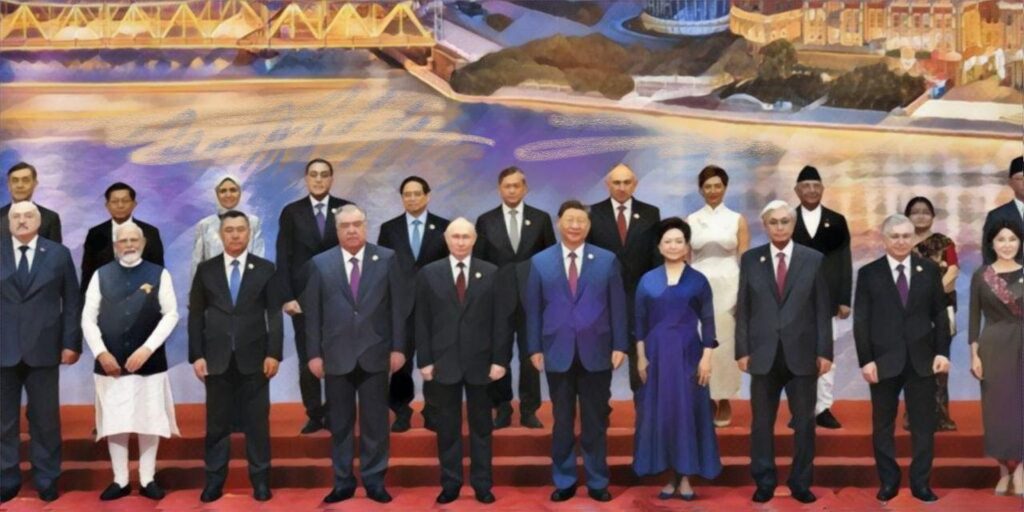
At the opening ceremony of the SCO Summit in Tianjin on August 31, Chinese President Xi Jinping, Russian President Vladimir Putin, and India’s Prime Minister Narendra Modi joined Central Asian leaders in a group photo. The Tianjin summit - China’s second time hosting the SCO and its “largest-ever” summit - was attended by all five Central Asian presidents alongside a host of key countries. In his welcome speech, Xi highlighted that the SCO now bears “greater responsibility” for safeguarding regional peace and stability, and said the summit was expected to produce a new 10-year development strategy. Xi proposed fast-tracking an SCO development bank, pledging 2 billion yuan ($280 million) in aid plus 10 billion yuan in loans to seed the fund. Xi also urged members to oppose a “Cold War mentality” and support an inclusive, multilateral trading system in a pointed rebuke to recent U.S. tariffs. Central Asian Leaders and Their Messages Kazakh President Kassym-Jomart Tokayev opened the summit for his delegation, thanking Xi and praising China’s “consistent policy aimed at strengthening security, stability, economic cooperation, and cultural ties within the SCO framework.” In his address, Tokayev marked the symbolic 80th anniversaries of the end of World War II, noting the value of unity and solidarity which he said the SCO embodies. Tokayev reaffirmed Kazakhstan’s support for a multipolar world order, respect for sovereignty, and mutually beneficial trade and investment, and pledged to keep combating the “three evils” of terrorism, separatism, and extremism. Beyond the opening remarks, Central Asian leaders used the summit to lay out their strategic priorities. Speaking at the heads-of-state meeting, President Shavkat Mirziyoyev of Uzbekistan called for further reform of SCO institutions and expansion of its dialogue partners. Mirziyoyev advocated for new cooperation mechanisms - a regional center for critical materials, a “Unified SCO Transport Space” linked to China’s Belt and Road Initiative, digital platforms, and green energy corridors - and proposed measures to boost intra-regional trade. Notably, Mirziyoyev urged the signing of an Agreement on Trade Facilitation, saying it “will give a boost to the growth of intra-regional trade within the SCO area.” In his closing remarks, he congratulated Kyrgyzstan’s Sadyr Japarov on assuming the SCO chairmanship for 2026, setting up the next summit. Tajik President Emomali Rahmon did not address the leaders’ meeting, but in a pre-summit interview, he highlighted China’s role in the SCO, crediting China with significant investment in Tajik infrastructure and energy, and welcoming Beijing’s proposal to locate an SCO Anti-Drug Center in Dushanbe. "We are confident that the center will make tangible contributions to strengthening regional cooperation and combating illicit drug trafficking," he stated. As a founding member, Rahmon stressed that the SCO’s top priority has long been Central Asian security and said that Tajikistan fully backs China’s Tianjin agenda, citing Beijing’s support for roads, tunnels, and power lines in Tajikistan. The incoming 2026 chair, Sadyr Japarov of Kyrgyzstan, met with Xi on August 31, reviewing plans to deepen all-around cooperation. Xi stated that China will fully support Kyrgyzstan in...

7 months ago
Tokyo Steps Up: Iwaya’s Central Asia Tour Signals Japan’s Long-Term Commitment

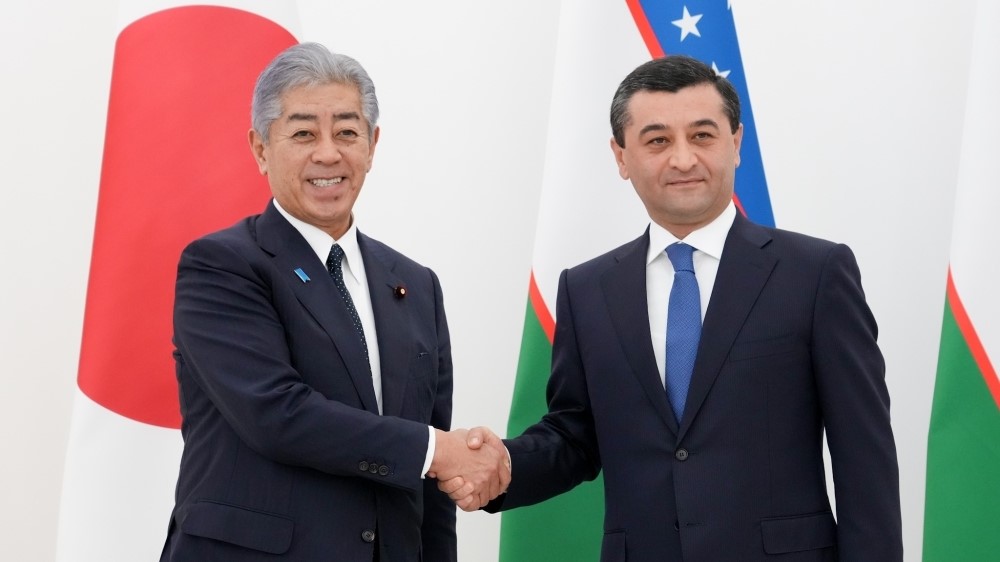
Japanese Foreign Minister Takeshi Iwaya made a landmark trip to Central Asia from August 24–28, 2025, holding talks in Kazakhstan and Uzbekistan. Tokyo framed the visit as a bid to deepen bilateral ties and revive the Central Asia plus Japan leaders’ summits. The visit fulfilled commitments made by then-Prime Minister Kishida, who had planned a similar tour in 2024 before cancelling at the last minute due to a domestic earthquake alert. Strategic Engagement Iwaya’s visit reflects Tokyo’s long-standing, multifaceted approach to Central Asia. Analysts emphasized to The Times of Central Asia that Japan is pursuing “trust-building diplomacy” in the region, focusing on human capital, infrastructure, and governance rather than quick geopolitical wins. Tokyo inaugurated the Central Asia plus Japan Dialogue format in 2004, making it the first outside power to group all five Central Asian republics within a single framework. As Professor Timur Dadabaev of Tsukuba University told The Times of Central Asia, Tokyo is seen “not as a competing hegemon, but as a partner that invests in the region’s human capital, infrastructure, and governance in ways that reinforce independence.” This approach contrasts with what has been characterized as the transactional models of other powers. On August 25, Iwaya met with Kazakhstan’s Deputy Prime Minister and Foreign Minister Murat Nurtleu in Astana, marking his first official visit to the country. The talks underscored both sides’ commitment to strengthening ties as strategic partners and in upholding a “free and open international order based on the rule of law.” The ministers welcomed active exchanges and pledged to expand cooperation in trade, investment, mineral resources, disaster prevention, and nuclear non-proliferation. They also announced plans to accelerate preparations for the long-delayed Central Asia plus Japan summit. [caption id="attachment_35524" align="aligncenter" width="1000"] Japanese Foreign Minister Iwaya with Kazakh Foreign Minister Nurtleu in Astana after their meeting on August 25, 2025; image Japan MOFA[/caption] In Tashkent, Iwaya echoed this message, calling Uzbekistan “an important strategic partner,” and highlighting the first-ever foreign ministers’ strategic dialogue held there. Japanese officials also stressed their policy does not aim to pressure Central Asian partners on sensitive issues. Characterizing Japan as a “catalyst to promote interconnectivity and inter-regional cooperation,” Foreign Ministry spokesman Toshihiro Kitamura stated that Tokyo does not see a zero-sum “competition between Japan and other countries. We would like to see Central Asian countries work together with other parts of the world.” In Tashkent, Kitamura explicitly noted that while Japan condemns Russia’s invasion of Ukraine, it will not pressure Uzbekistan or others to take the same stance. “The relationship between Russia and the Central Asian countries is a very delicate issue. Each country should take into account the relations it establishes with other countries. Even if it is with Russia, such relations do not affect the relations of other countries with Japan,” Kitamura stated. Bilateral Agreements In Kazakhstan, Iwaya held high-level talks with President Kassym-Jomart Tokayev and Foreign Minister Nurtleu. Tokayev welcomed Japan as a “reliable and close partner in Asia” and said ties are “developing dynamically.” The sides agreed to...

7 months ago

Jordan’s King Abdullah II Departs for Uzbekistan and Kazakhstan

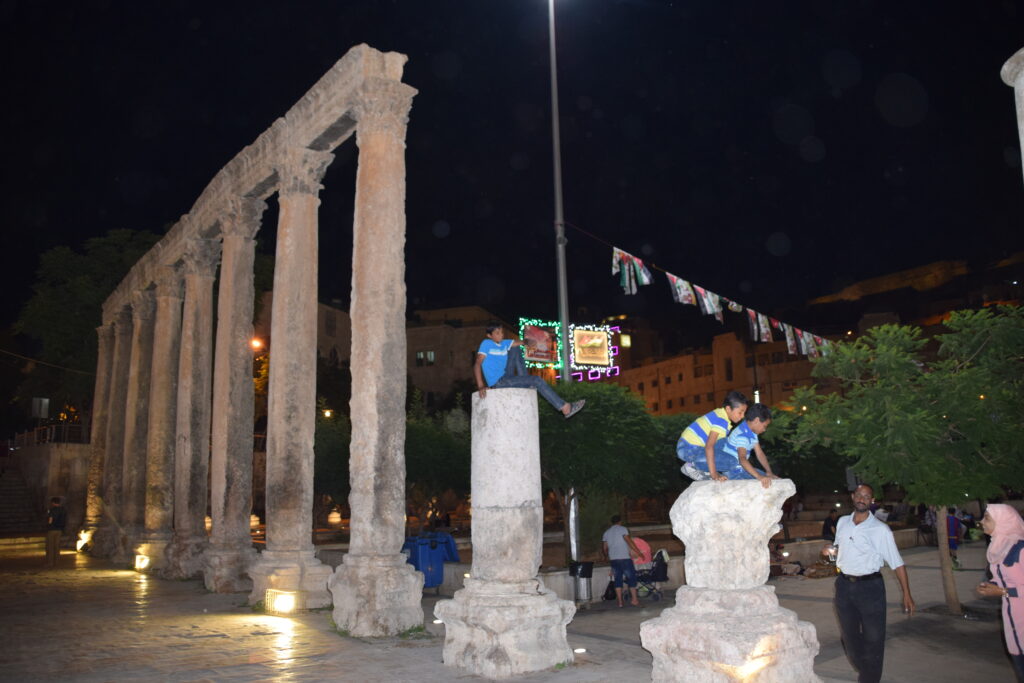
At the invitation of President Shavkat Mirziyoyev, King Abdullah II departed earlier today for a state visit to Uzbekistan spanning 25–26 August, with the main events to be held in Samarkand. The King will then continue to Kazakhstan for an official visit on 26–27 August. In Samarkand, King Abdullah II and President Mirziyoyev are expected to review political dialogue, trade and investment, agriculture and food security, education, tourism, and transport connectivity. Uzbek media report that several cooperation documents are slated for signature, underscoring Samarkand’s growing role as a diplomatic venue for Central Asia. In Astana, the King will meet President Kassym-Jomart Tokayev and attend events designed to expand commercial ties. The authorities in Astana have announced traffic curbs tied to the visit, a signal that a tightly choreographed official program is imminent. Kazakh media have framed the stop as part of a broader effort to deepen links with Middle Eastern partners at a time when Kazakhstan is diversifying export routes and courting investment from the Levant and Gulf. According to the official website of the President of the Republic of Kazakhstan, “high-level negotiations will be held aimed at further strengthening Kazakh-Jordanian cooperation in the trade, economic, cultural and humanitarian spheres.” The two visits fit into Jordan’s long-running outreach to Central Asia. Diplomatic relations with the region’s states date back to the 1990s, and Amman has increasingly paired political dialogue with practical economic initiatives. For Uzbekistan, officials have been looking to scale up a cordial relationship into more structured cooperation, and the Samarkand setting gives both sides a stage to announce concrete timelines for working groups or ministerial roadmaps. For Kazakhstan, Jordan is positioning itself as a mid-market gateway to the Levant and the Gulf, complementing Astana’s drive to build partnerships that can open new consumer markets, source medical-pharma products, and expand educational and tourism flows. Beyond Uzbekistan and Kazakhstan, Jordan’s engagement with Central Asia has emphasized areas where Amman brings specific comparative advantages. Jordan’s experience in water management and desert agriculture aligns with Central Asian priorities on climate resilience and efficient irrigation; its halal and medical-pharma sectors appeal to governments seeking to diversify imports; and its universities offer English- and Arabic-language programs that can deepen people-to-people links. Following the visits, observers will look for intergovernmental agreements that move beyond generalities, whether in health and pharmaceuticals, food supply chains, tourism promotion, or student exchanges. Aviation and cargo-handling announcements would be early evidence of a more durable commercial bridge, while references to streamlined customs procedures or mutual recognition in standards could make a material difference for small and mid-sized exporters on both sides. As Central Asia is recalibrating connectivity amid sanctions frictions and supply-chain shocks, Middle Eastern partners are seeking new sources of food, energy inputs, and investable projects with predictable regulatory environments. The two-country tour could, therefore, touch upon both sides' requirements, with Jordan’s looking to move its Central Asia policy from exploratory diplomacy to delivery.

7 months ago

Tokayev in Bishkek: Deals, Diplomacy, and a Golden Bridge

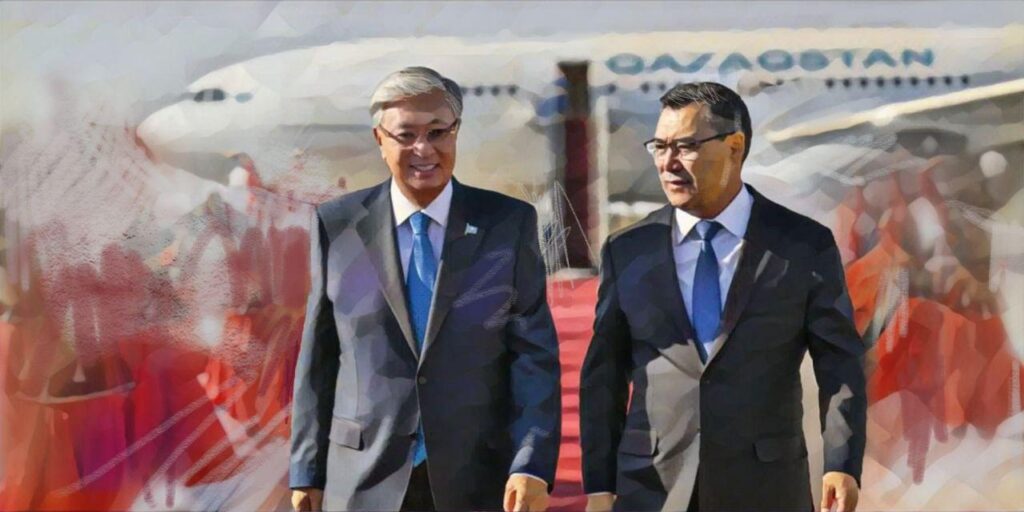
Kazakh President Kassym-Jomart Tokayev arrived in Kyrgyzstan on 21 August for an official visit that rolls into a full day of talks in Bishkek on 22 August, including a session of the Supreme Interstate Council. The Kyrgyz capital implemented rolling traffic restrictions around motorcade routes, a sign of how tightly choreographed the program is. The visit’s centerpiece is a Tokayev–Japarov meeting in both narrow and expanded formats, alongside a packed slate of bilateral events that underscore deepening political, economic, and cultural ties between the neighbors. Tokayev’s schedule blends state protocol with public-facing diplomacy. Alongside presiding over the seventh meeting of the Supreme Interstate Council, the two leaders are set to unveil the “Golden Bridge of Friendship” monument in Bishkek’s Yntymak Park - an attempt to give symbolic form to a relationship both sides have labored to institutionalize over the past two years. The program is also set to include the inauguration of the Consulate General of Kazakhstan in Osh, the launch of a branch of L.N. Gumilyov Eurasian National University in Kyrgyzstan’s south, the third Kyrgyz-Kazakh Youth Forum, and Days of Kazakhstan Cinema - events designed to anchor cooperation beyond chancelleries and boardrooms. This public show of diplomacy is being matched by concrete steps. The new Consulate General in Osh is intended to smooth consular services, support cross-border business, and expand cultural ties in a region where Kazakh–Kyrgyz trade and travel flows are accelerating. Central government, city, and regional officials joined Kazakh diplomats at the ribbon-cutting, underscoring the practical, day-to-day value for citizens who live and work across the southern corridor. Optics aside, the substance is in the talks. Astana and Bishkek have spent the last 18 months upgrading their legal architecture. In April 2024, the presidents signed a Treaty on Deepening and Expanding Allied Relations, moving the relationship beyond the basic language of partnership and into a framework that touches upon security, transport, energy, agriculture, and cultural cooperation. Kazakhstan’s Parliament later approved, and the president signed implementing legislation, putting the allied-relations commitments on a firmer legal footing domestically. This trip is widely viewed in both capitals as a chance to translate that framework into specific projects - some of which are already in motion. Trade and connectivity top the economic agenda. Bilateral trade hit roughly $1.7 billion in 2024, and both governments have repeatedly floated a target of $3 billion within the decade. The composition of flows is familiar: Kazakhstan ships metals, grain, fuels, and construction materials, while Kyrgyzstan supplies gold, coal, light-industry goods, and services. Reaching the next rung, however, will require more predictable border procedures, harmonized standards, and dedicated logistics capacity - areas where ministerial roadmaps are already in circulation. Energy and water cooperation is the other pillar. Kyrgyzstan’s Kambarata-1 hydropower project - envisioned as a 1,860 MW plant on the Naryn River - has become a regional test case for practical integration. Since mid-2024, Kyrgyzstan, Kazakhstan, and Uzbekistan have built a joint track with the World Bank and other partners to complete feasibility work, structure financing,...

7 months ago

CSTO Working Group on Military Training and Scientific Cooperation Opens in Bishkek

A working group meeting on military training and scientific cooperation under the Collective Security Treaty Organization (CSTO) opened in Bishkek today, bringing together delegations from Armenia, Belarus, Kazakhstan, Kyrgyzstan, Russia, and Tajikistan to coordinate officer education, joint curricula, and research collaboration across the bloc. The two-day session runs August 21–22 under Kyrgyzstan’s 2025 chairmanship. AKIpress reported the start of proceedings and its focus on aligning training and scientific work across member states. Officials have said the agenda will center on harmonizing military-education standards, expanding joint training for specialized branches, and mapping priority research areas that can be shared among defense academies and laboratories across the alliance. Outcomes from the Bishkek meeting are expected to inform the CSTO’s rolling program of joint trainings and institutional cooperation in 2026 and beyond. Recent Track Record in Central Asia Today’s meeting builds on a stepped-up schedule of CSTO drills and staff talks in Central Asia. In September 2024, Kyrgyzstan hosted the active phase of “Interaction-2024,” “Search-2024,” and “Echelon-2024” exercises designed to synchronize command-and-control, reconnaissance, logistics, and support elements of the alliance’s collective forces. The Kyrgyz leg concluded with combined operations demonstrations and evaluation of interoperability gains. In October 2024, Tajikistan hosted “Rubezh-2024,” focused on Central Asia’s rapid-deployment forces and scenarios involving incursions by illegal armed groups, hostage rescue, and air-defense coordination. The CSTO reported that the exercise’s operational objectives were achieved and that joint tactics were refined during the active phase at the Harbmaidon range. This year, the organization also ran a strategic command-staff training for its Joint Staff and national ministries on March 17–20, 2025, rehearsing planning and coordination procedures for regional contingencies - part of the bloc’s annual joint-training cycle. Policy framework and next steps The Bishkek working group is meeting against the backdrop of decisions taken by defense ministers in Bishkek on May 28, 2025, when CSTO members approved the Plan of Military Cooperation for 2026–2030 and the Plan of joint training for 2026 - documents that set training priorities, exercise calendars, and institutional cooperation goals across the alliance. By aligning academy programs and research agendas, and pairing them with the long-term exercise plan, the CSTO is aiming to standardize specialist training (from signals and EW to logistics and UAV operations), expand exchanges among defense universities, and convert lessons from recent drills into updated curricula. As chair, Kyrgyzstan is expected to circulate agreed proposals from this week’s sessions to the Council of Defense Ministers for inclusion in the 2026 training calendar and for incorporation into the 2026–2030 cooperation framework.

7 months ago