• KZT/USD = 0.00218
  • TJS/USD = 0.10810
  • UZS/USD = 0.00009
  • TMT/USD = 0.29760
  • KZT/USD = 0.00218
  • TJS/USD = 0.10810
  • UZS/USD = 0.00009
  • TMT/USD = 0.29760
  • KZT/USD = 0.00218
  • TJS/USD = 0.10810
  • UZS/USD = 0.00009
  • TMT/USD = 0.29760
  • KZT/USD = 0.00218
  • TJS/USD = 0.10810
  • UZS/USD = 0.00009
  • TMT/USD = 0.29760
  • KZT/USD = 0.00218
  • TJS/USD = 0.10810
  • UZS/USD = 0.00009
  • TMT/USD = 0.29760
  • KZT/USD = 0.00218
  • TJS/USD = 0.10810
  • UZS/USD = 0.00009
  • TMT/USD = 0.29760
  • KZT/USD = 0.00218
  • TJS/USD = 0.10810
  • UZS/USD = 0.00009
  • TMT/USD = 0.29760
  • KZT/USD = 0.00218
  • TJS/USD = 0.10810
  • UZS/USD = 0.00009
  • TMT/USD = 0.29760
25 August 2026

Viewing results 1 - 6 of 16

Turkmenistan and CNPC Sign Deal on New Phase of Galkynysh Gas Field Development

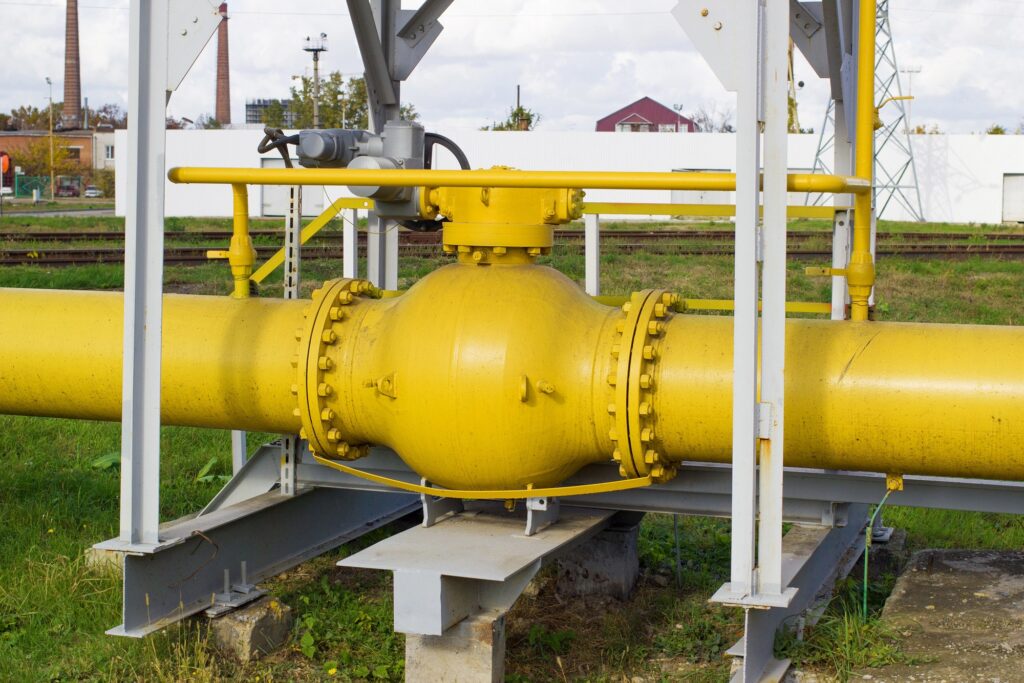
Turkmenistan has signed a new agreement with China National Petroleum Corporation (CNPC) to advance the fourth phase of development at the Galkynysh gas field, one of the largest gas deposits in the world.  According to the state news agency TDH, CNPC will design and construct production facilities on a turnkey basis, including gas wells and infrastructure capable of processing up to 10 billion cubic meters of marketable gas annually. The agreement follows a presidential decree authorizing the state concern Turkmengaz to conclude a contract with CNPC’s subsidiary, CNPC Amudarya Petroleum Company Ltd. The document provides for the construction of gas treatment facilities and the drilling of a sufficient number of production wells to maintain the planned output level. According to reports by industry publication Nebit-Gaz, work on the fourth phase was expected to begin in early 2026. The overall development plan for the Galkynysh field is divided into seven phases. Information published on the Turkmengaz website, citing the international conference “Oil and Gas of Turkmenistan, 2025,” indicates that the first phase has already been completed and is operational. It includes three gas processing plants with a combined annual capacity of 30 billion cubic meters. Turkmenistan possesses the world’s fourth-largest proven reserves of natural gas, yet its export routes remain limited. The majority of gas exports, estimated at between 80% and 90%, are directed eastward through the Central Asia-China pipeline network, often referred to as the Turkmenistan-China corridor. This has resulted in a high degree of dependence on a single export destination. Efforts to diversify export routes have encountered persistent challenges. Proposed projects involving increased deliveries through Iran, trans-Caspian connections via Azerbaijan, or pipeline routes toward South Asia have been constrained by infrastructure limitations, financing issues, and geopolitical factors.  Analysts also note that delays in engaging with initiatives such as the European Union’s Southern Gas Corridor in the early 2000s reduced opportunities to expand Turkmenistan’s export geography.
Kazakhstan and Kyrgyzstan Resume Data Sharing on Reservoirs and Transboundary Rivers

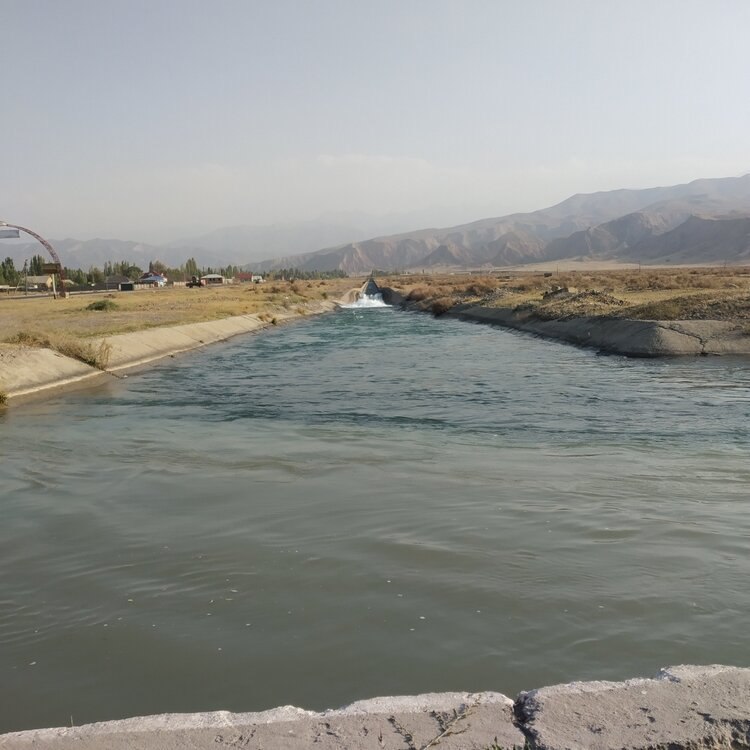
Kazakhstan and Kyrgyzstan have renewed formal cooperation in hydrometeorology, agreeing to exchange key hydrological data on major reservoirs and transboundary rivers, a development officials say is vital for regional flood management and agricultural planning. The agreement covers data exchange on the Kirov, Orto-Tokoy, and Toktogul reservoirs, all located in Kyrgyzstan but directly influencing downstream water supply in Kazakhstan. The signing took place on February 9 in Astana, where Kyrgyzstan’s First Deputy Minister of Emergency Situations Mambetov Muratovich and Kazakhstan’s First Deputy Minister of Water Resources and Irrigation Nurlan Aldamzharov endorsed a 2026-2028 cooperation program between Kazhydromet and the Kyrgyz Hydrometeorological Service. Key Components of the Agreement The three-year program includes: Regular exchange of hydrological data on shared rivers and reservoirs Joint forecasting of basin runoff and water accumulation Mutual hazard and storm warnings Scientific and technical collaboration Professional exchange between agencies Describing the agreement as an achievement of "water diplomacy," Aldamzharov emphasized that timely data is critical to protecting populations and infrastructure downstream, especially during peak water flow and flood risk periods. Strategic Role of Kyrgyz Water Infrastructure Kyrgyzstan plays a pivotal upstream role in Central Asia’s water system, delivering seasonal irrigation flows to southern Kazakhstan’s Turkistan, Kyzylorda, and Zhambyl regions via the Chu, Talas, and Syr Darya rivers. Each of the reservoirs included in the data-sharing agreement serves a distinct strategic function: Kirov Reservoir: Located in Kyrgyzstan’s Talas region, near the Kazakh border; vital for irrigating farmland on both sides. Orto-Tokoy Reservoir: Situated on the Chu River, which flows into Kazakhstan, it regulates seasonal supply for downstream agriculture. Toktogul Reservoir: Kyrgyzstan’s largest, located on the Naryn River, the principal tributary of the Syr Darya, one of Central Asia’s main water arteries feeding Kazakhstan and Uzbekistan. According to Kazakhstan’s Ministry of Water Resources, during the 2025 growing season, Zhambyl region received 160 million cubic meters of water via the Chu River and 427.5 million cubic meters via the Talas River under existing water allocation frameworks. Water Stress Ahead of Growing Season Authorities warn that the Syr Darya basin continues to experience low-flow conditions. Reduced inflows to the Naryn-Syr Darya system are threatening irrigation reliability for the upcoming agricultural season. The Toktogul Reservoir may reach near-record low levels, heightening risks for downstream farmers. In response, agricultural authorities in southern Kazakhstan have urged the adoption of water-saving irrigation technologies, a shift away from water-intensive crops, and greater reliance on drought-resistant varieties-steps that make access to reliable hydrological forecasts increasingly urgent.

Uzbekistan and Islamic Development Bank Sign $164 Million Agreements for Roads and Schools

Uzbekistan and the Islamic Development Bank (IsDB) have signed new financing agreements totaling $164 million to support major infrastructure and education initiatives, further deepening a partnership that plays a key role in the country’s long-term development strategy. The agreements were formalized on February 8 in AlUla, Saudi Arabia, during the Second AlUla Conference for Emerging Market Economies. Prior to the signing, both sides held bilateral talks focused on scaling up cooperation across transport, education, and other high-priority sectors. The discussions emphasized the importance of projects that strengthen regional connectivity and human capital. Road Infrastructure: 4R40 Project One agreement allocates $70 million under the IsDB’s broader $192 million commitment for the 4R40 road project. The funds will support the reconstruction of 143 kilometers of the Dashtabad-Zaamin-Bakhmal-Galyaaral highway, as well as the rehabilitation of 30 kilometers of local and rural roads in the Jizzakh region. The road upgrades are expected to ease transit bottlenecks, enhance safety, and improve access to markets and public services for approximately 200,000 residents. The project will also strengthen regional links to the M39 international transport corridor. Education Reform: SmartEd Project The second agreement covers $94.06 million, part of a total contribution of $160.25 million for the SmartEd project, a national initiative aimed at transforming Uzbekistan’s education system. Funds will be used to build and equip 58 new schools and expand existing institutions with an additional 2,431 classrooms. The initiative targets nearly 73,000 students annually, with provisions for specialized training for over 36,000 teachers and administrators. The project is designed to promote a competency-based, inclusive education system. A Broader Partnership These new agreements build on earlier commitments. At the first AlUla conference in February 2023, Uzbekistan and the IsDB signed $299 million in financing deals, laying the foundation for the infrastructure and education reforms now entering the implementation phase.

Uzbekistan and EU Sign Landmark Enhanced Partnership Agreement in Brussels

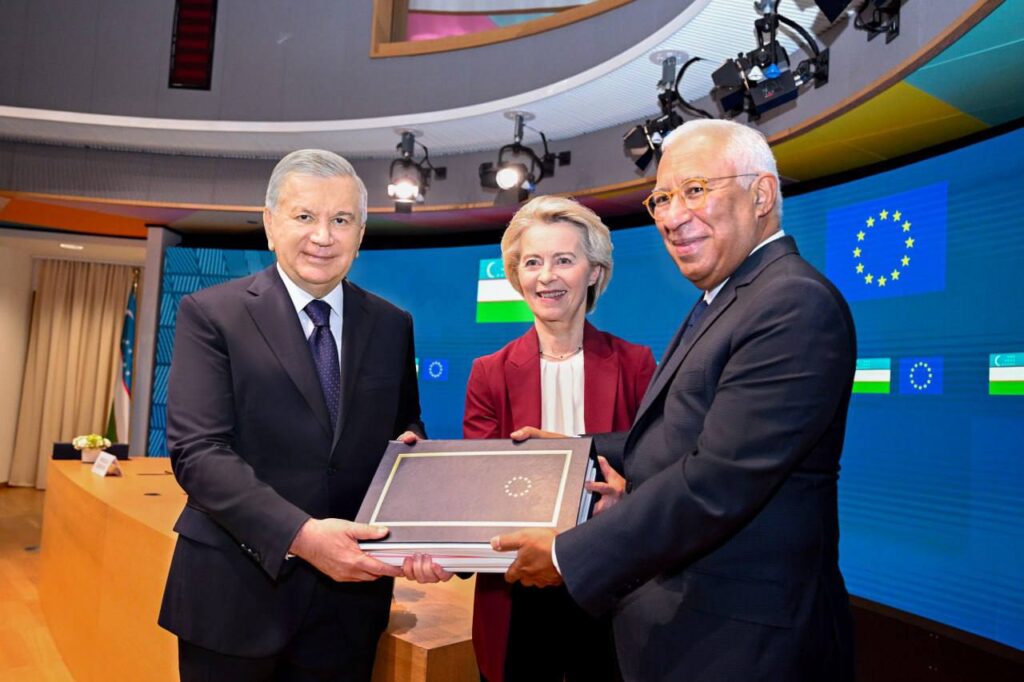
President Shavkat Mirziyoyev of Uzbekistan paid an official visit to Brussels on October 23-24 at the invitation of European Council President Antonio Costa and European Commission President Ursula von der Leyen, where a landmark agreement was signed to deepen Uzbekistan-EU cooperation across multiple sectors. During the visit, Mirziyoyev attended the signing ceremony of the Enhanced Partnership and Cooperation Agreement (EPCA), which replaces the 1996 Partnership and Cooperation Agreement. The new accord significantly broadens the scope of bilateral ties, covering areas such as trade, investment, digital technologies, environmental protection, and climate resilience. Negotiations began in February 2019 and concluded in July 2022. The EPCA includes nine sections, 356 articles, and 14 annexes, forming a comprehensive legal framework for political dialogue and long-term economic collaboration. It aims to bolster cooperation in trade, innovation, sustainable development, education, and cultural exchange between Uzbekistan and EU member states. In Brussels, Mirziyoyev also participated in a roundtable with executives from leading European companies and financial institutions, including Vandewiele, Linde, Lasselsberger Group, Meridiam, SUEZ, the European Investment Bank, Commerzbank, and KfW. The parties agreed to pursue new joint projects worth over €10 billion in sectors such as energy, chemicals, critical minerals, logistics, textiles, and pharmaceuticals. These initiatives build on an existing portfolio of EU-led projects in Uzbekistan, currently valued at more than €40 billion. Over the past seven years, trade between Uzbekistan and the European Union has doubled, while the number of joint ventures with European investment has surpassed one thousand. Mirziyoyev highlighted that the partnership is grounded in mutual trust and shared priorities, particularly in human capital development, renewable energy, digital transformation, and sustainable infrastructure. The President outlined four priority areas for expanding cooperation: joint production of high-value goods through deeper processing of strategic raw materials; collaboration in the green economy; development of logistics and transport corridors linking Europe and Asia; and partnerships in digital technologies, including artificial intelligence and cybersecurity. On the sidelines of the visit, Mirziyoyev met with King Philippe of Belgium at Laeken Palace. The two leaders discussed trade, investment, and cultural ties, with the King congratulating Uzbekistan on the signing of the historic EPCA. Relations between Uzbekistan and Belgium continue to grow, with rising trade volumes and expanding business cooperation. Belgian firms are active in Uzbekistan’s textile, logistics, and service sectors, while cultural ties have also deepened. Notable milestones include the unveiling of a bust of Ibn Sina in Kortrijk and sister-city partnerships such as Tashkent-Kortrijk and Samarkand-Liège. Mirziyoyev extended an official invitation to King Philippe to visit Uzbekistan, underscoring a shared commitment to strengthening bilateral ties in the years ahead.

Electronic Queue System Launched at Key Kyrgyz-Uzbek Border Crossing

An Electronic Queue Management System (e-QMS) has been launched at the Dostuk border crossing, the primary checkpoint between Kyrgyzstan and Uzbekistan along the Osh-Andijon road. The initiative, developed through cooperation between the Kyrgyz government, the European Union, and the International Trade Centre (ITC), is part of the “Ready4Trade Central Asia” project (2024-2028), which aims to streamline trade procedures and boost economic competitiveness across the Trans-Caspian Transport Corridor. Funded by the European Union, the project is designed to simplify cross-border operations and improve conditions for small and medium-sized enterprises. The e-QMS platform, developed by the ITC in collaboration with Kyrgyzstan’s State Customs Service and Ministry of Economy and Commerce, allows transport operators to pre-book border crossing times online or via a mobile app. The system is expected to reduce waiting times, ease congestion, and improve the predictability of border transit, benefiting both carriers and customs authorities through greater transparency, efficiency, and safety. “For Kyrgyzstan, the implementation of e-QMS is a cornerstone in creating a business-friendly environment for exporters. The new system simplifies procedures, reduces costs for exporters and carriers, and makes trade more transparent and efficient,” said Iskender Asylkulov, Kyrgyzstan's Deputy Minister of Economy and Commerce. The system was initially piloted at the Kyzyl-Kiya border crossing in November 2024, where it processed more than 12,000 vehicles in its first six months. Following positive feedback from transport operators and significant reductions in wait times, the system has now been expanded to Dostuk, one of the region’s busiest crossings. In 2024 alone, over 87,000 vehicles passed through Dostuk, including more than 21,000 import consignments, nearly 8,000 export shipments, and over 58,000 transit movements. The deployment of the e-QMS is expected to further boost trade between Kyrgyzstan and Uzbekistan, which reached $846 million in 2024. From January to June 2025, bilateral trade turnover totaled $430.2 million, $50 million more than during the same period in 2024, according to data from Uzbekistan’s National Statistics Committee.

Kazakh and Chinese Universities Sign Over 20 New Cooperation Agreements

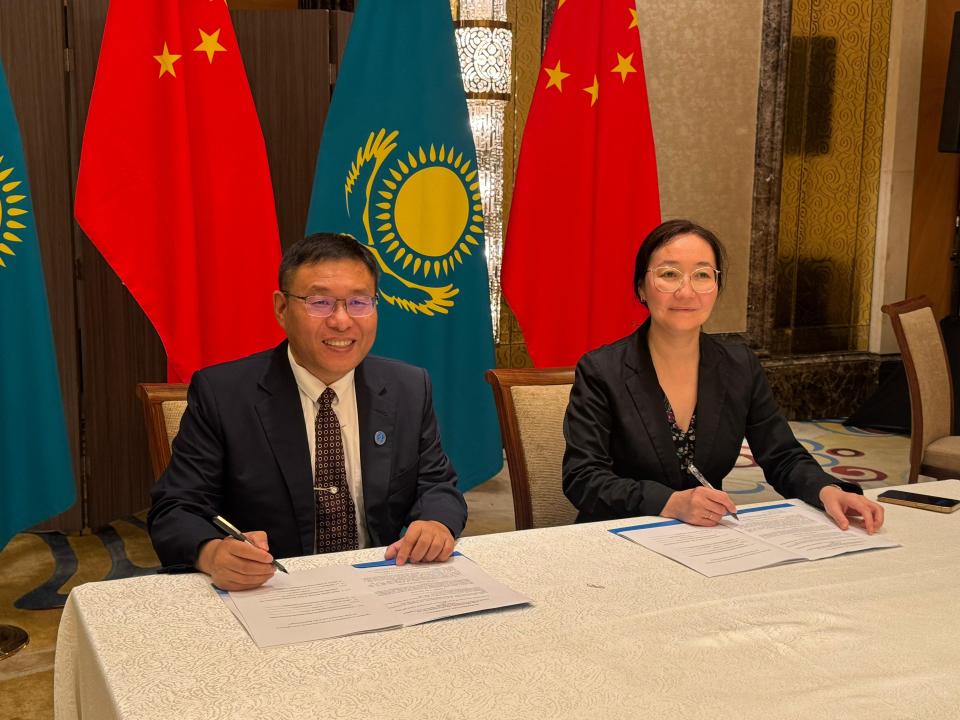
At the Kazakhstan-China Business Council meeting held in Beijing on September 2, leading universities from both countries signed more than 20 new agreements aimed at deepening cooperation in education, science, and innovation, according to the Kazakh Ministry of Science and Higher Education. The wide-ranging agreements span areas such as artificial intelligence, robotics, water resource management, and dual degree programs, highlighting the growing strategic role of academic and research collaboration in the Kazakhstan-China partnership. Among the most significant developments was the establishment of the Kazakh-Chinese Scientific and Technological Alliance on Spatio-Temporal Artificial Intelligence. The alliance includes the National Academy of Sciences of Kazakhstan, the Kazakh National Agrarian Research University, Zhejiang University of Technology, and Zhejiang Zhonghe Technology Co., Ltd. A joint laboratory will also be launched as part of the Belt and Road Initiative. Al-Farabi Kazakh National University (KazNU) signed an agreement with Chinese investment and development firm Yuan Zhen to jointly design and produce unmanned aerial vehicles. KazNU also partnered with Jiangsu Huibo Robotics Technology Co., Ltd. to inaugurate the International Institute of Digital Technologies and Robotics, along with a Robotics Center dedicated to training the next generation of engineers. In Almaty, the Technological University signed an agreement with Beijing Technology and Business University to create the Kazakhstan-China Center for Technology and Innovation Development. Meanwhile, the Kazakh National University of Water Resources and Irrigation and the North China University of Water Resources and Electric Power (NCWU) agreed to collaborate on sustainable water management. In the digital sphere, Astana IT University signed a memorandum of cooperation with Tus-Holdings, a science park affiliated with Tsinghua University, focusing on information technology, artificial intelligence, and startup incubation. Multiple institutions expanded joint academic offerings. Gumilyov Eurasian National University, Abylkas Saginov Karaganda Technical University, ALT University, and Uzbekali Zhanibekov South Kazakhstan Pedagogical University all signed agreements with top Chinese universities to launch dual bachelor’s and master’s degree programs. In the energy sector, the Atyrau University of Oil and Gas and Liaoning Petrochemical University will establish the Kazakhstan-China International Engineering School and a joint international laboratory. Additionally, Astana International University and Beijing Language and Culture University agreed to open a branch campus of the Chinese university in Kazakhstan. These agreements underscore the strategic role of higher education and scientific cooperation in advancing Kazakhstan-China relations, particularly within the framework of the Belt and Road Initiative.