• KZT/USD = 0.00219
  • TJS/USD = 0.10810
  • UZS/USD = 0.00009
  • TMT/USD = 0.29850
  • KZT/USD = 0.00219
  • TJS/USD = 0.10810
  • UZS/USD = 0.00009
  • TMT/USD = 0.29850
  • KZT/USD = 0.00219
  • TJS/USD = 0.10810
  • UZS/USD = 0.00009
  • TMT/USD = 0.29850
  • KZT/USD = 0.00219
  • TJS/USD = 0.10810
  • UZS/USD = 0.00009
  • TMT/USD = 0.29850
  • KZT/USD = 0.00219
  • TJS/USD = 0.10810
  • UZS/USD = 0.00009
  • TMT/USD = 0.29850
  • KZT/USD = 0.00219
  • TJS/USD = 0.10810
  • UZS/USD = 0.00009
  • TMT/USD = 0.29850
  • KZT/USD = 0.00219
  • TJS/USD = 0.10810
  • UZS/USD = 0.00009
  • TMT/USD = 0.29850
  • KZT/USD = 0.00219
  • TJS/USD = 0.10810
  • UZS/USD = 0.00009
  • TMT/USD = 0.29850
06 September 2026

Viewing results 1 - 6 of 2

Archaeologist Steven Gilbert on Medieval Christianity in Kazakhstan

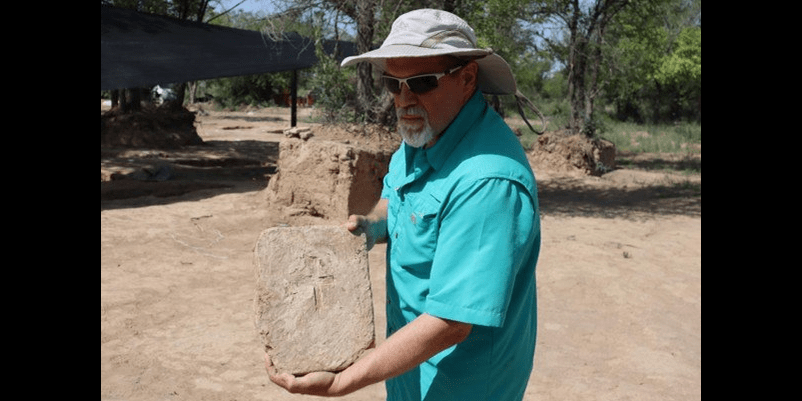
For almost a decade, archaeologists excavating a medieval Silk Road city in southeastern Kazakhstan have been uncovering evidence of a little-known Christian community that lived there centuries before the Russian conquest. At Ilibalyk, in the Zhetysu region near Kazakhstan’s border with China, they have found a Christian cemetery, dozens of gravestones bearing crosses and epitaphs, a funerary chapel, and burials of women of high social status. In an interview with The Times of Central Asia, American archaeologist Steven Gilbert discusses the discoveries at Ilibalyk, what they reveal about Christianity in medieval Central Asia, and what archaeology can add to Kazakhstanis’ understanding of the region’s past. TCA: What inspired you to pursue archaeology, and how did your research journey bring you to Kazakhstan? Gilbert: I lived in Kazakhstan before I became an archaeologist. I moved to Kazakhstan in 1993, shortly after independence. My wife and I originally came as part of a humanitarian organization because Kazakhstan was facing many difficulties at the time. Our organization was involved in food aid projects in the Aral Sea region and various exchange programs. My interest in archaeology began after a schoolteacher discovered a very large Christian gravestone, one meter long, in Usharal, in the Panfilov district of the Zhetysu region, in 2014. I had previously conducted historical research into Christianity in Central Asia and knew that Christians had been present in the region since the fifth century, and possibly as early as the second century. The discovery of this remarkable artifact, now housed at the Center for the Rapprochement of Cultures in Almaty, allowed me to establish connections with archaeologists from Kazakhstan and the United States. Through them, I returned to the U.S. to study archaeology specifically so that I could work at this and other sites. TCA: What makes the ancient city of Ilibalyk historically unique within the Silk Road network? Gilbert: Ilibalyk was located on an ancient trade route just beyond the Dzungarian Gate in this region. It was a stop before Almaliq, the capital of the Chagataids in the late medieval period. This oasis on the edge of the desert was an important place for travelers both before and after the Mongol conquest. For our research, its uniqueness lies primarily in the fact that we now know that a large community of Turkic-speaking Christians lived here for almost two centuries, from the 12th to the 14th century.They lived in the city alongside followers of several religions: Muslims, Buddhists, Manichaeans, and those who followed traditional religious beliefs that today we call Tengrism. This is the first clearly Christian cemetery discovered in Kazakhstan dating from before the arrival of the Russian Empire. Christian communities and cemeteries had previously been found in Kyrgyzstan, but this is the first reliable evidence of such a community on the territory of modern-day Kazakhstan. TCA: Which of the artifacts and discoveries made by your team at Ilibalyk do you consider the most significant? Gilbert: We have discovered more than 50 gravestones, known as kairaks, bearing images of crosses. Six of...

Rome to Host Exhibition of Ancient Artifacts from Tajikistan

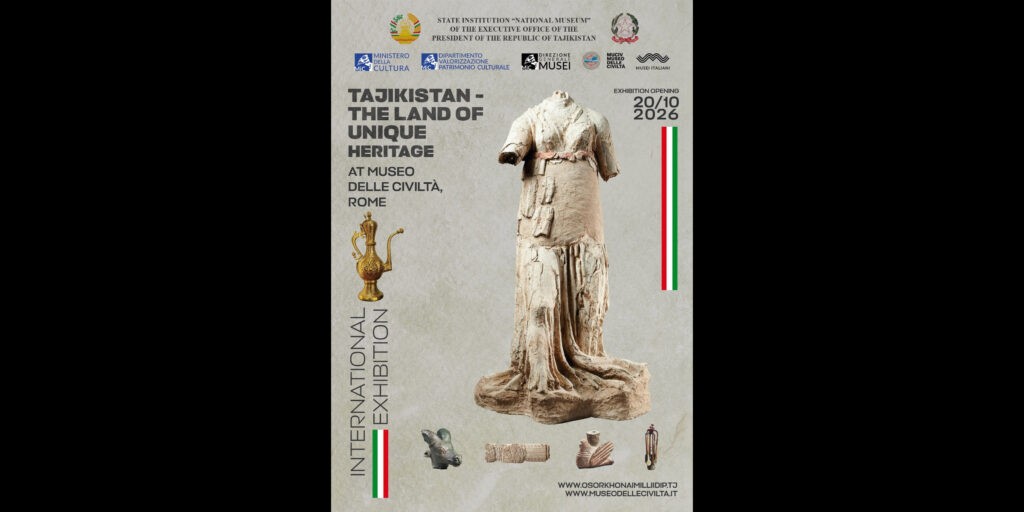
The National Museum of Tajikistan will present an exhibition in Rome later this year, displaying cultural and archaeological heritage spanning about 2,500 years. The exhibition, titled Tajikistan – The Land of Unique Heritage, will open in Rome on October 20 and mark the 35th anniversary of Tajikistan’s independence from the Soviet Union, according to the National Museum. Tajikistan declared independence on September 9, 1991. The show includes artifacts from Takht-i Sangin, an archaeological site in southern Tajikistan; the Ajina-Teppa Buddhist monastery, a seventh- to eighth-century site in the south where a large reclining Buddha statue was discovered; and Panjakent, the ruins of an ancient Sogdian city that was part of the Silk Road trade network and lies in northwestern Tajikistan. “The exhibited artifacts span a chronological period from the 6th century BCE to the 20th century CE, illustrating the major stages in the formation and development of the civilization of the Tajik people,” the National Museum said. Heritage from Tajikistan has previously gone on display in Europe. From October 2021 to January 2022, the show Tajikistan: The Land of Golden Rivers was held at the Musée Guimet. It featured heritage spanning the period from prehistory to the arrival of Islam in Central Asia in the early eighth century. Rome recently hosted another exhibition of artifacts from Central Asia. From October 2025 to April this year, the Capitoline Museums presented Ancient Civilizations of Turkmenistan. On display were “masterpieces from prehistoric Margiana, corresponding to the present-day Murghab River valley in southeastern Turkmenistan, and from ancient Parthia, in particular from Nisa,” a site in south-central Turkmenistan that is more than 2,000 years old, Italy’s foreign ministry said.