Armenian President Delivers Speech at Astana Summit, Emphasizing Climate Action and Biodiversity
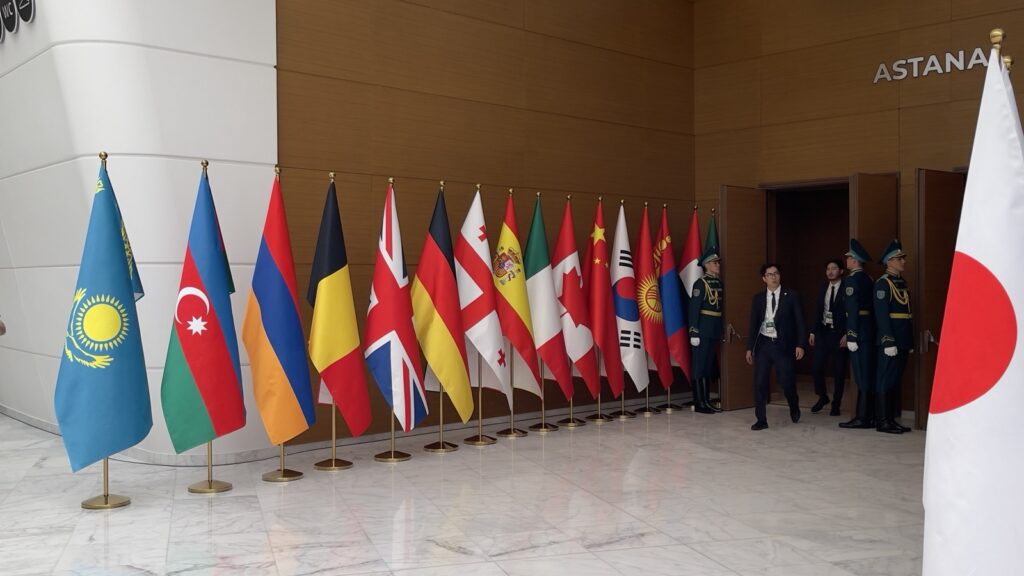
Astana, Kazakhstan – Armenian President Vahagn Khachaturyan addressed the Regional Ecological Summit (RES 2026) today, speaking about the urgent challenges of climate change, biodiversity loss, and the need for strengthened international cooperation. The summit, themed “Shared Vision for a Resilient Future,” opened its sessions on Earth Day under the patronage of Kazakh President Kassym-Jomart Tokayev. In his remarks, President Khachaturyan expressed deep gratitude to his Kazakh counterpart, the government, and the people of Kazakhstan for their warm hospitality and the excellent organization of this important event. “It is an honor to address the Regional Ecological Summit in Astana,” he stated. He praised Kazakhstan’s leadership in advancing global and regional cooperation on climate change and environmental protection, describing the event as an important platform for dialogue bringing together governments, the scientific community, civil society, and international partners. [caption id="attachment_47661" align="alignnone" width="300"] President Vahagn Khachaturyan gives address at the Regional Ecological Summit in Astana; Image: TCA[/caption] Highlighting Armenia’s unique vulnerabilities, the President noted that, as a landlocked, developing, and mountainous nation, Armenia is already experiencing severe effects of climate change despite contributing just 0.02% of global greenhouse gas emissions. “Over the past decades, the average temperature in the country has increased by more than one degree Celsius and is projected to continue rising by mid-century,” he said. These changes have triggered more frequent extreme weather events, including floods and droughts, leading to significant ecological losses, declining precipitation, glacier retreat, and growing water scarcity — particularly affecting rural communities and mountain ecosystems. President Khachaturyan welcomed Kazakhstan’s initiative to convene international consultations on strengthening cooperation for effective water resource management and said Armenia will actively participate. On the climate front, he reaffirmed Armenia’s ambitious nationally determined contributions (NDCs): a 44% reduction in greenhouse gas emissions by 2035 compared to 1990 levels through domestic measures, rising to 52% with international support. “Armenia undertakes these commitments with full awareness of its national capacity and the importance of international cooperation,” he emphasized, citing the principles of equity and common but differentiated responsibilities. Turning to biodiversity, the President stressed that rising temperatures are a major driver of biodiversity loss, with profound consequences for ecosystems, human health, food security, and economies worldwide. He announced that Armenia will host the 17th Conference of the Parties (COP17) to the Convention on Biological Diversity in Yerevan in October later this year. “These efforts reflect our small country’s strong commitment to promote global nature conservation,” Khachaturyan declared, inviting all participants to join the landmark gathering “to review our progress and identify ways to accelerate efforts to restore and protect the environment for present and future generations.” The Armenian President concluded by underscoring the critical role of international cooperation, including the mobilization of financial resources, sharing of expertise, and the transfer of technology. “Armenia stands ready to cooperate with regional and international partners, to share our experience and to learn from others,” he said. “Together, we can protect our planet Earth, ensure long-term resilience and well-being for our societies.” President Khachaturyan’s address highlights Armenia’s...