Kazakhstan’s deepening engagement with Armenia has made TRIPP, part of the Armenia–Azerbaijan peace formula, a practical question for the Middle Corridor. The Armenia–U.S. implementation framework published in January presents the Trump Route for International Peace and Prosperity (TRIPP) as a project for unimpeded, multimodal transit connectivity on Armenian territory. The means for its realization remain under discussion.
TRIPP has thus become relevant to Kazakhstan, even though Astana is not a direct party to the prospective Armenia–Azerbaijan settlement. Recent Kazakhstani diplomacy with Baku and Tbilisi has confirmed that the existing Azerbaijan–Georgia route remains the operative western channel of the Middle Corridor. A route through Armenia would not replace the Azerbaijan–Georgia line; it would widen the Middle Corridor’s western options. If constructed, it would link the main body of Azerbaijan with Nakhchivan and open new transit opportunities from Central Asia and the Caspian to Europe.
Astana Brings Yerevan into the Route System
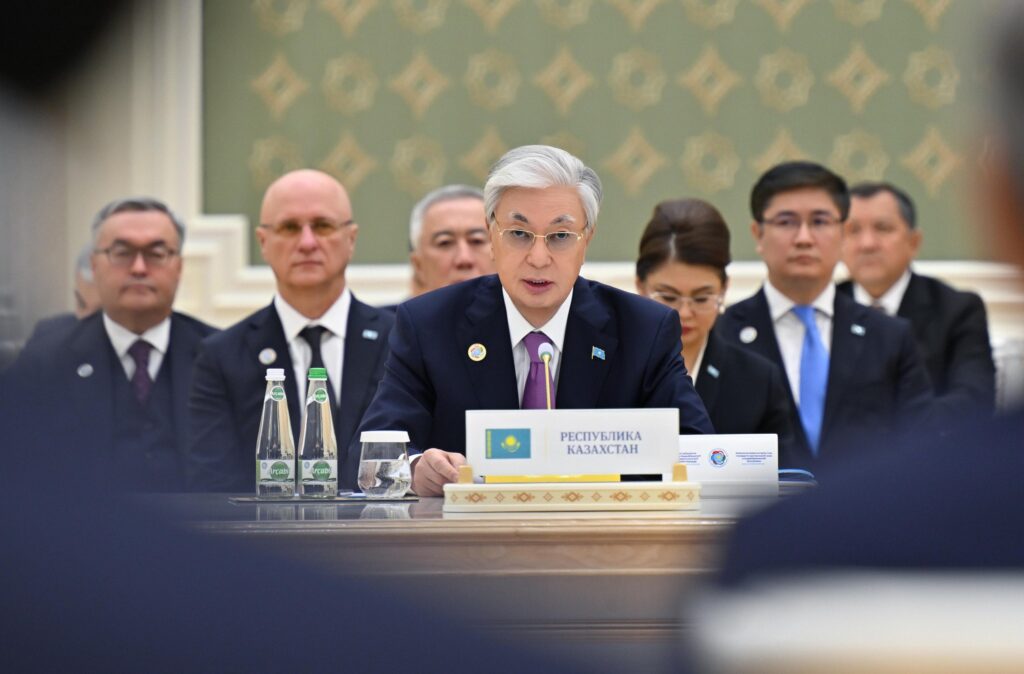
Armenian Prime Minister Nikol Pashinyan visited Astana in November 2025. His talks with President Kassym-Jomart Tokayev emphasized economic sectors, including trade, infrastructure, transport, agriculture, and air transport, together with humanitarian sectors such as education and culture. The official Armenian account also recorded the leaders’ interest in unblocking regional communications, importing wheat from Kazakhstan to Armenia by rail, and bringing TRIPP to life. Tokayev described the first shipment of Kazakhstani wheat reaching Armenia through Azerbaijan as having both political and economic significance. The cargo moved along existing lines, through Russia, Azerbaijan, and Georgia. Astana’s April 2026 Regional Ecological Summit showed the same regional widening from another angle: it brought Armenia, Azerbaijan, and Georgia into a forum that connected environmental pressure with economic security and regional cooperation.
The Kazakhstan–Armenia agenda has since become more specific. Foreign Minister Yermek Kosherbayev visited Yerevan as part of an official delegation earlier this month. Kosherbayev’s presence gave the visit added weight, bringing recent cabinet experience and a record on politically sensitive regional issues rather than merely protocol standing. His talks with Foreign Minister Ararat Mirzoyan on April 8 extended the discussion to a broader institutional basis, including the bilateral Intergovernmental Commission and the Kazakhstan–Armenia Business Council. The two parties agreed that transit and logistics interconnectivity create new opportunities for market integration between Central Asia and the South Caucasus. The talks did more than raise the bilateral profile. They brought Armenia closer to the network already carrying Kazakhstan’s westbound trade.
Regional connectivity received more detailed treatment on April 9, when Kosherbayev met with Pashinyan to discuss transport, transit, and trade within the 2026–2030 Roadmap for Trade and Economic Cooperation. Kosherbayev also reaffirmed Kazakhstan’s interest in long-term agricultural exports, especially grain and meat, and informed the Armenian side about measures to establish regular direct air connections. These meetings showed Astana and Yerevan moving toward the same practical premise: Armenia may become part of the wider route system.
TRIPP Becomes a Middle Corridor Question
Azerbaijan has completed infrastructure up to the Armenian border, but TRIPP has not yet begun construction through Armenia itself. It remains tied to the Armenia–Azerbaijan peace process and to U.S. sponsorship. The January implementation framework says its success depends on further institutionalization of peace between Armenia and Azerbaijan, progress toward Armenia–Turkey normalization, and regional stability. It is also framed to respect sovereignty, territorial integrity, and jurisdiction. TRIPP therefore requires political consent and effective state capacity before it can become a transport fact.
For Kazakhstan, the question is whether the Middle Corridor can gain another workable western route. The Trans-Caspian chain running through Azerbaijan and Georgia remains Astana’s current South Caucasus route to Europe. A multimodal route through Azerbaijan, Armenia, Nakhchivan, and Turkey toward European markets would give the Middle Corridor a second western branch. That would supplement the existing route, not displace it. Kazakhstan’s interest is in adding another workable path through the South Caucasus.
Tokayev made the connection explicit. The official Armenian account of Pashinyan’s November 2025 visit to Astana recorded the two leaders’ interest in bringing TRIPP to life. Tokayev also acknowledged the possibility of integrating Armenia’s Crossroads of Peace initiative, which is more circuitous and more exposed to security problems than TRIPP, with the Trans-Caspian International Transport Route (TITR, Middle Corridor) linking China, Kazakhstan, the Caspian Sea, Azerbaijan, Georgia, and Europe. Crossroads of Peace is more complicated and less immediately workable than TRIPP, but Tokayev was still pointing to the same transport problem. A future TRIPP route would more readily add capacity, redundancy, and political flexibility to the existing westbound system.
The Railway Constraint
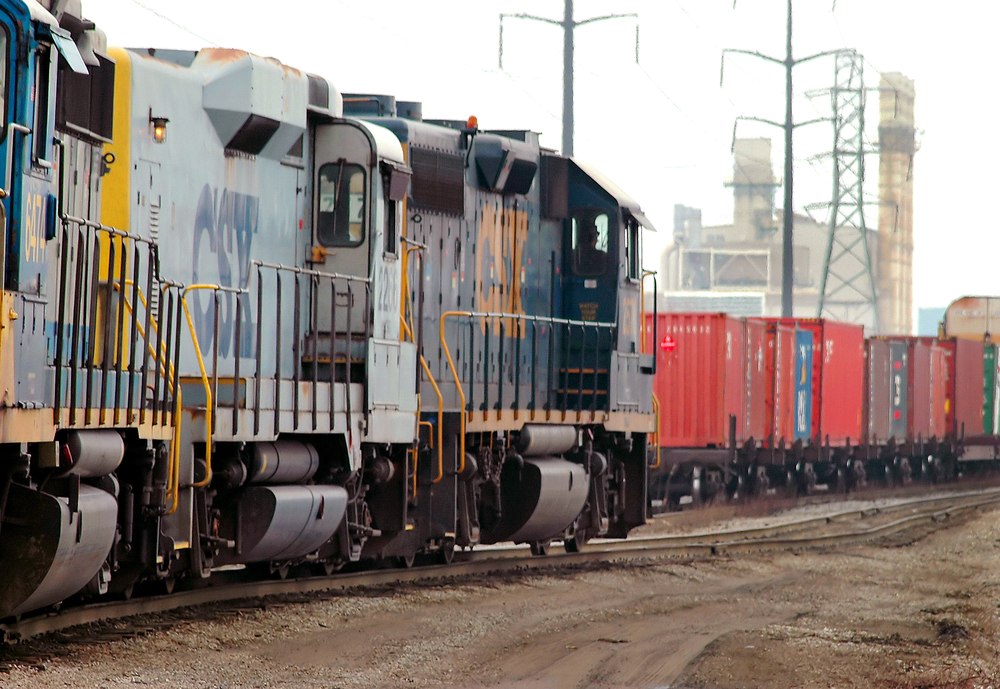
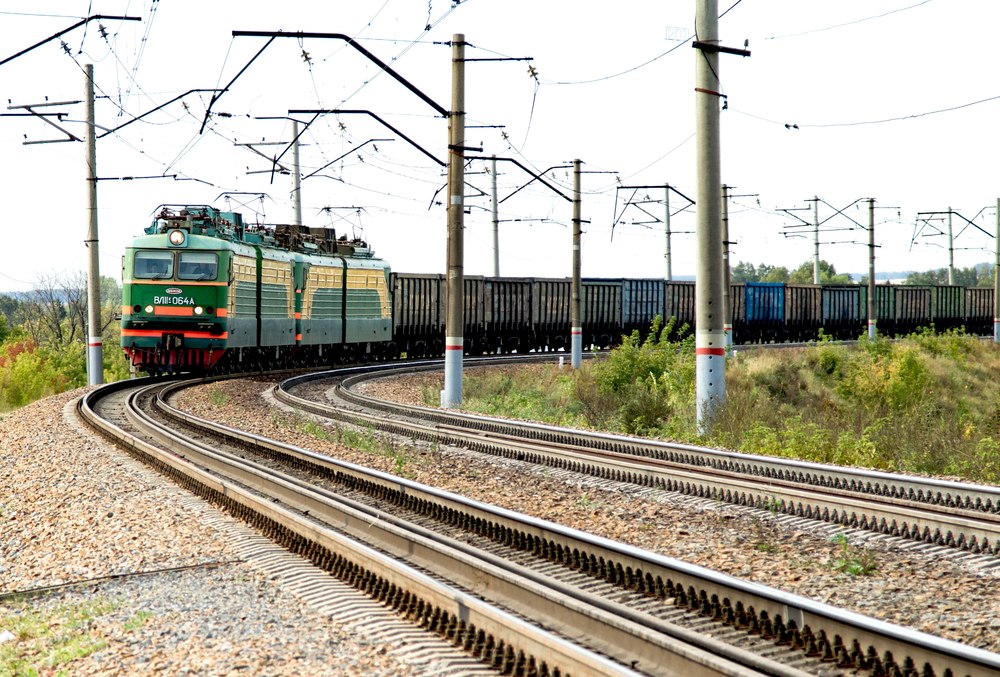
The status of Armenia’s railway system, including repair and reconstruction of its segment through southern Armenia, is perhaps the most nettlesome operational constraint. What is at issue is not ownership of the national railway network per se, but the operating concession held through Russian Railways. South Caucasus Railway, a subsidiary of Russian Railways, has operated Armenia’s railway system under a 30-year concession agreement signed in 2008 that could be extended afterward. Armenian railways thus remain under a structure that ties access, management, and political consent to Moscow.
Pashinyan has floated the possibility that the concession could be transferred to a third country friendly to both Armenia and Russia. Reports have named Kazakhstan, the United Arab Emirates, and Qatar. At the same time, he has signaled that Armenia would not discuss the matter behind Russia’s back or act against Russia. Kazakhstan has officially denied that negotiations are underway for Kazakhstan Temir Zholy to acquire Russia’s concession management of Armenia’s railways. The same report also noted the statement by Russia’s transport minister that Moscow was not negotiating the transfer of the concession management to Kazakhstan.
The denials set the present constraint, but they do not remove the concession from the route question. Russian-language reporting shows why easy progress on the matter is unlikely. Sputnik Armenia has reported a Russian Security Council estimate that any potential buyer would need at least $250 million for rights and compensation, plus additional costs. Such an official Russian figure shows that Moscow views the matter as a serious political and economic issue. Even if the precise numbers are disputed, costs and legal claims would still have to be addressed, together with indirect geopolitical resistance.
A Western Branch Still Taking Shape
The railway issue with Armenia, therefore, concerns the operating concession held through Russian Railways rather than an imminent acquisition of the network by Astana. TRIPP’s significance for Central Asia will depend in part on whether this constraint can be loosened. Promoting reconstruction of the relevant Armenian rail segment would be an ideal contribution for the European Union, but Brussels has shown little interest in the prospect. Kazakhstan’s moves do not prove that the Armenian route will work. They do confirm that Astana is now treating Armenia as a route worth testing.
Europe also has a western opening through Georgia’s Black Sea interface; yet that opening, too, has drawn limited European attention. A 2023 World Bank study pointed toward Georgia’s two commercial ports, Poti and Batumi, distinguishing them from the marine oil terminals at Supsa and Kulevi. The point is sharper because the EU’s November 2025 Georgia report notes that Georgia’s investment agreement with a Chinese consortium for the development of a new deep-water port at Anaklia has been stalled for several years. Georgia’s wider port system is another potential western outlet for Caspian and Central Asian trade.
Kazakhstan’s testing of the Armenian route exposes the larger problem. The Middle Corridor is not yet a fully diversified system of reliable branches; its western options are developing unevenly. Kazakhstan is moving where practical openings appear. It has already moved through Baku and Tbilisi, where the route works. It is now looking toward Yerevan, where TRIPP may add a second branch, while rail governance and outside support still lag behind the route idea.