• KGS/USD = 0.01144 0%
  • KZT/USD = 0.00206 0%
  • TJS/USD = 0.10802 -0.37%
  • UZS/USD = 0.00008 0%
  • TMT/USD = 0.28571 0%
  • KGS/USD = 0.01144 0%
  • KZT/USD = 0.00206 0%
  • TJS/USD = 0.10802 -0.37%
  • UZS/USD = 0.00008 0%
  • TMT/USD = 0.28571 0%
  • KGS/USD = 0.01144 0%
  • KZT/USD = 0.00206 0%
  • TJS/USD = 0.10802 -0.37%
  • UZS/USD = 0.00008 0%
  • TMT/USD = 0.28571 0%
  • KGS/USD = 0.01144 0%
  • KZT/USD = 0.00206 0%
  • TJS/USD = 0.10802 -0.37%
  • UZS/USD = 0.00008 0%
  • TMT/USD = 0.28571 0%
  • KGS/USD = 0.01144 0%
  • KZT/USD = 0.00206 0%
  • TJS/USD = 0.10802 -0.37%
  • UZS/USD = 0.00008 0%
  • TMT/USD = 0.28571 0%
  • KGS/USD = 0.01144 0%
  • KZT/USD = 0.00206 0%
  • TJS/USD = 0.10802 -0.37%
  • UZS/USD = 0.00008 0%
  • TMT/USD = 0.28571 0%
  • KGS/USD = 0.01144 0%
  • KZT/USD = 0.00206 0%
  • TJS/USD = 0.10802 -0.37%
  • UZS/USD = 0.00008 0%
  • TMT/USD = 0.28571 0%
  • KGS/USD = 0.01144 0%
  • KZT/USD = 0.00206 0%
  • TJS/USD = 0.10802 -0.37%
  • UZS/USD = 0.00008 0%
  • TMT/USD = 0.28571 0%

Viewing results 1 - 6 of 134

Uzbekistan, India Boost Strategic Partnership in High-Level Call

Uzbek President Shavkat Mirziyoyev spoke with Indian Prime Minister Narendra Modi on August 12, 2025, in a telephone conversation aimed at deepening the strategic partnership between Uzbekistan and India. The two leaders discussed expanding cooperation across trade, connectivity, healthcare, technology, and cultural exchanges, with Modi describing their conversation as “fruitful.” Posting on X, Modi stated that “We reviewed the progress achieved in key areas of our bilateral cooperation and reaffirmed our shared resolve to further advance the India-Uzbekistan Strategic Partnership.” Ahead of India’s 79th Independence Day, Mirziyoyev highlighted the longstanding friendship between the two nations. The talks underscored Uzbekistan’s growing role as a vital partner in Central Asia for India, as both countries seek to bolster regional stability and their economic development. Since Uzbekistan’s independence in 1991, the country has steadily built ties with India, which was among the first to recognize its sovereignty. The two nations formally established diplomatic relations in 1992 and elevated their engagement with a Strategic Partnership declaration in 2011. Uzbekistan has hosted several visits by Modi, most recently in September 2022, when he participated in the 22nd SCO summit held in Samarkand. Mirziyoyev has visited India on two occasions. Uzbekistan plays a central role in Central Asian connectivity initiatives such as the China–Kyrgyzstan–Uzbekistan railway project, enhancing trade routes and regional cooperation. It is also exploring collaboration with India in healthcare and technology, alongside efforts to promote cultural and educational exchanges that strengthen ties between their peoples. Bilateral economic ties are steadily growing, with trade between India and Uzbekistan reaching approximately $756.6 million in 2023, up from $444.2 million in 2020. Indian exports include pharmaceuticals, machinery, and food products, while Uzbekistan supplies fruits, fertilizers, and textiles. More than 300 Indian companies now operate in Uzbekistan, encouraged by a new Bilateral Investment Treaty signed in 2024, which is aimed at boosting joint ventures in healthcare, IT, and tourism. Both governments have signaled their intent to diversify into renewable energy, agriculture, and hospitality. Connectivity is a key pillar of the partnership. Uzbekistan is working with India on projects like the International North–South Transport Corridor and seeking operational access to Iran’s Chabahar Port, which would give Tashkent a direct route to the Indian Ocean. Security and defense cooperation have intensified since the creation of the Joint Working Group on Defense in 2019. The two countries hold the annual Dustlik military exercises, alternating between India and Uzbekistan, to strengthen counter-terrorism and urban warfare capabilities. The sixth edition was held in Pune from April 16–28, 2025, underscoring growing interoperability between the two militaries. Uzbek forces regularly train at Indian military academies, and discussions are underway on defense industry collaboration. Cultural and educational ties also remain vibrant. Bollywood and Indian music enjoy enduring popularity in Uzbekistan. Around 10,000 Indian students now study across Uzbek institutions, particularly in medicine. On the tech side, ministers agreed this year to launch an India–Central Asia Digital Partnership Forum, with Uzbekistan offering to host the inaugural meeting, linking India’s digital public infrastructure experience with Central Asia’s modernization...

The View From Ankara – President Tokayev’s Working Visit to Turkey

The official visit of President of Kazakhstan Kassym-Jomart Tokayev to Turkey on July 29, 2025, carries a multidimensional and strategic significance that extends far beyond the boundaries of diplomatic protocol. This engagement stands out as part of an ongoing multidimensional process of transformation marked by deepening regional alliances in the fields of science, energy, and logistics. Invited by President Recep Tayyip Erdoğan, Tokayev co-chaired the fifth meeting of the Turkey-Kazakhstan High-Level Strategic Cooperation Council. As a result of this summit, 20 bilateral agreements were signed, encompassing new frameworks of regional integration, especially in the fields of mining, energy, transportation, and higher education. Energy Diplomacy and Resource Geopolitics One of the most striking dimensions of the visit was the negotiation of new cooperation mechanisms aimed at transporting Kazakh oil to global markets via Turkey. According to President Tokayev, currently 1.4 million tons of Kazakh oil are transported annually through the Baku–Tbilisi–Ceyhan pipeline. Under the newly signed memoranda of understanding, the parties aim to increase this volume. This development not only strengthens Turkey’s ambition to become a regional energy hub but also holds critical importance for Kazakhstan’s strategy to diversify export routes and secure access to safe ports. Furthermore, the expressed intent of Turkish Petroleum Corporation (TPAO) to operate in Kazakhstan signals that the collaboration may extend beyond transport into production processes as well. Kazakhstan's reserves of rare earth elements and strategic minerals are of considerable value to both European and Asian economies prioritizing green energy transitions. In this context, the agreements signed in the mining sector may herald a new phase — one that mandates not only commercial but also technological and scientific R&D collaborations. Strategic Dimensions of the Middle Corridor Another key agenda item during the visit was the development and activation of the Trans-Caspian International Transport Route, commonly referred to as the ‘Middle Corridor.’ According to data shared by Tokayev, approximately 85% of road freight transported between China and Europe passes through Kazakhstan. This positions Kazakhstan as the backbone of the region’s logistics infrastructure. Turkey’s central role in the Middle Corridor makes it a decisive actor in the route’s integration with Europe. In this regard, Kazakhstan’s efforts to modernize its rail and road infrastructure, alongside its revival of maritime transport on the Caspian Sea, when combined with Turkey’s port capacity and transportation infrastructure, offer significant synergistic potential. These developments also underscore the strategic importance of the Zangezur Corridor and reinforce the value of uninterrupted transportation from China to Europe via Turkey, bypassing the Iranian route. Education and Academic Diplomacy The visit also drew attention for its scientific and cultural dimensions, in addition to its economic focus. Joint initiatives such as Gazi University’s planned establishment of a branch within the South Kazakhstan Pedagogical University can contribute to aligning the Turkish higher education model with Kazakhstan’s ongoing education reforms. Moreover, the Turkish Maarif Foundation’s new school initiatives in Kazakhstan signify a broadening and institutionalization of bilateral cooperation in education. These efforts may extend beyond student exchange programs to encompass joint research...

Kazakhstan and Turkey Reshape Their Eurasian Partnership

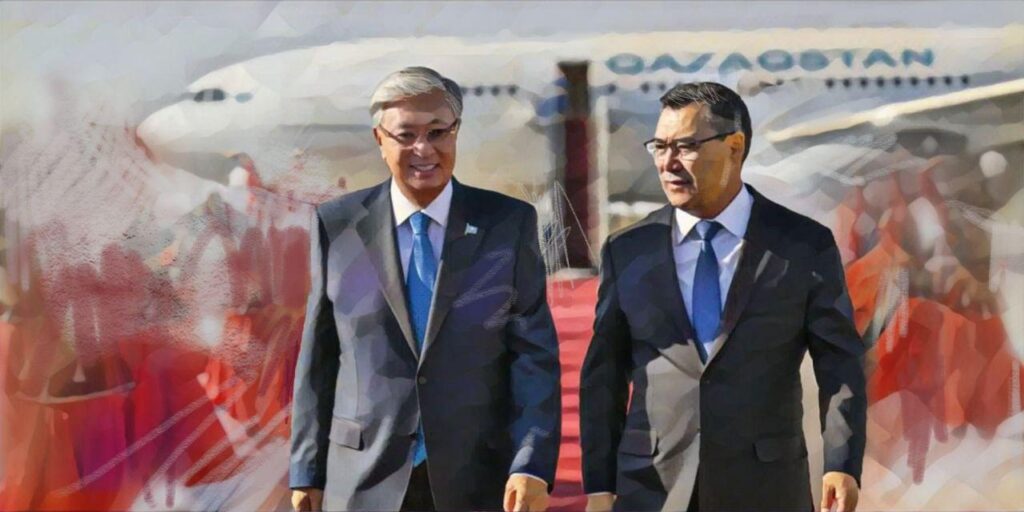
President Kassym-Jomart Tokayev’s visit to Ankara consolidated bilateral ties, but it also marked a deeper strategic inflection. The visit marks a broader regional convergence between two major Eurasian actors as they coordinate a strategic regional architecture. Thus, Tokayev’s language emphasized an “expanded strategic partnership,” signaling a move beyond traditional trade or cultural diplomacy. Ankara, for its part, went well beyond symbolic gestures in its response, with binding institutional agreements and substantive infrastructural commitments. The timing of the visit underscores its significance against the current geopolitical backdrop, where Central Asia is once again the object of keen attention from external actors vying for footholds and influence. In this context, the Kazakhstan–Turkey axis appears not as a knee-jerk reaction to outside machinations but as a deliberate autonomous regional vector that enhances the agency of both countries. Strategic Depth of the Tokayev Visit Tokayev’s trip to Turkey represents an assertion of multidimensional regional agency: Kazakhstan’s long-standing multi-vector foreign policy was once a balancing act among great powers, but it has now entered a phase of selective consolidation. This bilateral intensification indexes a shift in the configuration of Eurasian geoeconomics, as strategic weight disperses across an increasingly differentiated agentic field. The Astana–Ankara alignment means that both countries can act with diminished external dependence, even as global architectures become more unstable and contested. Tokayev’s diplomacy suggests the emergence of an equilibrium strategy anchored in regional connectivity rather than bloc affiliation. Ankara’s perspective is equally structural. The shared vocabulary — “coordination,” “deepening,” “integration” — signals a logic of long-horizon strategic cooperation. Complementarities Across the Bilateral Core The current Kazakhstan–Turkey relationship exhibits a structurally complementary relationship rarely sustained at this depth between two regional powers so geographically distant from one another. On one side, Kazakhstan brings economic scale, resource depth, and transit centrality to the Middle Corridor. On the other, Turkey brings not only industrial experience and defense sector credibility but maritime access, NATO membership, and a flexible political reach into Europe, the Middle East, and the Mediterranean basin. The evolution of mutual strategic trust based on converging structural interests binds these capacities of the two sides together. For Kazakhstan, Turkey provides logistical continuity and downstream industrial expansion; Ankara also diversifies Astana's international geoeconomic network. For Turkey, Kazakhstan provides resource access, eastward corridors, and meta-regional relevance beyond the Black Sea. These structural interests converge across multiple material economic sectors: energy, defense-industrial cooperation, agrotechnology, education, and digital logistics. Nor is this convergence driven solely by state policy: both countries’ private sectors increasingly perceive each other as entry points into economic systems adjacent to one another. The Organization of Turkic States (OTS) as an Institutional Amplifier The Organization of Turkic States (OTS), now maturing into an institutionalized platform for regional legitimacy with a shared symbolic and infrastructural vocabulary, enables Kazakhstan–Turkey cooperation to transcend the limits of bilateralism while maintaining its coherence. Joint positions on transport, trade, education, and foreign policy are advanced and discussed within a common multilateral setting where proposals are negotiated horizontally with other Turkic states. Through...

Kazakhstan and Turkey Tighten Ties Amid Shifting Caspian Dynamics

Kazakhstan’s President Kassym-Jomart Tokayev arrived in Turkey on an official visit late on Monday, where he held talks with President Recep Tayyip Erdoğan. The two leaders went on to co-chair the fifth meeting of the Kazakhstan–Turkey High-Level Strategic Cooperation Council. Coming amid heightened tensions in the Caspian region, particularly between Russia and Azerbaijan, the trip appears aimed at recalibrating regional dynamics, though analysts say its full implications remain unclear. Tokayev’s visit ended on a ceremonial high, as Erdoğan bestowed upon him the Devlet Nişanı, Turkey’s highest state honor. Accepting the award, Tokayev — who noted he had previously declined both domestic and foreign distinctions — thanked the Turkish president and people, highlighting Kazakhstan’s political and economic achievements. Erdoğan, in turn, praised Kazakhstan as the “center of peace and stability in its region.” Yet with Kazakhstan straddling both Central Asia and the Caspian basin — each a strategic priority for Ankara — it remains unclear which “region” Erdoğan had in mind. Much of the visit, however, played out behind closed doors. The official press release offered only general statements and few specifics. But the images released were polished and plentiful. Ahead of the summit, Tokayev met with prominent Turkish business leaders already active in Kazakhstan or planning future investments in the country’s economy. Political analyst Adil Kaukenov, a China specialist, weighed in on Tokayev’s business meetings via his Telegram channel, stating that the main topics were processing and logistics. His colleague Daniyar Ashimbayev, meanwhile, interpreted the visit as evidence that Astana is pursuing the foreign policy course it deems necessary. “I have already written about the logistical and geopolitical rivalry between Central Asia, the South Caucasus, and Asia Minor,” Ashimbayev observed. “A strange situation even arose when Kazakhstan signed one agreement on the Trans-Afghan Highway with Kabul, and Tashkent signed another. Or the constant discussion between Tashkent and Baku on the development of the Trans-Caspian corridor without the participation of Ashgabat and Astana. Tensions have risen in relations between Baku and Moscow, which could jeopardize Caspian logistics. Against this backdrop, the Kazakh authorities are methodically pushing through their agenda.” Ashimbayev also recalled Kazakhstan’s recent diplomatic successes, such as securing EU sanctions exemptions for agricultural and coal exports. “In this regard, Tokayev’s trip to Ankara was intended to resolve possible contradictions and misunderstandings in bilateral relations,” Ashimbayev concluded. While official sources emphasized economic and cultural-humanitarian cooperation as the main themes of the visit, Ashimbayev hinted that more sensitive topics may have been discussed privately. “The Turkish release mentions that the parties discussed defense issues, while the Kazakh release says they talked about IT,” he noted. “But by and large, the meaning of the talks is that both leaders calmly sorted out mutual issues, with no one acting as a supplicant or ‘vassal’ (as is sometimes the case at similar meetings). Kazakhstan methodically focused on the issues of interest to it and correctly discussed the issues raised by the host of the summit.” A closer analysis of publications on Akorda, the Kazakh presidential...

Uzbekistan Day on Capitol Hill Highlights Deepening Ties With the U.S.

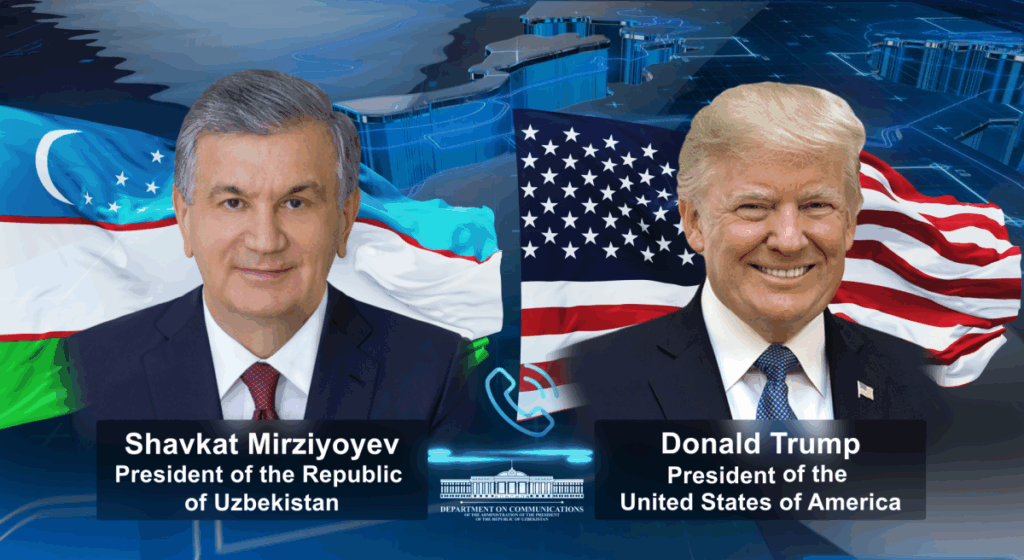
On July 23, the U.S. Capitol hosted “Uzbekistan Day,” a significant event co-organized by the Congressional Uzbekistan Caucus to reaffirm growing ties between Uzbekistan and the United States. More than a hundred participants — including lawmakers, diplomats, officials from the State Department and Pentagon, business leaders, and journalists — gathered to engage with the Uzbek delegation and explore new areas for bilateral cooperation. The forum focused on Uzbekistan’s ongoing political and socio-economic reforms and its foreign policy vision centered on regional stability and international cooperation. A central priority discussed was Uzbekistan’s accession to the World Trade Organization (WTO), with officials framing it as a vital step to ensuring long-term reform and global market integration. U.S. Lawmakers Praise Reforms At the event, Congressman Trent Kelly, Co-chairman of the Caucus on Uzbekistan, praised President Shavkat Mirziyoyev’s leadership, stating, “I want to express my gratitude to President Shavkat Mirziyoyev. He is a bold reformer, a reliable partner, and a sincere friend of the U.S. Under his leadership, Uzbekistan is confidently moving along the path of change. Human rights are being strengthened, democratic institutions expanded, and opportunities for international cooperation opened. These achievements inspire all of us.” On a more personal note, Kelly added, “I have had the opportunity to visit Uzbekistan four times, and each visit left a deep impression on me. I was moved by the kindness of the Uzbek people, the richness of their cultural heritage, and the hospitality of your country. Music, cuisine, and deep traditions — all of this makes Uzbekistan truly unique… We will soon remove the Jackson-Vanik Amendment from our agenda because Uzbekistan is doing everything right and carrying out reforms,” he concluded. Senator Steve Daines, Co-chairman of the Caucus on Central Asia, described himself as a “sincere friend of Uzbekistan.” Reflecting on his March 2024 trip to Tashkent, he said, “I felt at home and among friends. This meeting strengthened my desire to continue supporting the Central Asian countries.” [caption id="attachment_34350" align="aligncenter" width="2560"] Montana Senator Steve Daines, Co-chairman of the Caucus on Central Asia[/caption] Congresswoman Carol Miller, also part of the March delegation, spoke of her personal connection to Uzbekistan’s heritage. “Uzbekistan, with its ancient history, has long aroused my professional interest, since I am a historian by education. The opportunity to see the country’s unique historical and cultural heritage in person was an invaluable experience.” Miller emphasized that, “The conversation took place in a trusting and open atmosphere. The topics raised during the meeting were not only relevant but also extremely promising from the viewpoint of the future development of Uzbek-American relations.” [caption id="attachment_34351" align="aligncenter" width="1020"] West Virginia Congresswoman Carol Miller[/caption] Miller underscored her commitment to concrete legislative goals: “The removal of the Jackson-Vanik Amendment regarding our country and support for Uzbekistan’s accession to the WTO are priority tasks. I am currently working closely with members of Congress to accelerate these issues.” Economic Cooperation and Business Confidence The event also featured remarks from American business leaders highlighting Uzbekistan’s economic potential. Peter Flanagan, Senior Vice President...

Kazakh Foreign Minister Visits Kabul, Signs $500M Railway Deal as Mining Push Gathers Momentum

In a major step toward deepening regional engagement, Kazakhstan’s Foreign Minister Murat Nurtleu arrived in Kabul this week, signaling a continuing shift towards pragmatic engagement in Astana’s policy towards Afghanistan. The visit resulted in significant diplomatic and economic developments, including the signing of a $500 million agreement on the Herat-Torghundi railway. During his visit, Nurtleu met with Afghanistan’s acting Foreign Minister Amir Khan Muttaqi and other senior officials in the Taliban-led government. In a joint statement, the two sides emphasized their commitment to expanding bilateral ties in transit, trade, education, and regional security. Nurtleu pledged Kazakhstan’s support for Afghanistan’s stabilization, food security, and comprehensive development, stating that Astana is seeking to expand its partnership with Kabul based on shared regional interests. A highlight of the visit was the signing of a memorandum of understanding for the construction of the Torghundi–Herat railway. The 115-kilometer line will link western Afghanistan to Turkmenistan, and is expected to extend connectivity into Iran and further south to the Arabian Sea. Afghanistan’s Deputy Prime Minister Abdul Ghani Baradar welcomed the agreement, stating that the deal will lay the foundation for establishing a logistics hub in Herat. As reported by Baradar’s office, discussions also covered the possibility of relaxing visa regulations for Afghan traders, resuming direct flights between Kabul and Astana, and increasing bilateral trade volumes. The two sides emphasized expanding economic collaboration through joint initiatives in key industries, including mining, transportation, communications, energy, and infrastructure. They also considered formalizing accords on agricultural product safety, cross-border logistics, and reduced transit costs — steps aimed at potentially raising trade between the countries to $3 billion. In parallel to these diplomatic overtures, Kazakhstan’s mining giant Kazakhmys Barlau is exploring Afghanistan’s untapped mineral resources. CEO Galym Nurzhanov confirmed that his team has already begun reconnaissance operations in the mineral-rich Nuristan Province. Nurzhanov described the terrain as a geological time capsule, stating that “For our geologists and miners, it’s like stepping into the 19th century. We looked at lead-zinc deposits, grades of nearly 39%, with concentrates reaching 41%. That’s ready ore, you can crush it and send it straight to the plant.” As previously reported by The Times of Central Asia, despite lingering tensions over issues such as Afghanistan’s controversial Qosh Tepa Canal project, Kazakhstan has emphasized an approach to relations with Kabul based on “practicality, not ideology,” highlighting the shared need for regional security, trade corridors, and energy development.