• KZT/USD = 0.00223
  • TJS/USD = 0.10830
  • UZS/USD = 0.00009
  • TMT/USD = 0.29850
  • KZT/USD = 0.00223
  • TJS/USD = 0.10830
  • UZS/USD = 0.00009
  • TMT/USD = 0.29850
  • KZT/USD = 0.00223
  • TJS/USD = 0.10830
  • UZS/USD = 0.00009
  • TMT/USD = 0.29850
  • KZT/USD = 0.00223
  • TJS/USD = 0.10830
  • UZS/USD = 0.00009
  • TMT/USD = 0.29850
  • KZT/USD = 0.00223
  • TJS/USD = 0.10830
  • UZS/USD = 0.00009
  • TMT/USD = 0.29850
  • KZT/USD = 0.00223
  • TJS/USD = 0.10830
  • UZS/USD = 0.00009
  • TMT/USD = 0.29850
  • KZT/USD = 0.00223
  • TJS/USD = 0.10830
  • UZS/USD = 0.00009
  • TMT/USD = 0.29850
  • KZT/USD = 0.00223
  • TJS/USD = 0.10830
  • UZS/USD = 0.00009
  • TMT/USD = 0.29850
04 October 2026

Viewing results 1 - 6 of 44

Kazakhstan May Miss Record Oil Output Target in 2026 Amid Infrastructure Disruptions

Kazakhstan’s oil production could decline by 2-4 million tons by the end of 2026 following disruptions linked to attacks on the infrastructure of the Caspian Pipeline Consortium (CPC) and fires at the country’s largest oil field, Tengiz. This was stated by Energy Minister Yerlan Akkenzhenov in response to journalists’ questions. In 2025, Kazakhstan produced more than 99.5 million tons of oil, exceeding the initial forecast of 96.2 million tons. Output for 2026 had originally been projected at 100.5 million tons, a potential record for the country. However, the minister indicated that actual production is now likely to fall short of this target. “According to the economic development plan, oil production in 2026 was expected to reach 100.5 million tons. However, due to events at the end of last year and the beginning of this year, attacks on CPC infrastructure and fires at Tengiz, production is likely to be in the range of 96-98 million tons,” Akkenzhenov said. Earlier reports suggested that Kazakhstan had been forced to urgently revise its oil export routes following drone attacks on CPC facilities. In January two fires broke out at electric generators at the Tengiz field. Although the incidents were quickly contained, they caused power outages and temporarily reduced production by nearly 20%. According to the minister, production at Tengiz had been fully restored by early March. “Tengiz has returned to a production level of 120,000 tons per day. A commission is currently finalising its investigation into the causes of the fire, and the results will be announced shortly,” Akkenzhenov said. Akkenzhenov also noted that global oil markets remain volatile amid ongoing tensions in the Middle East. He said that oil prices had recently peaked at $119 per barrel before declining to around $87. “Prices fluctuate daily. At the same time, attacks on oil infrastructure in Persian Gulf countries continue, reducing physical supply and keeping prices relatively high,” he said. Akkenzhenov added that rising global oil prices have not yet significantly affected domestic gasoline prices in Kazakhstan. According to the minister, future price dynamics will largely depend on developments in the Middle East. Military escalation in the region, including hostilities involving Iran that began in late February 2026, has already affected global energy markets and may continue to influence oil prices and supply stability.
Kazakhstan Restructures Oil Exports Amid Disruptions at CPC

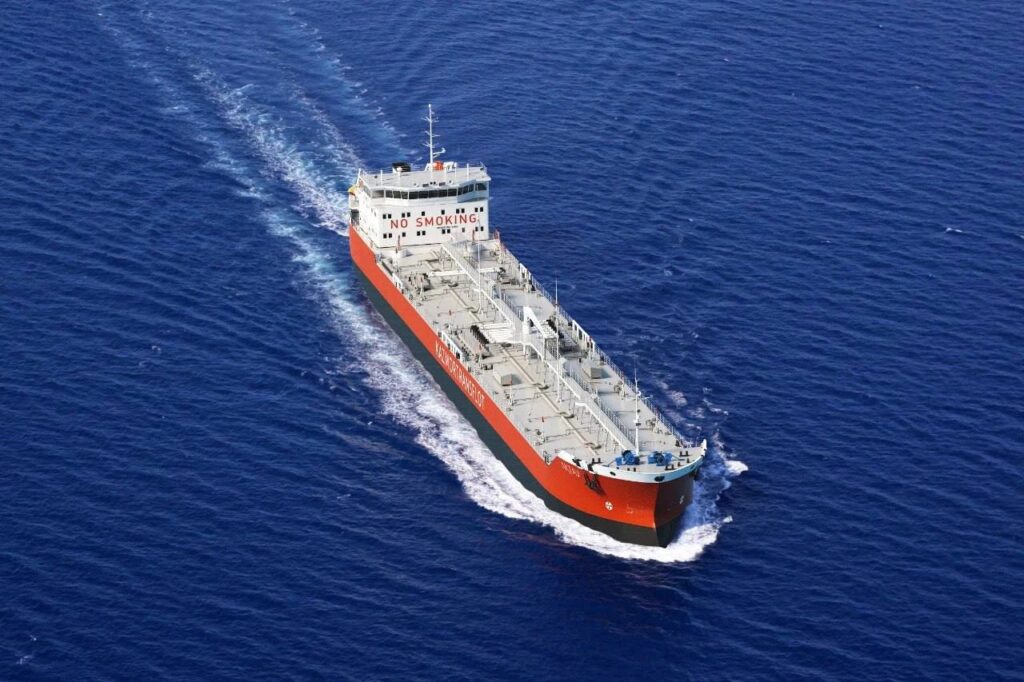
Kazakhstan is rapidly restructuring its oil export routes in response to disruptions affecting the Caspian Pipeline Consortium (CPC), a critical channel for the country’s crude shipments. To maintain export volumes and avoid production slowdowns, authorities have turned to alternative infrastructure. According to a statement from KazMunayGas, the national oil company, approximately 300,000 tons of oil were rerouted in December 2025 after restrictions limited the CPC’s intake capacity. In coordination with KazTransOil JSC (KTO), the country redirected oil flows to other export corridors. These rerouted volumes were exported to Germany, China, and via the Baku-Tbilisi-Ceyhan (BTC) pipeline, with shipments also handled through the ports of Novorossiysk and Ust-Luga. As CPC restrictions remained in place into January 2026, the redirection strategy continued. Amid these challenges, Kazakhstan’s use of alternative routes gained momentum. KazMunayGas reported that oil deliveries to Germany’s Schwedt refinery totaled 2.1 million tons by the end of 2025, with projections indicating a rise to 2.5 million tons in 2026. Exports through the port of Aktau to the BTC pipeline reached 1.3 million tons in 2025 and are expected to grow to 1.6 million tons this year. Shipments to China remained stable, with 1.1 million tons delivered by the end of 2025. These developments reflect a gradual shift aimed at reducing Kazakhstan’s dependency on the CPC which has faced repeated operational setbacks. The CPC disruptions stem from a series of security incidents. In February and March 2025, the Kropotkinskaya station was targeted in drone attacks. On 29 November, a strike on the consortium’s remote mooring device caused damage to its marine terminal. Following the November incident, Kazakhstan’s Ministry of Energy stated that the CPC pipeline is an international energy project and warned that “any forceful impact on its facilities poses direct risks to global energy security.” After another attack on 13 January 2026, when drones targeted three oil tankers near the CPC terminal in the Black Sea, the Ministry of Foreign Affairs issued a sharper response. In emergency consultations with European partners, the U.S., and other stakeholders, Kazakhstan called for reinforced protection of hydrocarbon transportation routes and maritime corridors, emphasizing the need for adherence to international law.

Security Risks Around Kazakhstan’s Oil Exports Ripple Through European Markets

Europe’s oil market is becoming increasingly exposed to disruption as security risks rise along export routes used by Kazakhstan, which the European Union has long viewed as a reliable alternative to Russian supply. The risks extend far beyond Ukraine itself. “Russia continues escalating its attacks and targeting civilians and civilian infrastructures,” an EU spokesperson told The Times of Central Asia. “Russia’s brutal and unacceptable attacks have left people without hot water, heating and electricity in the current weather conditions. Russia’s war of aggression has also severely impacted Black Sea maritime security, including through its use of shadow fleet vessels to circumvent international sanctions, and the persistent attacks on civilian and port infrastructure in Ukraine. On the other hand, Ukraine has accepted an unconditional ceasefire in March 2025. It shows that Russia does not want peace. The EU and the entire international community need to put pressure on Russia to stop its war. “Kazakhstan plays a crucial role for Europe’s energy security and has been for years a reliable partner in diversifying energy sources and ensuring a stable supply for European markets. More than 12% of all the oil imported by the EU comes from Kazakhstan, contributing to the diversification of energy sources and reducing dependency on a limited number of suppliers. The continuous and safe functioning of the supply chain is hence key also for Europe. “Maritime safety and security in the Black Sea is a fundamental component of the new EU strategic approach to the region, adopted in May 2025. The Black Sea is a critical connector between Europe, the Southern Caucasus, Central Asia and the Eastern Mediterranean. Ensuring maritime security and safety in this region is vital not only for the littoral States but also for broader European interests and for many partner countries, as it supports trade flows, sustainable supply chains and enhanced connectivity.” Kazakhstan produced roughly 1.8 million barrels per day in 2024 and exported the bulk of that volume. More than 80% of its crude exports move through the Caspian Pipeline Consortium, or CPC, which links oil fields in western Kazakhstan to Russia’s Black Sea port of Novorossiysk. From there, tankers ship the oil mainly to European refiners. Under normal conditions, the pipeline carries roughly 1.3 million barrels per day, making it one of the most important single supply routes for non-Russian crude entering Europe. Recent events have shown how sensitive European markets are to any disruption along that corridor. On January 14, Bloomberg reported that oil prices in Europe strengthened after shipments of CPC Blend fell short of expectations. Traders cited reduced availability of the light, low-sulfur crude, which is favored by European refiners, forcing buyers to seek alternative grades at higher prices. Despite the recent tightening, traders say the market has so far absorbed disruptions without severe shortages, reflecting high inventories and flexible refinery operations, though that buffer could narrow if attacks persist. That supply pressure followed a series of security incidents in the Black Sea, where commercial shipping and port infrastructure have...

Kazakhstan Opens Criminal Probe Over Calls to Attack CPC Oil Pipeline

Kazakhstan has opened a criminal investigation into public statements that authorities say encouraged attacks on the Caspian Pipeline Consortium (CPC), the main export route for the country’s crude oil, after months of disruption at the system’s Black Sea terminal turned a foreign security risk into a domestic legal and political issue. Prosecutor General Berik Asylov confirmed the case in a written reply to a parliamentary inquiry on January 6. "On December 17, 2025, the Astana City Police Department launched a pre-trial investigation under Part 1 of Article 174 of the Criminal Code of the Republic of Kazakhstan (incitement of social, national, tribal, racial, class, or religious discord) into negative public comments regarding damage to the Caspian Pipeline Consortium," the Prosecutor General stated. The authorities have yet to name suspects, publish the posts under review, or announce any arrests. The file remains at the evidence-gathering stage, and prosecutors have left open whether any charges will ultimately be filed under Article 174, or reclassified under other provisions once investigators assess the intent and impact. The probe follows a request by Mazhilis deputy, Aidos Sarym, who said that some social media commentary crossed from opinion into encouragement of harm to strategic infrastructure, endorsed attacks on the CPC, and urged further strikes on critical sites. The political sensitivity is rooted in the 1,500-kilometer pipeline’s central role in Kazakhstan’s economy. CPC carries crude from western Kazakhstan to a marine terminal near Russia’s Black Sea port of Novorossiysk, where the oil is loaded onto tankers for delivery to global markets. The pipeline is owned by a consortium that includes Kazakhstan, Russia, and several international energy companies. The system dominates Kazakhstan’s oil export economy. More than 80% of the country’s crude oil exports move through the CPC route, which also carries more than 1% of global oil supplies, making it a pressure point for both markets and state revenue when operations are disrupted. The investigation follows a period of repeated disruption at the Novorossiysk terminal in late 2025, after a naval drone strike damaged one of the offshore loading points used to transfer oil from the pipeline to tankers. The damage forced operators to suspend loadings and move vessels away while inspections and repairs were carried out, sharply reducing export capacity. The CPC relies on single-point moorings positioned at sea to load crude onto tankers, a critical constraint on the entire system; when one goes offline, capacity drops quickly. The pipeline cannot store large volumes, forcing upstream producers to cut or slow output. By late December, the impact was visible in Kazakhstan’s production figures. Oil output fell by about 6% during the month after the late November strike constrained exports. Production at the Tengiz oilfield, the country’s largest, dropped by roughly 10%. Exports of CPC Blend crude fell to about 1.08 million barrels per day in December, the lowest level in more than a year, as the terminal operated with only one functioning mooring while others remained offline due to damage and maintenance. Operational pressures continued as...

Kazakhstan Boosts Oil Output Despite Export Infrastructure Challenges

Kazakhstan increased its production of oil and gas condensate by 14% in January-November 2025 compared to the same period last year, and exceeded its annual export plan ahead of schedule, despite ongoing disruptions in the Caspian Pipeline Consortium (CPC). The figures were announced by Deputy Minister of Energy Sungat Yessimkhanov. By the end of 2024, Kazakhstan had produced 87.7 million tons of oil and gas condensate, 97.1% of its target of 90.5 million tons. Total oil exports for the year reached 63.2 million tons. In the first 11 months of 2025, production rose to 91.9 million tons, marking a 14.1% year-on-year increase. The full-year target for 2025 is 96.2 million tons. Over the same period, exports amounted to 73.4 million tons, already surpassing the annual target of 70.5 million tons and representing a 16.1% increase from the previous year. This growth came despite serious challenges to Kazakhstan’s main export route. The CPC, which carries the bulk of Kazakh crude to international markets, experienced disruptions following a drone attack on its infrastructure. The incident raised fresh concerns about the vulnerability of critical export corridors. In the gas sector, Kazakhstan produced 62.8 billion cubic meters of natural gas in January-November 2025, a 16.7% increase from the same period in 2024. The annual gas production target for 2025 has already been met. Liquefied petroleum gas (LPG) production rose to 2.8 million tons, up 1.8%. Gas transit volumes through Kazakhstan reached 64.5 billion cubic meters, up 0.9%. During the same period, domestic production of petroleum products reached 14 million tons. The full-year target is 14.5 million tons, on track to match the 2024 total, when 17.9 million tons of crude were processed domestically. Production of oil and gas chemical products increased by 12.2%, reaching 567,600 tons. The target for 2025 is set at 590,000 tons. As previously reported by The Times of Central Asia, Kazakh authorities are actively seeking foreign investment for the construction of a fourth major oil refinery with a projected capacity of up to 10 million tons per year. Overall, Astana plans to attract between $15 billion and $19 billion in investment for the development of the oil refining sector by 2040.

Kazakhstan Fast-Tracks Delivery of Caspian Pipeline Equipment

Kazakhstan has expedited the delivery of two new offshore berthing facilities for the Caspian Pipeline Consortium (CPC), a move prompted by recent drone attacks on CPC infrastructure. The initiative aims to restore the stability of oil exports and ensure uninterrupted operations at the key marine terminal in Novorossiysk. The two new remote mooring devices (RMDs) were procured from a manufacturer in the United Arab Emirates for installation at the CPC Marine Terminal. Kazakhstan’s Energy Minister Yerlan Akkenzhenov announced on December 15 in Astana that the delivery timeline has been moved up from April 2026 to January 2025. “The Ministry of Energy of the Republic of Kazakhstan and the national oil and gas company KazMunayGas are making every effort to deliver the two new RMD units. We are now pushing ahead with this and plan to deliver them in January,” said Akkenzhenov, highlighting the logistical complexity of transporting the technologically advanced equipment to Novorossiysk. According to the CPC press service, the two devices being replaced, CPC-1 and CPC-2, were originally commissioned in 2001. The contract for their replacement was signed in January 2024, and both new units are expected to be completed by December 2025. These upgrades are part of a recovery program following a series of attacks on CPC infrastructure. At the same time, repair work continues on VPU-3, another remote berthing facility. However, efforts have been hindered by severe weather conditions in Novorossiysk, where strong winds and currents have disrupted underwater installation work. “The weather in Novorossiysk is difficult, with very strong winds causing high waves and currents. Divers are descending under the dome to install underwater hoses,” Akkenzhenov explained. The Caspian Pipeline Consortium remains one of the largest energy projects in the post-Soviet space. The 1,511 kilometer Tengiz-Novorossiysk pipeline transports more than two-thirds of Kazakhstan’s oil exports, along with output from Russian fields, including those in the Caspian Sea. The CPC’s marine terminal in Novorossiysk is equipped with three remote mooring devices, enabling tankers to load safely offshore and ensuring continuous export operations. Since autumn 2025, CPC facilities have been repeatedly targeted. The first attack occurred on September 24, when drones struck the consortium’s office, injuring employees and bystanders. Other key incidents included attacks on the Kropotkinskaya base (February 17 and March 24), the Kavkazskaya facility (March 19), and the Novorossiysk marine terminal (September 24-25). The most serious incident occurred on November 29, when the terminal’s pier was damaged, rendering VPU-2 inoperable. Kazakhstan’s Ministry of Energy estimated losses of 480,000 tons of oil and condemned the attack as “unacceptable and dangerous for global energy security.” The emergency acquisition and fast-tracked delivery of the new berthing units are seen as a strategic investment by Kazakhstan, not only to secure its export capacity but also to reinforce the stability of one of the region’s most critical energy corridors.