• KGS/USD = 0.01144 0%
  • KZT/USD = 0.00212 0%
  • TJS/USD = 0.10780 0%
  • UZS/USD = 0.00008 0%
  • TMT/USD = 0.28490 0%
  • KGS/USD = 0.01144 0%
  • KZT/USD = 0.00212 0%
  • TJS/USD = 0.10780 0%
  • UZS/USD = 0.00008 0%
  • TMT/USD = 0.28490 0%
  • KGS/USD = 0.01144 0%
  • KZT/USD = 0.00212 0%
  • TJS/USD = 0.10780 0%
  • UZS/USD = 0.00008 0%
  • TMT/USD = 0.28490 0%
  • KGS/USD = 0.01144 0%
  • KZT/USD = 0.00212 0%
  • TJS/USD = 0.10780 0%
  • UZS/USD = 0.00008 0%
  • TMT/USD = 0.28490 0%
  • KGS/USD = 0.01144 0%
  • KZT/USD = 0.00212 0%
  • TJS/USD = 0.10780 0%
  • UZS/USD = 0.00008 0%
  • TMT/USD = 0.28490 0%
  • KGS/USD = 0.01144 0%
  • KZT/USD = 0.00212 0%
  • TJS/USD = 0.10780 0%
  • UZS/USD = 0.00008 0%
  • TMT/USD = 0.28490 0%
  • KGS/USD = 0.01144 0%
  • KZT/USD = 0.00212 0%
  • TJS/USD = 0.10780 0%
  • UZS/USD = 0.00008 0%
  • TMT/USD = 0.28490 0%
  • KGS/USD = 0.01144 0%
  • KZT/USD = 0.00212 0%
  • TJS/USD = 0.10780 0%
  • UZS/USD = 0.00008 0%
  • TMT/USD = 0.28490 0%

Viewing results 1 - 6 of 32

Unvaccinated Children Barred from First Grade in Kyrgyzstan

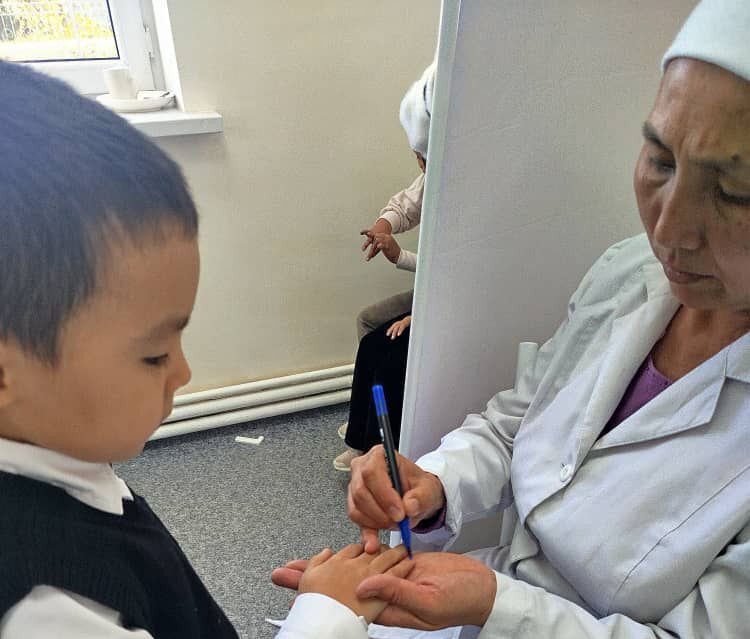
Kyrgyzstan’s Ministry of Education has announced that children who are not vaccinated will not be admitted to first grade, amid a worsening measles outbreak in the country. Deputy Education Minister Lira Samykbayeva stated during a live national radio broadcast that the process of registering children for school has been significantly simplified. Parents no longer need to submit numerous documents such as passports, marriage or birth certificates, and proof of family composition. “This year, the Ministry of Education integrated its database with other government agencies, so there is no longer a need to collect certificates manually,” Samykbayeva explained. However, she emphasized that two medical certificates will remain mandatory: one confirming a general health examination, and another verifying that the child has received preventive vaccinations, including the measles vaccine. “The only thing that must be provided to the school is two medical certificates,” she said. “Including vaccination against measles.” A government decree enforcing the new requirement was adopted just a day earlier. In the future, the Ministries of Education and Health plan to fully integrate their systems, allowing medical records to be accessed automatically by schools. The stricter policy comes as Kyrgyzstan battles a growing measles outbreak. Since the beginning of the year, over 4,000 children have contracted the disease, and eight people have died. According to health officials, 95 percent of those infected were unvaccinated. Speaking to The Times of Central Asia, Gulbara Ishenapysova, Director of the Republican Center for Immunoprophylaxis, said the Ministry of Health is stepping up vaccination efforts. “By decision of the Kyrgyz Cabinet of Ministers, the ministry has revised the national vaccination calendar,” she noted. In an effort to improve public trust, Kyrgyz health authorities have also engaged religious leaders. Clergy across the country are being encouraged to speak with parents about the importance of vaccinating their children.
Kazakhstan Cracks Down on Crimes Against Children and Women

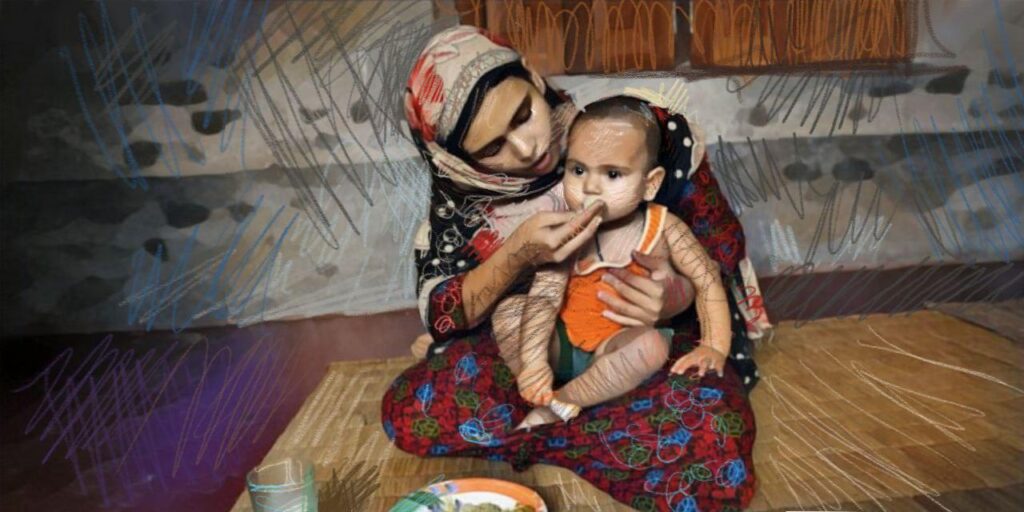
Kazakhstan’s Commissioner for Children’s Rights, Dinara Zakiyeva, has outlined the scale of sexual violence against minors and the state’s efforts to combat it by strengthening legislation and support systems. Legislative Changes In April 2024, Kazakhstan introduced sweeping amendments to its criminal legislation, significantly increasing penalties for crimes against women and children. On April 15, 2024, President Kassym-Jomart Tokayev signed into law the On Amendments and Additions to Some Legislative Acts of the Republic of Kazakhstan on Ensuring Women's Rights and Children's Safety. Key changes to the Criminal Code include: Prohibition of lenient sentencing for crimes involving violence against minors; Elimination of reconciliation between parties in cases involving violence against minors; Introduction of life imprisonment as the sole penalty for the murder of a minor (Article 99), rape of a minor (Article 120), and other violent sexual acts against minors (Article 121), removing alternative sentencing options; Criminalization of sexual solicitation of individuals under 16; and Legal liability for inciting or assisting in suicide. Scope of the Problem According to Zakiyeva, approximately 900 crimes related to the sexual abuse of minors are reported in Kazakhstan each year. Since the enactment of the new law, 25 to 27 individuals have already received life sentences for such offenses. The highest incidence of these crimes is recorded in southern Kazakhstan, specifically Almaty, Turkestan, and Zhambyl regions, as well as West Kazakhstan and Kostanay regions. Zakiyeva notes that these areas often have high population density and conservative family structures that may conceal abuse. Zakiyeva shared disturbing cases of underage girls who had given birth as a result of prolonged abuse. “In Zhambyl region, I met a 13-year-old girl who had been raped for six years by her two uncles. In Turkestan region, I visited a center housing 16 underage mothers, aged 13 to 15, all of whom were victims of abuse by relatives. Many didn’t even realize they were victims of a crime, they believed this was normal family life,” she said. Prevention and Support The children’s ombudsman emphasized that effective anti-violence strategies globally rely on four pillars: strengthening legal frameworks; promoting self-defense and awareness; working with families to identify risk factors early; and expanding support infrastructure for victims. Kazakhstan’s new legislation supports preventive measures such as deploying mobile teams to identify at-risk families and establishing family support centers in every district. Currently, 112 such centers are operational, with another 109 underway. In Turkestan region alone, the number of centers has grown from one to 13, with four more soon to open. Helpline and Awareness In a single month, Kazakhstan’s national children’s helpline received 120 phone calls and 11,145 text messages. According to Zakiyeva, these messages often reveal the deep emotional isolation children feel. “Children feel alone. They’re scared to speak out. They’re afraid to tell anyone that they’re being threatened, blackmailed, or approached by strangers. Many can’t talk to their parents, teachers, or psychologists,” she said.

Kazakhstan Working On a Bill to Ban Quadrobers

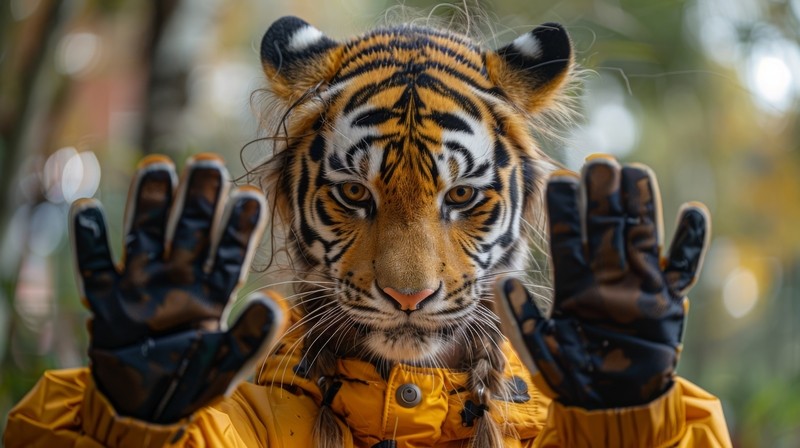
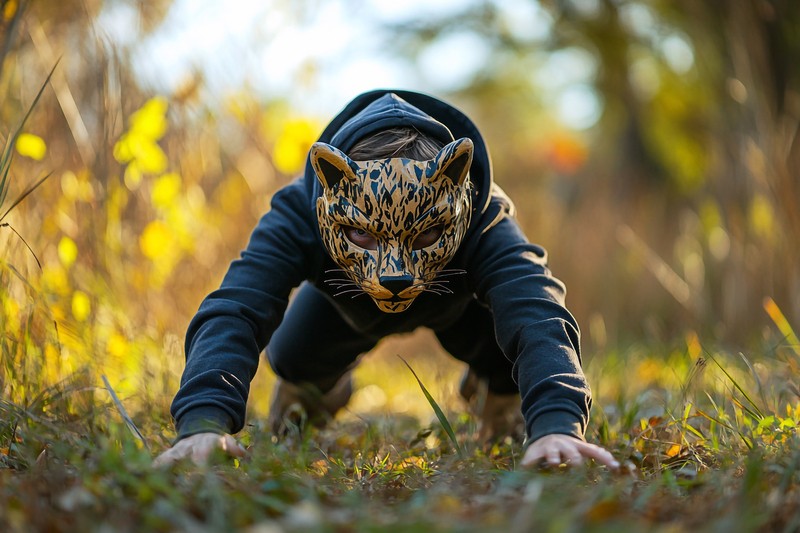
Mazhilis deputy Daulet Mukayev has said Kazakhstan is working on a bill to ban quadrobers. The spread of this hobby, where young people imitate animals, could have a detrimental effect on the younger generation, he stated. “In 2024, quadrobics has undergone a major change. While it used to be more like a sporting challenge, now quadrobers wear animal masks, tails, and paws. If we don't take action, we risk losing a whole generation,” Mukayev said in response to journalists' inquiries to the Telegram channel, Buzyq. Mukayev emphasized that the problem is also a concern in other countries, and parents, society, and the state should work together to solve it. The deputy added that the development of legislative measures and strengthening control over social networks has already begun. However, the deputy did not give precise information about the agencies that initiated this bill. A request for a comment was sent to the Mazhilis press service, which replied that they had not yet received such a piece of legislation. Earlier, Mukayev had characterized quadrobers as a potentially dangerous social phenomenon and called for a study into the phenomenon, stating that the Mazhilis would develop laws against quadrobing if necessary. However, Kazakhstan's Ministry of Culture considers quadrobics a temporary fad and stated that its main task remains to ensure the safety of teenagers who participate in this trend. Quadrobics is an unofficial sport in which participants move on all fours and imitate the habits of animals in costumes. The movement has already been seen in Kazakhstan, Russia, Kyrgyzstan, and Ukraine. Recent cases of this behavior have also been reported in Tashkent, Uzbekistan, where a teenager wearing an animal mask scared passersby on October 10. The next day, another quadrober imitating a dog attacked passengers on public transport, scaring children. The Times of Central Asia previously reported that the Kyrgyz authorities are trying to curb the growing interest of teenagers in quadrobics. Uzbekistan is also taking steps to control the issue, where parents are being warned of fines for inappropriate behavior by teenagers. In Russia, the issue of administrative responsibility for parents who do not take responsibility for the upbringing of their children who become overtly interested in quadrobics has also been raised. The problem has not yet been resolved, but a request to the State Duma has requested fines and criminal liability for such actions. In addition, Gennady Shkil, a priest of the Russian Orthodox Church, suggested in a sermon that fathers and mothers of quadrobers should be deprived of parental rights. Shkil stated that “tough measures” are needed “for the salvation of mankind.”

In Uzbekistan, Perpetrators of Domestic Violence Against Children Face Tougher Penalties

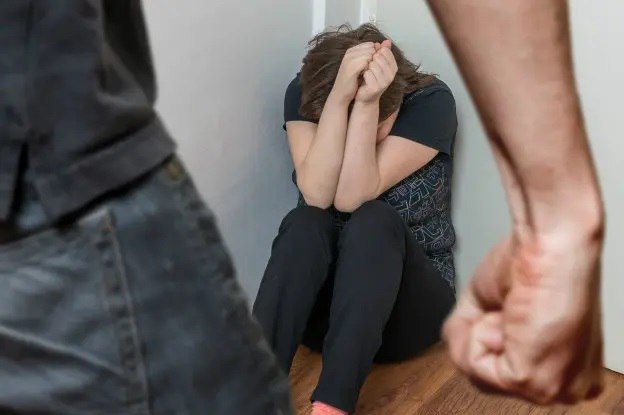
Uzbekistan has toughened liability for physical abuse of children within the family, actions which can now result in more stringent criminal penalties. President Shavkat Mirziyoyev signed relevant amendments to the legislation, which came into force after being officially published on the website of the national legislation base. The amendments affect the Criminal Code and the Code of Administrative Responsibility, introducing stricter sanctions for domestic violence against children. Child abuse is punishable by fines ranging from $590 to $885, or imprisonment of two to three years. In cases of violence against more than one child, the punishment becomes more severe, with perpetrators facing three to five years in prison. The legislative changes were approved by Parliament in July 2024 and approved by the Senate in September. These measures come as a reaction to increasing cases of child abuse in Uzbekistan. Recently, a woman in Bukhara beat her underage daughters, and a resident of the Shafirkon district was sentenced to three years in prison for abusing her child. Another high-profile case occurred in the Toylok district of Samarkand province, where a man was accused of beating his six-year-old stepson. These cases have attracted significant public attention, prompting the authorities to strengthen legislative measures to protect children from violence perpetrated within family units.

Pupil’s Hand Stabbed by Teacher in Uzbekistan

The publication “Bolalar dunyosi” (“Children’s world”) reports that in one of the schools in the Andijan region of Uzbekistan, a teacher punished a 1st grader by stabbing a needle in her hand and locked the classroom door to prevent the pupil from visiting the toilet. In response, the girl's father filed a complaint with the Internal Affairs Department, accusing the teacher of applying psychological pressure. He explained that his daughter had missed an additional lesson after class, which cost 50,000 UZS (approximately $3.90). The Children’s Ombudsman of Uzbekistan, Surayyo Rahmonova, stated that following an examination of the girl's injury, the issue had been resolved. The case comes in the wake of  a previous report by The Times of Central Asia  concerning a Tashkent teacher who slapped a student for asking for the Russian language class to be taught in Russian; an event which caused broad public debate in Uzbekistan and a reaction from Russian politicians.

Uzbekistan to Fine Parents of Quadrobers

Parents in Uzbekistan have been threatened with fines for the inappropriate behavior of their children who belong to the quadrobika subculture. The Interior Ministry said failure to comply with parental duties will be punishable as parents are responsible for educating their children to respect social norms and preventing inappropriate behavior. The quadrobika subculture, which has emerged among young people, involves using masks and accessories to imitate animals and their habits. This movement has already been noticed in Kazakhstan, Russia, and Ukraine, and recently, cases of such behavior have been registered in Tashkent. On October 10, a teenager wearing an animal mask frightened people, and the next day, a quadrober imitating a dog attacked a person and frightened children. Specialists warn that such behavior can harm the mental health of minors, affect their social integration, and even lead to aggression. In this regard, the authorities are pressing home parents' legal obligations to ensure their children's upbringing and education under the Constitution and the Education Act of Uzbekistan. Violating these duties carries a fine of up to five times the basic calculation unit (up to 1.875 million UZS ($147). The Interior Ministry has urged parents to take care of their children's all-round development, reacting in time to the emergence of dangerous sub-cultural phenomena. If necessary, a psychological examination of children may be conducted to determine the impact of quadrobics on their emotional health. In Russia, the issue of administrative responsibility of parents who fail to oversee the upbringing of their children who are addicted to quadrobics has also been raised. The problem has not yet been resolved, a the request to the State Duma has been submitted calling for fines and criminal liability violations. In addition, Gennady Shkil, a priest of the Russian Orthodox Church, suggested in a sermon that mothers and fathers of quadrobers should be deprived of parental rights. Shkil believes that such “tough measures” are necessary as it is “for the salvation of mankind.”