• KGS/USD = 0.01144 0%
  • KZT/USD = 0.00203 0%
  • TJS/USD = 0.10448 -0.19%
  • UZS/USD = 0.00008 0%
  • TMT/USD = 0.28490 0%
  • KGS/USD = 0.01144 0%
  • KZT/USD = 0.00203 0%
  • TJS/USD = 0.10448 -0.19%
  • UZS/USD = 0.00008 0%
  • TMT/USD = 0.28490 0%
  • KGS/USD = 0.01144 0%
  • KZT/USD = 0.00203 0%
  • TJS/USD = 0.10448 -0.19%
  • UZS/USD = 0.00008 0%
  • TMT/USD = 0.28490 0%
  • KGS/USD = 0.01144 0%
  • KZT/USD = 0.00203 0%
  • TJS/USD = 0.10448 -0.19%
  • UZS/USD = 0.00008 0%
  • TMT/USD = 0.28490 0%
  • KGS/USD = 0.01144 0%
  • KZT/USD = 0.00203 0%
  • TJS/USD = 0.10448 -0.19%
  • UZS/USD = 0.00008 0%
  • TMT/USD = 0.28490 0%
  • KGS/USD = 0.01144 0%
  • KZT/USD = 0.00203 0%
  • TJS/USD = 0.10448 -0.19%
  • UZS/USD = 0.00008 0%
  • TMT/USD = 0.28490 0%
  • KGS/USD = 0.01144 0%
  • KZT/USD = 0.00203 0%
  • TJS/USD = 0.10448 -0.19%
  • UZS/USD = 0.00008 0%
  • TMT/USD = 0.28490 0%
  • KGS/USD = 0.01144 0%
  • KZT/USD = 0.00203 0%
  • TJS/USD = 0.10448 -0.19%
  • UZS/USD = 0.00008 0%
  • TMT/USD = 0.28490 0%

Viewing results 1 - 6 of 23

Fallout From Assault on Tashkent Schoolboy Reaches Russian Foreign Ministry

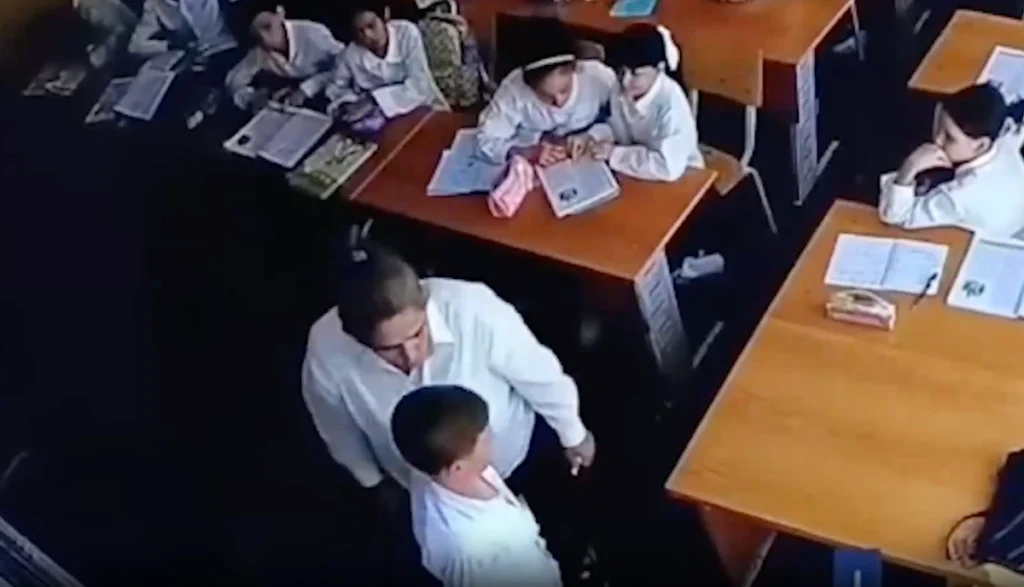
On September 23 a teacher at a school in Tashkent's Chilonzor district slapped a student when the child asked for the Russian language class to be taught in Russian. The Children’s Ombudsman of Uzbekistan, Surayyo Rahmonova, has begun an investigation into the incident -- but not before news of the assault reached Russia. Maria Zakharova, the spokesperson for the Russian Ministry of Foreign Affairs, said that she was concerned about the content of a video of the slap that was posted on social media. “We have requested official clarification from the Uzbek side,” Zakharova commented. “The Uzbek side is urgently asked to give the media material a legal assessment and, if justified, to take action against the perpetrator of cruel treatment of the child. We are keeping this issue under the closest attention.” The leader of Uzbekistan’s Milli Tiklanish (National Revival) party and deputy speaker of the lower house of parliament, Alisher Qodirov commented on Telegram that “it would be better for [Russia] to deal with their own affairs [which are] full of problems than to deal with our internal issues. The violation of rights of an Uzbek child at a school in Uzbekistan will be investigated in accordance with Uzbek laws.” A vocal critic of Russian influence, earlier this year Qodirov proposed a ban on the provision of public services to persons who don’t speak the Uzbek, and the promotion of Soviet ideology and symbols in Uzbekistan.

Woman in Uzbekistan Tries to Exchange Daughter for a House

A 41-year-old woman who tried to exchange her 13-year-old daughter for a house in Samarkand has been sentenced to 5 years and two months in prison. The woman, who had come to Samarkand to work, said that the family had no housing when she received an offer to exchange one of her three children for a house worth $25,000. She agreed and gave the person her middle daughter. After receiving some money, the woman went to a restaurant to celebrate the deal, where she was apprehended by law enforcement. This is the woman's second conviction. As a result, her children, including the 13-year-old girl, were put into under state guardianship. This case has had repercussions around the country, with citizens raising questions about the need to strengthen child protection and anti-trafficking measures in Uzbekistan. Child trafficking in Uzbekistan remains a severe problem, despite government efforts to reduce it. According to the Trafficking in Persons Report, in 2019-2020, about 43% of reported trafficking offenses involved children. These cases often include the sale of infants and the involvement of medical personnel in illegal schemes. There has also been an increase in child trafficking in recent years due to economic hardship, especially in rural areas.

Central Asian Countries Unite To Support Women and Children Repatriated From Conflict Zones

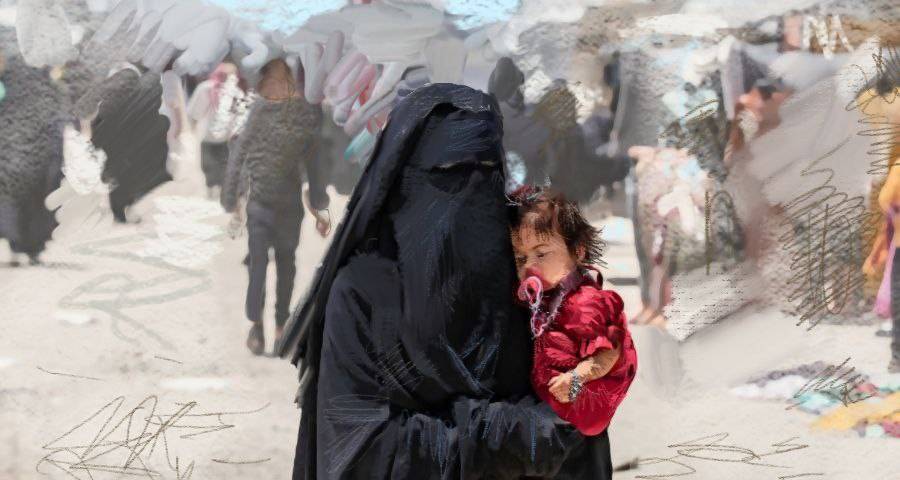
UNICEF Uzbekistan reports that Kazakhstan, Kyrgyzstan, Tajikistan, and Uzbekistan are actively working to improve the support system for women and children returning from conflict zones, such as Iraq and Syria. In support of the European Union's project “The second phase of EU-UN support to Central Asian states for their citizens returning from conflict zones,” delegations from the above met to discuss their shared experiences and means of providing necessary support and services for successfully reintegrating women and children into society. Uzbekistan was one of the first countries in Central Asia to start repatriating its citizens from conflict zones. Since 2019, the country has undertaken several missions to return women and children stranded in conflict zones as part of operations known as “Mehr” (“kindness” in Uzbek). The “Mehr-1” and “Mehr-2” operations have enabled the Government of Uzbekistan to repatriate many of its citizens, and in cooperation with the government of Iraq and UNICEF, offer a safe haven in their motherland for children deprived of basic necessities such as food, clean water, and medical care while living in war zones and refugee camps. On their return, repatriated citizens are placed in special sanatoriums where they are provided with hot food, clothing, and the services of doctors, therapists, and teachers. To date, Uzbekistan has successfully repatriated 531 citizens, including 331 children, 125 women, and 27 men. The country's initiative has been praised internationally and noting  its focus on the interests of children and supporting the family unity and society, Ní Aoláin, a UN expert has stateed that, “The Uzbek model of repatriation and reintegration provides a roadmap for other governments to return their nationals from conflict zones." Kazakhstan, likewise, has committed to the repatriation of its citizens from areas previously controlled by the Islamic State, and has launched operations “Jusan” and “Rusafa”, implemented with a high level of coordination between various government agencies, including national security services, diplomats, and the military. One of the most essential repatriations took place within the framework of the “Jusan” operation, launched in 2019. The name “Jusan” means bitter wormwood; native to Kazakhstan and a symbol of homesickness. Through this operation, hundreds of women and children were rescued from dangerous refugee camps in Syria, including the notorious Al-Hol Camp. Maryam, one of the women repatriated during the “Jusan” operation, said that the "first time a delegation from Kazakhstan arrived was to collect data on Kazakh citizens in the Al-Hol Camp. They promised to come back for us soon. A month of waiting felt like an eternity to us.” According to women from the tent camp, the shortage of drinking water and provisions, essential medicines, and the unbearable heat aggravated the situation and led to constant conflicts between residents. The humanitarian operations “Jusan” and “Rusafa” enabled the return of 725 people to Kazakhstan, including 188 women and 522 children, most of whom were under twelve years of age. Kazakhstan's success in such operations has been  attributed to the high level of investment by the state. According to Gabit Konusov,...

Kyrgyzstan Wants to Fine Emigrants Who Leave Their Children at Home

Kyrgyzstan has proposed introducing liability for parents who go to work abroad and leave their children without proper custody. The bill was initiated by the Ministry of Labor and has been submitted for public discussion. It is planned to introduce the concept of “children of migrant workers” into the Children's Code. According to the Ministry of Labor, in the first quarter of this year, about 85,000 children were identified, half of whom are with relatives without legal guardianship. The Ministry emphasizes that parents' absence leads to a lack of love and care; many are forced to work and do not attend school. The new bill proposes fines of 15,000 KGS ($181) for parents who leave their children in the care of relatives, neighbors, children, or acquaintances without notifying the guardianship authorities. Similar measures to protect migrant children exist in other countries. For example, in Uzbekistan, a project was launched in 2018 to support children left behind by parents who go to work abroad. The project is supported by UNICEF and funded by the European Union. It aims to provide social and legal assistance to children without officially appointed guardians. According to the research data, many children are left with relatives without legal guardianship, leading to various social problems that require state support.

Tajikistan Bans Corporal Punishment for Children

Tajikistan has become the 67th country to ban corporal punishment of children. This law, enacted in June, protects the country's 4 million children from any violent discipline at home or school. “These new policy changes represent a remarkable advancement in child protection in Tajikistan and demonstrate the Government’s strong commitment to respecting children's dignity and physical integrity. The legislative changes are a major step forward. Still, much work remains to ensure that these measures lead to positive change in every child’s life,” said Arthur van Diesen, UNICEF Representative for Tajikistan. Corporal punishment affects approximately 330 million children worldwide, and has severe consequences for their health, development, and emotional wellbeing. This can impair the development of the brain and nervous system, leading to long-term behavioral and mental health problems. The economic cost of child abuse is $7 trillion a year, or about 8% of global GDP. Tajikistan will take part in the upcoming Global Ministerial Conference on Ending Violence against Children, which will be held on November 7-8, in Bogota, Colombia.

Taking the Necessary Steps to Curb Child Abuse in Kazakhstan

In Almaty, a young woman threw herself off a Ferris wheel, falling to her death. Before committing suicide, she had strangled her five-year-old daughter. The number of children in Kazakhstan has soared over the past decade, but so have the number of crimes committed against minors. When Mom and Dad are the murderers In 2023, twenty-five children were murdered in Kazakhstan, seven of them by their relatives according to the country’s children's ombudsman, Dinara Zakiyeva. This year, Kazakhstanis were shocked by numerous horrifying cases of child abuse. According to relatives and neighbors, the family of the woman who strangled her daughter lived in the Ile District of Almaty Region and were financially secure and successful. The regional commissioner for children's rights, Aigul Yesimbekova, explained that the woman had confesses her crime to her sister before committing suicide. “The child had Down's syndrome. The mother was most likely in an internal crisis and despair when she decided to do this,"Yesimbekova explained. "She went to her sister and told her that she was going to kill herself. When her sister tried to calm her down, she went to the park (the Central Park of Culture and Leisure in Almaty). Her husband is an IT specialist, and the financial component [of her life] was fine. She was not registered with psychiatrists, her husband makes money, and everything seemed fine, but the child was sick. Probably, her soul was in such a state of crisis; it is hard when a child is sick. Maybe she murdered the child in a rush of emotion, and then, unable to cope with the guilt, she took the step she did.” According to Zakiyeva, such families are in critical need of psychological support, and child protective services should supervise them. However, the situation with psychologists and child social workers in Kazakhstan is poor. At the end of June, a court in the Turkestan Region convicted a mother of killing her two children. Their bodies were found in a rented apartment in February 2024 in the city of Turkistan. The mother was sentenced to 15 years in prison. After killing her children, the woman called her friend and told her what she'd done. Even against the backdrop of Kazakhstan’s high birth rates, the Turkestan Region - as is the entire south of the country - is an outlier. The percentage of people under the age of 18 in Kazakhstan stands at 34.1%, whereas in the Turkestan Region, this figure is 43.3%, followed by the Mangystau Region at 41.9%, and the federal city of Shymkent at 40.6%. Experts say that it is in the regions with the highest birth rates that the highest rates of violence against children are recorded. In September of last year, a pedophile raped and brutally murdered a five-year-old girl who lived next to him in the village of Zhibek Zholy in the Turkestan Region. He was sentenced to life imprisonment and chemical castration. News of the murder almost sparked a riot and deadly reprisals against the rapist;...