• KZT/USD = 0.00211
  • TJS/USD = 0.10810
  • UZS/USD = 0.00008
  • TMT/USD = 0.29760
  • KZT/USD = 0.00211
  • TJS/USD = 0.10810
  • UZS/USD = 0.00008
  • TMT/USD = 0.29760
  • KZT/USD = 0.00211
  • TJS/USD = 0.10810
  • UZS/USD = 0.00008
  • TMT/USD = 0.29760
  • KZT/USD = 0.00211
  • TJS/USD = 0.10810
  • UZS/USD = 0.00008
  • TMT/USD = 0.29760
  • KZT/USD = 0.00211
  • TJS/USD = 0.10810
  • UZS/USD = 0.00008
  • TMT/USD = 0.29760
  • KZT/USD = 0.00211
  • TJS/USD = 0.10810
  • UZS/USD = 0.00008
  • TMT/USD = 0.29760
  • KZT/USD = 0.00211
  • TJS/USD = 0.10810
  • UZS/USD = 0.00008
  • TMT/USD = 0.29760
  • KZT/USD = 0.00211
  • TJS/USD = 0.10810
  • UZS/USD = 0.00008
  • TMT/USD = 0.29760
01 August 2026

Viewing results 1 - 6 of 757

Berdimuhamedov’s Beijing Visit and the Reshaping of Central Asia’s Gas System

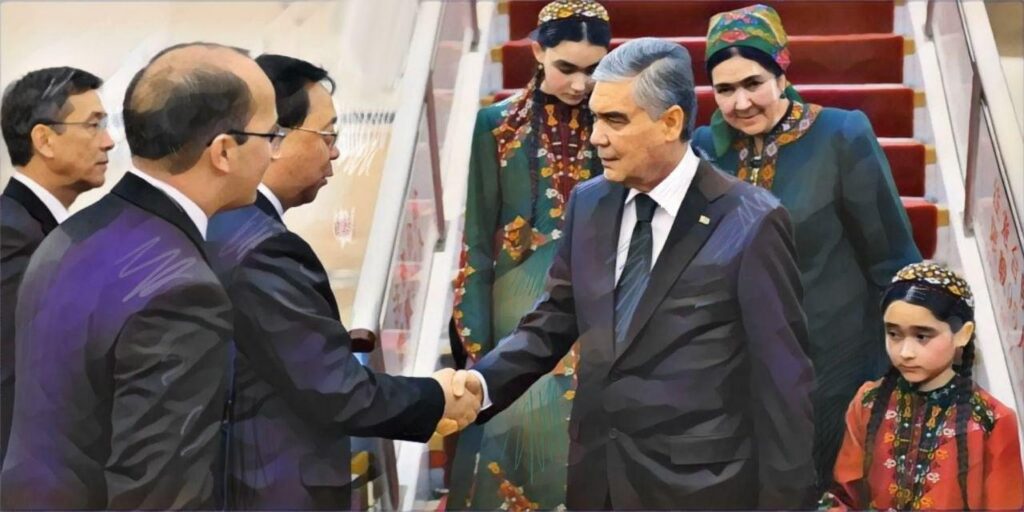
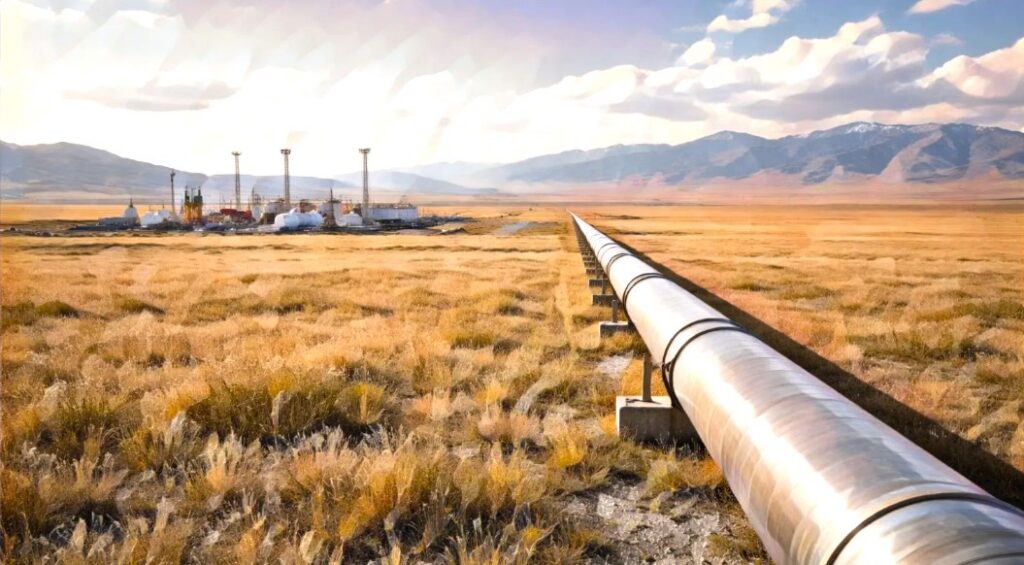
The visit by Turkmenistan’s Gurbanguly Berdimuhamedov, Chairman of the Halk Maslahaty, to Beijing on March 17–19 did more than routinely reaffirm Turkmenistan’s ties with China. It opened onto a wider issue in Central Asian energy, not simply about continuing the cooperation between Ashgabat and Beijing, but about how the renewal of that cooperation would affect the Central Asia–wide gas production and transmission system that increasingly intersects with China’s wider infrastructural and industrial presence in the region. No dramatic announcement of any new export route highlighted that wider significance, which emerged from a narrower sequence of policy initiatives that carried broader implications. Xi Jinping used the visit to restate the importance of cooperation in natural gas while widening the agenda to include connectivity, clean energy, artificial intelligence, and the digital economy. Within days of the meeting, Turkmenistan moved ahead on a new phase of development at Galkynysh with CNPC. These events signal a further deepening Chinese role in the upstream and systemic organization of Central Asian energy. What Beijing Actually Signaled Beijing’s own language about the matter was direct. In the official Xinhua account of Xi’s March 18 meeting with Berdimuhamedov, China called for the two sides to “expand the scale of cooperation in the natural gas sector” and to raise trade and investment levels. Such language confirms that gas remains at the center of the relationship even as the bilateral agenda widens. For all the parallel discussions of digitalization, transport links, and non-resource cooperation, the political weight of Sino-Turkmen ties still rests primarily on energy. The Chinese side, however, did not treat gas as a self-contained file. Gas remains the primary, but it is increasingly embedded within a wider pattern of regional engagement comprising energy, transport, and adjacent economic sectors. The same Beijing readout on the meeting with Berdimuhamedov placed connectivity, artificial intelligence, the digital economy, and clean energy alongside natural gas under a broader heading of expanded cooperation. This framing removes gas from its status as a stand-alone commodity and places it within a larger operational perspective. Neither the main Chinese readout nor the public official Turkmen framing of the visit highlighted Line D of the Central Asia–China gas pipeline system. Line D has long stood as the clearest indicator of a future expansion of Turkmen gas exports through Tajikistan and Kyrgyzstan into China. Had the visit produced a concrete breakthrough on that front, the official language would have been the obvious place to signal it. The practical movement after the trip lay elsewhere. Why It Matters Beyond Turkmenistan The focus lay at Galkynysh. In the immediate wake of the visit, President Serdar Berdimuhamedov authorized Turkmengaz to conclude a turnkey contract with CNPC Amudarya Petroleum Company Ltd. for Phase 4 of the Galkynysh gas field. The official Turkmen account linked the decision to meetings held during Gurbanguly Berdimuhamedov’s visit to China and specified facilities capable of processing 10 billion cubic meters of marketable gas per year. TCA reported the same move as a new phase of CNPC-backed field development....

Kyrgyzstan Seeks Chinese Cooperation to Develop EV Charging Infrastructure

Kyrgyzstan is seeking to collaborate with Chinese companies to develop electric vehicle (EV) charging infrastructure as part of efforts to modernize its energy sector and promote sustainable transport. On March 25, Energy Minister Taalaibek Ibrayev visited China, where he held a series of meetings with energy and technology companies involved in EV infrastructure development. During the visit, Ibrayev toured a manufacturing facility operated by ShuiFa Group and signed a memorandum of understanding between the Kyrgyz Ministry of Energy and the company. The agreement involves cooperation in energy infrastructure, including the development of EV charging stations and energy storage systems. Officials said the memorandum represents a step toward modernizing Kyrgyzstan’s energy sector and supporting sustainable transport. Ibrayev also met with representatives of NUCL New Energy Technology (GD) Ltd to discuss potential cooperation on EV charging infrastructure and the introduction of modern technologies. The company expressed readiness to work with Kyrgyz authorities. In addition, talks were held with Zhejiang Anfu New Energy Technology Co., Ltd. regarding the possible supply of equipment and the localization of production in Kyrgyzstan These initiatives align with the government’s broader strategy to promote environmentally friendly transport and reduce air pollution in Bishkek and other major cities. The number of electric vehicles in Kyrgyzstan has been rising steadily. According to First Deputy Prime Minister Daniyar Amangeldiev, more than 200 electric vehicles are imported into the country daily under a value-added tax (VAT) exemption scheme. As a member of the Eurasian Economic Union (EAEU), Kyrgyzstan also benefits from an annual quota allowing the duty-free import of up to 15,000 electric vehicles. Despite this growth, EVs still account for a small share of the country’s total vehicle fleet. According to the Ministry of Natural Resources, Ecology, and Technical Supervision, Kyrgyzstan had more than 1.9 million registered vehicles as of early 2026, a 13% increase compared with 2024. Of these, 972,000 run on gasoline, 339,000 on diesel, 56,900 on gas, and 37,000 are hybrids. Electric vehicles make up about 0.8% of the total, or approximately 15,200 vehicles.

Kazakhstan’s Trade with China Is Growing, but the Deficit Is Widening

Kazakhstan’s trade and economic ties with China continue to deepen, yet the expansion in bilateral trade is accompanied by a widening imbalance. By the end of 2025, China had consolidated its position as one of the country’s key trading partners, accounting for nearly a quarter of total foreign trade turnover. According to data from the analytical centre of the Association of Financiers of Kazakhstan (AFK), bilateral trade reached $34.1 billion, an increase of 13.2% compared with the previous year. China’s share in Kazakhstan’s foreign trade rose to 23.7% from 21.2% a year earlier. Growth in trade was driven primarily by an increase in imports of Chinese goods. In 2025, imports from China reached $18.9 billion, 23.6% higher than the previous year. China accounted for 29.2% of all imports into the country. The structure of imports indicates growth in shipments of both consumer goods and industrial products. The largest increases were recorded in vehicles (+$3.4 billion), metals (+$645 million), and chemical products (+$412 million). According to analysts, this reflects expanding investment activity, infrastructure projects, and domestic demand. In contrast to imports, Kazakhstan’s exports to China showed only moderate growth, rising by 2.1% to $15.2 billion. At the same time, the export structure changed. Shipments of agricultural and chemical products increased, while exports of traditional raw materials declined. Experts attribute this to cooling industrial demand in China, lower global commodity prices, and growth in domestic production within China itself. Faster growth in imports led to a sharp deterioration in the trade balance. According to AFK data, the bilateral trade deficit with China increased tenfold, from $370 million to $3.7 billion. At the same time, price trends for goods imported from China remained largely downward. Declining prices for a number of items are linked to low inflation in China and increased competition from Chinese manufacturers in foreign markets. This, in turn, is exerting a restraining effect on inflation in Kazakhstan, partially offsetting price increases driven by domestic factors such as tariffs, demand, and budget spending. In the short term, analysts expect imports from China to remain the main driver of bilateral trade. Kazakhstan’s exports, meanwhile, will depend on commodity prices and the level of industrial demand in China. High oil prices (above $100 per barrel) could temporarily reduce the deficit by boosting export revenues. However, this effect would be largely price-driven and is unlikely to change the overall structure of trade.

Tajikistan’s Reliance on External Funding for State Investment Projects Is Growing

Tajikistan continues to implement a large-scale state investment programme. International financial institutions play a key role in financing these projects, however, while the government's own contribution remains limited. According to data from the State Committee on Investment and State Property Management, 82 state investment projects are currently under way in the country The total value of ongoing initiatives is estimated at approximately $4.67 billion. Of these, 55 projects are being implemented on a grant basis, five through loans, and another 22 have mixed financing. About $3 billion has already been allocated for procurement, works, and services related to the implementation of these projects. However, more than 70% of the funding is provided by just three international institutions. The World Bank remains the largest donor, contributing $1.725 billion (36.9%). It is followed by the Asian Development Bank with $914.7 million (19.5%) and the European Bank for Reconstruction and Development (EBRD) with $658.1 million (14.1%). Other investors include the Islamic Development Bank ($207.9 million), the Chinese government ($194.9 million), the Asian Infrastructure Investment Bank ($142.5 million), the German Development Bank ($129.3 million), and the European Investment Bank ($114.8 million). Against the backdrop of extensive external financing, Tajikistan’s own contribution remains small. The state is investing approximately $151.2 million, accounting for only 3.2% of the total. This means that the implementation of key infrastructure and social projects largely depends on international donors and lenders. At the same time, in 2025 Tajikistan managed to significantly increase capital inflows. Foreign investment reached approximately $7 billion, rising by nearly $2 billion (35.1%) compared with the previous year. The authorities hope to sustain this momentum by improving the investment climate, including through legislative updates. A key step was the adoption on May 14, 2025, of a new version of the law “On Investments and the Promotion of Investment Activity,” aimed at increasing the country’s attractiveness to international partners. The current development model allows Tajikistan to implement large-scale projects that would be difficult to carry out relying solely on domestic resources. However, this financing structure also increases dependence on external sources, making the economy more sensitive to the conditions set by international institutions and the global financial environment.

Kyrgyzstan Sees No Grounds for Restricting Potato Imports from China

Kyrgyzstan’s Ministry of Water Resources, Agriculture, and Processing Industry has stated that there are no grounds for restricting potato imports from China. The announcement follows reports that the domestic market has been flooded with Chinese potatoes allegedly being sold as locally produced goods. In response, the ministry’s Veterinary and Phytosanitary Control Service conducted monitoring of potato sales in Bishkek and Osh. According to officials, imported Chinese potatoes are present on the market, but no confirmed cases were identified in which such products were falsely labeled as local produce. Currently, the average retail price of imported Chinese potatoes ranges from 38 to 40 soms per kilogram, while locally grown potatoes are sold at prices of around 42 to 44 soms per kilogram. The ministry also noted that Kyrgyzstan’s obligations under the World Trade Organization framework limit the scope for imposing unilateral import restrictions. Officials emphasized that agricultural trade between Kyrgyzstan and China is mutual, with Kyrgyz products also being exported to the Chinese market. In addition, the Veterinary and Phytosanitary Control Service has advised domestic potato farmers to accelerate sales of stored produce. Some producers are reportedly holding stocks in warehouses in anticipation of higher prices. However, the service believes that price increases are unlikely as the arrival of the new harvest is expected to boost supply. Officials warned that prolonged storage may lead to spoilage and financial losses. In related developments, the Ministry of Agriculture has announced the start of corn exports to China. The first shipment, totaling 25 tons, departed on March 16. The export became possible following the signing of a protocol on phytosanitary requirements for corn exports from Kyrgyzstan to China between the Kyrgyz Ministry of Agriculture and China’s General Administration of Customs. To date, two Kyrgyz enterprises have been authorized to export corn under this framework. Trade between Kyrgyzstan and China continues to expand. According to Chinese Ambassador to Kyrgyzstan Liu Jiangping, bilateral trade turnover reached $27.2 billion, representing a 20% increase and a record high. He also noted that China’s imports from Kyrgyzstan grew by 86%.

Xi Jinping and Berdymuhamedov Sr. Discuss Expansion of China-Turkmenistan Partnership

Chinese President Xi Jinping held talks with Gurbanguly Berdymuhamedov, Turkmenistan's former president and leader of its People's Council, during the latter’s official visit to China. The meeting took place on March 18 at the Diaoyutai State Guesthouse in Beijing, according to a statement from China’s Ministry of Foreign Affairs. Xi noted that China had recently completed its annual parliamentary meetings, commonly referred to as the “Two Sessions,” during which key socio-economic priorities were outlined. He said the country’s new development agenda would support modernization efforts and create additional opportunities for international cooperation. The Chinese president said that mutual political support remains central to the comprehensive strategic partnership between Beijing and Ashgabat. He reaffirmed China’s readiness to continue backing Turkmenistan on issues related to sovereignty, territorial integrity, and its internationally recognized policy of permanent neutrality. Xi and Berdymuhamedov discussed expanding cooperation in the energy sector, particularly natural gas supplies, as well as in trade, investment, transport connectivity, agriculture, artificial intelligence, the digital economy, and clean energy. Both leaders also highlighted the importance of aligning China’s Belt and Road Initiative with Turkmenistan’s plans to revitalize historic Silk Road trade routes. Humanitarian cooperation was another focus of the talks, including plans to develop educational and cultural exchanges and establish joint centers. The leaders also discussed coordination on regional security challenges, including efforts to counter terrorism, separatism, and extremism. Berdymuhamedov reaffirmed Turkmenistan’s commitment to the One China principle and expressed readiness to deepen bilateral cooperation in energy, infrastructure, and trade. He said closer ties with China were important for Turkmenistan’s long-term economic development and again noted Beijing’s support for the country’s neutrality policy. Chinese Foreign Minister Wang Yi also attended the meeting. As previously reported by The Times of Central Asia, the visit followed Berdymuhamedov’s trip to the United States in mid-February, the details of which were not fully disclosed. Shortly after his return, Turkmenistan’s President, Gurbanguly's son Serdar Berdymuhamedov, dismissed the country’s ambassador to the U.S. and its permanent representative to the United Nations. No official explanation was provided for the personnel changes.