• KGS/USD = 0.01144 0%
  • KZT/USD = 0.00209 0%
  • TJS/USD = 0.10431 0.1%
  • UZS/USD = 0.00008 0%
  • TMT/USD = 0.28571 0%
  • KGS/USD = 0.01144 0%
  • KZT/USD = 0.00209 0%
  • TJS/USD = 0.10431 0.1%
  • UZS/USD = 0.00008 0%
  • TMT/USD = 0.28571 0%
  • KGS/USD = 0.01144 0%
  • KZT/USD = 0.00209 0%
  • TJS/USD = 0.10431 0.1%
  • UZS/USD = 0.00008 0%
  • TMT/USD = 0.28571 0%
  • KGS/USD = 0.01144 0%
  • KZT/USD = 0.00209 0%
  • TJS/USD = 0.10431 0.1%
  • UZS/USD = 0.00008 0%
  • TMT/USD = 0.28571 0%
  • KGS/USD = 0.01144 0%
  • KZT/USD = 0.00209 0%
  • TJS/USD = 0.10431 0.1%
  • UZS/USD = 0.00008 0%
  • TMT/USD = 0.28571 0%
  • KGS/USD = 0.01144 0%
  • KZT/USD = 0.00209 0%
  • TJS/USD = 0.10431 0.1%
  • UZS/USD = 0.00008 0%
  • TMT/USD = 0.28571 0%
  • KGS/USD = 0.01144 0%
  • KZT/USD = 0.00209 0%
  • TJS/USD = 0.10431 0.1%
  • UZS/USD = 0.00008 0%
  • TMT/USD = 0.28571 0%
  • KGS/USD = 0.01144 0%
  • KZT/USD = 0.00209 0%
  • TJS/USD = 0.10431 0.1%
  • UZS/USD = 0.00008 0%
  • TMT/USD = 0.28571 0%

Viewing results 1 - 6 of 122

Opinion – The Quiet Competition: How the U.S. Is Losing Ground to China in Central Asia

Over the past decade, China has steadily expanded its presence in Central Asia, not through military force, but by building roads, trade corridors, and digital infrastructure. As the United States scaled back its regional footprint following its withdrawal from Afghanistan, Beijing moved quickly to fill the void. Today, China has positioned itself as the region's dominant external power, while the U.S. risks being left on the sidelines. At the heart of China’s strategy is the Belt and Road Initiative (BRI), which has provided over $1 trillion into infrastructure projects globally since its launch in 2013. This includes $704 billion in construction contracts and $470 billion in non-financial investments. In 2024 alone, BRI engagement reached $121.8 billion – $70.7 billion in construction and $51 billion in investments – and trade between China and the countries of Central Asia hit a record $95 billion, highlighting the depth of China's economic integration. This engagement has also created significant financial dependencies. Central Asian countries owe China roughly $15.7 billion, about 8% of the region's total external debt, and these loans are often opaque and carry terms that provide Beijing with outsized political leverage. Chinese firms are also laying fiber-optic networks and constructing electric vehicle corridors to link western China with its neighbors. In Tajikistan, for example, contractors are upgrading the Pamir Highway to support cross-border EV transport. Huawei and other Chinese tech giants are also expanding the region’s telecommunications infrastructure, raising serious concerns about surveillance, data sovereignty, and long-term digital dependency. China’s economic outreach is reinforced by high-level diplomacy. The China–Central Asia (C+C5) format has become the centerpiece of Beijing’s regional engagement. At the 2025 summit, leaders from across the region gathered to coordinate on connectivity, climate resilience, and trade facilitation. The regularity and substance of these summits stand in sharp contrast to the United States’ more sporadic diplomatic presence. The U.S. maintains the C5+1 platform and launched a promising Critical Minerals Dialogue in 2024. However, these initiatives have yet to match the scale or consistency of China's approach as U.S. infrastructure investment is limited, its commercial footprint is small, and diplomatic engagement is too infrequent to shift the region’s strategic trajectory. This matters. Central Asia is strategically located, resource-rich, and increasingly central to global supply chains and geopolitical competition. Kazakhstan alone supplies more than 40% of the world’s uranium. The region also serves as a testing ground for competing development models, and if the United States fails to become a more engaged and credible partner, China’s infrastructure-heavy, state-centric model may become the default. To remain competitive, Washington should recalibrate its approach in Central Asia. This includes pursuing bilateral deals that deliver real impact, such as deepening ties with Uzbekistan and Kazakhstan through targeted investment packages, trade agreements, and joint-sector initiatives. It also means securing access to critical minerals by expanding private-sector investment in mining, processing, and transport infrastructure aligned with U.S. supply chain needs. Offering digital infrastructure alternatives is equally essential; the United States must support secure, interoperable, and transparent technology networks that...
Kuirektykol Deposit May Elevate Kazakhstan to Global Leader in Rare-Earth Reserves

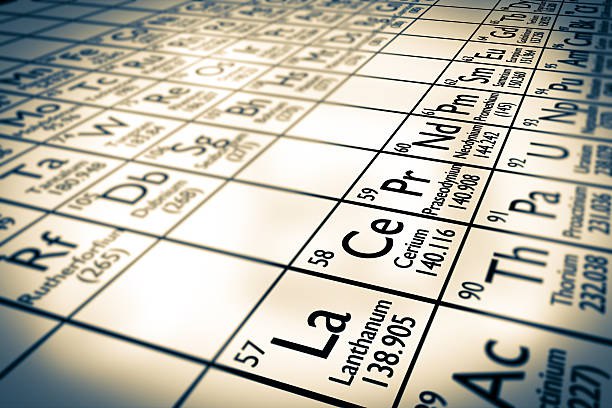
Kazakhstani geologists have identified several promising new areas within the Kuirektykol deposit in the Karkaraly District of the Karaganda Region. If confirmed, these reserves could position Kazakhstan among the world’s leading nations in rare-earth metal resources. Exploration of the Kuirektykol site began in 2022. By November 2024, surveyors had discovered commercially viable concentrations of rare-earth elements, including cerium and lanthanides, across four prospective zones. These were initially estimated to contain total resources of 935,400 tons, including 795,800 tons of proven reserves. At the time, experts predicted that with further in-depth exploration, total reserves could potentially double. That projection is now being borne out by new findings, according to the Ministry of Industry and Construction. In a recent statement, the ministry reported that LLP Tsentrgeolszemnadzor, working within the framework of the state program for geological subsoil research, had uncovered several additional promising areas at the Kuirektykol site. These areas are believed to contain a combined one million tons of rare-earth metals. The agency also announced the preliminary evaluation of a vast new prospective area named Zhana Kazakhstan. Following recent prospecting work, geologists now estimate the total predicted resources of rare-earth metals in the Kuirektykol area to exceed 20 million tons at depths of up to 300 meters. The average concentration of rare-earth elements in the ore is approximately 700 grams per ton. As previously reported by The Times of Central Asia, the state-owned National Mining Company Tau-Ken Samruk is preparing to begin development of the Kuirektykol deposit, a move expected to attract significant private investment in the sector. These developments come amid increasing global demand for rare-earth elements, which are essential to technologies ranging from renewable energy and electric vehicles to defense and telecommunications, and are set to be exempt from new U.S. trade tariffs. Kazakhstan's growing resource base could play a pivotal role in diversifying global supply chains and enhancing the country’s strategic economic importance.

Kazakhstan Faces Big U.S. Tariffs, but Minerals Could be Exempted

Kazakhstan will be hit with the largest U.S. tariffs among Central Asian states after President Donald Trump announced duties on goods from global trading partners, vowing to end what he calls unfair treatment of the United States even as concerns grow that a vast trade war carries grave risks for economies around the world. According to a White House list released on Wednesday, Kazakhstan charges 54% tariffs on American goods and its own products will therefore be subject to duties of 27% when they arrive in the United States. A minimum baseline of 10% tariffs will also be applied to goods from Kyrgyzstan, Uzbekistan, Tajikistan, and Turkmenistan. However, Kazakhstan has large reserves of minerals that could have applications in energy and other industries and might be exempted under terms of the Trump administration’s plan. The measure against Kazakhstan reflects what the White House calls “an individualized reciprocal higher tariff” on countries with which the United States has its biggest trade deficits. The U.S. says its tariffs on nations around the world, which are to take effect in the coming days, can be increased if trading partners retaliate or can go down if those partners collaborate with Washington on economic and security matters. The fallout from the Trump administration’s move remains to be seen, with many economists and other analysts warning that falling markets and the threat of higher prices, including in the United States, are a sign of the economic upheaval to come. But a possible loophole for some Central Asian countries lies in the U.S. statement that some goods will not be subject to the tariffs. They include copper, pharmaceuticals, semiconductors, lumber, bullion, and “energy and other certain minerals that are not available in the United States.” Kazakhstan said this week that it had discovered a huge rare earth metals deposit in the central region of Karaganda. By some estimates, the deposit could contain roughly 20 million tons of the coveted materials and is among the larger of more than a dozen similar deposits found in the country. “The identified rare earth deposits and promising areas, if further confirmed, could position Kazakhstan as a global leader in rare earth element reserves and enable the rapid development of a high-tech rare earth metals industry,” the Ministry of Industry and Construction said, according to the Orda news organization. Those natural resources are of interest to the United States. On March 12, U.S. Secretary of State Marco Rubio spoke with Kazakh Foreign Minister Murat Nurtleu and the U.S. “looks forward to working with Kazakhstan to deepen economic ties in the energy, telecommunications, and critical minerals sectors,” the U.S. State Department said. U.S. tariffs and Central Asian resources are also likely to be discussed at a meeting of regional and European Union leaders in Samarkand, Uzbekistan, on Friday. The EU is seeking to expand trade ties with Central Asia as its longtime alliance with the United States unravels over trade and security matters. More on this breaking story will follow.

Kazakhstan Strengthens Position in Global Critical Minerals Market

Kazakhstan has the potential to ensure a stable supply of critical minerals essential for the global energy transition and the expansion of the electric vehicle market, according to analysts at the Astana International Financial Center (AIFC)​. An AIFC study highlights Kazakhstan’s competitive advantages in exporting copper, zinc, aluminum, silver, and lead. Additionally, nickel, gold, lithium, and rare earth metals are seen as promising sectors for export expansion​. Kazakhstan holds a 5% share of the global zinc market, ranking seventh in reserves with 6.7 million tons. In 2022, Turkey, Russia, and China accounted for 70% of Kazakhstani zinc exports. The country also controls about 4% of the global copper market, with 20 million tons in reserves, placing it 11th worldwide. Its main copper buyers in 2022 were China, Turkey, and the UAE​. Kazakhstan ranks eighth globally in lead reserves (2 million tons) and 12th in production, with 40,000 tons mined in 2021. Global lead demand is projected to rise from 11.6 million tons in 2022 to 13.4 million tons by 2031. In the silver market, Kazakhstan holds the third-largest reserves, accounting for 2.7% of global supply​. In 2023, Kazakhstan ranked 11th in global bauxite reserves (160 million tons) and 10th in production (4.3 million tons), though its aluminum market share remains below 1%. The primary destinations for aluminum exports are Turkey, Italy, and Greece. Meanwhile, Kazakhstan is among the world’s top 20 nickel-producing countries, holding reserves of approximately 1.5 million tons, or 2% of global reserves, though its market share remains small​. The country is also actively exploring lithium deposits in collaboration with companies from Germany, the UK, and South Korea. In March 2024, South Korean specialists discovered a lithium deposit in East Kazakhstan with a content of 5.3%, valued at an estimated $15.7 billion. Kazakhstan has also strengthened its position in the critical minerals market through international agreements. It recently signed a contract with the European Union worth €3 million for the supply of essential raw materials​.

Ivanhoe Mines Begins Exploration of World’s Third-Largest Sedimentary Copper Basin in Kazakhstan

Canadian mining company Ivanhoe Mines has announced a joint venture with UK-based Pallas Resources to explore the Chu-Sarysu Copper Basin in Kazakhstan - the world’s third-largest sediment-hosted copper basin, containing 27 million tons of known copper. Exploration Plans and Investment Ivanhoe Mines has acquired an initial 20% equity stake in the joint venture and has committed $18.7 million in exploration expenditure over the next two years. License applications, submitted in Q4 2024, cover an area of approximately 16,000 km². Pallas Resources has digitized extensive Soviet-era geological data covering the license area. Initial analysis has identified multiple potential copper targets, which will be further explored following an airborne geophysics survey later this year. After the initial two-year phase, Ivanhoe has the option to increase its stake by investing up to $115 million over the next four years, depending on how much of the license area it retains. If a major copper deposit is discovered, Ivanhoe can secure up to an 80% equity stake by financing and completing a pre-feasibility study. Significance of the Chu-Sarysu Basin Ivanhoe Founder and Executive Co-Chairman Robert Friedland emphasized Kazakhstan’s importance as a key mining jurisdiction and home to one of the world’s most significant copper basins. “The Ivanhoe Group has a long history in Kazakhstan... and we look forward to returning to this tremendous country to further unlock the significant geological potential of the Chu-Sarysu Basin,” Friedland said. According to the United States Geological Survey (USGS), the Chu-Sarysu Basin contains an estimated 25 million tons of undiscovered copper, further underscoring its untapped potential. The basin is also known to contain lead, zinc, silver, barium, and strontium deposits. Kazakhstan’s Mining Industry Kazakhstan is already a global leader in mineral production: World’s largest uranium producer. Second-largest chromite producer. Major producer of copper, zinc, iron ore, and coal. Mining and quarrying contribute approximately 14% of Kazakhstan’s GDP and 17.5% of its total exports, valued at around $10.5 billion.

Kazakhstan and Serbia Strengthen Ties Despite Different Geopolitical Paths

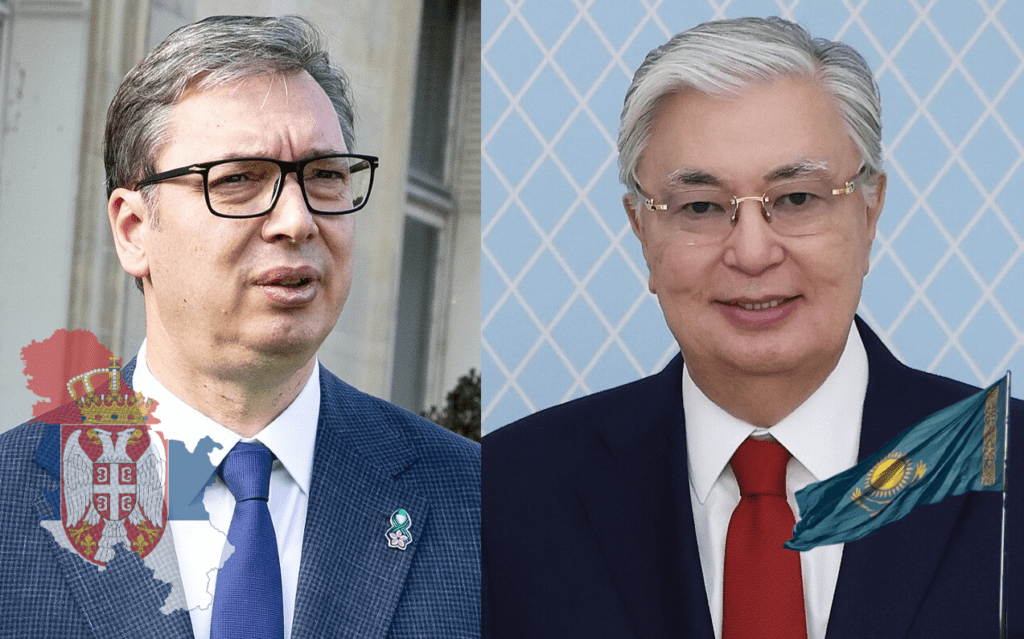
Serbian President Vucic (54) might physically resemble Kazakh leader Kassym-Jomart Tokayev (71), but the geopolitical positions of Sebia and Kazakhstan could not be more different. While the Balkan nation – a European Union candidate since 2012 – remains in the EU’s “eternal waiting room”, the Central Asian country – a member of the Russian-led Eurasian Economic Union – seems to have found a delicate balance between Russia, China, and the West. Those differences, however, have not prevented Serbia and Kazakhstan from strengthening their bilateral ties. Over the past six months, the two countries have been actively preparing for Tokayev’s trip to Serbia. This year, he spoke by phone with Vucic twice, while various Serbian and Kazakh officials held several meetings. On November 18-19, Tokayev finally visited the Southeastern European nation, where he met with his Serbian counterpart. According to the Kazakh leader, they discussed strengthening trade and economic relations and bilateral partnerships between the two nations. “It is essential that we develop cooperation. We had constructive talks and reached important deals,” Tokayev stressed. During his visit to the Balkan country, Serbian and Kazakh ministers signed several bilateral agreements. One of them is a 2025 plan on military cooperation. It is, therefore, no surprise that, following the talks in Belgrade, Vucic and Tokayev attended an exhibition of arms and military equipment at the Batajnica military airport near the Serbian capital. Indeed, military ties seem to be an important aspect of the Serbian-Kazakh relationship. Back in 2017, the two nations signed a memorandum of understanding in the field of military-technical collaboration. Six years later, in November 2023, Kazakhstan and Serbia inked intergovernmental agreements on military-technical cooperation, while in June of this year Serbian and Kazakh defense ministers discussed in Astana military relations between the two countries. Also, in September, Roman Vassilenko, Kazakhstan’s Deputy Foreign Minister, announced that Belgrade and Astana plan то expand cooperation in the defense industry. It remains to be seen how Moscow – Astana’s nominal ally in the Collective Security Treaty Organization (CSTO) – will react to Kazakhstan’s ambitions to deepen military ties with Serbia – a nominally neutral country that has indirectly supplied Ukraine with $885 million worth of weapons. Despite being in different geopolitical positions, Serbia and Kazakhstan seem to share the same approach regarding Ukraine. Both nations support the Eastern European country’s territorial integrity, while trying to preserve relatively good relations with the Kremlin. At the same time, they support each other’s territorial integrity, which is particularly important for Serbia given that Kazakhstan does not recognize the 2008 unilateral independence of Kosovo. In 2022, sitting next to Russian President Vladimir Putin, Tokayev said that if the right to self-determination is put into practice worldwide, then there will be over 600 countries instead of the 193 states which are currently members of the United Nations. “For this reason, we do not recognize either Taiwan, or Kosovo, or South Ossetia, or Abkhazia… This principle will also be applied to quasi-state territories, which, in our opinion, are Lugansk and...