• KGS/USD = 0.01144 0%
  • KZT/USD = 0.00205 0%
  • TJS/USD = 0.10771 -0.19%
  • UZS/USD = 0.00008 0%
  • TMT/USD = 0.28571 0.28%
  • KGS/USD = 0.01144 0%
  • KZT/USD = 0.00205 0%
  • TJS/USD = 0.10771 -0.19%
  • UZS/USD = 0.00008 0%
  • TMT/USD = 0.28571 0.28%
  • KGS/USD = 0.01144 0%
  • KZT/USD = 0.00205 0%
  • TJS/USD = 0.10771 -0.19%
  • UZS/USD = 0.00008 0%
  • TMT/USD = 0.28571 0.28%
  • KGS/USD = 0.01144 0%
  • KZT/USD = 0.00205 0%
  • TJS/USD = 0.10771 -0.19%
  • UZS/USD = 0.00008 0%
  • TMT/USD = 0.28571 0.28%
  • KGS/USD = 0.01144 0%
  • KZT/USD = 0.00205 0%
  • TJS/USD = 0.10771 -0.19%
  • UZS/USD = 0.00008 0%
  • TMT/USD = 0.28571 0.28%
  • KGS/USD = 0.01144 0%
  • KZT/USD = 0.00205 0%
  • TJS/USD = 0.10771 -0.19%
  • UZS/USD = 0.00008 0%
  • TMT/USD = 0.28571 0.28%
  • KGS/USD = 0.01144 0%
  • KZT/USD = 0.00205 0%
  • TJS/USD = 0.10771 -0.19%
  • UZS/USD = 0.00008 0%
  • TMT/USD = 0.28571 0.28%
  • KGS/USD = 0.01144 0%
  • KZT/USD = 0.00205 0%
  • TJS/USD = 0.10771 -0.19%
  • UZS/USD = 0.00008 0%
  • TMT/USD = 0.28571 0.28%

Viewing results 1 - 6 of 86

Rubio Hosts Critical Minerals Meeting; Central Asia Is Key to U.S. Vision

The United States welcomed delegations from dozens of countries to a meeting in Washington, D.C. on Wednesday that was aimed at strengthening and diversifying supply chains for critical minerals. With large reserves of these minerals, Central Asia is emerging as a key player in U.S. plans to secure components deemed necessary for advances in technology, economic development, and national security. "I don’t need to explain to anybody here that critical minerals are vital to the devices that we use every single day,” U.S. Secretary of State Marco Rubio said in his opening remarks at the minister-level conference. “They power our infrastructure, our industry, and our national defense… Our goal is to have a global market that's secure, a global supply that's enduring and is available to everyone, every nation, at an affordable price.” U.S. Vice President JD Vance also spoke at the event, saying the United States wants to form a trading bloc among allies and partners that expands production of critical minerals in an environment of stable prices and supply chains immune from disruption. “By regulating imports to preserve free and fair competition within the preferential trading zone, we will elevate our nation’s miners and refiners, our investors and producers alike,” Vance said. “We are all on the same team, and we need to create the economic incentives that reward people for investing and building in our countries.” The United States is seeking to counter China’s dominance of the critical minerals market. China is a key trading partner for Central Asia, whose countries aim to diversify their relationships among the major powers. Foreign Minister Yermek Kosherbayev of Kazakhstan was among those slated to attend the critical minerals conference in the United States. The visit follows intensifying discussions involving the United States and Central Asian countries on how to develop trade and investment. On Wednesday, business leaders and government officials from Central Asia and the United States gathered in Kyrgyzstan’s capital, Bishkek, for the start of the second B5+1 Business Forum.

Kazakhstan’s Foreign Minister Yermek Kosherbayev in Washington: Critical Minerals Cooperation

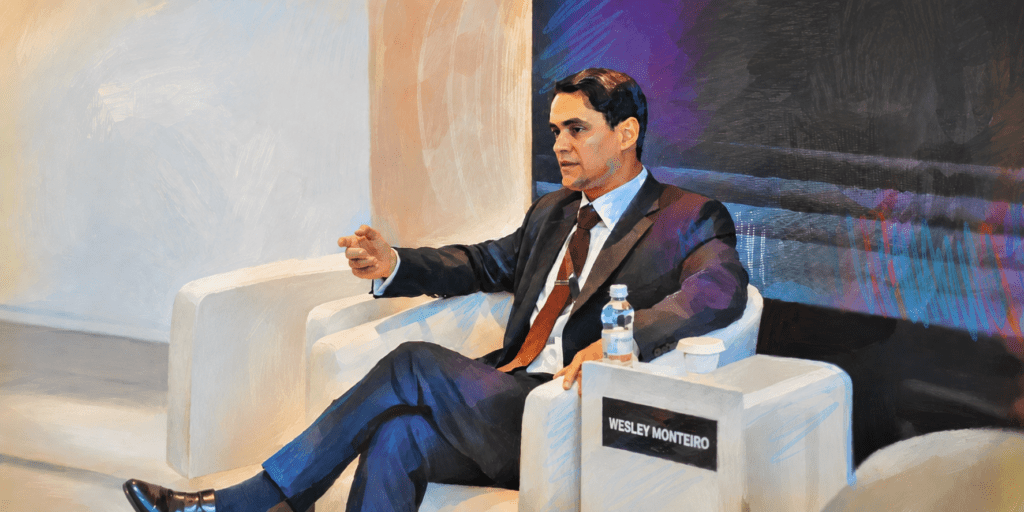
Foreign Minister Yermek Kosherbayev will travel to Washington, DC, to attend the Critical Minerals Ministerial on 3–4 February. A meeting with the Department of State and other rare earth element (REE) supplier countries will take place on 3 February. This will be Kosherbayev’s first official visit to the United States as foreign minister. A career diplomat, he assumed office on 26 September 2025. Prior to his appointment as foreign minister, he served as Kazakhstan’s ambassador to the Russian Federation, governor of the East Kazakhstan Region, and, earlier in 2025, as deputy prime minister, combining senior diplomatic experience with executive and regional governance roles. His visit will include engagement with Ambassador Yerzhan Kazykhan, appointed as the President’s first-ever Special Envoy to the United States on 13 January 2026, reflecting the priority Kazakhstan places on engagement with Washington. U.S.–Kazakhstan Strategic Convergence on Critical Minerals The visit follows a period of sustained diplomatic engagement beginning in November, marked by intensified trade and investment discussions. Since then, Presidents Kassym-Jomart Tokayev and Donald Trump have met twice in person and held one phone call, during which an invitation was extended for the G20 meeting scheduled for 14–15 December 2026. During this period, Kazakhstan also acceded to the Abraham Accords, a signature foreign policy initiative of the Trump administration. This diplomatic momentum has converged with U.S. strategic priorities on critical minerals. Rare earth elements (REEs) are a core component of the U.S. critical minerals strategy. While the United States maintains domestic REE production, it continues to pursue supply-chain diversification to enhance resilience. In this context, Kazakhstan’s identified REE deposits and resource potential—including elements not currently produced at scale in the United States—position it as a relevant partner in broader diversification efforts. This alignment has been formalized through a memorandum of understanding on cooperation in critical minerals, signed by President Tokayev. The agreement is intended to strengthen supply chains and deepen economic ties related to strategic raw materials and has been complemented by engagement from U.S. and Kazakh stakeholders, including Amont, interest from U.S. investors such as Cove Capital, and potential financing support from the Export-Import Bank of the United States, which has issued a letter of interest for up to $900 million. These signals reflect growing momentum at an early stage. Letters of interest and initial investor engagement lay the groundwork for defining commercial structures, offtake agreements, and development timelines, with progress ultimately driven by effective project sequencing and alignment between public support and private-sector risk appetite. Kazakhstan’s growing cooperation with the United States on critical minerals takes place within a well-established multi-vector foreign policy framework. Astana’s approach prioritizes stability and pragmatic engagement across a broad set of economic partners. Within this context, additional compliance and due-diligence requirements to support resilient supply chains are likely to remain part of project development, representing a manageable—but non-trivial—consideration for stakeholders. Kazakhstan’s Full-Value-Chain Advantage in Rare Earths Unlike many prospective rare earth element suppliers to the United States, Kazakhstan is not a greenfield destination limited to upstream extraction. The country...

Jackson-Vanik Repeal Gains Momentum as U.S. Courts Central Asia

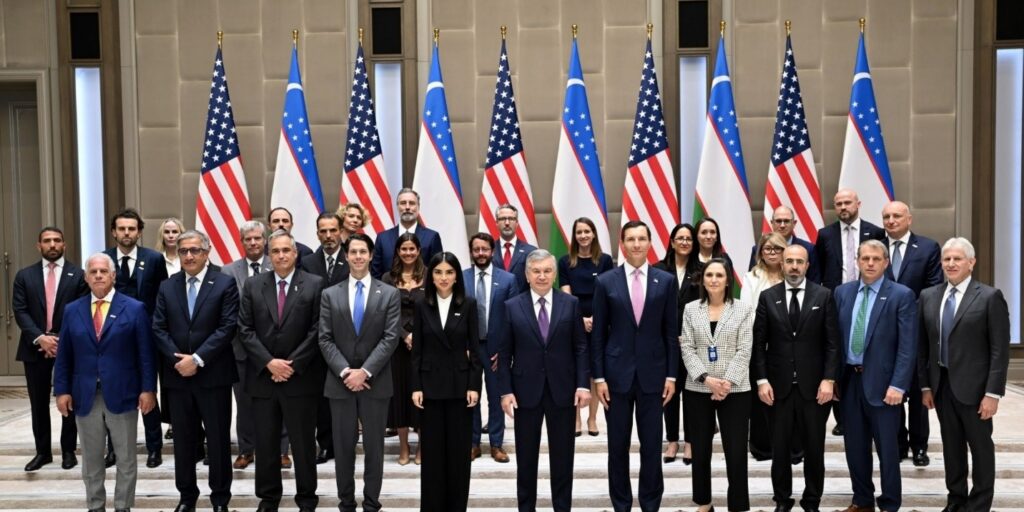
For many years, U.S. relations with Central Asia were primarily political in nature, while economic ties developed slowly. However, in the past year, engagement has intensified significantly, with recent agreements suggesting the U.S. is poised to strengthen its economic presence in the region. A recent statement by U.S. Secretary of State Marco Rubio reinforces this outlook. Calls to repeal the outdated Jackson-Vanik trade restrictions have been framed by U.S. officials as a way to facilitate trade with Central Asia and strengthen U.S. energy security. The Jackson-Vanik Amendment The Jackson-Vanik Amendment, enacted in 1974, restricts trade with countries that limit their citizens’ right to emigrate. At the time of its passage, Central Asia was still part of the Soviet Union.  The amendment prohibits granting most-favored-nation (MFN) status, government loans, and credit guarantees to countries that violate their citizens’ right to emigrate, and allows for discriminatory tariffs and fees on imports from non-market economies. The amendment was repealed for Ukraine in 2006, and for Russia and Moldova in 2012. However, it remains in effect for several countries, including Azerbaijan, Kazakhstan, Tajikistan, Turkmenistan, and Uzbekistan, which continue to receive only temporary normal trade relations. In May 2023, a bill proposing the establishment of permanent trade relations with Kazakhstan, which included repealing the Jackson-Vanik Amendment, was introduced in the U.S. Congress. A follow-up bill with similar provisions was submitted in February 2025. Then-nominee and now Secretary of State Marco Rubio previously noted that some policymakers viewed the amendment as a tool to extract concessions on human rights or to push Central Asian states toward the U.S. and away from Russia. However, he characterized such thinking as outdated, stating that, “In some cases, it is an absurd relic of the past.”  Rubio has consistently supported expanding U.S. ties with Central Asia. Expanding Cooperation In 2025, relations between the U.S. and Central Asia deepened significantly, particularly with Kazakhstan and Uzbekistan, which are seen by analysts as the primary beneficiaries of this cooperation. In late October 2025, U.S. Deputy Secretary of State Christopher Landau and U.S. Special Representative for South and Central Asia Sergio Gor visited Kazakhstan and Uzbekistan. One of the year’s major events was the Central Asia-U.S. (C5+1) summit held in Washington on November 6. Leaders of the five Central Asian states met with President Donald Trump and members of the U.S. business community. Uzbekistani President Shavkat Mirziyoyev also met with U.S. Senator Steve Daines, co-chair of the Senate Central Asia Caucus, with both sides focusing heavily on economic cooperation. At the summit, Uzbekistan finalized major commercial agreements with U.S. companies, including aircraft orders by Uzbekistan Airways and deals spanning aviation, energy, and industrial cooperation. Kazakhstan signed agreements worth $17 billion with U.S. companies in sectors including aviation, mineral resources, and digital technologies. This included a deal granting American company Cove Kaz Capital Group a 70% stake in a joint venture to develop one of Kazakhstan’s largest tungsten deposits, an agreement valued at $1.1 billion.  Further agreements were signed on critical minerals exploration. Kazakhstan and the...

Astana and Tashkent Engage Washington’s Central Asia Vector

On January 22 at the World Economic Forum in Davos, Kazakhstan’s President Kassym-Jomart Tokayev and Uzbekistan’s President Shavkat Mirziyoyev signed President Donald Trump’s new Board of Peace charter. The document matters less than what their participation signifies: recognized access to the White House and a willingness to be publicly associated with a U.S.-led initiative. This is all the more significant as Washington’s relations with several long-standing partners have recently become more fraught and publicly contested. The Central Asian response is part of that story. Their participation indicates that the Trump White House regards them as interlocutors of consequence, and that both Central Asian capitals are embracing that status. On December 1, Washington assumed the G20 presidency for 2026 and set three priorities: limiting regulatory burdens, strengthening affordable and secure energy supply chains, and advancing technology and innovation. It has also scheduled the leaders’ summit for December 14–15, 2026, in the Miami area. On December 23, Trump said that he was inviting Tokayev and Mirziyoyev to attend as guests. That invitation places Kazakhstan and Uzbekistan inside a host-defined agenda whose working tracks overlap with their strongest external bargaining assets, including energy, critical minerals potential, and transport connectivity. Trump publicly tied the invitations to discussions of peace, trade, and cooperation, which is in line with his subsequent Board of Peace invitations. Diplomatic Logic and Multi-Vectorism It is worthwhile situating these developments in the context of Central Asian cooperation, which Kazakhstan and Uzbekistan have driven as the regional core. At the August 2024 Consultative Meeting in Astana, all five leaders signed a Roadmap for the development of regional cooperation for 2025–2027, and adopted a “Central Asia 2040” conceptual framework. Tokayev and Mirziyoyev referenced their 2022 allied-relations agreement and announced plans to adopt a strategic partnership program through 2034, including large-scale joint economic and energy projects. Moscow’s preoccupation with the war in Ukraine has widened the room for maneuver by other external actors, and Central Asian capitals have pursued these opportunities selectively. For example, the EU’s then foreign-policy chief Josep Borrell visited Kazakhstan and Kyrgyzstan in early August 2024, Japan has pursued its “Central Asia plus Japan” line as a counterweight to China’s influence, and Azerbaijan has been building an energy bridge between Central Asia and Europe via the South Caucasus with Kazakhstan and Uzbekistan. Washington’s main channel into this complex is the C5+1, and the current U.S. emphasis is to create routines that survive individual summits. The U.S. Special Envoy for South and Central Asian Affairs Sergio Gor and Deputy Secretary of State Christopher Landau travelled to Kazakhstan and Uzbekistan in October 2025 ahead of the Washington summit that Trump hosted the following month for the five leaders. Such formats can concentrate attention on the implementation of standardized procurement procedures and regularized dispute resolution that new supply-chain corridors require for interoperable paperwork and predictable customs treatment. Kyrgyzstan is scheduled to host the second B5+1 forum (the business counterpart to C5+1) on February 4–5, 2026. This has already been prepared by a joint briefing...

New U.S. Ambassador to Kazakhstan to Build “Momentum” on Trade, Diplomacy

Julie Stufft, the new U.S. ambassador to Kazakhstan, is a career diplomat who has said her goal is to ensure that U.S. companies in the Central Asian country have not just an “even playing field” but are also “the partners of choice” in a region where Russia and China are the dominant trading partners. Stufft, who made those remarks during her confirmation hearing in the U.S. Congress in July, presented her credentials to President Kassym-Jomart Tokayev of Kazakhstan in Astana on Friday. She has previously worked on COVID-19 travel policies and U.S. visa processing worldwide and was most recently deputy assistant to the president and executive secretary of the National Security Council. Stufft has served as deputy chief of mission in the U.S. Embassies in Moldova and Djibouti, and was also a diplomat in Russia, Ethiopia, and Poland. One of Stufft’s daughters, Nora, is a student at the U.S. Air Force Academy in Colorado. After the credentials ceremony in Astana, Stufft said Tokayev and U.S. President Donald Trump have a “very close relationship” and that there was impetus for further collaboration between Kazakhstan and the United States. “We have so much momentum from President Tokayev´s recent visit to Washington that we have to build on this,” Stufft said in reference to a November summit hosted by Trump and attended by the leaders of Kazakhstan, Kyrgyzstan, Tajikistan, Turkmenistan, and Uzbekistan. The meeting focused on securing big trade deals as well as U.S access to minerals in Central Asia that are critical to energy and other industries. Another U.S. goal is to counter the longstanding influence of Russia and China in Central Asian countries, whose leaders seek to balance their relationships with the big powers. Last month, in another round of diplomatic outreach, Trump invited Tokayev and President Shavkat Mirziyoyev of Uzbekistan to attend the G20 summit in Miami later this year. In addition to holding large reserves of critical minerals, Kazakhstan is a top uranium producer and a major oil exporter. China and Russia are its biggest overall trading partners. While U.S. trade with Kazakhstan is relatively small in comparison, the relationship is growing. “My goal as ambassador, if confirmed, would be to make sure that U.S. companies have an even playing field so that they can do investment in Kazakhstan, and also that U.S. companies are the partners of choice in Kazakhstan, instead of Chinese or other companies,” Stufft said in her confirmation hearing last year. The previous U.S. ambassador to Kazakhstan, Daniel Rosenblum, resigned from the post in January 2025.

2025: The Year Central Asia Stepped Onto the Global Stage

For much of the post-Soviet era, Central Asia occupied a peripheral place in global affairs. It mattered to its immediate neighbors, but rarely shaped wider debates. In 2025, that changed in visible ways. The region became harder to ignore, largely not because of ideology or alignments, but because of assets that the world increasingly needs: energy, minerals, transit routes, and political access across Eurasia. One of the clearest signs came in April, when the European Union and the leaders of Kazakhstan, Kyrgyzstan, Tajikistan, Turkmenistan, and Uzbekistan met in Samarkand for their first summit at the head-of-state level. The meeting concluded with a joint declaration upgrading relations to a strategic partnership, with a focus on transport connectivity, energy security, and critical raw materials. The document marked a shift in how Brussels views Central Asia, moving beyond development assistance toward geopolitical cooperation, as outlined in the official EU–Central Asia summit joint declaration. European interest is rooted in necessity. Russia’s war in Ukraine has forced EU governments to rethink energy imports, supply chains, and overland trade routes. Central Asia sits astride the most viable alternatives that bypass Russian territory. It also holds resources essential to Europe’s green transition, including uranium and a range of industrial metals. The region’s leaders spent much of the year framing their diplomacy around these tangible advantages, rather than abstract political alignments. The United States followed a similar track. Through the C5+1 format, Washington deepened engagement with all five Central Asian states, with particular emphasis on economic cooperation and supply-chain resilience. A key element has been the Critical Minerals Dialogue, launched to connect Central Asian producers with Western markets. This initiative formed part of a broader U.S. effort to diversify access to strategic materials and reduce dependence on Russia and China. Russia remained a central but changing presence in Central Asia throughout 2025. Economic ties, labor migration, and shared infrastructure ensured that Moscow continued to matter across the region. At the same time, however, Russia’s war in Ukraine constrained its ability to act as the dominant external power it once was. Central Asian governments maintained pragmatic relations with Moscow, but they increasingly treated Russia as one partner among several rather than the default reference point. Trade continued, security cooperation persisted, and political dialogue remained active, yet the balance shifted toward hedging rather than dependence. Uranium sits at the center of this shift, with the United States having banned imports of certain Russian uranium products under federal law, with waivers set to expire no earlier than January 1, 2028. As Washington restructures its nuclear fuel supply chain, Central Asia’s role has grown sharply. According to the U.S. Energy Information Administration’s 2024 Uranium Marketing Annual Report, Kazakhstan supplied 24% of uranium delivered to U.S. reactor operators, while Uzbekistan accounted for about 9%. Canada and Australia remain major suppliers, but the Central Asian share is now strategic rather than marginal. That economic weight translated into political visibility. In December, U.S. President Donald Trump said he would invite Kazakhstan and Uzbekistan to attend...