• KGS/USD = 0.01144 0%
  • KZT/USD = 0.00216 0%
  • TJS/USD = 0.10659 0%
  • UZS/USD = 0.00008 0%
  • TMT/USD = 0.28530 0%
  • KGS/USD = 0.01144 0%
  • KZT/USD = 0.00216 0%
  • TJS/USD = 0.10659 0%
  • UZS/USD = 0.00008 0%
  • TMT/USD = 0.28530 0%
  • KGS/USD = 0.01144 0%
  • KZT/USD = 0.00216 0%
  • TJS/USD = 0.10659 0%
  • UZS/USD = 0.00008 0%
  • TMT/USD = 0.28530 0%
  • KGS/USD = 0.01144 0%
  • KZT/USD = 0.00216 0%
  • TJS/USD = 0.10659 0%
  • UZS/USD = 0.00008 0%
  • TMT/USD = 0.28530 0%
  • KGS/USD = 0.01144 0%
  • KZT/USD = 0.00216 0%
  • TJS/USD = 0.10659 0%
  • UZS/USD = 0.00008 0%
  • TMT/USD = 0.28530 0%
  • KGS/USD = 0.01144 0%
  • KZT/USD = 0.00216 0%
  • TJS/USD = 0.10659 0%
  • UZS/USD = 0.00008 0%
  • TMT/USD = 0.28530 0%
  • KGS/USD = 0.01144 0%
  • KZT/USD = 0.00216 0%
  • TJS/USD = 0.10659 0%
  • UZS/USD = 0.00008 0%
  • TMT/USD = 0.28530 0%
  • KGS/USD = 0.01144 0%
  • KZT/USD = 0.00216 0%
  • TJS/USD = 0.10659 0%
  • UZS/USD = 0.00008 0%
  • TMT/USD = 0.28530 0%

Viewing results 1 - 6 of 135

Adoption of Latin-Based Common Turkic Alphabet

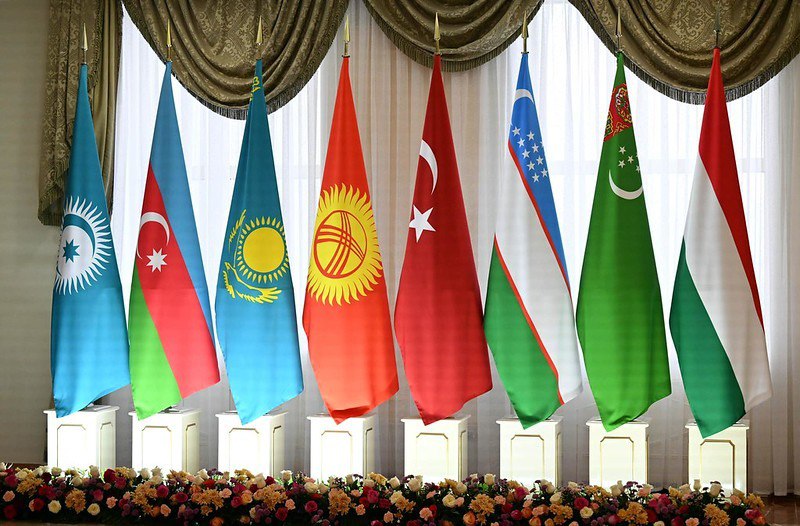
The Turkic Academy has announced that the Turkic World Common Alphabet Commission is to adopt a Latin-based Common Turkic Alphabet consisting of 34 letters. At a meeting in Baku (Azerbaijan) on September 9-11, the Commission finalized its two-year development of a proposed standard alphabet for Turkic languages in which each letter in represents different phonetic sounds in Turkic languages. Emphasizing its historic significance, the Turkic Academy stated that the development of the Common Turkic Alphabet, first proposed by scientists in 1991, promotes mutual understanding and cooperation among the Turkic peoples while preserving their linguistic heritage. Based in Astana, Kazakhstan, the Turkic Academy is an international organization established under the Organization of Turkic States. Founding member states include Azerbaijan, Kazakhstan, Kyrgyzstan, and Türkiye, with Hungary and Uzbekistan joining as observers in 2018 and 2022, respectively.  The Organization of Turkic States currently comprising Azerbaijan, Kazakhstan, Kyrgyzstan, Turkey, Uzbekistan and Turkmenistan, with Hungary and the Turkish Republic of Northern Cyprus as observers, was founded in 2009 to foster comprehensive cooperation among Turkic-speaking nations. The alphabet issue in post-Soviet Turkic-speaking countries dates back to 1929, when the Soviet government replaced traditional Arabic-based alphabets used by Muslim minorities in the Soviet Union with Latin-based national alphabets. In 1940, the Latin alphabet was replaced with Cyrillic, used for the Russian language. After the breakup of the Soviet Union in 1991, former Soviet republics of Azerbaijan and Turkmenistan switched to Latin-based alphabets, while Uzbekistan has used both Latin and Cyrillic alphabets since 1992. In 2017, Kazakhstan's then-President Nursultan Nazarbayev ordered the government to develop a Latin-based alphabet for the Kazakh language. The switch, initially planned for 2025, was then postponed till as late as 2031. Citing the complexity of a transition from the Cyrillic to a Latin-based alphabet, in June 2022, Nazarbayev's successor, President Kassym-Jomart Tokayev stated that linguistic reform should not be rushed. Kyrgyzstan is the only post-Soviet Turkic-speaking nation committed to the use of the Cyrillic alphabet. Talk about switching from Cyrillic to Latin in post-Soviet Central Asia has always irritated Moscow, which considered such moves by the former Soviet republics as a means of distancing themselves from Russian influence.
Kazakhstan Launches National Board Game Into Space

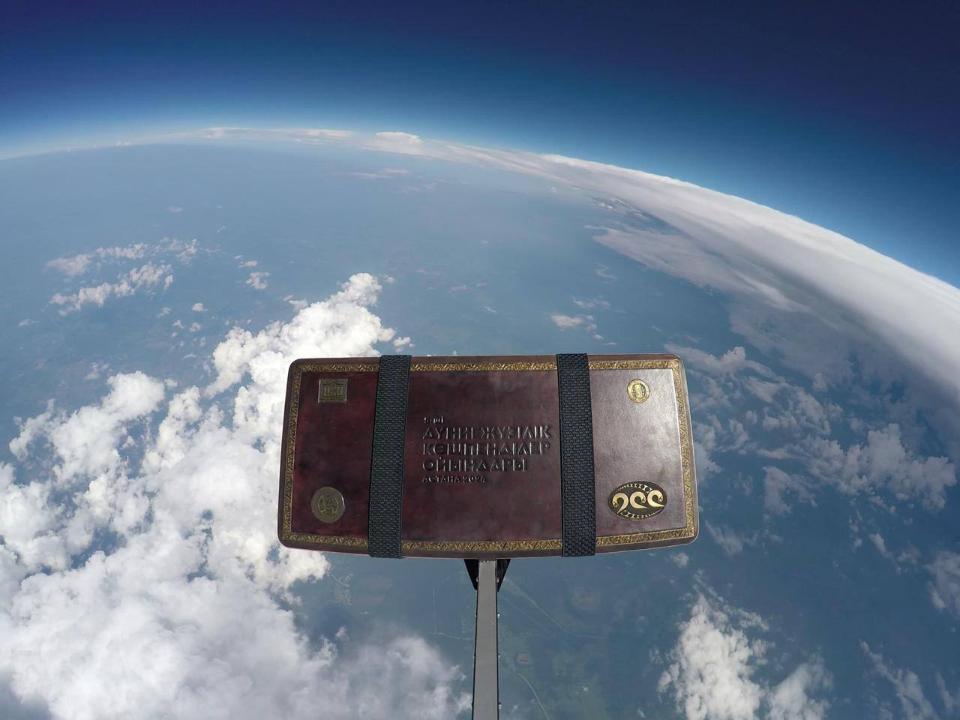
The Kazakh pastime "Togyzkumalak" has become the first board game to travel into space. Its launch was organized to promote the 2024 edition of the World Nomad Games, which are currently being held in Astana. Togyzkumalak is one of the oldest Kazakh board games, with a history dating back about 4,000 years. The game is played by two players, who start with 81 stones. Their goal is to "capture" their opponent's stones, and place them into a "cauldron". On September 9 Togyzkumalak was played for the first time at the Nomad Games. The Togyzkumalak tournament has 114 competitors from 41 countries, including Colombia, Bangladesh, the UK, France, Germany, the USA, China, and others. In 2020 Togyzkumalak was included in UNESCO's list of intangible cultural heritage, emphasizing its cultural significance for Kazakhstan and other Turkic peoples. After a successful launch, the board was eventually returned to Earth.

Turkmenistan Tries to Eradicate Soviet Imagery

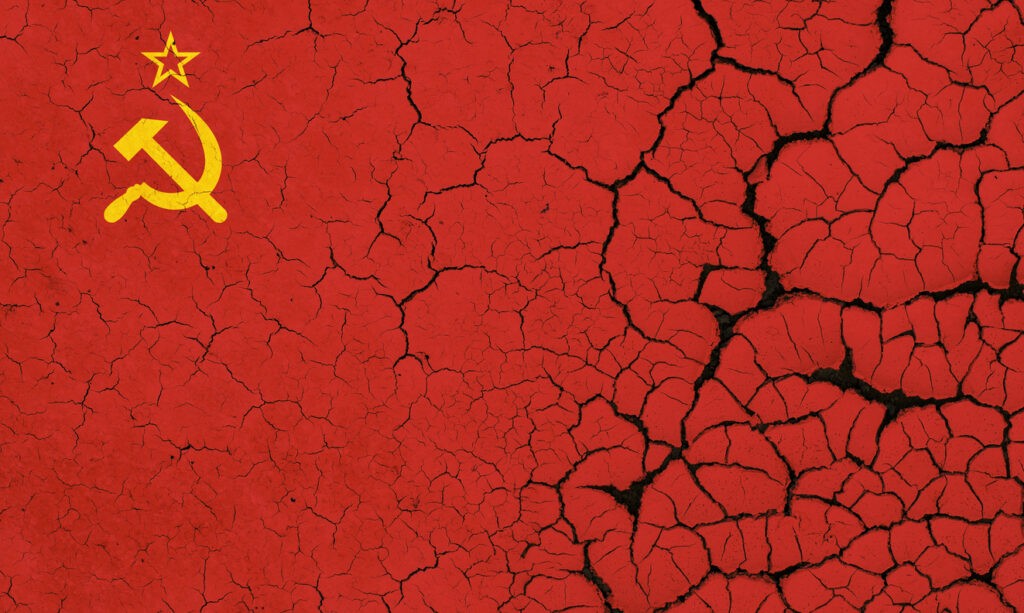
A campaign to fight symbols of the former Soviet Union, such as the hammer and sickle and the Soviet flag, has been launched in Turkmenistan's Balkan region. Authorities have involved national security and internal affairs officers, actively cracking down on clothing and accessories with Soviet symbols. According to residents, law enforcement agencies interrogate entrepreneurs selling such goods and even those wearing them. These operations take place in the markets and stores of Balkanabad and Turkmenbashi. “At Kenar market, I saw police seizing t-shirts, caps, notebooks, and other items with communist symbols while questioning sellers about the origin of these goods,” a resident of the region said. The active fight against Soviet symbols reportedly began in September, coinciding with preparations to celebrate the 33rd anniversary of Turkmenistan's independence. The country gained independence in 1991 after the collapse of the Soviet Union. Although Turkmenistan did not openly discuss the Soviet legacy for a long time, the process of decommunization did take place — many towns and villages named after Soviet figures were renamed. Turkmen authorities continue to create a national ideology, emphasizing the country's independence and identity within a new historical identity. The Balkan region added: “In western Turkmenistan, at various events and gatherings, people in their 50s have increasingly started to start conversations and praise the Soviet era. They say that during the Soviet times, one ruble could buy many things: a box of matches for 1 kopeck, 10 rubles could buy a 50-kilogram sack of flour, and now we can't buy meat or candy for months. There are more and more such people. They say that soon the USSR will be restored, and the communists will rule the world again.” The Times of Central Asia has written about a 74-year-old resident of Uzbekistan, Ergashkul Hasanov, who was convicted for spreading "propaganda" for the restoration of the USSR.

Uzbek Politician Calls for Ban on Soviet Symbols

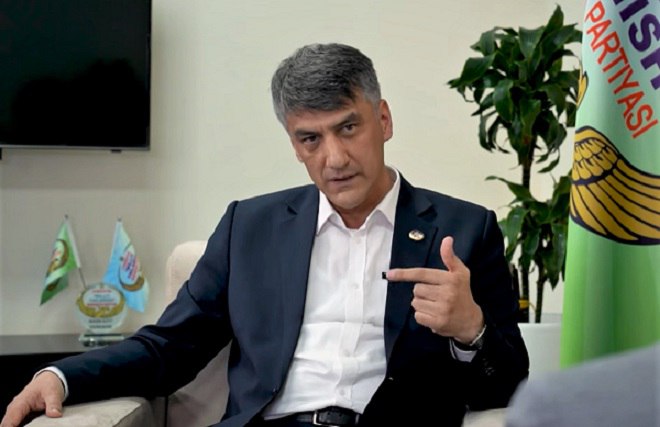
Alisher Qodirov, the deputy speaker of the legislative chamber of Uzbekistan's Parliament (Oliy Majlis) and leader of the Milliy Tiklanish (National Revival) Party, has proposed an initiative to ban the promotion of Soviet ideology and symbols in the country. The idea emerged after the high-profile case of a Samarkand pensioner who expressed a desire to restore the Soviet Union, for which he was sentenced to three years of restricted freedom under an article on encroachment on Uzbekistan's constitutional order. Qodirov supported the court's decision, noting that he considered Soviet ideology harmful and hostile to national values. In his statement, he emphasized that the Soviet regime had harmed not only Uzbekistan but the whole world, undermining the cultural and spiritual foundations of the people. He recalled the discrimination suffered by the Uzbek people during the Soviet period and emphasized the need to analyze this period. He stands firmly against its justification and promotion. “The Uzbek people were discriminated against and humiliated by the Soviet authorities and are still healing the wounds of the past. The Soviet ideology, which rejected nations, values, and faith, harmed not only our people but also the entire humanity, and these phenomena continue to be a misfortune,” Qodirov said. The politician also called the promotion of Soviet ideas a crime against the constitutional order and a betrayal of the people and ancestors who were victims of the regime. Qodirov has repeatedly spoken out against symbols relating to the USSR. In May 2021, he called the raising of the red flag at a concert in Tashkent a provocation and an insult to the people, explaining that the symbol of the Soviet occupier state was soaked in the blood of Uzbek intellectuals who had been repressed by the regime.

Mehrdad Mozart : A Model’s View of Kazakhstan’s Fashion Industry

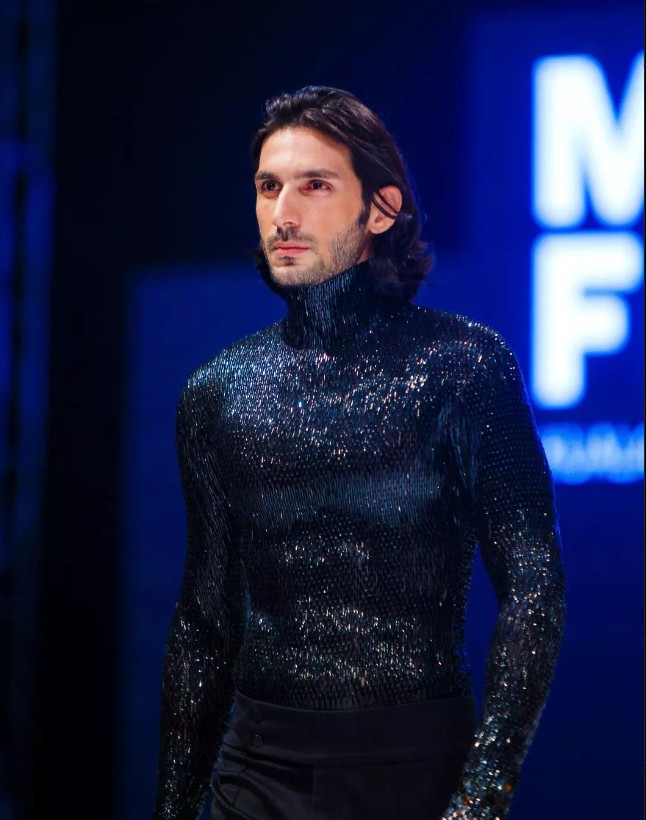
Kazakhstan's fashion industry is rapidly growing, and increasingly, attracting global attention. Within its dynamic environment, new faces, talented designers, and unique projects are emerging which promise to elevate its international status. One such talent is Mehrdad Mozart, a professional model with a wealth of international experience, now living and working in Kazakhstan. Originally from Iran, Mehrdad has enjoyed a chequered career from playing in a rock band to hosting radio & TV shows, and from acting in commercials and movies to judging modeling and talent shows. A model since 2009, he has worked with several global brands including Dolce & Gabbana, Versace and Gucci, and has mentored young people entering the profession. In an exclusive interview with TCA, Mehrdad spoke about his modeling career, his perception of the fashion industry in Kazakhstan, and his personal aspirations. [caption id="attachment_22748" align="aligncenter" width="785"] photo: mehrdadmozart.com -Mehrdad Mozart[/caption] TCA: What inspired you to enter the fashion industry? I think the allure of fashion itself inspired me. I used to get lost in magazines, dreaming of becoming a model and representing high-end brands. Fashion TV became a regular escape, where I absorbed every detail and admired the work of iconic male models like David Gandy, Sean O’Pry, and Tyson Beckford.The influence of legendary brands like Tom Ford, Dior, Hermès, Burberry, and D&G played a huge role in shaping my aspirations. They were the very definition of style and sophistication, fueling my desire to be a part of that world. TCA: How did you get into modeling?  My modeling career began when I moved to Malaysia. I didn’t have a portfolio or any connections, so I joined a Facebook group for talents, most of whom were working as extras in films and commercials. That gave me my first break and after a slow start, my modest portfolio eventually caught the attention of talent directors, photographers, stylists, and then, modeling agencies. TCA: What challenges have you had to overcome to get to where you are now? In the beginning, breaking into the industry was challenging. I faced constant rejections from modeling agencies, had no connections, and had to deal with criticism. Staying in shape required intense discipline, and coping with the competitive, high-pressure environment was tough. Unfortunately, diversity remains a significant issue in the fashion world. Middle Eastern models, in particular, encounter additional barriers, making it even more difficult to succeed. Given these challenges, perseverance and determination proved essential to navigating and eventually thriving in this demanding industry.   [caption id="attachment_22749" align="aligncenter" width="803"] photo:mehrdadmozart.com -the catwalk[/caption]   TCA: You now live in Kazakhstan: What are your initial impressions of its fashion industry? I had heard of renowned Kazakh designers such as Aigerim Akenova and Aida Kaumenova. However, when I first arrived in the capital city, Astana, the fashion scene  still felt fairly underdeveloped, with little activity apart from the odd fashion show or commercial shoot. Almaty however, is a different story. The fashion industry here is vibrant and rapidly expanding. Since moving to the city, I've become...

Kyrgyzstan Proposes Ban on Face Coverings

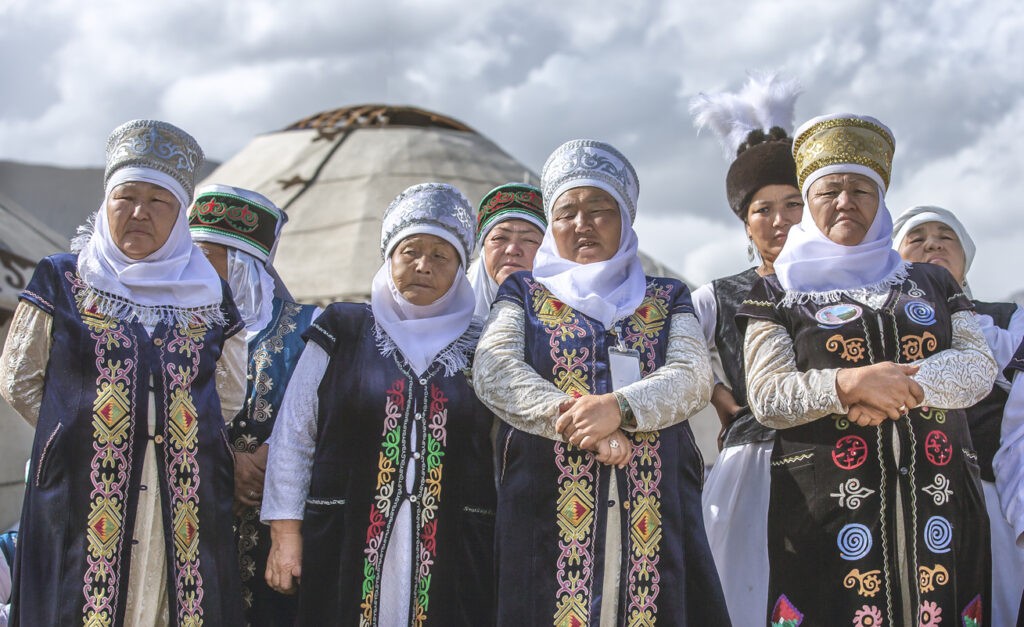
The State Commission on Religious Affairs of Kyrgyzstan has proposed several important initiatives to regulate religious activity in the country and in particular, a ban on face coverings that hinder citizen identification in state institutions and public places. The ban will not apply to protective masks, and a draft decree, carrying a proposed fine equivalent to 235 USD for violation of the law, has now been submitted for public discussion. In addition, the State Committee of Religion also proposes banning the distribution of religious literature and other materials in public places, residential premises, state and municipal institutions, and educational organizations. Recommendations have also been mooted to prohibit religious figures from foreign organizations from conducting ceremonies and events in nursing homes, correctional institutions, and military units without prior approval of the authorized body. A further proposal is the implementation of a ban on religious organizations' interference in the activities of public authorities and local self-government bodies, and on financing political parties by subjects of spiritual activity. Administrative liability is envisaged for violation of these prohibitions, the aim of which is to strengthen state control, and prevent abuse, of religious activity. Laws prohibiting face coverings are already in place in several countries. France and Belgium for example, have strict bans on burkas and niqabs in public places, and in Sri Lanka, similar measures have been introduced to combat religious extremism. In the Republic of Congo and Chad, such laws were imposed to improve security despite the low Muslim population. Post-Soviet countries have adopted similar laws but on a limited scale. Azerbaijan restricts religious dress in public institutions, whilst motivated by concern for national identity and the secular nature of the state, Tajikistan has imposed a law banning the hijab in public institutions and schools since 2017.