• KGS/USD = 0.01144 0%
  • KZT/USD = 0.00211 0%
  • TJS/USD = 0.10454 -0.1%
  • UZS/USD = 0.00008 0%
  • TMT/USD = 0.28571 0.28%
  • KGS/USD = 0.01144 0%
  • KZT/USD = 0.00211 0%
  • TJS/USD = 0.10454 -0.1%
  • UZS/USD = 0.00008 0%
  • TMT/USD = 0.28571 0.28%
  • KGS/USD = 0.01144 0%
  • KZT/USD = 0.00211 0%
  • TJS/USD = 0.10454 -0.1%
  • UZS/USD = 0.00008 0%
  • TMT/USD = 0.28571 0.28%
  • KGS/USD = 0.01144 0%
  • KZT/USD = 0.00211 0%
  • TJS/USD = 0.10454 -0.1%
  • UZS/USD = 0.00008 0%
  • TMT/USD = 0.28571 0.28%
  • KGS/USD = 0.01144 0%
  • KZT/USD = 0.00211 0%
  • TJS/USD = 0.10454 -0.1%
  • UZS/USD = 0.00008 0%
  • TMT/USD = 0.28571 0.28%
  • KGS/USD = 0.01144 0%
  • KZT/USD = 0.00211 0%
  • TJS/USD = 0.10454 -0.1%
  • UZS/USD = 0.00008 0%
  • TMT/USD = 0.28571 0.28%
  • KGS/USD = 0.01144 0%
  • KZT/USD = 0.00211 0%
  • TJS/USD = 0.10454 -0.1%
  • UZS/USD = 0.00008 0%
  • TMT/USD = 0.28571 0.28%
  • KGS/USD = 0.01144 0%
  • KZT/USD = 0.00211 0%
  • TJS/USD = 0.10454 -0.1%
  • UZS/USD = 0.00008 0%
  • TMT/USD = 0.28571 0.28%

Viewing results 1 - 6 of 123

From the Central Asian Steppe to Manhattan: A Turkmen Bard in New York

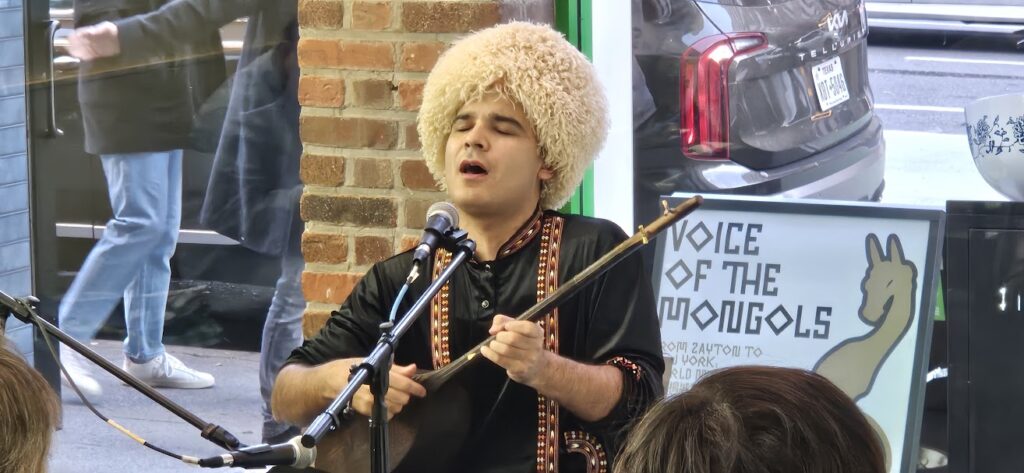
A halal Chinese Muslim restaurant in New York City is an unlikely setting for a concert by a highly acclaimed bard of the Turkmen tradition. Yet on a Saturday afternoon in Manhattan’s Kips Bay neighborhood, before an audience of attentive listeners and curious onlookers peering through the window, the multi-award-winning Mohammad Geldi Geldi Nejad filled Beef Up Noodle with sustained melodic phrases and guttural embellishments. At times, his dexterous strumming of the dutar, a two-stringed long-necked lute, deliberately mimicked the rhythm of galloping horse hooves central to the Turkmen bardic style. Mohammad was raised in the Turkmen community of Gonbad-e Kavus in northeastern Iran. At age ten, he became only the second musician ever to receive the honorary title Oghlan Bakhshi, meaning Child Bard. His musical education in Turkmen bardic traditions began in early childhood, before more formal training in Turkmenistan’s capital, Ashgabat. Turkmen culture, shaped by a nomadic heritage, extends across Turkmenistan, Iran, Afghanistan, Uzbekistan, and Kazakhstan, with smaller populations in Turkey, Iraq, and the North Caucasus. It draws on nomadic traditions where performance serves as a primary vehicle of cultural expression. Central Asian music and culture, carried by diasporic communities from these regions, has found a growing audience in the United States. Turkmen traditions, however, given the minuscule size of the Turkmen population in the U.S., remain largely unfamiliar to most audiences. [video width="848" height="478" mp4="https://timesca.com/wp-content/uploads/2025/12/WhatsApp-Video-2025-12-17-at-18.16.28.mp4"][/video] Even so, Mohammad has brought his music to audiences beyond Turkmenistan and Iran, performing in parts of Europe and the U.S., including recent concerts at the Lowell Folk Festival in Massachusetts and at Roulette in Brooklyn. At the latter, he offered Western listeners rare access to a musical lineage sustained within a family across generations. Performing under his honorific alias Oghlan Bakhshi, he appeared alongside his father, the gyjak, or spike fiddle, master Abdolghaffar Geldinejad, and his wife and regular musical collaborator, Zyyada Jumayeva, a dutar player who represents the female bardic tradition of Turkmenistan. His album Journey Across the Steppes is the first international release of Turkmen folk music in 30 years. His work has also been documented in a book series, The Music of Central Asia. At Beef Up Noodle, Mohammad’s performance, titled Songs of the Bakhshi: Turkmen Bardic Heritage, formed part of a broader curatorial landscape shaped by ethnomusicologist Mu Qian, whose work spans scholarship, publishing, and community-based music making. From Zayton to New York is the concert series he curates, exploring how music travels through histories of migration and exchange. Mohammad’s appearance opened a Central Asian trilogy within the series, to be followed by programs devoted to Kyrgyz and Kazakh musical traditions in early 2026. This trilogy represents one strand of Mu Qian’s wider mission, developed through the See & Sea Cultural Foundation, to support minority musicians and bring underrepresented musical cultures from across Asia into conversation with audiences beyond their places of origin. [caption id="attachment_41154" align="aligncenter" width="1283"] Mu Qian with Mohammad Geldi Geldi Nejad; image: Paul Adams[/caption] British expat Margaret Murray, an audience member whose chance meeting...
Kobyz Musical Instrument and Karakalpak Yurt Added to UNESCO Heritage List

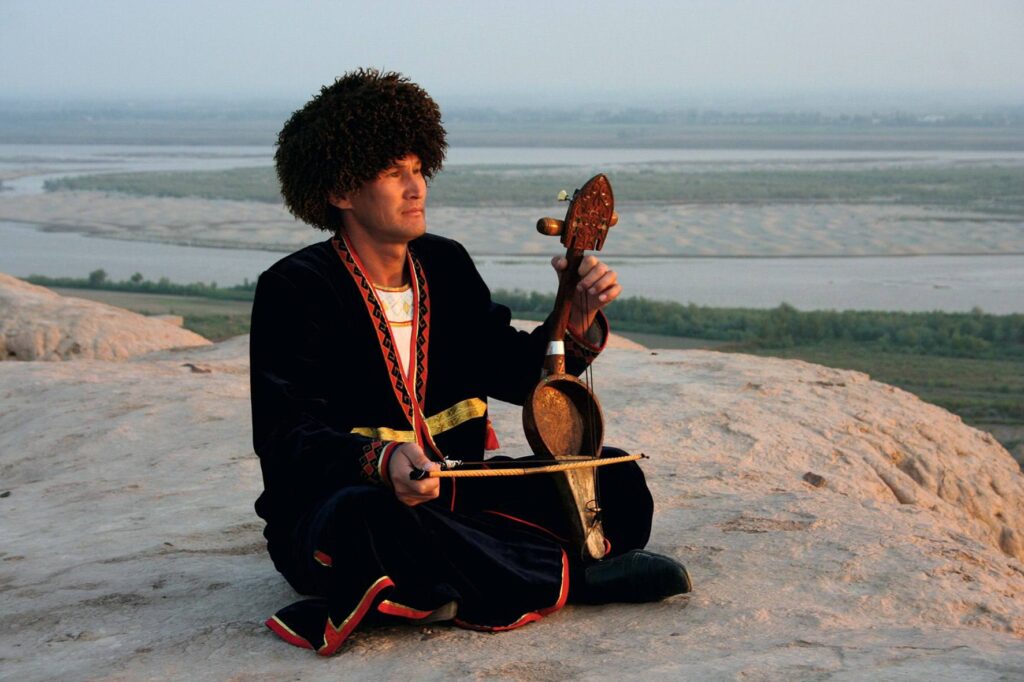
At the 20th session of the UNESCO Intergovernmental Committee for the Safeguarding of the Intangible Cultural Heritage, held in New Delhi from December 8-13, Uzbekistan’s nominations for the kobyz musical instrument and the Karakalpak yurt were officially approved for inclusion in the UNESCO Intangible Cultural Heritage List. As part of the application process, researchers documented the historical and cultural significance of the zhyrau (oral storytellers), whose performances are traditionally accompanied by the kobyz. A documentary film was also produced in Karakalpakstan, an autonomous republic within Uzbekistan, highlighting the craftsmanship involved in making the kobyz. The nomination emphasized the urgent need for preservation, citing a steady decline in the number of artisans who know the tradition. The kobyz is an ancient, bowed string instrument originating among Turkic peoples, with historical roots dating back to the 5th-8th centuries. Its haunting sound traditionally accompanies zhyrau performances and remains prevalent in both Karakalpakstan and Kazakhstan.

Medieval Wall Paintings Discovered at Ancient Kanka Site in Uzbekistan

Archaeologists in Uzbekistan have uncovered rare wall paintings dating back to the 10th-11th centuries at the ancient site of Kanka in the Tashkent region, according to a report by UzA. The excavation is being led by researchers from the Institute of History at the Academy of Sciences of Uzbekistan, with support from the Tashkent regional administration. Dilnoza Jamolova, the institute’s deputy director, stated that the mural fragments were discovered within the remains of a large caravanserai located in the shahristan (inner city) of ancient Kanka. The structure, situated approximately 60 meters south of the city’s southern gate, measures around 100 by 70 meters and is noted for its significant architectural features. Inside one of the caravanserai’s rooms, archaeologists found fragments of wall paintings that had fallen from the walls. The pieces, ranging from 15×20 to 30×35 centimeters, confirm that the building’s interior was once adorned with mural artwork. Experts say the discovery is notable evidence that wall painting, a tradition believed to have declined following the Arab conquest, experienced a revival in the Tashkent region during the 10th and 11th centuries. Similar wall paintings have been identified at other prominent Central Asian archaeological sites, including Samarkand and Ahsikent. The ongoing study, which involves restorers from the Samarkand Archaeological Institute under the Cultural Heritage Agency, also suggests the existence of a distinct mural art tradition in medieval Tashkent. In earlier excavations at Kanka in 2023, researchers discovered murals dating back to the 5th-7th centuries. The latest findings are expected to offer new insights into the cultural and artistic life of the region and to deepen scholarly understanding of Tashkent’s medieval heritage. Previously, The Times of Central Asia reported on another major archaeological discovery in southern Uzbekistan, where scientists found evidence that hunter-gatherer communities were harvesting wild barley as early as 9,200 years ago, challenging long-standing theories about the origins of agriculture in the ancient world.

UNESCO Conference in Samarkand Highlights Uzbekistan’s Heritage

At the opening ceremony of the 43rd session of the UNESCO General Conference in Samarkand, Uzbek President Shavkat Mirziyoyev highlighted Uzbekistan’s growing role in global cultural dialogue and its expanding cooperation with UNESCO. Held on October 30, the event marked the first time in four decades that the conference had convened outside UNESCO’s headquarters in Paris. The ceremony welcomed high-level participants, including UNESCO Director-General Audrey Azoulay, Serbian President Aleksandar Vučić, Slovak President Peter Pellegrini, and representatives from UNESCO member states. In his address, Mirziyoyev said that hosting such a prominent international forum reflects global recognition of Uzbekistan’s reform efforts and its active role in cultural and educational cooperation. He commended UNESCO’s decades-long contributions to education, science, culture, and media, noting Samarkand’s symbolic importance as one of the world’s oldest cities. “Samarkand has always been a crossroads of civilizations, science, and tolerance,” Mirziyoyev said. The president highlighted the 2023–2027 cooperation program between Uzbekistan and UNESCO, which focuses on cultural heritage preservation, educational reform, and digital innovation. He also noted that Khiva, Bukhara, Shahrisabz, and Samarkand are inscribed on UNESCO’s World Heritage List, and that the Zarafshan-Karakum Corridor was recently added as part of the Silk Roads network. Uzbekistan’s rich intangible heritage, including Shashmaqom music, the Lazgi dance, Navruz celebrations, and traditional crafts such as embroidery and ceramics, has also earned UNESCO recognition, strengthening the country’s identity as a cultural hub in Central Asia. During the session, Mirziyoyev proposed several initiatives for UNESCO’s consideration: Establishing a UNESCO Platform for Inclusive Education with AI-integrated learning tools; Organizing a Global Summit on Vocational Education to prepare youth for future professions; Declaring November 19 as the International Day of Documentary Heritage; Creating an International Digital Heritage Institute under UNESCO auspices; Launching a UNESCO Academy for Women Leaders to advance women’s participation in science, culture, and education; and Hosting a World Forum of Women Researchers and Artists in Samarkand. Addressing global challenges, the president called for stronger international cooperation on climate issues and proposed designating a “UNESCO Ecological Capital” each year to recognize cities promoting sustainable environmental practices. Mirziyoyev also spoke about the dangers of misinformation, calling for improved media literacy among young people and greater support for responsible journalism and intercultural dialogue. Concluding his speech, the president reaffirmed Uzbekistan’s readiness to serve as a bridge between East and West and to actively support UNESCO’s mission to promote peace, sustainable development, and mutual understanding around the world.

U.S. Envoys Experience Kazakhstan’s Living Nomadic Traditions

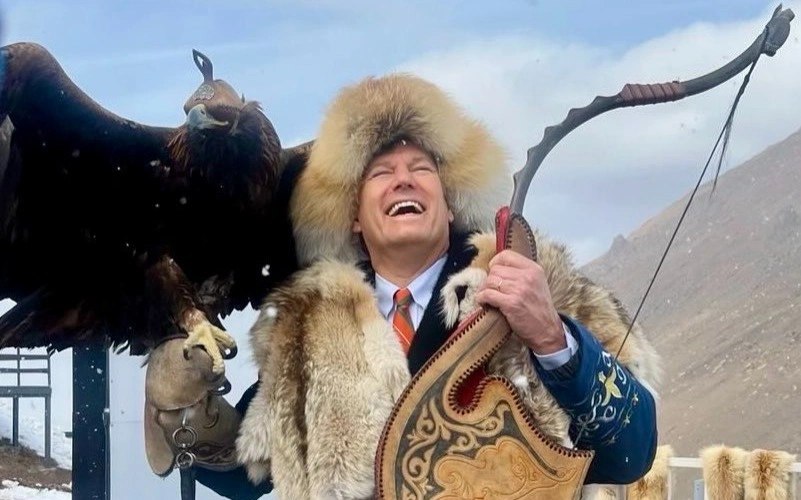
U.S. Special Representative for South and Central Asia Sergio Gor and Deputy Secretary of State Christopher Landau recently visited Kazakhstan as part of preparations for the upcoming C5+1 summit. While official releases highlighted meetings on regional cooperation and stability, local media also noted cultural engagements showcasing Kazakhstan’s living nomadic traditions. While in Almaty, the U.S. delegation also toured the Shymbulak ski resort and the Medeu high-altitude skating rink. Amidst the picturesque alpine scenery, they participated in traditional archery, an enduring symbol of the nomadic peoples’ skill and heritage. Archery: A Living Legacy Traditional archery, known as sadak atu, is experiencing a revival in Kazakhstan. As in the past, both boys and girls train in the discipline, a tradition rooted in the realities of steppe life, where women were equally taught to hunt and defend their communities. Far more than a sport, archery reflects a nomadic philosophy. In ancient times, the bow served both as a hunting tool and a weapon of war, requiring intricate craftsmanship using wood, bone, and animal tendons. Archers learned to shoot from horseback, relying on instinct and experience rather than sights. Today, this heritage is inspiring a resurgence of interest among young Kazakhs. Archery clubs are opening across the country, competitions are being held, and the traditional art is gaining popularity. The 5th World Nomad Games, held in Astana in 2024, prominently featured sadak atu among other ethnic sports. Petropavl also hosted the Kazakhstan Youth Traditional Archery Championship, drawing 400 participants aged 10 to 17, many in national attire. Meanwhile, Uralsk hosted the 4th Republican Traditional Archery Championship, with 270 athletes from 18 regions competing. Coaches expect the popularity of sadak atu and zhamba atu, mounted archery, to grow, offering Kazakhs a tangible link to their ancestral culture and a spectacle that continues to impress international visitors. [caption id="attachment_22863" align="aligncenter" width="909"] Horseback archery at the World Nomad Games 2024; image: TCA, Ilyas Otan[/caption] The Tazy: A National Symbol The Tazy dog, sometimes referred to as the Kazakh or Central Asian greyhound, holds a special place in Turkic heritage. Once indispensable to nomadic hunters, the breed’s cultural and historical value is now protected by state policy. In 2023, Kazakh President Kassym-Jomart Tokayev was gifted a Tazy puppy called Nauryz, which is named after the spring festival celebrating renewal. The president emphasized the importance of promoting the Tazy and Tobet breeds internationally and called on the Ministry of Foreign Affairs to participate in preservation efforts. A special law was adopted to support this cause. By 2024, President Tokayev had three Tazy dogs under his care. He is known to walk them personally in his free time. That same year, he gifted two Tazy puppies to French President Emmanuel Macron. Delivered to Paris, the puppies were named Jules and Jeanne. [caption id="attachment_38363" align="aligncenter" width="1200"] The Tazy; image: TCA, Stephen M. Bland[/caption] Hunting with Birds of Prey: The Wings of Victory The tradition of hunting with birds of prey, kusbegilik, has deep roots in Turkic culture, dating back millennia. Archaeological...

The Artistic Brilliance of Central Asia Takes Center Stage at Sotheby’s

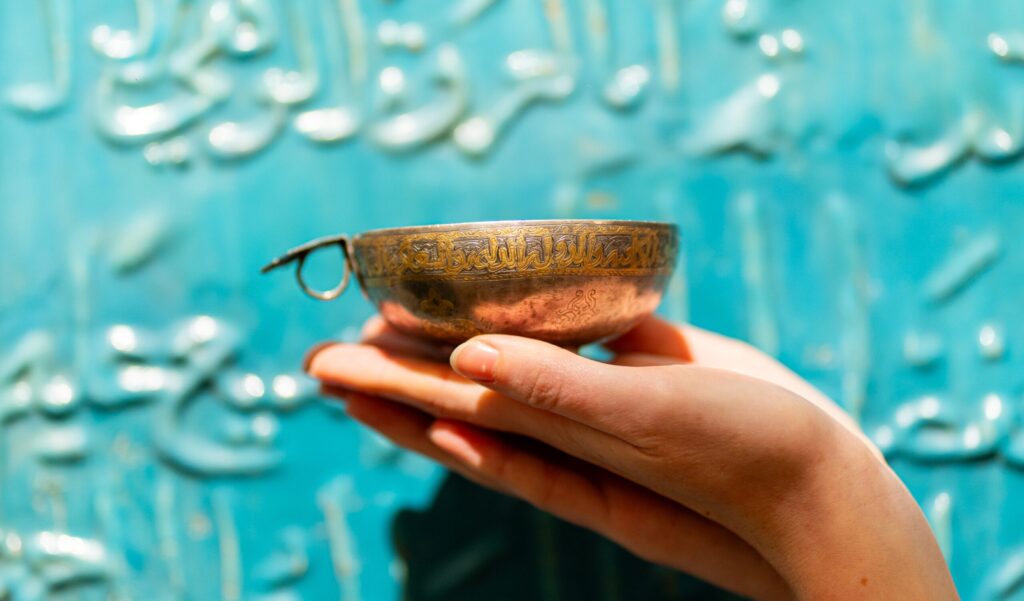
On October 29, Sotheby’s will host its Arts of the Islamic World and India sale, featuring a dazzling selection of manuscripts, ceramics, metalwork, and jewelry that together trace the creative reach of Central Asia across six centuries. The auction highlights how the region’s artists shaped Islamic visual culture from the early medieval period to the Timurid age. Among the most important works is a rare page from the monumental Baysunghur Qur’an, produced around 1400 in Herat or Samarkand. Another piece connects to the earlier Samanid Dynasty, whose rule from Bukhara and Tashkent fostered a flourishing of calligraphic pottery in the ninth and tenth centuries. The Arab geographer al-Maqdisi once praised the “large bowls from Shash,” an early name for Tashkent, noting their reputation throughout the Islamic world. [caption id="attachment_38298" align="aligncenter" width="1797"] A line from the 'Baysunghur Qur'an', attributed to 'Umar al-Aqta, Herat or Samarkand, circa 1400; image: Sotheby's[/caption] Two colorful Timurid mosaic tiles from the fourteenth or fifteenth century illustrate the architectural splendor of Samarkand and Herat. Their glazed patterns in cobalt, turquoise, and white once formed part of vast decorative panels in mosques and mausoleums. The geometric interlace and stylized foliage that define them became a visual signature of Timurid architecture, a style that spread from Central Asia to Persia and India. [caption id="attachment_38301" align="aligncenter" width="1346"] A Golden Horde turquoise and pearl-set gold belt or necklace, Pontic-Caspian Steppe, 14th century; image: Sotheby's[/caption] The Times of Central Asia spoke with Frankie Keyworth, a specialist in Islamic and Indian Art at Sotheby’s, for a closer look. TCA: How did manuscripts like the Baysunghur Qur’an serve as symbols of power and faith in the Timurid court, and what does its immense scale - a Qur’an so vast it took two people to turn a page - reveal about the empire’s ambition, artistry, and self-image? Keyworth: The manuscript was a hugely ambitious and challenging project, even just by the tools it would take to create, with monumental sheets of paper measuring 177 by 101cm., and a large pen whose nib would have to measure over 1cm. Displayed on a magnificent marble stand, the manuscript would be a staggering visual representation of the patron’s wealth and piety. Their subsequent use during public recitation reinforced the elite’s religious aspirations. The fact that this manuscript is unsurpassed by any other medieval Qur’an and remains so valued centuries after it was produced at the turn of the 15th century reveals the key role manuscripts played in the establishment of the Timurid dynastic image. [caption id="attachment_38299" align="aligncenter" width="1346"] A Timurid brass jug (mashrabe), Herat, Afghanistan, 15th-early 16th century; image: Sotheby's[/caption] TCA: A brass jug from Herat shaped like a Chinese vase, a ceramic bowl from Tashkent inscribed in Arabic script - these objects tell of traders, scholars, and artists linking worlds from Samarkand to Beijing long before globalization had a name. What can you tell us about how this trade transpired, and are there similarities to modern transport corridors? Keyworth: Trade via the so-called Silk Road endured for...