• KGS/USD = 0.01144 0%
  • KZT/USD = 0.00215 0%
  • TJS/USD = 0.10599 -0.28%
  • UZS/USD = 0.00008 0%
  • TMT/USD = 0.28571 0%
  • KGS/USD = 0.01144 0%
  • KZT/USD = 0.00215 0%
  • TJS/USD = 0.10599 -0.28%
  • UZS/USD = 0.00008 0%
  • TMT/USD = 0.28571 0%
  • KGS/USD = 0.01144 0%
  • KZT/USD = 0.00215 0%
  • TJS/USD = 0.10599 -0.28%
  • UZS/USD = 0.00008 0%
  • TMT/USD = 0.28571 0%
  • KGS/USD = 0.01144 0%
  • KZT/USD = 0.00215 0%
  • TJS/USD = 0.10599 -0.28%
  • UZS/USD = 0.00008 0%
  • TMT/USD = 0.28571 0%
  • KGS/USD = 0.01144 0%
  • KZT/USD = 0.00215 0%
  • TJS/USD = 0.10599 -0.28%
  • UZS/USD = 0.00008 0%
  • TMT/USD = 0.28571 0%
  • KGS/USD = 0.01144 0%
  • KZT/USD = 0.00215 0%
  • TJS/USD = 0.10599 -0.28%
  • UZS/USD = 0.00008 0%
  • TMT/USD = 0.28571 0%
  • KGS/USD = 0.01144 0%
  • KZT/USD = 0.00215 0%
  • TJS/USD = 0.10599 -0.28%
  • UZS/USD = 0.00008 0%
  • TMT/USD = 0.28571 0%
  • KGS/USD = 0.01144 0%
  • KZT/USD = 0.00215 0%
  • TJS/USD = 0.10599 -0.28%
  • UZS/USD = 0.00008 0%
  • TMT/USD = 0.28571 0%

Viewing results 1 - 6 of 132

Buildings “Full of Tattoos:” Tashkent Mosaics, Newly Protected, Tell of a City’s Rebirth

In one Tashkent mosaic, Shirin, a protagonist in a Persian love poem that ends in tragedy, sits with flowing hair on a colorful carpet. Another mosaic in the Uzbek capital depicts the scientist Abu Rayhan al-Biruni with the planet Saturn overhead and flowing water below. The scientist holds the Tree of Life. The mosaic is located on Babur Street in the Yakkasaray district of Tashkent. Other images portray Soviet-era optimism – a young couple, a female irrigation engineer and corn and wheat, symbols of production and abundance. Tales of degraded heritage in Uzbekistan and elsewhere are familiar, but there are bright spots. In late March, the government designated about 160 mosaics on buildings in Tashkent and other regions as cultural heritage, meaning they are protected, officially at least, from being dismantled, painted over or covered with advertisements. The city’s subway art is also a source of pride. The state sees the images as a tourist draw, and Tashkent residents and other enthusiasts who have campaigned for their preservation are spreading the word. [caption id="attachment_17717" align="alignnone" width="1200"] Photo by Fotima Abdurakhmanova[/caption] A slick new website titled “Mosaics of Tashkent" offers information about more than 330 mosaics, documenting how artists and architects from across the Soviet Union and beyond put their stamp on the reconstruction of a city that was virtually leveled in a 1966 earthquake. Investigations are still underway to determine who made some of the mosaics. Many were dismantled or damaged over the years and not all of those remaining have government protection. “Each mosaic told its own story, gave emotions, diluted the gray landscape of high-rise buildings, marking the beginning of a new life and a new era,” says the website, which was created by Tashkent’s Department of Digital Development. The quake left hundreds of thousands without homes. One official toll put the number of dead at 15, though it was probably higher. [caption id="attachment_17718" align="alignnone" width="1167"] Photo by Fotima Abdurakhmanova[/caption] Some residential buildings with mosaics on their facades “look like a body which is completely full of tattoos,” Philipp Meuser, a German architect, said during a presentation at the Goethe-Institut in Tashkent last week. Meuser wrote a book about the Tashkent mosaics of the Zharsky brothers – Pyotr, Nikolai and Alexander. The three designers and decorators decorated hundreds of buildings in a city whose reimagined character was shaped by Soviet modernism, regional influences and some Western ideas about urban layout. Two of the brothers were born in France. The Zharskys started mosaic designs with a sketch, and the process was scaled up from there, Meuser said. In one method, colored tiles were pressed by hand into soft concrete that had been poured into a steel mold to create a mosaic. The survival of the art decades later testifies to the durability of the techniques. [caption id="attachment_17719" align="alignnone" width="1078"] Photo by Fotima Abdurakhmanova[/caption] Communism-extolling mosaics were an official art form across the Soviet Union, but the imagery of many of those which survive in Tashkent is not ideological. Geometric...
Campaign to Save Bishkek’s Trolleybuses

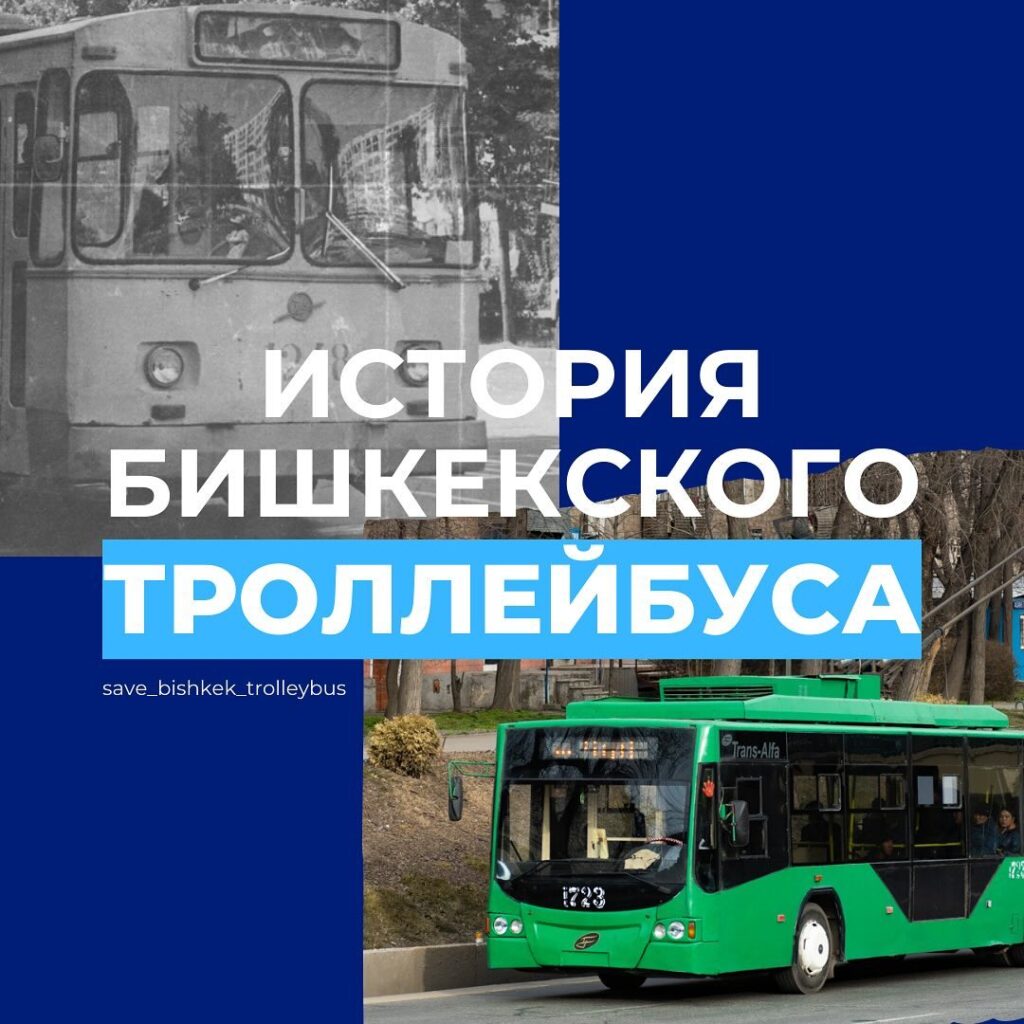
A campaign has been launched to prevent plans by the municipality of Bishkek to replace its trolleybuses with electric buses. According to a statement issued by the Bishkek municipality, “the issue of transferring trolleybuses along with their contact network and traction substations to the cities of Osh, Kara-Balta and Tokmok for their further operation there, is under consideration”. A key objection raised by the Save Bishkek Trolleybus campaign is that since the five proposed electric bus routes will simply replicate the existing trolleybus routes, the city will lose its existing network of environmentally- friendly public transport that introduced in the Soviet era, has been operating for many decades. The Save Bishkek Trolleybus has now launched an online petition to preserve its favoured mode of transport. According to the group behind the new initiative, the reason for abandoning the trolleybus network relates to the fact that one of the conditions of funding by the Asian Development Bank for electric public transport in Bishkek , was the replacement of trolleybus depots with new depots and substations to recharge electric buses. Kadyrbek Atambayev, leader of the Social Democratic faction in Bishkek’s City Council, argues that Bishkek’s trolleybus system should be developed, not eliminated. Regarding cost, he emphasizes that electric buses are four times more expensive than trolleybuses. The price of 100-120 electric buses along with charging stations is $50 million, while in 2017, 52 trolleybuses were purchased for 7 million euros. He also drew attention to the fact that operating batteries during Bishkek's cold winters would increase energy consumption and reduce the efficiency of electric buses. In his opinion, the liquidation of the trolleybus system would mean not only the loss of a convenient and affordable mode of public transport, but also the loss of a significant part of Bishkek’s cultural heritage.  

US Embassy Boosts Preservation of Tajikistan’s Ancient City

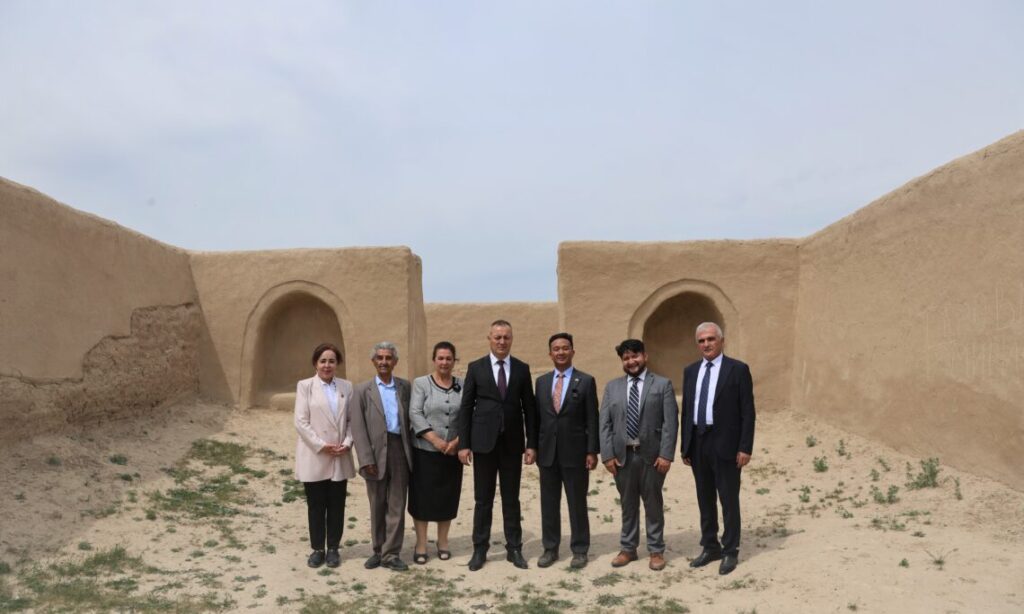
On April 26, U.S. Ambassador to Tajikistan Manuel P. Micaller, Jr. attended the celebration of the restoration of the Silk Road’s ancient city of Panjakent. Located in Tajikistan’s Sughd region and dating back to the 5th century, it is recognized as a UNESCO World Heritage Site. Financed by the U.S. Ambassador’s Fund for Cultural Preservation (AFCP) program, the U.S. Embassy  awarded a grant of $186,766 to the Public Organization Javononi Peshsaf for the preservation and restoration of four of Panjakent’s key archaeological structures: the Zoroastrian temple, and corner tower-defensive wall, both  constructed between the 5th-8th centuries; the defensive wall, dating back to the early fifth century, and the ceremonial hall Rustamiada, built between the 7th-8th centuries. The ancient Panjakent archeological site project, implemented by Javononi Peshsaf, in close cooperation with local authorities and the Archeological Base of Panjakent and Sarazm, offers significant potential to increasing international tourism and academic interest, and in the words of the ambassador, “boost local economy and improve the prosperity of the Tajik people.” The site which illustrates the history of Sogdians, provides a unique and rare insight into life in Central Asia during the fifth to eighth centuries. After years of being buffered by the elements, the site once carefully restored with traditional materials, including mud bricks and mortar and clay plaster, is now being  preserved for generations to come. In his address, Ambassador Micaller stated, “I am honoured and proud to celebrate our partnership to preserve the ancient city of Panjakent. For the U.S. Embassy, supporting the restoration of this ancient Silk Road city is one of the most meaningful ways we can express our respect for, and appreciation of, Tajikistan’s rich history and culture.”  

Qazaq Culture Portal Launched in Kazakhstan

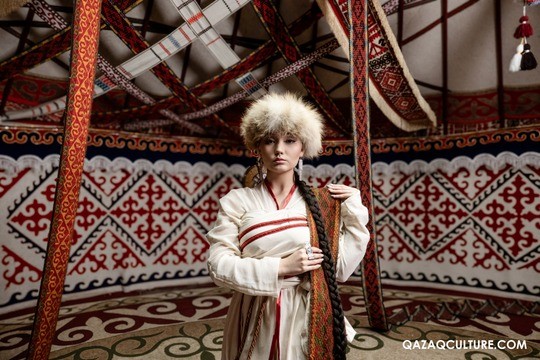
In an enlightened new initiative to attract international attention to the country’s rich cultural and historical heritage, the Ministry of Culture and Information of Kazakhstan has supported the creation of an information and educational portal on Qazaq Culture. Available in the six official languages of the United Nations, as well as Kazakh and Turkish, the portal offers a unique and comprehensive insight into Kazakhstan’s many diverse regions. Visitors to the site will be afforded a virtual exploration of the country’s landmarks and attractions in the section, ‘Culture of Kazakhstan Through the Prism of Artificial Intelligence’, and delve deeper into its heritage by accessing source material and publications held in the Archive Fund of Kazakhstan. In addition to a cultural news blog covering a vibrant array of festivals, contests, film and theatre premieres, books, and art exhibitions, the website will feature a single ticket system for all the cultural facilities in Kazakhstan.  

Preserving Heritage: How the Manas Epic Inspires Kyrgyzstan’s Youth

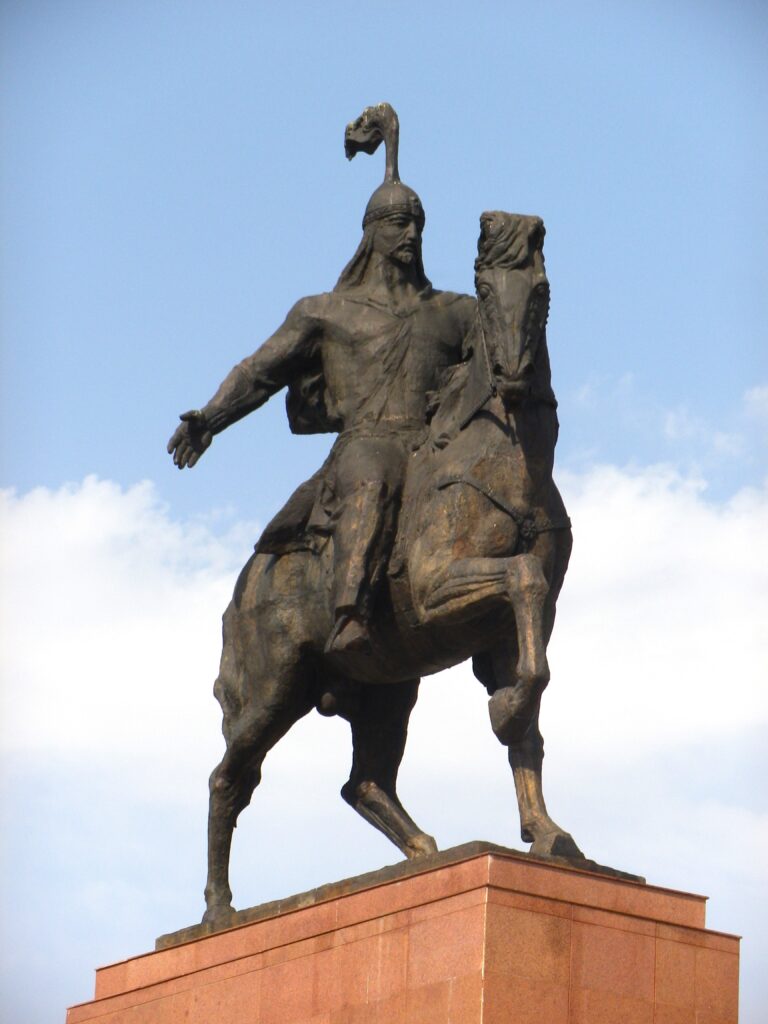
A nation steeped in cultural heritage, Kyrgyzstan continues to be proud of its unique attractions, and among them, the epic work "Manas" occupies a special place. The Manas epic is of special importance because it contains rich information on history, ethnography, philosophy, language, diplomacy, military affairs, folk pedagogy, and other aspects of life of the Kyrgyz people. Another distinctive feature of Manas is its huge volume - more than half a million lines of verse - which makes it the longest epic in the world. The relevance of Manas continues, today. Theatrical productions based on the work and competitions to display knowledge of it underscore the continuing interest in this great literary heritage. An observer of these contests, Zhanara believes that Manas still has a profound impact on the people of the regions, especially on schoolchildren who participate in these competitions. "Such events are conducted with a very careful selection process, which implies the serious preparation of the participants. At the end of the day, their efforts yield results and well-deserved prizes," she told TCA. However, journalist Aigerim from Bishkek believes the Manas epic still has a profound effect even on urban youth. "I think the epic plays a significant role for the whole country. Although not everyone knows it in full, key plot points are known to almost everyone and are often reflected in everyday life. For example, 'Kokotay's wake,' which lasted for several weeks and was very lavish. Also, the main characters can be called role models to a certain extent: brave and fair Manas, wise Bakai and weak, vain Bokmurun, whose name literally translates as ‘snotty nose’,” she told TCA. The epic also contributes to the development of young people's creative abilities. "In almost every classroom, scenes from the epic are staged and students study its lines. Manaschi (bards), who continue to be the performers and custodians of this epic, still enjoy respect and popularity. I recently became aware of a case where a young boy was given a stallion in recognition for his outstanding performance. Mairam, a blogger from Osh, sees Manas as an integral part of Kyrgyz culture and traditions. She notes the epic serves as a key cultural code for the Kyrgyz people. "'Manas is a kind of portrait of the Kyrgyz nation as heroic and brave,” she told TCA. “It also reflects Kyrgyz culture in detail, and I, along with many of my friends, turn to it as a cultural touchstone so that we don't forget who we are."

Kazakhstan Announces Date of 5th World Nomad Games

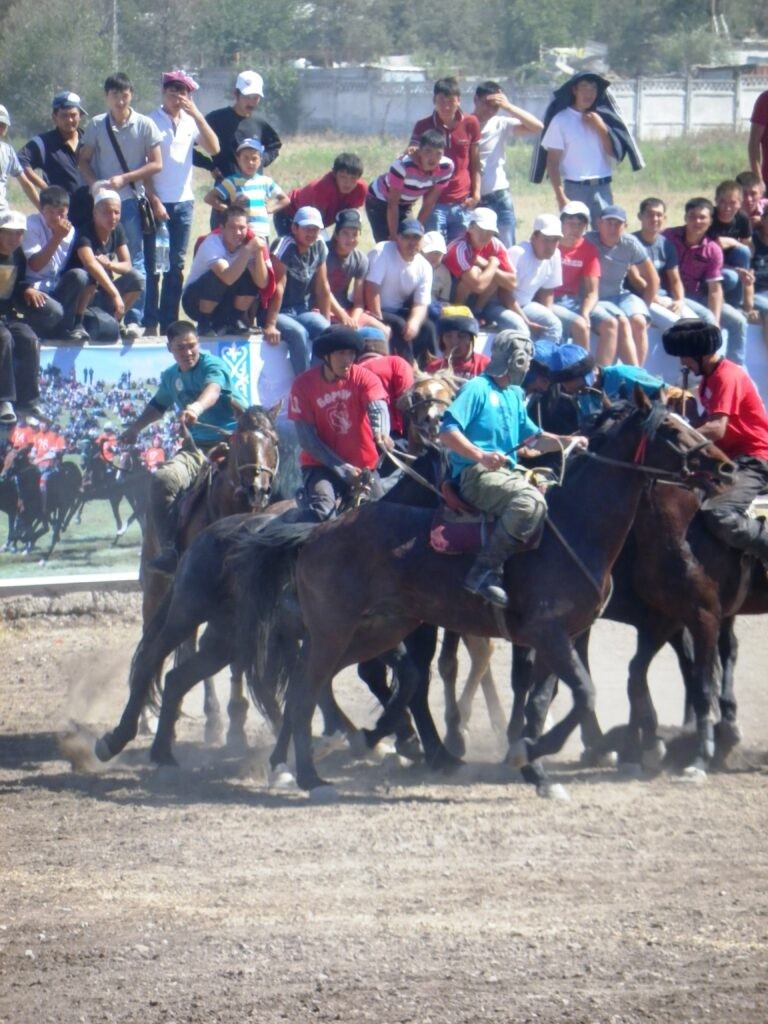
The 5th World Nomad Games will be held in Astana from September 8th to 14th, the Ministry of Tourism and Sports of Kazakhstan has said. It is expected that close to 4,000 athletes from more than a hundred countries will compete in the games, which will include twenty competitive and ten demonstration events, with 110 sets of medals being competed for. Equestrian sports, traditional wrestling, archery, bird hunting, and traditional intellectual games will all be included. It is also expected that more than 100,000 tourists will attend sporting and cultural events during the games. An ethno-village, “Universe of Nomads,” will be opened in Astana, where every visitor will be able to get acquainted with the culture and traditions of the Kazakh people, as well as the cultures of participating countries. Up to 30,000 residents and guests in Astana will be able to visit the ethno-village daily, the ministry stated. The games will be held under the motto, “Meeting in the Great Steppe.” The World Nomad Games were initiated by the government of Kyrgyzstan in 2012 for the revival and preservation of the culture of nomadic civilizations. The First World Nomad Games were held in September 2014 in the resort city of Cholpon Ata on Lake Issyk-Kul in Kyrgyzstan.