• KGS/USD = 0.01144 0%
  • KZT/USD = 0.00198 -0%
  • TJS/USD = 0.10903 0.18%
  • UZS/USD = 0.00008 0%
  • TMT/USD = 0.28571 0%
  • KGS/USD = 0.01144 0%
  • KZT/USD = 0.00198 -0%
  • TJS/USD = 0.10903 0.18%
  • UZS/USD = 0.00008 0%
  • TMT/USD = 0.28571 0%
  • KGS/USD = 0.01144 0%
  • KZT/USD = 0.00198 -0%
  • TJS/USD = 0.10903 0.18%
  • UZS/USD = 0.00008 0%
  • TMT/USD = 0.28571 0%
  • KGS/USD = 0.01144 0%
  • KZT/USD = 0.00198 -0%
  • TJS/USD = 0.10903 0.18%
  • UZS/USD = 0.00008 0%
  • TMT/USD = 0.28571 0%
  • KGS/USD = 0.01144 0%
  • KZT/USD = 0.00198 -0%
  • TJS/USD = 0.10903 0.18%
  • UZS/USD = 0.00008 0%
  • TMT/USD = 0.28571 0%
  • KGS/USD = 0.01144 0%
  • KZT/USD = 0.00198 -0%
  • TJS/USD = 0.10903 0.18%
  • UZS/USD = 0.00008 0%
  • TMT/USD = 0.28571 0%
  • KGS/USD = 0.01144 0%
  • KZT/USD = 0.00198 -0%
  • TJS/USD = 0.10903 0.18%
  • UZS/USD = 0.00008 0%
  • TMT/USD = 0.28571 0%
  • KGS/USD = 0.01144 0%
  • KZT/USD = 0.00198 -0%
  • TJS/USD = 0.10903 0.18%
  • UZS/USD = 0.00008 0%
  • TMT/USD = 0.28571 0%
05 December 2025

Viewing results 1 - 6 of 29

Russia Announces ‘Deportation Regime’ for Migrant Laborers

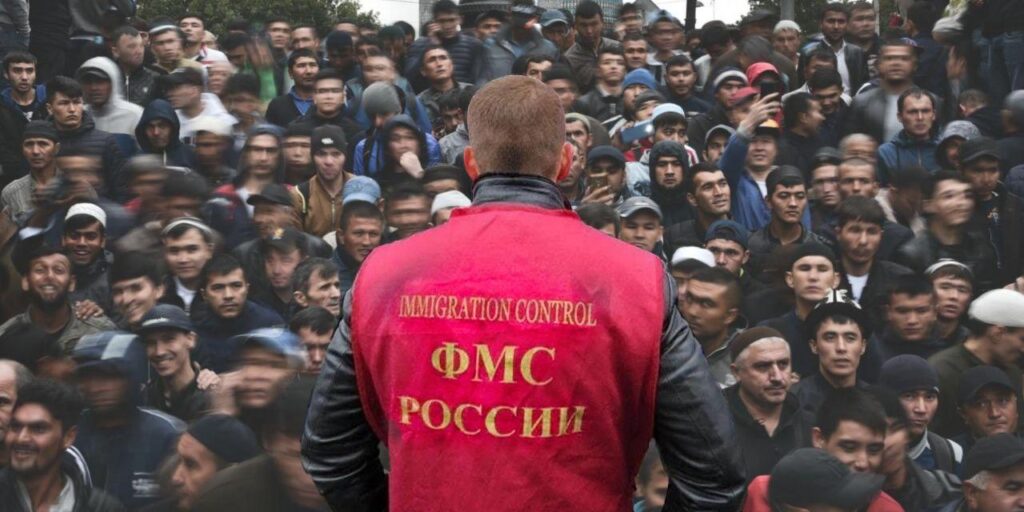
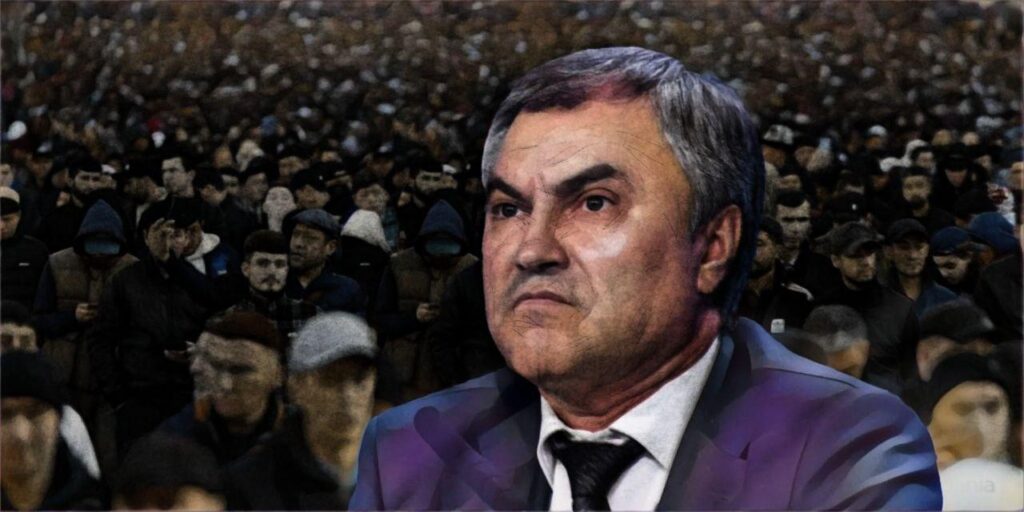
It has been more than a month since the deadline for migrant laborers working in Russia to complete their registration documents or face expulsion. The anticipated mass deportations have not happened, but Russian State Duma Chairman, Vyacheslav Volodin, indicated on October 13 that could change soon. Volodin warned, “A new migration regime is now in effect… the deportation regime.” The Final Bell Several months ago, Russian officials announced the September 10 deadline for all migrant laborers to legalize their status to work and live in Russia. Russia’s Federal Migration Service created a list in the summer of 2024 of “controlled persons,” those who still did not have all the required documentation to remain in Russia. The list was posted on the service’s website in February 2025. Volodin said those on the list lacked one or more of the following: “documents or certificates required for obtaining migration status or citizenship, registration of a place of stay or residence.” Volodin said the list also included those who failed to complete mandatory procedures such as “annual medical examinations for [their] presence… as well as fingerprinting and photographing” or have failed to show that their “patent, work permits, or employment contract” was renewed. The Duma Chairman said some 35,000 “foreign citizens” had already been expelled between January and August of this year. September 10 arrived, and in the days that followed, there were no reports of Russian law enforcement rounding up migrants and sending them back to their homelands. However, it was clear the Russian government was not bluffing. In his remarks to the Duma, Volodin explained that as of September 1, there were still some 770,000 migrants on the register of controlled persons, and that one-third of them were women and children. If these people have not taken care of their requirements, Volodin said, “They need to leave our country, informing [us] of the date, place, and route of their departure.” The Dwindling Number of Central Asian Migrant Laborers in Russia There are several million foreign workers in Russia, and the largest group is those from Central Asia, though fewer of them work there than was previously the case. The terrorist attack on Moscow’s Crocus City Hall in March 2024 that left more than 140 people dead was blamed on citizens of Tajikistan. It sparked a wave of xenophobia in Russia aimed at Central Asians, and prompted a raft of new laws and regulations for migrant laborers. Uzbekistan’s citizens have long been the largest group of Central Asian migrant laborers working in Russia, numbering between 4 to 6 million, depending on the season, during 2016. Figures vary for how many Uzbek citizens are working in Russia now, but Uzbekistan’s Migration Agency said at the start of October that it was about 1.3 million, noting the figure fluctuates depending on the time of the year, and that during the warmer months of 2025, it was closer to 2 million. During his recent visit to Tajikistan for a CIS summit and a separate meeting with...

Uzbek National in U.S. Faces Deportation Following Voter Fraud Conviction

An Uzbek citizen, Sanjar Djamilov, is facing deportation from the United States after pleading guilty to conspiracy to commit voter registration fraud, according to a U.S. court ruling reported by Florida Politics. Djamilov, 33, who resides in St. Petersburg, Florida, was sentenced to time served and placed under supervised release pending deportation. He has been remanded to the custody of U.S. Marshals and is awaiting processing by the Bureau of Customs and Immigration. If deported, he will be barred from re-entering the U.S. without explicit government authorization. The court imposed a $100 assessment on Djamilov, but waived restitution and other fees. According to investigators, Djamilov and a Russian national, Dmitry Shushlebin, submitted 132 fraudulent voter registration applications to the Pinellas County Supervisor of Elections between February and March 2023. The applications were flagged for identical formatting, repeated typographical errors, sequential Social Security numbers, and recurring birth dates, raising immediate suspicion. Authorities say the pair also submitted change-of-address forms to the U.S. Postal Service to redirect official mail to three addresses under their control. The case was jointly investigated by the FBI, the U.S. Postal Inspection Service, and the Florida Department of Law Enforcement, following a referral from the Florida Department of State’s Office of Election Crimes and Security. In an April 2025 plea agreement, Djamilov admitted that Shushlebin had hired him and others to submit more than 100 fraudulent applications. While Djamilov has now been sentenced, Shushlebin has also pleaded guilty but is still awaiting sentencing. Djamilov had faced up to five years in prison for his involvement. As previously reported by The Times of Central Asia, 131 citizens from Uzbekistan, Kazakhstan, and Kyrgyzstan were repatriated from the U.S. on a special charter flight in May 2025. Funded by the Uzbek government, the operation reflected growing cooperation between Washington and Tashkent on migration and security issues.

Turkmen Migrants Face Deportations as Russia Escalates Crackdown

Russian authorities are intensifying their deportation of foreign nationals under a sweeping crackdown on irregular migration, with Turkmen citizens increasingly targeted, according to Turkmen News. Deportation Without Trial Under new rules introduced in February 2025, Russian police and migration officials can summarily expel foreign nationals without awaiting court decisions. The measures coincide with a significant uptick in Turkmen migration: nearly 90,000 Turkmen citizens entered Russia in 2023, triple the number recorded in 2022. Now, reports of deportations are mounting. In July alone, media outlets across several Russian regions reported hundreds of foreigners, many of them from Turkmenistan, being forcibly removed. Key figures include: Astrakhan Region: 200 people Nizhny Novgorod Region: 518 people Republic of Dagestan: 260 people Stavropol Krai: 127 people Raids have also been carried out in other areas, though officials often refrain from disclosing detainees’ nationalities. For example, in early July, Moscow police raided hostels and prayer houses, detaining over 500 foreigners. More than 30 were later expelled for immigration violations, according to Kommersant. A recent case in Saratov Region highlighted the situation. On July 30, the Federal Bailiff Service (FSSP) announced the deportation of three Turkmen citizens for violating migration laws. Among them: a 27-year-old former student who overstayed his registration in Kazan, a 55-year-old man whose legal stay had expired in 2024, and a 47-year-old businessman who failed to obtain a work permit. All three cited lack of funds to return home. They were escorted to a Moscow-area airport and deported, receiving five-year re-entry bans. According to Turkmen News, they will also be placed on a "no-exit" list upon return, barring them from leaving Turkmenistan in the near future. Tougher Migration Regulations Millions of Central Asians live and work in Russia, forming the backbone of the country's migrant labor force. Official figures indicate that nearly 4 million citizens of Kazakhstan, Kyrgyzstan, Uzbekistan, Tajikistan, and Turkmenistan currently reside in Russia. An additional 670,000 foreigners are believed to be in the country without legal status. Uzbekistan and Tajikistan account for the largest share of migrant laborers. In 2023, over one million Tajik citizens entered Russia for work. However, the overall number of Central Asian migrants has been declining, driven by tighter restrictions, growing xenophobia, and fears of forced conscription. In 2024 alone, Russian authorities expelled around 15In 2025, Moscow introduced a new set of migration regulations aimed at curbing irregular migration. These measures authorize law enforcement to carry out deportations without judicial review, establish a centralized registry of undocumented foreigners, and set a deadline of September 10, 2025, for migrants to legalize their status. Those who fail to comply will face deportation and multi-year bans on re-entry. These efforts build on previous policies, including mandatory fingerprinting and photographing of all incoming migrant workers, reducing visa-free stays from 180 days to 90, and expanding the list of deportable offenses. The crackdown intensified following the March 2024 terrorist attack at Crocus City Hall in Moscow, which was allegedly carried out by suspects of Central Asian origin. The incident sparked a...

Potential Mass Expulsion of Migrants Looms in Russia

Russia introduced new regulations for foreign citizens in the country on February 5, and started keeping a list at the Interior Ministry of foreigners who are living or staying in Russia without proper documentation, the “controlled persons registry.” The rules are aimed at migrant laborers working in Russia, many of whom come from Central Asian countries. Russia has set a September 10 deadline for foreigners in the country to clear up all their paperwork with the authorities or face expulsion with a ban on re-entry. Judging by recent comments from Kyrgyzstan’s ambassador to Russia, Kubanychbek Bokontayev, many might not make that September 10 deadline. Needed but Not Desired Over the course of the last two decades, millions of citizens from Central Asian countries have worked in Russia. Most are from Kyrgyzstan, Tajikistan, and Uzbekistan. The remittances they send home have grown to the point where this money now accounts for nearly 40% of the GDP in Tajikistan, 24% in Kyrgyzstan, and 14% in Uzbekistan. Most of these remittances come from Russia. Russia badly needs the extra workers, and, until recently, the arrangement seemed to suit all parties. But the March 2024 terrorist attack on Moscow’s Crocus City Hall changed the situation. The Russian authorities detained and charged a group of Tajik nationals for the attack, and the always simmering xenophobia in Russia, particularly toward Central Asians, boiled over. New rules and restrictions have been imposed on migrant workers. Those that came into force in February this year were only the latest in a series of changes that already included mandatory fingerprinting and photographs upon entry to Russia, a reduction in the term of stay from 180 to 90 days, and an increasing list of infractions that provide grounds for deportation. In 2024, Russia expelled some 157,000 migrants who were in the country illegally, which, according to Russian Interior Minister Vladimir Kolokoltsev, was an increase of some 50% over 2023. The Clock Is Ticking At the start of February, just before the latest regulations came into effect, Russia’s Deputy Interior Minister Aleksandr Gorovoi said there were some 670,000 foreigners living illegally in Russia. Gorovoi added that more than half were women and children, “those who entered, but we do not see that they received a patent registered with the migration service… [or] that an employment agreement was concluded with them.” On July 24, Kyrgyz media outlet AKIpress published an interview with the Kyrgyz Ambassador to Russia, Bokontayev, in which he said that at the start of July, there were some 113,000 Kyrgyz citizens on the controlled persons registry, which he referred to as the “gray list.” He also said there were some 80,000 Kyrgyz citizens on the “black list” of people barred from entering Russia. In a separate interview with Radio Free Europe/Radio Liberty’s Kyrgyz Service published on July 25, Kyrgyzstan’s General Consul in Russia, Bakyt Asanaliyev, said that about 30% of the Kyrgyz citizens on the gray list are children. Ambassador Bokontayev said Kyrgyzstan’s embassy is working to make sure...

Tajikistan Escalates Deportations of Afghan Refugees Amid Growing Concerns

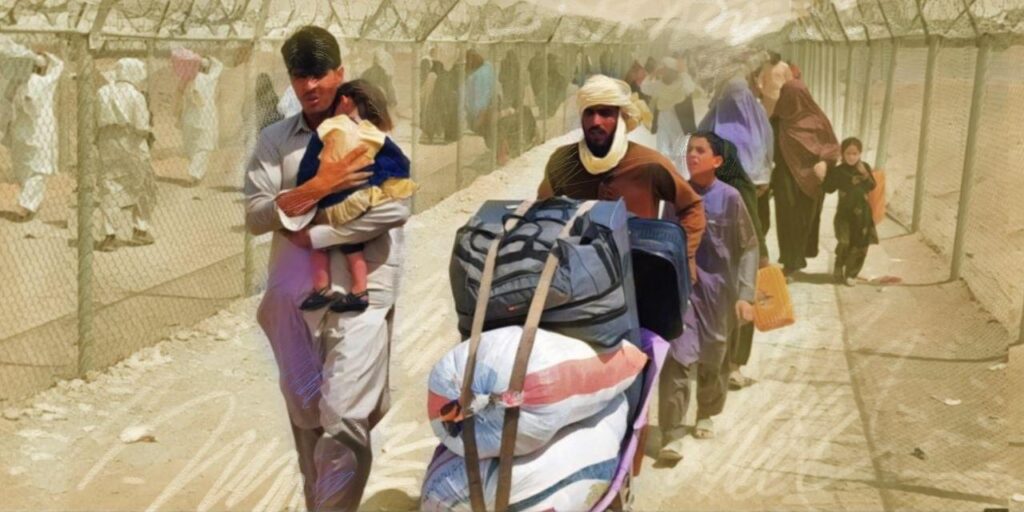
Afghans who fled to Tajikistan are keeping a low profile lately. Tajik authorities have started the latest wave of deportations, and this one looks to be bigger than the previous sweeps. “You Have 15 Days” At the beginning of July, Afghan refugees and asylum-seekers in Tajikistan received an SMS warning them to leave the country within 15 days or else they would be forcibly deported. Tajikistan’s government has not commented on these messages, but the detention of Afghans started not long after the messages were sent. So far, the only two places mentioned where Afghans were being apprehended were the Rudaki district outside of Dushanbe and the town of Vahdat, 26 kilometers from Dushanbe. Hundreds of Afghan refugees are known to be living in these two areas. Radio Free Europe/Radio Liberty’s Tajik Service, known locally as Ozodi, reported that journalists who went to the houses of Afghan refugees in Vahdat were stopped and turned away by men in military uniforms outside the homes. Some Afghan refugees in Vahdat spoke with Ozodi under the condition of anonymity and said that on July 15, several vans arrived and took away “dozens” of Afghan men, women, and children. One said Afghan refugees are staying inside their homes, fearing that if they go out, they will be detained and deported. Police “take the documents from Afghans and set a date for them to leave the country,” the refugee said, “For more than 20 days we have practically not stepped outside at all.” Local Tajiks confirmed that Afghans were being taken away and that many of those who remained were searching for new places to live to avoid being apprehended. The Tajik authorities did not say anything about the deportations until July 19, when the state news agency Khovar posted a text from the Press Center of the Border Troops of the State Committee for National Security. The statement said some “foreign citizens” had entered Tajikistan illegally, and a “certain number” of them engaged in illegal activities such as “narcotics trafficking, [spreading] the ideas of extremist movements,” or providing false information or documents to acquire refugee status. The office of the UN High Commissioner for Refugees (UNHCR) said that as of the end of 2024, there were 9,902 Afghan refugees registered in Tajikistan. However, Afghans have been fleeing their homeland and coming to Tajikistan for many years, and some estimates for the number of Afghans in Tajikistan run as high as 13,000. Something else which remains unclear about the Afghan refugees in Tajikistan is how many are ethnic Tajiks. Ostensibly, most of them could be since the ethnic Tajik population of Afghanistan is mainly found in areas adjacent to Tajikistan. Many who came to Tajikistan 10 or 15 years ago have assimilated and are likely not refugees or asylum seekers, but may not have obtained Tajik citizenship. It is unclear how many Afghan citizens have been detained and deported since the start of July, but they are just the latest to be sent back to...

Kazakhstan Deports 10,000 Foreigners Amid Crackdown on Migration Violations

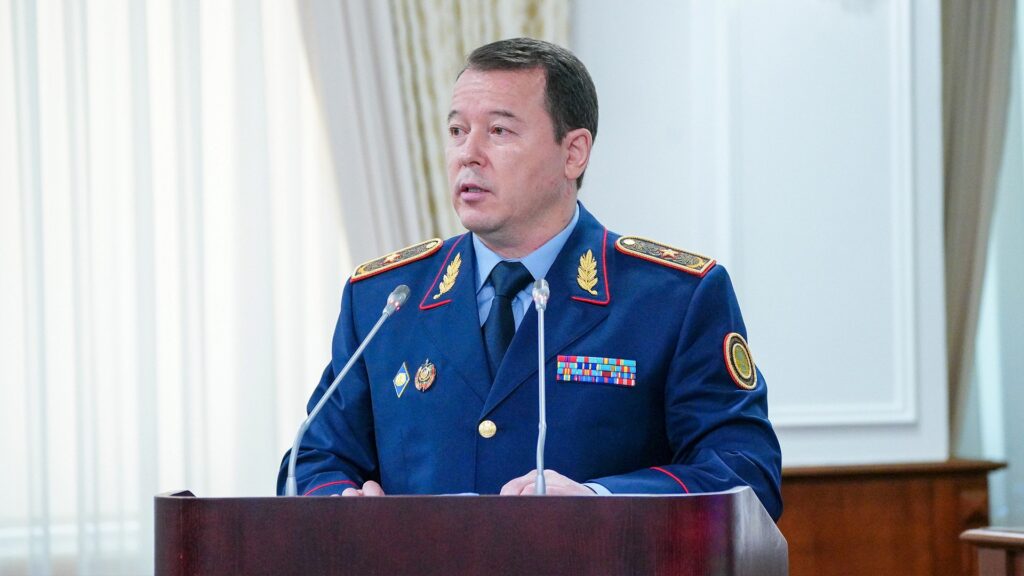
Nearly 10,000 foreign citizens have been deported from Kazakhstan since the beginning of 2025, according to First Deputy Minister of Internal Affairs Baurzhan Alenov. The announcement was made during a recent government meeting addressing migration trends and enforcement measures. Alenov noted a consistent rise in the number of foreign arrivals to the country. In the first half of 2025 alone, more than 7.5 million people entered Kazakhstan, while 7.2 million departed, a net increase of 600,000 compared to the same period in 2024. Approximately 90% of those arriving are citizens of post-Soviet states. “It is important to note that 97% of foreign citizens comply with migration laws. However, more than 200,000 individuals have faced administrative penalties,” Alenov stated. “Of these, 46,000 were fined for violating residency rules, and nearly 10,000 have been deported with a five-year ban on re-entry.” In addition, over 2,000 employers were fined for the illegal employment of foreign workers. Seven criminal cases have been opened against repeat offenders. Migration Patterns and Permanent Residency As of mid-2025, approximately 212,000 foreign nationals reside in Kazakhstan on a permanent basis. The largest concentration is in Almaty (42,000), followed by the Almaty region (32,000), and both Astana and the Karaganda region (17,000 each). Over the past three years, the number of permanent foreign residents has risen by 42%. Kazakhstan also hosts around 430,000 temporary foreign residents. Of these, 360,000 are labor migrants, 17,000 arrived for family reunification, 8,000 for educational purposes, and 44,000 for tourism or private matters. Government Response and New Initiatives Prime Minister Olzhas Bektenov emphasized the need for stricter enforcement of migration laws. He highlighted that over 7,000 violations were detected in May alone during nationwide operations. “Such incidents must be addressed promptly. We need to actively implement digital tools. The introduction of migrant ID cards, issued at border entry points, must be accelerated to improve monitoring and regulation,” Bektenov said. He instructed the Ministry of Internal Affairs to tighten administrative oversight and called on the Ministry of Labor and Social Protection to enhance regulation of private agencies involved in sending Kazakh citizens abroad for work. “These agencies currently operate without accountability or oversight. By year’s end, legislative amendments must be proposed to require licensing of such activities. Additionally, I instruct the Ministry of Labor to submit a draft Concept of Migration and Demographic Policy by October 1. This document should align with the Concept of Regional Policy being developed through 2030,” Bektenov concluded. As previously reported by The Times of Central Asia, the majority of foreign labor migrants in Kazakhstan in 2025 have come from China, Uzbekistan, Turkey, and India, working primarily in the construction sector.