• KZT/USD = 0.00223
  • TJS/USD = 0.10810
  • UZS/USD = 0.00009
  • TMT/USD = 0.29850
  • KZT/USD = 0.00223
  • TJS/USD = 0.10810
  • UZS/USD = 0.00009
  • TMT/USD = 0.29850
  • KZT/USD = 0.00223
  • TJS/USD = 0.10810
  • UZS/USD = 0.00009
  • TMT/USD = 0.29850
  • KZT/USD = 0.00223
  • TJS/USD = 0.10810
  • UZS/USD = 0.00009
  • TMT/USD = 0.29850
  • KZT/USD = 0.00223
  • TJS/USD = 0.10810
  • UZS/USD = 0.00009
  • TMT/USD = 0.29850
  • KZT/USD = 0.00223
  • TJS/USD = 0.10810
  • UZS/USD = 0.00009
  • TMT/USD = 0.29850
  • KZT/USD = 0.00223
  • TJS/USD = 0.10810
  • UZS/USD = 0.00009
  • TMT/USD = 0.29850
  • KZT/USD = 0.00223
  • TJS/USD = 0.10810
  • UZS/USD = 0.00009
  • TMT/USD = 0.29850
22 September 2026

Viewing results 1 - 6 of 137

U.S. Envoys Hail Stronger Kazakhstan Partnership Ahead of C5+1 Summit

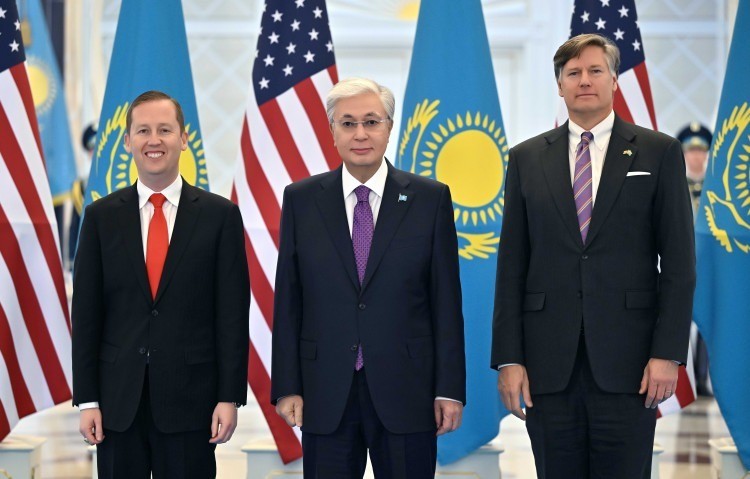
On October 29, Unites States Special Envoy for South and Central Asia Sergio Gor and Deputy Secretary of State Christopher Landau concluded their visit to Kazakhstan ahead of the upcoming C5+1 summit in Washington. During their trip, the U.S. envoys met with President Kassym-Jomart Tokayev and held discussions with representatives of Kazakhstan’s government and business community, which they described as highly productive. “We are concluding a memorable trip to Kazakhstan in the beautiful capital, Astana, which did not even exist 30 years ago and now boasts a population of more than 1.5 million,” Landau posted on social media. He also stated that bilateral relations between the U.S. and Kazakhstan “have never been so strong” and expressed gratitude for the hospitality.  Gor and Landau held talks with Prime Minister Olzhas Bektenov and key cabinet members, including Minister of Trade and Integration Arman Shakkaliev, Minister of Energy Yerlan Akkenzhenov, Minister of Transport Nurlan Sauranbayev, and Deputy Prime Minister and Minister of National Economy Serik Zhumangarin, to discuss Kazakhstan’s economic priorities and areas for expanding bilateral cooperation. According to the Kazakh government, the talks focused on expanding trade and investment cooperation between the two countries. Priority areas included transport and logistics, energy, agriculture, the digital economy, and artificial intelligence. During their visit, the U.S. envoys also met with Deputy Prime Minister Murat Nurtleu, who reaffirmed Kazakhstan’s readiness to cooperate on sustainable development and energy security. The meetings demonstrated Kazakhstan’s active engagement with the United States in the lead-up to the upcoming Central Asia–U.S. summit. Deputy Prime Minister and Minister of National Economy Serik Zhumangarin, who highlighted Kazakhstan’s economic strengths during talks with Gor and Landau, had recently returned from a high-level visit to the United States. His delegation, which included Deputy Head of the Presidential Administration Erbolat Dossaev and Chairperson of the Agency for Regulation and Development of the Financial Market Madina Abylkasymova, held meetings in New York and Washington with American business leaders and members of Congress. During the visit, the Kazakh delegation presented the country’s economic growth strategy, highlighted ongoing GDP expansion, and discussed the potential listing of government securities on the New York Stock Exchange. They also raised the possible repeal of the Jackson–Vanik Amendment, a long-standing priority for Kazakhstan’s diplomatic agenda. Against this backdrop, the White House’s decision to convene a summit between President Donald Trump and the leaders of the Central Asian republics may partly reflect Kazakhstan’s sustained diplomatic outreach. In that context, Gor and Landau’s remarks of appreciation as they departed Astana underscored recognition of Kazakhstan’s role in shaping this evolving partnership.   Explore our critical minerals special coverage for a timeline of Central Asia’s growing place in U.S. supply-chain strategy.

Magzhan Ilyasov Appointed Kazakhstan’s Ambassador to the United States

President Kassym-Jomart Tokayev has appointed Magzhan Ilyasov as Kazakhstan’s new Ambassador Extraordinary and Plenipotentiary to the United States. The appointment is part of a broader reshuffling of the country’s foreign policy leadership. The presidential decree announcing the appointment was published on the official Akorda website. Ilyasov succeeds Yerzhan Ashikbayev, who served in Washington from 2021 until his dismissal on September 26, 2025, shortly after Tokayev’s working visit to New York. Born in Almaty in 1974, Ilyasov graduated with honors from the Faculty of International Relations at the Kazakh State University of World Languages. He later earned a master’s degree from Harvard University’s Kennedy School of Government. Ilyasov began his diplomatic career in 1996 at the Ministry of Foreign Affairs, starting as a referent before serving as attaché and secretary in the Department of the United Nations and International Economic Organizations. By the late 1990s, he transitioned to the Presidential Administration, focusing on protocol and organizing international meetings. From 2005 to 2016, he held senior roles in the foreign policy division of the Presidential Administration, eventually becoming an advisor to the president. His diplomatic postings include: 2016-2020: Ambassador to the Netherlands and Permanent Representative to the Organisation for the Prohibition of Chemical Weapons; 2020-2022: Permanent Representative of Kazakhstan to the United Nations; and 2022-2025: Ambassador to the United Kingdom, with concurrent accreditation to Iceland and Ireland beginning in 2023 Ilyasov’s appointment comes amid a broader realignment of Kazakhstan’s foreign policy team. On the same day Ashikbayev was dismissed, several key changes were announced: Murat Nurtleu stepped down as Foreign Minister to become the president’s assistant for international investment and trade cooperation; Yermek Kosherbayev was appointed as the new Foreign Minister; and Yerzhan Kazykhan, formerly the president’s assistant for international affairs, was named Kazakhstan’s permanent representative to the United Nations and other international organizations in Geneva. Ilyasov’s extensive diplomatic experience and recent high-profile postings are seen as aligning with Kazakhstan’s strategic priorities in the United States, particularly amid growing engagement in investment, trade, and security dialogue.

Pipelines Under Pressure: Ukraine War Hits Kazakhstan Energy Arteries

The ongoing war between Ukraine and Russia continues to have indirect but notable implications for Kazakhstan’s energy sector. Following the September drone attack in Russia’s Novorossiysk that damaged the offices of the Caspian Pipeline Consortium (CPC) - which exports the majority of Kazakhstan’s oil - another incident has raised concern: the October 19 strike on Russia’s Orenburg Gas Processing Plant, which handles gas from Kazakhstan’s Karachaganak field. The CPC confirmed that its export terminal continued operating after the September 24 incident, though two employees were injured and part of its office complex was damaged. The consortium remains the backbone of Kazakhstan’s oil exports, handling over 80% of national crude shipments to world markets. This concentration has long been viewed as a vulnerability because nearly all flows depend on infrastructure inside Russian territory. The war has underscored that risk, prompting Astana to accelerate plans for alternative routes across the Caspian Sea toward Azerbaijan and Georgia. Astana has been working with Baku and Tbilisi to expand capacity along the Trans-Caspian International Transport Route (Middle Corridor), supported by EU and World Bank funding commitments. Kazakhstan’s Ministry of Energy confirmed that the plant, located about 150 kilometers northwest of Kazakhstan’s Karachaganak field across the Russian border, was temporarily shut down following the UAV strike. “According to information from PJSC Gazprom, on October 19, 2025, an emergency situation occurred at the Orenburg gas processing plant as a result of a UAV attack, in connection with which the plant temporarily stopped receiving raw gas from the Karachaganak field.” The Ministry added that gas supplies to domestic consumers remain unaffected and that consultations are underway with field operators to assess potential disruptions and losses. No details on the extent of the damage or repair timelines have been released by the Russian side. Ukraine’s military confirmed responsibility for the attack as part of its campaign against Russian energy infrastructure, according to statements reported by Interfax-Ukraine and Ukrainska Pravda. Industry analysts, however, remain cautious. Journalist Oleg Chervinsky noted that the Orenburg plant processes up to nine billion cubic meters of Karachaganak gas annually, a portion of which is returned to Kazakhstan’s northern regions. He warned that a prolonged shutdown could lead to supply shortages, particularly during the winter months. The timing of the Orenburg attack - just before the start of the heating season - adds a seasonal risk dimension. Olzhas Baidildinov, an expert in the energy sector, criticized delays in constructing a domestic gas processing facility at Karachaganak, arguing that reliance on foreign infrastructure heightens Kazakhstan’s vulnerability to regional conflict and economic disruptions. The replacement of damaged equipment, including components from France’s Technip, could also be complicated by sanctions and supply chain issues, ultimately impacting tariffs and consumer costs. The cumulative effect of reduced gas processing capacity and potential production slowdowns at Karachaganak could weigh on Kazakhstan’s already strained budget. While some observers note that reduced output may help the country align with its OPEC+ production commitments, previously exceeded at major fields including Kashagan, Tengiz, and Karachaganak, such...

Kazakhstan Maintains Diplomatic Balance Following Gaza Ceasefire

On Monday, the Palestinian group Hamas handed over the final 20 surviving hostages to Israel in a two-stage exchange, reportedly mediated with the involvement of Qatari representatives. By midweek, the outcome of the latest ceasefire attempt between Israel and Hamas may become clearer. On October 13, U.S. President Donald Trump addressed the Knesset in Israel, before traveling to Egypt for a summit. The hostages had been held for more than two years, mirroring the duration of Israel’s military campaign that has reverberated across the region. The two-stage exchange formed part of a broader ceasefire framework backed by the United States, Egypt, and Qatar. Washington has framed the deal as a cornerstone of its renewed Middle East peace initiative, which aims to establish a long-term truce and pave the way for gradual reconstruction in Gaza. Trump described the agreement as the "beginning of a new security architecture for the region,” though analysts caution that deep mistrust between the parties could still derail implementation. The ongoing war in the Middle East is impacting Kazakhstan, as it is across Central Asia. Anti-Israeli sentiment has grown in this majority-Muslim country, though the government continues to advocate for a balanced and diplomatic approach. For Astana, maintaining neutrality amid the polarized reactions to the war is not just a matter of diplomacy, but also a matter of regional stability. Kazakhstan’s leadership views itself as a potential bridge between Muslim-majority nations and Western partners, drawing on its history of multivector foreign policy. Officials stress that Astana’s engagement is guided by the principles of dialogue and international law rather than religious or ideological alignment. A Delicate Diplomatic Position Kazakhstan has consistently supported international peacekeeping efforts. On September 30, President Kassym-Jomart Tokayev backed Trump's Gaza peace plan, and on October 9, Tokayev welcomed the ceasefire agreement in the Gaza Strip and the release of hostages, as announced by his press secretary, Ruslan Zheldibay. Tokayev commended the mediation efforts of Egypt, Qatar, and Turkey, and acknowledged the contributions of the United States and President Trump in advancing peace negotiations in the region. Kazakhstan recognized the State of Palestine in 1992 and established diplomatic ties. While economic relations remain minimal, the recognition holds symbolic political significance. At the same time, Kazakhstan maintains relatively strong relations with Israel, with a notable volume of bilateral trade. The country's longstanding diplomatic stance emphasizes the principle of “two states for two peoples.” Bilateral trade between Kazakhstan and Israel exceeded $450 million in 2023, driven primarily by exports of Kazakh metals and imports of Israeli technology and agricultural products. Cooperation in water management, healthcare, and defense technologies has continued despite regional instability. Kazakh officials have also emphasized the importance of Israeli investment in innovation and renewable energy sectors. Kazakhstan's diplomatic position has been reiterated consistently. In November 2023, the Ministry of Foreign Affairs reaffirmed that the only sustainable solution to the conflict lies in the creation of two sovereign states. Amid intensified hostilities in October 2023, Israel imposed a blockade on Gaza. At that time, 76...

Russia Seeks to Reassert Role at Central Asia Summit, but Kazakhstan and Uzbekistan Push Their Own Agendas

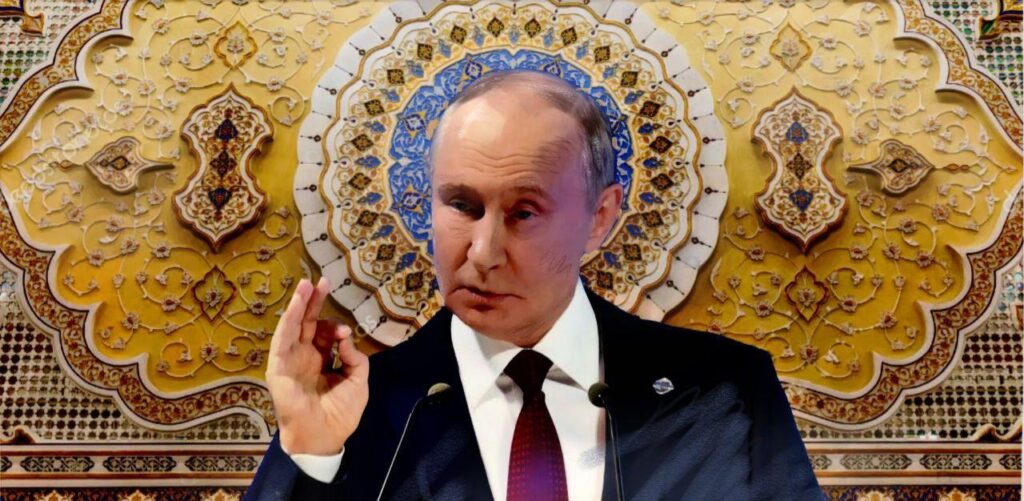
The second Central Asia-Russia summit, held ahead of the Commonwealth of Independent States (CIS) leaders’ meeting, reaffirmed the Kremlin’s continued intent to assert influence over the region. Russian President Vladimir Putin used the platform not only to signal discontent with the pace of economic integration but also to critique the Central Asian republics for what he portrayed as insufficient engagement in bilateral trade. Despite growing ties between Central Asian states and external partners, exemplified by the “C5+1” dialogue format that includes major powers such as the U.S. and China, Putin made clear that Russia does not view its influence in the region as diminished. Opening the summit, Putin took a veiled swipe at the “C5+1” initiative, which has gained traction in recent years. “I am in constant contact with each of the Central Asian presidents,” he said, before adding, “But I am sure that this multilateral format of communication is also very useful and has its obvious ‘added value’, so to speak.” By “added value,” the Russian leader appeared to suggest that multilateral engagement enables Central Asian states to present a more unified front in foreign negotiations, an approach that complicates Moscow’s ability to exert influence through bilateral channels. Putin also expressed dissatisfaction with the current levels of mutual trade and Russian investment in the region. While acknowledging that trade between Russia and Central Asia had surpassed $45 billion, he pointedly compared this figure to trade with Belarus, which exceeds $50 billion despite its far smaller population. “Our trade turnover with Belarus exceeds $50 billion. Let me remind you that Belarus has a population of 10 million. Uzbekistan already has nearly 40 million, Tajikistan over 10 million, and Kazakhstan more than 20 million. Can you imagine what a colossal resource this is?” Putin said. “This means there are strong prospects for expanding our economic relations.” Putin described Russia’s current $20 billion in regional investments as inadequate and called for increased engagement, but also tempered expectations surrounding major infrastructure and logistics projects championed by Astana and Tashkent, while positioning Russia as a central player in their development. He proposed integrating existing North-South and East-West corridors into a unified Eurasian logistics network supported by digital and transport services. “This will allow us to significantly increase international transport volumes through our common region,” Putin said. Kazakh President Kassym-Jomart Tokayev responded directly, updating figures presented by Putin and reaffirming Kazakhstan’s commitment to regional integration. He noted that Russia’s total trade with Central Asia exceeded $50 billion in 2024, with $28 billion in trade between Russia and Kazakhstan alone. Tokayev emphasized the strategic importance of transport cooperation with Russia, stating that “Russia is a key gateway for the region’s countries to global markets. Therefore, cooperation in the transport and logistics sector is a matter of heightened strategic importance.” [caption id="attachment_37343" align="aligncenter" width="1600"] Image: Akorda.kz[/caption] Tokayev outlined Kazakhstan’s existing transport infrastructure, eleven international corridors, including five rail and six road routes, that carry about 85% of land freight between Asia and Europe. Over 15 years, Kazakhstan has...

Russia–Central Asia Summit in Dushanbe Tests Putin’s Grip

Russian President Vladimir Putin arrived in Tajikistan on October 8 for a three-day state visit that includes a Russia–Central Asia summit in Dushanbe, and a larger Commonwealth of Independent States (CIS) meeting. His arrival comes at a time of geopolitical flux in Central Asia, with Russia seeking to reaffirm its waning influence amid migration tensions, economic pressures, and security challenges on its southern flank. The Visit and Summit: What Has Happened So Far Putin was greeted at Dushanbe airport by Tajik President Emomali Rahmon, who has governed the country since 1992. Upon his arrival, the two leaders conducted a private meeting and later presided over expanded talks with their delegations. In his opening remarks, Putin told Rahmon that Russia and Tajikistan are “reliable allies” and pledged that Moscow would fulfil its obligations to Dushanbe, particularly in terms of security. In the first seven months of 2025, bilateral trade rose by more than 17%, a figure Putin cited to underscore that relations are developing “very positively.” Following the meeting, the two leaders signed a joint statement on “deepening the strategic partnership and alliance” between their countries. Alongside Rahmon, on October 9, Putin met with the presidents of Kazakhstan, Kyrgyzstan, Turkmenistan, and Uzbekistan as part of the Russia–Central Asia summit. As previously reported by The Times of Central Asia, the summit agenda includes cooperation in trade, transport, energy, security, migration, and environmental policy. A concluding communiqué is expected to lay out joint priorities for 2025–2027 in these fields. Following the Russia–Central Asia gathering, a broader CIS head-of-state meeting is scheduled for October 10. Alongside Russia and the Central Asian states, representatives from Armenia, Azerbaijan, and Belarus will also attend. Draft agendas suggest the adoption of a military-cooperation concept through 2030, counterterrorism and border security strategies, efforts to fight transnational crime, and discussions on a “CIS Plus” format that would allow third-party countries and international organizations to participate in selected CIS events. Russia’s Defense Minister Andrei Belousov held talks in Dushanbe with his Tajik counterparts on October 8, stating that “cooperation between our two military institutions” is key to regional stability. Tajikistan hosts Russia’s largest foreign military base and shares a long, porous border with Afghanistan, which makes the security relationship central to both sides’ calculus. Historical and Geopolitical Context Russia has long viewed Central Asia as its strategic backyard, but since 2022, its dominance has been challenged. Sanctions on Russia due to the war in Ukraine have constrained its economic leverage, while China has expanded its presence via Belt and Road investments. At the same time, the European Union has elevated its engagement with Central Asian states through trade, infrastructure funding, and diplomatic outreach. Central Asian governments have shown increasing boldness in balancing their relations between Moscow, Beijing, and the West. None of the Central Asian governments has openly backed Russia’s full-scale invasion of Ukraine. Surveys in Kazakhstan show that only 15% of respondents explicitly support Russia, while a larger share leans toward Ukraine or nonalignment. Kazakhstan has refused to recognize the...