• KGS/USD = 0.01144 0%
  • KZT/USD = 0.00205 0%
  • TJS/USD = 0.10813 -0.18%
  • UZS/USD = 0.00008 0%
  • TMT/USD = 0.28571 0.28%
  • KGS/USD = 0.01144 0%
  • KZT/USD = 0.00205 0%
  • TJS/USD = 0.10813 -0.18%
  • UZS/USD = 0.00008 0%
  • TMT/USD = 0.28571 0.28%
  • KGS/USD = 0.01144 0%
  • KZT/USD = 0.00205 0%
  • TJS/USD = 0.10813 -0.18%
  • UZS/USD = 0.00008 0%
  • TMT/USD = 0.28571 0.28%
  • KGS/USD = 0.01144 0%
  • KZT/USD = 0.00205 0%
  • TJS/USD = 0.10813 -0.18%
  • UZS/USD = 0.00008 0%
  • TMT/USD = 0.28571 0.28%
  • KGS/USD = 0.01144 0%
  • KZT/USD = 0.00205 0%
  • TJS/USD = 0.10813 -0.18%
  • UZS/USD = 0.00008 0%
  • TMT/USD = 0.28571 0.28%
  • KGS/USD = 0.01144 0%
  • KZT/USD = 0.00205 0%
  • TJS/USD = 0.10813 -0.18%
  • UZS/USD = 0.00008 0%
  • TMT/USD = 0.28571 0.28%
  • KGS/USD = 0.01144 0%
  • KZT/USD = 0.00205 0%
  • TJS/USD = 0.10813 -0.18%
  • UZS/USD = 0.00008 0%
  • TMT/USD = 0.28571 0.28%
  • KGS/USD = 0.01144 0%
  • KZT/USD = 0.00205 0%
  • TJS/USD = 0.10813 -0.18%
  • UZS/USD = 0.00008 0%
  • TMT/USD = 0.28571 0.28%

Viewing results 1 - 6 of 48

Russia’s Gasoline Export Ban: Limited Shock, Broader Lessons for Central Asia

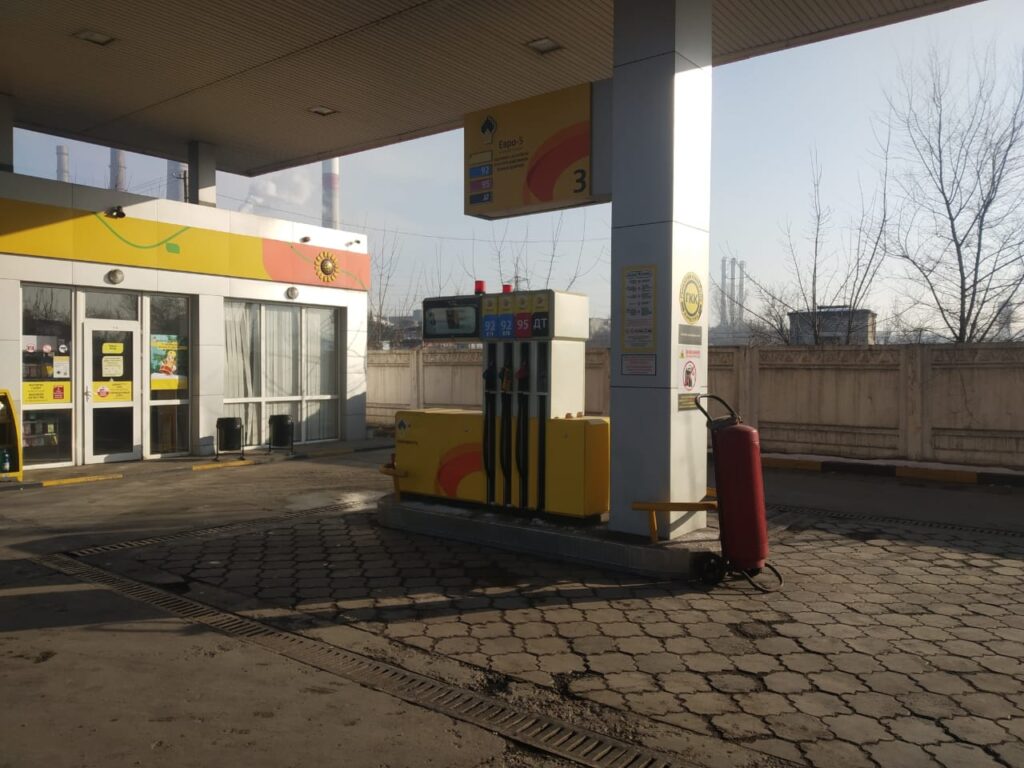
Russia’s decision to prolong restrictions on gasoline exports has raised concerns in energy markets, but for Central Asia, the immediate fallout appears limited. The true significance lies in what the move reveals about structural dependencies, the role of the Eurasian Economic Union (EAEU), and the region’s long-term push to diversify energy supplies. Moscow Extends Ban On September 2, Russian officials confirmed that the government may prolong its gasoline export ban for oil producers into October, extending measures first introduced in late summer. Deputy head of the Federal Antimonopoly Service, Vitaly Korolev, told state media that the authorities were weighing a one-month extension beyond the current deadline of September 30. As reported by Reuters, the aim is to stabilize domestic fuel supplies following refinery outages and a seasonal spike in demand. Ukrainian drone strikes have also damaged key refineries, reducing Russia’s production capacity by an estimated 10–17%. The ban affects a relatively small share of Russia’s overall fuel output but highlights the state’s readiness to intervene in energy markets. Previous restrictions in 2023 and 2024 temporarily halted shipments to stabilize domestic prices. The latest decision reflects similar concerns: tightening inventories, growing demand from the agricultural sector, and pressure to prevent inflation ahead of winter. While Moscow insists the measure is temporary, traders and governments across post-Soviet space are watching closely. Russia remains one of the world’s largest fuel exporters, and even marginal policy changes can cause significant ripples. Fuel Security in Central Asia For Central Asia, the impact of the ban will be blunted by exemptions. As members of the EAEU, both Kazakhstan and Kyrgyzstan continue to import Russian gasoline without interruption. Kazakhstan’s Ministry of Energy issued a statement stressing that the country is self-sufficient, pointing to its refineries in Pavlodar, Shymkent, and Atyrau. “For countries that have signed the relevant intergovernmental agreement… these restrictions do not apply,” Minister of Energy, Yerlan Akkenzhenov, stated. Kyrgyzstan is highly dependent on Russian imports. However, according to Kyrgyzstan’s Ministry of Energy, the 1.6 million tons of fuel the country consumes annually, 93% of which is imported from Russia under intergovernmental agreements, will remain unaffected by the export ban. Since mid-summer, gasoline and diesel prices have climbed, driven by rising global oil benchmarks and repair work at several Russian refineries. Talks are already in progress to set revised supply volumes for 2026. Non-EAEU states face a different challenge. Uzbekistan sources fuel through state-brokered contracts with Russian companies, ensuring stability for now, but smaller private importers outside of these deals have reported difficulties accessing volumes. Late last year, the Chairman of Uzbekistan’s Central Bank warned that the country’s growing reliance on Russian fuel imports could increase vulnerability to supply shocks, which may translate into limited competition and rising prices. Tajikistan remains heavily dependent on Russian fuel through bilateral import agreements, and its virtually non-existent refining capacity makes it highly susceptible to external price fluctuations, a vulnerability underscored by seasonal diesel shortages and repeated spikes in domestic fuel prices. Turkmenistan, meanwhile, continues subsidizing its energy sector heavily:...

Russian Gasoline Export Ban Will Not Impact Kyrgyzstan, Ministry Confirms

The temporary ban on gasoline exports introduced by the Russian government on August 27 will not affect Kyrgyzstan, the country’s Ministry of Energy has confirmed. As a member of the Eurasian Economic Union (EAEU), Kyrgyzstan is exempt from the restriction, which applies only to non-EAEU countries. Kyrgyzstan consumes approximately 1.6 million tons of motor fuel annually, 93% of which is imported from Russia under a 2016 intergovernmental agreement on fuel trade. While the full quotas for 2025 have yet to be fulfilled, deliveries remain uninterrupted, and negotiations are ongoing regarding 2026 volumes. Despite the exemption, domestic fuel prices in Kyrgyzstan have risen since mid-2025, reflecting wholesale price hikes in Russia. The Association of Oil Traders of Kyrgyzstan anticipates further increases in retail prices if the current upward trend at Russian refineries continues. The surge in Russian wholesale prices is attributed to multiple factors, including reduced refining capacity due to both scheduled and emergency maintenance, infrastructure damage from Ukrainian drone attacks, and ongoing difficulties in procuring technological equipment amid Western sanctions. In Kyrgyzstan, the price of AI-92 gasoline, a commonly used grade, has already reached 70 soms ($0.80) per liter. Nevertheless, retail fuel prices in Kyrgyzstan remain lower than in neighboring Tajikistan and Uzbekistan, which also depend on Russian imports but do not benefit from the EAEU exemption.

Has Kyrgyzstan Benefited From Its Membership of the EAEU?

On the sunlit shores of Lake Issyk-Kul this August, Kyrgyzstan played host to leaders from across the Eurasian Economic Union (EAEU). On August 14-15, officials from Armenia, Belarus, Kazakhstan, and Russia descended on the resort town of Cholpon-Ata for a meeting of the Eurasian Intergovernmental Council, accompanied by ceremonies to mark a decade since Kyrgyzstan joined the Moscow-led economic bloc. The Kyrgyz government issued a commemorative stamp to celebrate the anniversary, while the guest of honor, Russian Prime Minister Mikhail Mishustin, arrived with pledges of deeper integration. Rosatom, Moscow’s nuclear agency, signed agreements to build Kyrgyzstan’s first wind farm near Issyk-Kul, while the union’s five governments also agreed to recognize each other’s digital documents, and talks continued on a long-awaited gas union. Mishustin also caused a stir on social media by addressing the Kyrgyz honor guard in their own language. The words “Salam Asker” (hello, soldiers) were enough to draw appreciation from a Kyrgyz society unused to hearing Russian politicians use any language but Russian in its former colonies. The flattery was all part of the choreography: in return, Kyrgyz government officials and state media fell in line to proclaim the benefits of EAEU membership. But have these benefits been worth it? Or has the EAEU merely tethered Bishkek to a partner whose grip is more suffocating than supportive? [caption id="attachment_35121" align="aligncenter" width="1600"] The Conference Hall at Cholpon-Ata, where the council meeting took place; image: Joe Luc Barnes[/caption] The Case for the Union Kyrgyz officials are keen to emphasize the upsides. In an interview with state mouthpiece Slovo.kg, former economic minister Arzybek Kozhoshev said that joining the bloc had eased conditions for Kyrgyz migrant laborers in Russia and Kazakhstan. “With the accession of the Kyrgyz Republic to the EAEU, the conditions of stay and work of citizens of the Kyrgyz Republic in other EAEU countries have changed significantly,” Kozhoshev said, highlighting simplified entry, no requirement to take a Russian language exam, equal access to health insurance, and even the right to draw pensions on par with local workers. For a country where remittances have accounted for around 25% GDP over the past decade, these measures are not insignificant. Kyrgyz drivers, once barred from operating commercial vehicles in Russia, now enjoy full rights. Digital labor platforms like Work Without Borders make it easier to find jobs, and migrant workers in Russia pay the same flat 13% tax as local workers. In short, for the hundreds of thousands of Kyrgyz toiling in Moscow, Novosibirsk, and Almaty, the EAEU has meant fewer hurdles and more predictability. It’s worth bearing in mind that other potential labor destinations, such as Korea, the United States, or the European Union, are not handing out hundreds of thousands of visas to Kyrgyz citizens every year. Kremlin officials have also stressed that Kyrgyzstan pays lower tariffs on Russian gas – only $150 per 1,000 cubic meters, due to its EAEU membership. That said, given Russia’s current oversupply of gas with the closure of the European market, this is not...

Kyrgyzstan and Russia Sign $270 Million in Agreements at Issyk-Kul Forum

At the seventh Kyrgyz-Russian Economic Forum on the shores of Issyk-Kul, Kyrgyzstan and Russia signed nearly 30 agreements worth about US $270 million. The forum brought together around 1,000 representatives from government agencies, investment funds, businesses, and public organizations across member states of the Eurasian Economic Union (EAEU). In his address, President Sadyr Japarov said Kyrgyzstan has maintained average annual economic growth of 9 per cent since 2022, the highest rate among countries in the Commonwealth of Independent States and the EAEU. He described the forum as a vital platform for strengthening cooperation, exchanging experience, and fostering direct business ties. He also stressed the importance of technological independence, protection of digital data, and the development of national IT infrastructure. The agreements span energy, industry, transport, aviation, agriculture, the digital economy, education, and logistics. They include a US $55 million contract for Airports of Kyrgyzstan to acquire aircraft from a Russian manufacturer, a US $2.8 million memorandum for the purchase of an electric cruise ship, supply agreements for tractors, trucks, metal products, and machine tools, and plans for a milk processing complex. Additional deals cover financing arrangements for Kyrgyz companies to issue securities on the Russian market, an investment agreement with the Eurasian Development Bank to support projects through the Russian-Kyrgyz Development Fund, and a commitment by the Kyrgyz Green Energy Fund to purchase electricity from Russian suppliers. Roscosmos and the Kyrgyz Ministry of Digital Development also signed a memorandum on the peaceful exploration of space. First Deputy Prime Minister Daniyar Amangeldiev noted that during Kyrgyzstan’s decade as an EAEU member, the country has seen improvements in socioeconomic indicators, a decline in unemployment, and continued growth in priority sectors.

Kyrgyzstan Tops EAEU in Construction Growth Despite Labor Woes

Kyrgyzstan recorded the highest growth in construction activity among member states of the Eurasian Economic Union (EAEU) during the first half of 2025, according to data published by the Eurasian Economic Commission (EEC). Infrastructure Boom Drives Expansion Between January and May 2025, construction volumes in Kyrgyzstan nearly doubled compared to the same period in 2024. Last year, the sector had already grown by 38% year-on-year. Armenia followed with a growth rate of 29%, while Kazakhstan, Belarus, and Russia posted more modest increases of 15.4%, 12.3%, and 5.5% respectively. Across the EAEU, construction grew by an average of 6.8%. The primary drivers of Kyrgyzstan’s construction boom include extensive state and private investment in housing, infrastructure, and industrial development. The government has focused on building hydroelectric power plants, residential complexes, and administrative buildings. Notably, the state mortgage program offers housing loans at 4-8% interest rates, well below market levels. From January to April 2025, the Cabinet of Ministers allocated nearly $500 million toward housing projects, supplemented by $77 million in equity financing. To help stabilize construction costs, the government also classified cement as a socially significant good, subject to price controls. According to The Times of Central Asia, investment in housing, infrastructure, and social facilities rose by 62% year-on-year during the first four months of 2025, reaching approximately $800 million, the highest figure in recent years. The construction sector contributed an estimated 3% to Kyrgyzstan’s GDP growth in the first half of the year. Quality and Labor Concerns Persist Despite these achievements, concerns are growing over construction quality and labor shortages. Residents in major cities report poorly planned developments that lack supporting infrastructure, including roads and essential utilities such as water and electricity. Speaking to The Times of Central Asia, construction auditor Bakhtiar Kasymaliyev highlighted critical challenges in project execution. “We have serious problems with quality and professionalism,” he said. “There is a shortage of skilled concrete workers and bricklayers. They are in high demand. As a temporary solution, companies are bringing in labor from Pakistan, India, and Egypt, but most of them are unskilled. To improve quality, we need to attract qualified specialists from abroad.” According to Kasymaliyev, the labor shortage is already impacting project timelines and structural integrity, raising red flags amid the sector’s rapid expansion.

Kyrgyzstan Eases Plastic Ban to Comply with EAEU Standards

Kyrgyz President Sadyr Japarov has signed amendments to the law “On Limiting the Circulation of Polymer Film Bags and Plastic Items in the Territory of the Kyrgyz Republic,” easing some of the country’s planned restrictions on single-use plastics. The law was originally passed by parliament on June 17, 2025. Initially set to take full effect on January 1, 2027, the legislation included a sweeping ban on the production, import, and sale of several plastic products, including: Polymer film bags All types of disposable plastic tableware Disposable plastic food packaging PET (polyethylene terephthalate) bottles Disposable plastic egg cartons Plastic coffee capsules Grocery bags Under the newly adopted amendments, PET bottles and disposable plastic food packaging have been removed from the list of banned items. Additionally, the original ban on disposable plastic tableware has been narrowed to apply only to non-recyclable products. Aligning with Regional Trade Rules The changes were introduced to align Kyrgyzstan’s environmental legislation with the regulations of the Eurasian Economic Union (EAEU), which comprises Armenia, Belarus, Kazakhstan, Kyrgyzstan, and Russia. Several of the proposed restrictions, particularly the ban on PET bottles and plastic food containers, had sparked concern among domestic and regional businesses, who warned of potential disruptions to manufacturing and cross-border trade. Industry groups argued that the original provisions would have conflicted with common EAEU standards, complicating compliance and affecting supply chains. Environmental Efforts Continue in Issyk-Kul Despite the softening of national restrictions, local efforts to combat plastic pollution remain in place. As The Times of Central Asia previously reported, Kyrgyzstan banned the use and sale of plastic bags in Issyk-Kul’s resort and recreational areas as of March 2025. The move is part of a broader initiative to protect the lake’s fragile ecosystem and preserve environmental cleanliness.