Uzbekistan has become one of Central Asia’s strongest growth stories. GDP expanded by 6.5% in 2024, and the Asian Development Bank projects growth of 6.7% in 2026 and 6.8% in 2027. Industry, services, and foreign investment are all expanding. The World Bank says real GDP growth averaged around 6% a year between 2017 and 2025.
Beneath that momentum, however, a quieter problem is taking shape. Uzbekistan may not yet be training enough workers for the economy it is trying to build. The issue is not a shortage of capital; it is a shortage of market-ready skills.
The country has moved from an isolated, heavily state-controlled economy toward a more open and reform-driven model in less than a decade. But if education, vocational training, and private-sector demand do not align faster, Uzbekistan risks turning one of the region’s strongest demographic advantages into a labor-market strain.
A Dividend That Could Become a Deficit
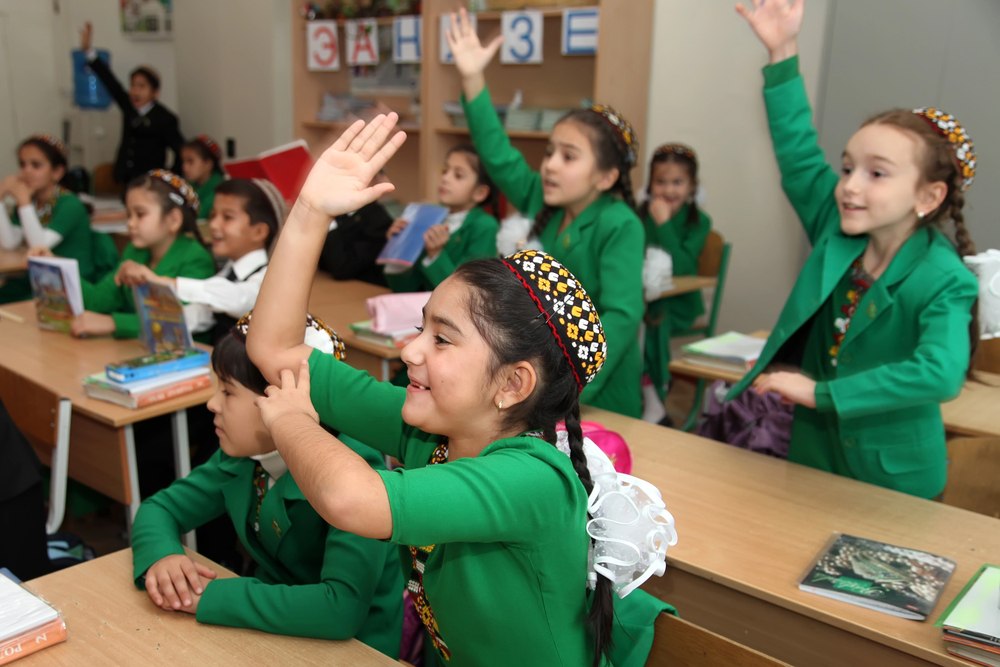
Uzbekistan is a young country in every sense. About 700,000 young people enter the job market each year, while the working-age population is expected to keep expanding for decades. In development economics, this kind of demographic concentration is often described as a dividend: a period when a large share of the population is of working age, productive, and capable of driving growth.
The risk is that the dividend does not materialize automatically. It depends on whether young people can move into productive, formal, and better-paid work. If the workforce entering the economy is not equipped with the skills employers need, the same demographic pressure can feed into informality, underemployment, migration, and social strain.
The official unemployment rate fell to 4.9% in the third quarter of 2025. That is a meaningful improvement. But around 760,000 people remained registered as job seekers, and the International Labour Organization has estimated informal employment at about 40% of the workforce. Remittances also remain a structural pillar of household income: according to Central Bank data cited by local media, inflows reached $18.9 billion in 2025, up from $14.8 billion in 2024.
This is not the picture of a country that has already solved its human-capital challenge. It is the picture of a country racing against time.
The Mismatch at the Heart of the Problem
The core challenge is not a shortage of graduates. Higher education has expanded dramatically. According to Uzbekistan’s National Statistics Committee, coverage among 18- to 23-year-olds reached 47.7% at the start of the 2024/2025 academic year, up from 8.3% in 2017. The number of higher education institutions has also grown rapidly.
By conventional access metrics, this is an extraordinary achievement. But enrollment alone is not the measure that matters. Employers need workers who can solve practical problems, operate modern equipment, manage digital systems, and adapt quickly to changing production and service needs.
Too many students are still moving through programs shaped by an older economic model: credential-heavy, theoretically oriented, and weakly connected to the needs of a modern labor market in IT, manufacturing, logistics, energy, tourism, and services.
The student-financing system has also reinforced the mismatch. The World Bank has noted that the existing system has not been sufficiently aligned with labor-market needs, including high-demand fields such as STEM and information and communications technology. Women make up a large share of students and education-loan beneficiaries, but they remain underrepresented in STEM fields where demand and wages are often stronger.
The result is a paradox: Uzbekistan is investing heavily in education, but its training pipeline is not yet producing enough of the skills its economy most urgently needs.
What Is Being Done, and Where the Gaps Remain
To its credit, the Uzbek government has recognized the problem and is moving on several fronts.
Vocational and technical education is being pushed closer to the center of national development policy. President Shavkat Mirziyoyev has declared 2026 the year of training young people in modern professions. The same official account says an Agency for Vocational Education is being created to introduce a new educational environment and international standards across 598 technical colleges.
The reform agenda also includes cooperation between 100 technical colleges and educational organizations in Germany, Switzerland, China, South Korea, and the United Kingdom. International BTEC programs have been launched in 14 technical colleges covering areas such as tourism, IT, medicine, construction, logistics, energy, mechanical engineering, biotechnology, and the creative economy.
The October 2025 presidential resolution PQ-316 points in the same direction. It sets out reforms to the vocational education system, including closer employer involvement, stronger regional coordination, and a greater focus on employment outcomes. Its hub-and-spoke logic is practical: not every institution can be equipped with expensive modern laboratories and expert trainers, so regional centers can concentrate high-cost resources and serve surrounding colleges.
A major external commitment followed in December 2025, when the World Bank approved a $250 million loan under the EduImkon Program. The program is intended to expand access to student financing for an estimated 600,000 young people over three years, with around 80% of funds directed toward low-income students and women. Crucially, it is also designed to make student financing more relevant to labor-market demand.
School-level reform is also part of the same picture. Unified state exams for 9th and 11th graders are due to be introduced from the 2026/2027 academic year, with results guiding students toward vocational or higher education pathways. This could create a more coherent pipeline from school to work if implementation is transparent and if vocational routes gain real status among families and employers.
These are genuine achievements. They show a government that is listening to its labor market and trying to adapt its institutions. But the gap between policy ambition and implementation on the ground remains significant.
What Still Needs to Happen
First, curriculum reform must accelerate. Technical schools need enough freedom to respond to local labor demand, not only to centrally defined programs. In a fast-moving economy, demand for skills in ICT, green energy, advanced manufacturing, logistics, and business services can shift faster than any centralized planning mechanism can track. Institutions need room to adjust courses in near-real time with employers.
Second, the gender dimension needs targeted attention. Legal reforms and financing support help, but they will not be enough by themselves. If girls are steered away from technical fields from an early age, the country loses talent before students even reach university or technical college. Uzbekistan needs scholarships, role models, school-level career guidance, and employer partnerships that make technical careers visible and credible for young women.
Third, Uzbekistan must build stronger institutional bridges between education and the private sector. The World Bank Country Economic Memorandum noted that growth between 2017 and 2022 did not generate the desired level of employment, although job creation accelerated in 2023 and 2024. That finding points to a deeper structural problem: investment does not automatically become productive employment.
State-owned enterprises still play a large role in key sectors. That can slow the feedback loop between firms, training institutions, and workers. Private companies are often quicker to define new skill needs, test new training models, and reward practical competence. Deeper market liberalization and stronger employer engagement in curriculum design are therefore not peripheral issues. They are central to whether education reform produces jobs at scale.
The Stakes Are High, and the Window Is Narrow
Uzbekistan has something many countries would envy: youth, time, and economic momentum. The reform trajectory under Mirziyoyev is real. International institutions, including the World Bank, ADB, UNESCO, and the ILO, are engaged and aligned around human capital, skills, and job creation.
But demographic windows do not stay open indefinitely. Young people entering the labor market now will not wait for institutions to catch up. They will look for informal work, migrate, or remain underemployed if formal jobs and useful skills do not meet at the right speed.
Uzbekistan’s economic future will not be decided by its gold reserves, its cotton fields, or even its trade corridors, vital as these are. It will be decided by whether the country can build an education and training system that gives young people the practical, market-relevant skills to power a modern economy.
The issue is no longer whether Uzbekistan understands the problem. It is whether schools, employers, and the state can close the gap before today’s demographic advantage becomes tomorrow’s labor-market pressure.
The views expressed in this article are those of the author and do not necessarily reflect the official policy or position of the publication, its affiliates, or any other organizations mentioned.