• KGS/USD = 0.01144 0%
  • KZT/USD = 0.00208 0%
  • TJS/USD = 0.10429 0.1%
  • UZS/USD = 0.00008 0%
  • TMT/USD = 0.28530 0%
  • KGS/USD = 0.01144 0%
  • KZT/USD = 0.00208 0%
  • TJS/USD = 0.10429 0.1%
  • UZS/USD = 0.00008 0%
  • TMT/USD = 0.28530 0%
  • KGS/USD = 0.01144 0%
  • KZT/USD = 0.00208 0%
  • TJS/USD = 0.10429 0.1%
  • UZS/USD = 0.00008 0%
  • TMT/USD = 0.28530 0%
  • KGS/USD = 0.01144 0%
  • KZT/USD = 0.00208 0%
  • TJS/USD = 0.10429 0.1%
  • UZS/USD = 0.00008 0%
  • TMT/USD = 0.28530 0%
  • KGS/USD = 0.01144 0%
  • KZT/USD = 0.00208 0%
  • TJS/USD = 0.10429 0.1%
  • UZS/USD = 0.00008 0%
  • TMT/USD = 0.28530 0%
  • KGS/USD = 0.01144 0%
  • KZT/USD = 0.00208 0%
  • TJS/USD = 0.10429 0.1%
  • UZS/USD = 0.00008 0%
  • TMT/USD = 0.28530 0%
  • KGS/USD = 0.01144 0%
  • KZT/USD = 0.00208 0%
  • TJS/USD = 0.10429 0.1%
  • UZS/USD = 0.00008 0%
  • TMT/USD = 0.28530 0%
  • KGS/USD = 0.01144 0%
  • KZT/USD = 0.00208 0%
  • TJS/USD = 0.10429 0.1%
  • UZS/USD = 0.00008 0%
  • TMT/USD = 0.28530 0%

Viewing results 1 - 6 of 26

Tokayev in New York: $100B U.S. Investment Push Boosts Kazakhstan Ties

Kazakhstan and the United States are continuing to strengthen their strategic partnership, with investment playing a central role. At a roundtable with U.S. business representatives in New York, President Kassym-Jomart Tokayev stated that American investments in Kazakhstan’s economy have surpassed $100 billion. “Today, more than 630 American companies are successfully operating in our country, including Chevron, ExxonMobil, Boeing, Visa, Mastercard, Meta, Wabtec, and Citibank. We regard the U.S. as an important strategic partner and reaffirm our commitment to further developing multifaceted cooperation,” Tokayev said. The president noted that Kazakhstan’s economy grew by 6.5% in the first eight months of 2025. He added that ongoing political and economic reforms are creating favorable conditions for long-term growth and attracting further investment. Energy and Uranium: The Cornerstone of Cooperation Energy continues to underpin U.S.-Kazakhstan relations. “We recognize and highly value the large and successful investments of Chevron and ExxonMobil over the past 30 years. Despite all the turbulence in regional geopolitics, their presence in our country has never been questioned,” Tokayev said. He pointed out that Kazakhstan supplies about 40% of the global uranium market and nearly a quarter of U.S. imports. Tokayev also highlighted Kazakhstan’s “four sources” strategy - oil, gas, coal, and uranium - and expressed support for the U.S. approach to coal as a reliable energy source in the near term. $4.2 Billion Wabtec Agreement: A Landmark Deal A key outcome of Tokayev’s U.S. visit was the signing of a $4.2 billion agreement with American locomotive manufacturer Wabtec. According to the U.S. Department of Commerce, the deal will see Kazakhstan’s national railway company, Kazakhstan Temir Zholy (KTZ), acquire 300 ES44Aci Evolution Series freight locomotives over the next decade. U.S. Secretary of Commerce Howard Lutnick described the contract as the "largest in history,” noting it would create approximately 11,000 jobs in Texas and Pennsylvania. “This is not just a story of massive success, it’s an example of how American innovation strengthens global leadership,” he posted on X. Wabtec President and CEO Rafael Santana added, “This project represents KTZ’s ambition to transform Kazakhstan’s railway network into a key bridge between Europe and Asia.” Tokayev has emphasized that Kazakhstan is upgrading transport hubs and rolling out a “Smart Cargo” digital customs and logistics system to streamline east–west and Trans-Caspian transit traffic. Presidential Support: Trump and Tokayev Hold Call The Wabtec agreement was preceded by a phone call between U.S. President Donald Trump and President Tokayev. “I just concluded a wonderful call with the Highly Respected President of Kazakhstan, Kassym-Jomart Kemeluly Tokayev,” Trump wrote on Truth Social. He emphasized the significance of the locomotive deal and linked it to his broader support for revitalizing U.S. infrastructure. “We need to support our rail industry, which has been attacked for years by ‘fake environmentalists.’ Now railroads are coming back and fast!” he said. Observers noted that Trump’s personal involvement underscored the political importance of the agreement for bilateral relations. Green Energy Progress: SAF Plant with LanzaJet Another notable development was the agreement between Kazakhstan’s national oil...
Kazakhstan, Kyrgyzstan, and Uzbekistan Agree on Joint Water and Energy Measures

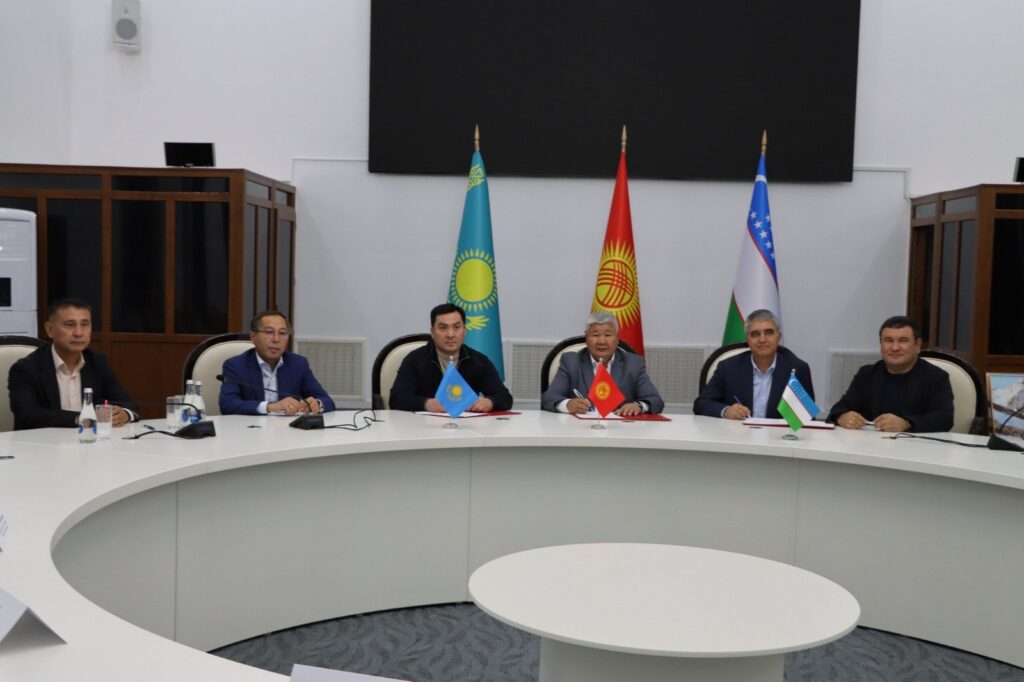
Kazakhstan, Kyrgyzstan, and Uzbekistan have reached a landmark agreement on coordinated water and energy management, signaling a deepening commitment to cross-border cooperation amid growing seasonal and climate-related challenges. The agreement was formalized on September 7 in Cholpon-Ata, Kyrgyzstan, during a meeting of energy ministers and water management authorities from the three countries. The protocols define mutual obligations for water releases and electricity exchanges, with the goal of balancing the region’s energy needs and preserving critical water resources. Under the terms of the agreement, Kyrgyzstan will release water from the Toktogul Hydroelectric Power Plant (HPP) reservoir to downstream Kazakhstan and Uzbekistan. In return, Kyrgyzstan will receive electricity from both countries through spring 2026. According to the Kyrgyz Ministry of Energy, the arrangement is designed to optimize the use of water stored in Toktogul and to secure reliable electricity supplies for Kyrgyzstan during the 2025-2026 autumn-winter period. Regional Power Transit Agreements The protocols also include provisions for cross-border electricity transit: from Russia to Kyrgyzstan via Kazakhstan’s grid, and from Turkmenistan to Kyrgyzstan through Uzbekistan’s transmission network. The Toktogul HPP, situated on the Naryn River, a major tributary of the Syr Darya, is Kyrgyzstan’s largest power facility, generating roughly 40% of the country’s electricity. It serves a dual function: providing domestic energy and regulating water flows that are essential for irrigation in downstream Kazakhstan and Uzbekistan. In winter, Kyrgyzstan often increases power output from Toktogul to meet heating demand, but this can significantly lower reservoir levels, jeopardizing irrigation supplies the following spring. The new agreement is intended to reduce this risk by enabling Kazakhstan and Uzbekistan to supply electricity during peak winter months, allowing Kyrgyzstan to conserve water. Kazakhstan’s Ministry of Energy emphasized that the trilateral deal is crucial to maintaining water levels in Toktogul and ensuring sufficient irrigation for southern Kazakhstan during the next growing season. Broader Regional Energy Cooperation Separately, Kazakhstan and Uzbekistan signed an agreement for the supply of approximately 900 million kilowatt-hours of electricity between March and December 2026. The electricity is expected to cover anticipated shortages in Kazakhstan’s southern power grid and further underscores the growing interdependence of Central Asia’s energy and water systems.

Trilateral Summit in Turkmenistan Focuses on Transport, Energy, and Trade

On August 22, a trilateral summit was held in Turkmenistan’s Avaza National Tourist Zone, bringing together Uzbekistan President Shavkat Mirziyoyev, Chairman of the Halk Maslahaty of Turkmenistan Gurbanguly Berdimuhamedov, and Azerbaijan President Ilham Aliyev. The leaders focused on strengthening cooperation in trade, the economy, transport, energy, and humanitarian affairs, while also emphasizing the development of political, cultural, and multilateral ties. Transport and Transit Mirziyoyev presented several initiatives aimed at expanding regional transport routes and maximizing the region’s transit potential. He highlighted the strategic importance of integrating existing and new corridors to better connect China with South Asia, the Middle East, and Europe. Construction of the China-Uzbekistan railway is underway, and a memorandum has been signed with Pakistan and Afghanistan to establish the Trans-Afghan Corridor. According to Mirziyoyev, these projects could significantly enhance infrastructure utilization across Azerbaijan, Turkmenistan, and Uzbekistan. The development of the Middle Corridor and the Zangezur Corridor was also discussed. The leaders agreed to collaborate on increasing the capacity of regional transport hubs, constructing modern logistics infrastructure at the ports of Turkmenbashi and Baku, implementing a unified tariff policy, and digitizing freight systems. Uzbekistan expressed its willingness to reduce tariffs on a reciprocal basis to facilitate improved access to global markets for regional businesses. Energy Cooperation Energy cooperation was another key focus. The participants emphasized the need to expand collaboration in energy exports and to explore new supply routes. A proposed project to export “green” energy to Europe was described as promising. Additionally, in the hydrocarbon sector, the leaders proposed deeper cooperation in geological exploration and offshore field development in the Caspian Sea. “Joint efforts in the fields of transport, transit, and logistics will be of great importance not only for our countries but also for the wider region,” said President Aliyev, stressing the strategic nature of trilateral cooperation. Aliyev also noted that Azerbaijan’s state oil company SOCAR has begun developing an oil field in Uzbekistan, with results expected in the coming years. Trade and Industry According to summit participants, mutual trade volume between Uzbekistan, Turkmenistan, and Azerbaijan has doubled in recent years, with industrial goods making up 40% of this trade. Talks included preparations for a Comprehensive Action Plan aimed at developing trade and logistics chains, establishing wholesale distribution centers, unifying phytosanitary standards, introducing digital product labeling, and launching joint online platforms. The leaders also underscored the importance of regional engagement and called for increased organization of trade fairs and business forums under the auspices of national chambers of commerce and industry. Summit Outcomes The summit concluded with the endorsement of a new trilateral program for cultural and tourism exchanges, aimed at boosting regional tourism and promoting shared cultural heritage. A joint presidential statement was issued, alongside memoranda of cooperation in the fields of transport and logistics, shipbuilding, and aviation. Additionally, an agreement was signed on cooperation between national commodity and raw material exchanges. To ensure implementation, President Mirziyoyev proposed the development of a roadmap and the institutionalization of regular ministerial meetings focused on key cooperation areas.

Tokayev Calls for Global Action at UN LLDC3 Summit in Turkmenistan

At the Third United Nations Conference on the Landlocked Developing Countries (LLDC3), held from August 5-8 in the Turkmen resort town of Awaza, Kazakhstan’s President Kassym-Jomart Tokayev urged the international community to deepen cooperation, enhance regional connectivity, and take decisive collective action in support of the 32 countries that lack direct access to the sea and remain on the periphery of global trade. A Global Call for Equality and Interconnectedness Speaking at the plenary session, Tokayev highlighted Kazakhstan’s leadership in advancing the LLDC agenda. In 2003, Almaty hosted the first UN conference on landlocked countries, which culminated in the Almaty Programme of Action (APoA). Two decades later, the president noted, structural barriers, such as limited market access, underdeveloped infrastructure, and high exposure to geopolitical shocks, remain largely unchanged. “Landlocked countries should be seen as equal and promising partners in global development,” Tokayev said. “Our voice must be louder and our cooperation deeper.” [caption id="attachment_34680" align="alignnone" width="300"] @akorda[/caption] The Awaza Action Programme: A Roadmap for 2024-2034 The centerpiece of LLDC3 was the adoption of the Awaza Action Programme for the coming decade, structured around five strategic priorities: structural transformation of economies, development of sustainable infrastructure, trade facilitation, regional integration, and resilience. Kazakhstan endorsed the plan and called for stronger political and financial support from transit countries, international institutions, and private investors. Tokayev emphasized the need for innovative financing tools to mobilize investment in transport, energy, and digital infrastructure. Addressing the Climate Challenge The president also highlighted the disproportionate climate-related vulnerabilities faced by LLDCs, including water scarcity, glacial melt, and desertification. He called for a balanced and inclusive approach to climate policy and invited participants to the Regional Environmental Summit, scheduled for April 2026 in Astana, to be co-hosted with the United Nations. Tokayev also pointed to Kazakhstan’s recent achievements in digital innovation and sustainability, citing the launch of the Alem.AI Artificial Intelligence Center and the commissioning of a new national supercomputer. “We are open to international scientific cooperation,” he said. [caption id="attachment_34681" align="alignnone" width="300"] @akorda[/caption] Central Asia as a Model of Regional Resilience Despite geographic constraints, Tokayev presented Central Asia as a case study in overcoming isolation through cooperation. “Geography does not determine destiny,” he said. “With political will, strategic investment, and international partnership, lack of access to the sea can become not a barrier but a source of growth.” Kazakhstan is investing heavily in transport corridors such as the Middle Corridor (Trans-Caspian International Route) and the North-South Corridor, strengthening its role in the Eurasian logistics network. Energy Diplomacy and Regional Projects On the sidelines of the conference, Central Asian leaders convened for informal talks, where they discussed priority areas of cooperation, including energy. Topics included development of Turkmenistan’s Galkynysh Gas Field, one of the world’s largest, and ongoing transport projects such as the Kazakhstan-Turkmenistan-Iran railway and the Turkmenbashi-Garabogaz-Kazakhstan border highway. According to the UN, trade costs in LLDCs are 74% higher than in coastal states, and cross-border shipping takes twice as long. Collectively, these countries account for only 1.2% of...

Tajikistan to Supply Rogun Hydropower to Uzbekistan at 3.4 Cents per kWh

Tajikistan and Uzbekistan have agreed to a new phase of energy cooperation that will see electricity from Tajikistan’s Rogun Hydropower Plant (HPP) exported to Uzbekistan at an initial price of 3.4 US cents per kilowatt-hour, according to Tajikistan’s Ministry of Justice legal information portal. The price, which includes a zero-rated VAT, will increase by 1% annually starting in the second year of supply. Deliveries are scheduled primarily during periods of planned shortages in Uzbekistan’s energy system and will follow an approved schedule coordinated by the countries’ respective system operators. The volume and technical details of the supply arrangement will be formalized in a separate electricity purchase agreement between Rogun HPP and Uzbekistan’s Uzenergosotish company. Electricity will be transmitted via interstate power lines, supplementing ongoing exports from Tajikistan’s national utility Barki Tojik. Regional Energy Integration The Rogun HPP, a key component of Tajikistan’s long-term energy strategy, is also drawing interest from Kazakhstan, which recently announced its intent to purchase electricity from the plant. The price for Kazakhstan is likewise set at $0.034 per kWh, excluding VAT, and subject to an additional transit fee based on seller-incurred costs. Payments are to be made within 35 days of each delivery period. During the plant's current construction phase, electricity exports will occur only during the vegetation season (April 1 to September 30). Once Rogun reaches full operational capacity, deliveries will expand to year-round. Agreement Terms and Project Outlook The bilateral agreement will enter into force once both governments complete their domestic legal procedures and confirm implementation via diplomatic channels. The initial agreement term is 20 years, with automatic 10-year extensions, unless one party opts out by notifying the other at least six months prior to expiration. Tajikistan has exported electricity to Uzbekistan every summer since 2018, strengthening energy ties in a region historically marked by infrastructure fragmentation. Upon completion, Rogun HPP will be the largest hydropower facility in Central Asia, with an installed capacity of 3,780 megawatts (MW) and estimated annual output of 14.4 billion kWh. Currently, two of the plant’s six turbines are operating at partial capacity, having come online in 2018 and 2019. Full commissioning of the sixth unit is expected by 2029. In 2024, Rogun generated 1.22 billion kWh, contributing 5.5% of Tajikistan’s total electricity production, according to the Ministry of Energy.

Transit of Russian Gas to Uzbekistan Through Kazakhstan Continues to Grow

The volume of Russian natural gas transiting through Kazakhstan to Uzbekistan is on the rise, reflecting deepening regional energy cooperation. Kazakhstan’s Deputy Minister of Energy, Alibek Zhamauov, shared the update during a speech at the international Energy Trends forum, according to Interfax. Gas transit to Uzbekistan via Kazakhstan began in October 2023. In 2024, 5.6 billion cubic meters of Russian gas were delivered through Kazakhstan, surpassing earlier forecasts of 3.8 billion cubic meters. The volume is projected to increase to 7.3 billion cubic meters in 2025, with further plans to reach 11 billion cubic meters per year starting in 2026. The growing volumes highlight Kazakhstan’s emerging role as a vital transit hub for Central Asia. In 2023, the initial year of operation, 1.28 billion cubic meters of gas were transported along this route. Zhamauov stated that the project is part of a broader strategy to enhance regional energy security and develop cross-border gas infrastructure. Kazakhstan’s Ministry of Energy has committed to expanding and upgrading the country’s gas transportation network to accommodate long-term supply agreements with neighboring states. Uzbekistan’s Production Decline Raises Concerns The rising reliance on imported gas comes amid a continued decline in Uzbekistan’s domestic natural gas production. In the first two months of 2025, output fell by 4.2% compared to the same period in 2024. This trend follows a steep drop in production from 61.59 billion cubic meters in 2018 to 44.59 billion in 2024. The shrinking output has sparked concerns over Uzbekistan’s energy security and its broader economic implications. The country’s increasing dependence on regional gas flows highlights the strategic importance of projects like the Russia-Kazakhstan-Uzbekistan transit corridor.