• KZT/USD = 0.00215
  • TJS/USD = 0.10800
  • UZS/USD = 0.00008
  • TMT/USD = 0.29850
  • KZT/USD = 0.00215
  • TJS/USD = 0.10800
  • UZS/USD = 0.00008
  • TMT/USD = 0.29850
  • KZT/USD = 0.00215
  • TJS/USD = 0.10800
  • UZS/USD = 0.00008
  • TMT/USD = 0.29850
  • KZT/USD = 0.00215
  • TJS/USD = 0.10800
  • UZS/USD = 0.00008
  • TMT/USD = 0.29850
  • KZT/USD = 0.00215
  • TJS/USD = 0.10800
  • UZS/USD = 0.00008
  • TMT/USD = 0.29850
  • KZT/USD = 0.00215
  • TJS/USD = 0.10800
  • UZS/USD = 0.00008
  • TMT/USD = 0.29850
  • KZT/USD = 0.00215
  • TJS/USD = 0.10800
  • UZS/USD = 0.00008
  • TMT/USD = 0.29850
  • KZT/USD = 0.00215
  • TJS/USD = 0.10800
  • UZS/USD = 0.00008
  • TMT/USD = 0.29850
15 August 2026

Viewing results 1 - 6 of 69

Focus on Central Asia’s Acute Shortage of Drinking Water

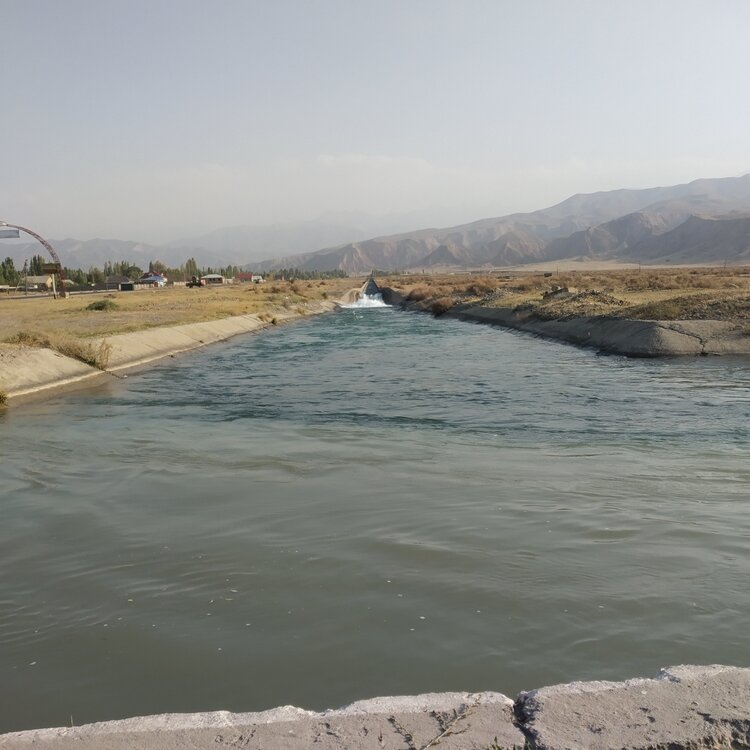
The Eurasian Development Bank (EDB) has declared water availability a particularly acute challenge in Central Asia, given that 10 million people, or 14% of the region’s population, currently lack access to safe drinking water. Between 1994 and 2020, water withdrawals for municipal and domestic needs doubled to 8.6 cubic kilometres. However, since investment in drinking water falls short of meeting the growing demand, the infrastructure for the supply and treatment of water has severely deteriorated. The challenges facing the sector highlight the need for large-scale investment in water supply and sanitation in Central Asia. The annual funding deficit to meet the targets of the United Nations’ Sustainable Development Goal 6 (to ensure the availability and sustainable management of water and sanitation for all) is estimated to reach US $2 billion by 2025–2030. In response, EDB analysts have prepared a report to assess the level of investment required by the region to achieve the UN Sustainable Development Goal by 2030, including proposals for practical steps to secure the necessary funding. Titled “Water and Sanitation in Central Asia”, the report will be launched on 28 June at the Eurasian Development Bank’s Business Forum in Almaty, Kazakhstan.  
Kyrgyzstan Pays Russia $64 million for Stake in the Eurasian Development Bank

Kyrgyzstan has paid $64.7 million to Russia for a stake in the Eurasian Development Bank (EDB), according to Akchabar.  Kyrgyzstan currently owns 4.23% of shares in the EDB. The country's share increased from 0.01% in 2023 after the redistribution of part of Russia's stake, which amounted to 321,151 shares in the bank's paid-up authorized capital. A decision to reallocate the shares was made by the EDB's Board of Directors on December 30, 2022. Following the distribution of securities in 2023,  Kyrgyzstan's share in monetary terms, increased from $700 thousand to $64.7 million. In its report on the transaction, EDB stated: "On May 19, 2023, an agreement was made between the Government of Russia and the Cabinet of Ministers of Kyrgyzstan on the sale and purchase of part of Russia's share in the paid-in authorized capital of EDB.  Signed on March 21, 2023, it came into force and Russia's share of $64 million was transferred to Kyrgyzstan. EDB does not participate in settlements between Russia and Kyrgyzstan on the transferred share in the bank's capital." It is important to note that today, Kyrgyzstan's share in the authorized capital of the EDB is almost entirely paid up. The republic has only $600 thousand in liabilities, payable in case of a bank claim. A similar situation has also been observed in Armenia. Tajikistan has paid 97% ($64.5 million) of its authorized capital to EDB, Belarus—just over 59%, and Russia and Kazakhstan, the largest shareholders of the international institution, about 16% ($678.8 million) and 24% ($565.2 million), respectively. At the end of 2023, the authorized capital of the Eurasian Development Bank amounted to seven million common shares with a par value of $1 thousand each. Each paid-up share carries a right to vote.

EDB Concept for Eurasian Transport Network

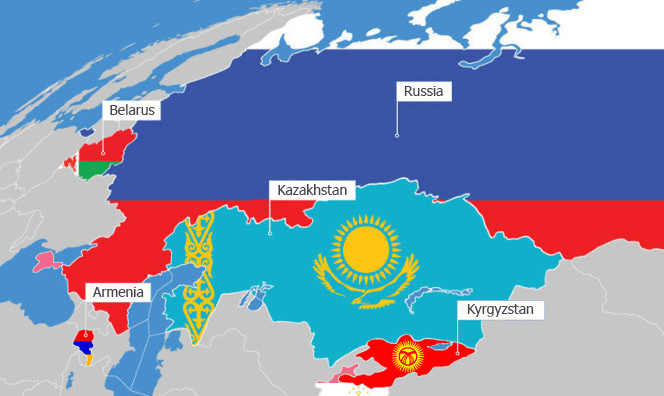
On 6 June, the Eurasian Development Bank (EDB) announced that it is preparing a concept for the Eurasian Transport Network aimed at enhancing connectivity across Eurasia and stimulating economic development, trade and mobility in the region. The EDB is a multilateral development bank with investments in the Eurasian states of Armenia, Belarus, Kazakhstan, Kyrgyzstan, Russia, and Tajikistan. The Eurasian Transport Network is a system of international transport corridors and routes spanning over 50,000 kilometres. In 2023, five key corridors — the Northern, Central and Southern Eurasian Corridors, TRACECA (including the Trans-Caspian International Transport Route) and the International North-South Transport Corridor — carried 260 million tons of freight and 3.6 million international containers. According to the EDB, container traffic has tripled over the past decade. Having mooted the notion of the Eurasian Transport Network back in 2021, the EDB is now poised to present a detailed concept of its development. Analysis has shown that the synergy of corridors is ensured not through their competition, but through the connection and complementarity nature of its routes. The concept includes ten key elements, including addressing Central Asia’s challenges by making the region a transport crossroads, focusing on intra-regional connectivity, and providing a strong impetus to realize the region’s vast agro-industrial potential through new logistics and specialized rolling stock. The EDB’s new report, titled The Eurasian Transport Network, also examines promising transport infrastructure development projects and initiatives, including cooperation between countries and multilateral development banks towards their implementation. The report will be launched at the EDB Business Forum, scheduled for 27–28 June 2024 in Almaty, Kazakhstan.    

Robust Economic Growth in EDB Member States

The latest Macroeconomic Review for the EDB’s six member states — Armenia, Belarus, Kazakhstan, Kyrgyzstan, Russia, and Tajikistan – was released by the Eurasian Development Bank on April 12th. Despite the challenging external economic environment, the report illustrates robust economic growth amongst all its members in January-February this year and according to short-term economic activity indicators, high GDP growth is set to continue. Fuelled by capital investment, Kazakhstan’s economy expanded by 4.2%, and Kyrgyzstan experienced a GDP surge of 8.6%, largely due to intensified investment activity, which spiked to 55%. Propelled by a dynamic increase in industrial output, economic activity in Armenia rose by 13.6%, and Belarus’s economy grew by 4% during the same period, boosted by manufacturing and retailing industries. In Russia, industrial production remains the prime driver of economic growth, raising the nation’s GDP by 6.0%, and Tajikistan’s high growth rates are maintained by consumption and investment sectors. In conclusion, the EDB reports that domestic demand within its represented countries is propelled by national projects, including increased public investment in Armenia, import substitution programs in Belarus and Russia, and the development of mechanical engineering in Kazakhstan and energy sectors in Kyrgyzstan and Tajikistan.

Eurasian Fund for Stabilization and Development to reconstruct road in Kyrgyzstan

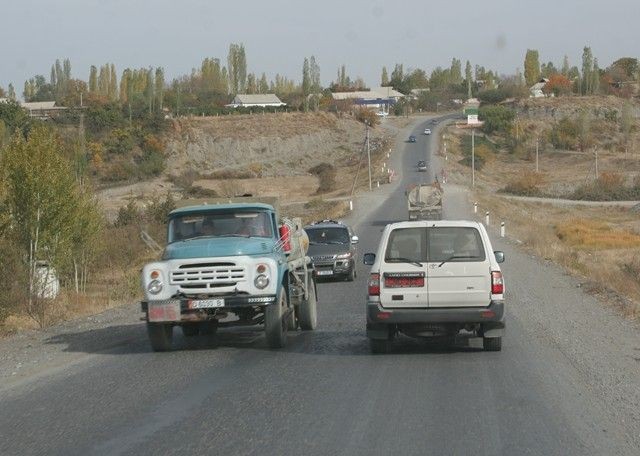
BISHKEK (TCA) — The Eurasian Fund for Stabilization and Development’s (EFSD) delegation visited Bishkek with a monitoring mission to discuss progress of the EFSD-funded investment projects to reconstruct a section of the Bishkek–Osh motor road and commission Unit 2 at Kambarata hydropower plant 2, as well as preparations for the project to reconstruct the Aral–Suusamyr road, the press service of the Eurasian Development Bank (EDB) said on February 12. Continue reading

Key macroeconomic indicators tested for strength in EDB member countries in 2018

BISHKEK (TCA) — In 2018, the Eurasian Development Bank (EDB) member countries — Armenia, Belarus, Kazakhstan, Kyrgyzstan, Russia, and Tajikistan — faced challenges to the region’s macroeconomic stability, according to the quarterly Macroeconomic Review published by the EDB’s Directorate for Research late in December. Continue reading