Viewing results 1 - 6 of 69
BISHKEK (TCA) — In 2017, the economies of Eurasian Development Bank (EDB) member countries — Armenia, Belarus, Kazakhstan, Kyrgyzstan, Russia, and Tajikistan — adapted to negative external developments and embarked onto a trajectory of economic growth. The region’s task for the next several years is to achieve more reliable and higher economic development rates, according to the quarterly Macroeconomic Review published by the Chief Economist Group at the EDB. Continue reading
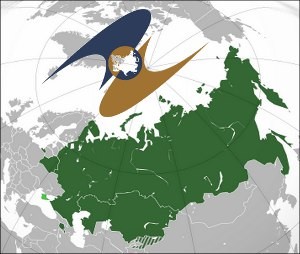
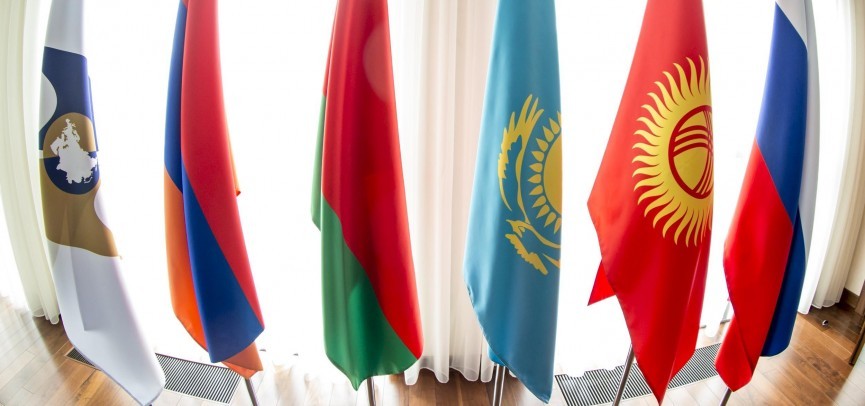
BISHKEK (TCA) — The weight of the Russian rouble in the foreign exchange structure of payments in the Eurasian Economic Union (EEU) — consisting of Armenia, Belarus, Kazakhstan, Kyrgyzstan, and Russia — has increased from 56% to 75% over the recent six years. The dollar’s share has decreased from 35% to 19% over the same time. However, the dollar remains the dominant currency in payments for goods and services between the EEU member states, excluding Russia. It accounts for 50-80% of payments, according to the new report by the Eurasian Development Bank’s (EDB) Centre for Integration Studies, entitled National Currencies in Mutual Payments within the EAEU: Barriers and Prospects. Continue reading
BISHKEK (TCA) — With 2017 nearing to its end, mid-term recovery prospects of the Eurasian Development Bank (EDB) member countries — Armenia, Belarus, Kazakhstan, Kyrgyzstan, Russia, and Tajikistan — become clearer to an extent. While at the beginning of the year there were concerns over the continuing recession in some countries of the region, it becomes evident by its end that all the EDB countries demonstrate positive economic growth, according to the findings of the monthly Macroeconomic Review published by the Chief Economist’s Group at EDB. Continue reading
BISHKEK (TCA) — Eurasian Economic Union (EEU) elites, general population, and business community perceive Eurasian integration in a generally positive light, but their attitude towards that phenomenon is becoming increasingly restrained. When contemplating their countries’ involvement in the EEU, politicians, businessmen, and individual citizens are often inclined to expect that integration will quickly produce a positive impact on the wellbeing of their countries, companies, and families. But economic integration is not a panacea for all of the EEU member states’ structural problems. It is a set of tools, and those who are going to use those tools need to master specific competencies, according to a monograph prepared by the Eurasian Development Bank’s Centre for Integration Studies. Continue reading
BISHKEK (TCA) — The Eurasian Fund for Stabilization and Development (EFSD) will extend grants to finance health care projects in Kyrgyzstan and Tajikistan. Continue reading
BISHKEK (TCA) — Most of the member countries of Eurasian Development Bank (EDB) — including Kazakhstan, Kyrgyzstan, and Tajikistan — face emerging risks to the positive dynamics of economic recovery which was observed in the first half of the year and remained in June, according to the findings presented in the Monthly Macroeconomic Review prepared by the EDB Chief Economist’s Group. Continue reading