• KZT/USD = 0.00222
  • TJS/USD = 0.10830
  • UZS/USD = 0.00009
  • TMT/USD = 0.29850
  • KZT/USD = 0.00222
  • TJS/USD = 0.10830
  • UZS/USD = 0.00009
  • TMT/USD = 0.29850
  • KZT/USD = 0.00222
  • TJS/USD = 0.10830
  • UZS/USD = 0.00009
  • TMT/USD = 0.29850
  • KZT/USD = 0.00222
  • TJS/USD = 0.10830
  • UZS/USD = 0.00009
  • TMT/USD = 0.29850
  • KZT/USD = 0.00222
  • TJS/USD = 0.10830
  • UZS/USD = 0.00009
  • TMT/USD = 0.29850
  • KZT/USD = 0.00222
  • TJS/USD = 0.10830
  • UZS/USD = 0.00009
  • TMT/USD = 0.29850
  • KZT/USD = 0.00222
  • TJS/USD = 0.10830
  • UZS/USD = 0.00009
  • TMT/USD = 0.29850
  • KZT/USD = 0.00222
  • TJS/USD = 0.10830
  • UZS/USD = 0.00009
  • TMT/USD = 0.29850
09 October 2026

Viewing results 1 - 6 of 6

Kazatomprom Secures New Uranium Block as Nuclear Demand Expands

Kazakhstan has granted its state-controlled uranium producer Kazatomprom six-year exploration rights to the Kyzyltu block in the Kyzylorda region, where preliminary resources are estimated at around 10,000 metric tons. Kazatomprom announced the exploration license on September 21 and said geological exploration would begin shortly to determine the block’s commercial potential. Kazakhstan remains the world’s largest uranium producer, accounting for roughly 40% of global mine production. Kazatomprom reported output of 25,839 metric tons in 2025 on a 100% basis, including its partners’ shares. The new exploration rights follow a wider effort by Kazatomprom to replenish its resource base. In March, the company outlined six prospective exploration areas covering more than 1,000 square kilometers, with planned exploration spending through 2030 of $155 million to $176 million. The company is also pursuing longer-term supply agreements with overseas buyers. An August outlook from Bloomberg Intelligence expects Kazatomprom and Canada’s Cameco to provide much of the increase in global uranium mine production during the remainder of this decade. Bloomberg estimates mined supply could rise 23% from 2025 levels to around 193 million pounds of U₃O₈ annually during 2028–2031. It estimates Kazatomprom could reach around 80 million pounds of U₃O₈ annually if sufficient sulfuric acid is available. In this base scenario, the uranium market could remain in surplus through 2031 before moving into deficit from 2032, as demand rises and depletion of low-cost reserves in Kazakhstan and Canada constrains supply. New mines generally require long development periods, limiting the ability of supply to respond quickly to higher demand. China is the largest near-term source of additional demand, accounting for 45% of nuclear capacity currently under construction or planned and has set a target of 110 gigawatts of nuclear capacity by 2030. The United States and European Union are also major markets for Central Asian uranium. U.S. civilian reactor operators purchased 46.9 million pounds of U₃O₈ equivalent in 2025, with Kazakhstan accounting for 28% of deliveries and Uzbekistan 7%, according to the U.S. Energy Information Administration. EU utilities purchased 14,678 metric tons of natural uranium in 2025, with Kazakhstan accounting for 20.3% of deliveries and Uzbekistan 10.4%, according to the Euratom Supply Agency. The European Commission’s nuclear investment assessment projects EU nuclear capacity rising from 98 gigawatts in 2025 to around 109 gigawatts by 2050. Kazakhstan also retains a production-cost advantage. Bloomberg attributes this largely to the widespread use of in-situ recovery, which allows uranium to be extracted without conventional open-pit or underground mining. Sulfuric Acid Supply Remains a Constraint Kazatomprom’s September 21 announcement also addressed Russian sulfuric-acid deliveries, an important issue because the chemical is used extensively in Kazakhstan’s in-situ uranium operations. The company said Russian measures introduced on September 12 had changed export approval procedures through the end of 2026, but had not prohibited exports. Russian suppliers had confirmed their intention to fulfill existing 2026 contracts and were seeking the necessary approvals. Kazatomprom said it did not expect the changes to have a material effect on its 2026 operations or production guidance. Talks over supplies...

Kazakhstan’s Solidcore to Invest $25 Million in Japan Gold Exploration

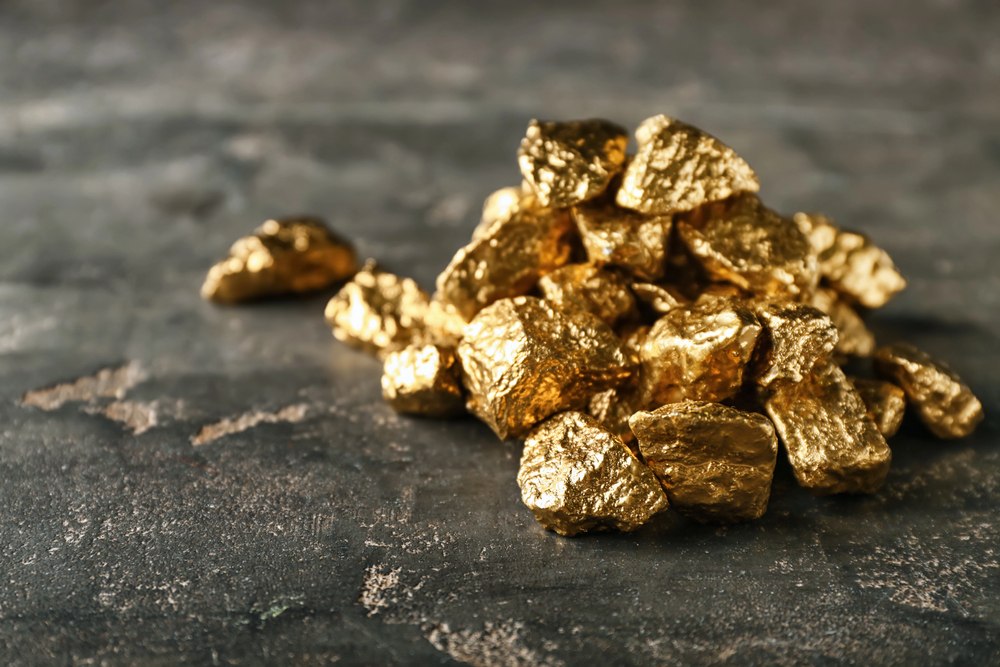
Solidcore Resources, a leading Kazakhstan-based gold producer, is expanding into exploration in Japan. The company will invest $25 million in gold exploration across five project areas on the islands of Hokkaido and Kyushu, with the option to acquire interests of up to 80% in individual projects if exploration proves successful. Solidcore has partnered with Canada-based Japan Gold Corp., a company focused on mineral exploration in Japan. It has also acquired an 18.81% stake in Japan Gold for $6.85 million. If it exercises warrants allowing it to buy additional shares, its interest could rise to 19.9% on a partially diluted basis. Solidcore produces gold in Kazakhstan, and its shares are traded on the Astana International Exchange. In 2025, the company produced 395,000 ounces of gold equivalent, 19% less than a year earlier. Higher gold prices nevertheless pushed revenue up 13% to $1.5 billion. The partnership covers Hakuryu, Bajo, Mizobe, Ryuo, and Aibetsu, five of Japan Gold’s project areas. Three are on Hokkaido and two on Kyushu. Several are close to historic gold mines, while much of the surrounding territory remains underexplored using modern methods. At Hakuryu, drilling has already identified zones of high-grade gold mineralization. Geophysical surveys at Bajo detected anomalies interpreted as possible extensions of mineralized structures, with strike lengths of more than one kilometer. Mizobe lies in an area with geology similar to Hishikari, Japan’s largest commercially operating gold mine, which produced around 9 million ounces of gold between 1985 and 2025. Ryuo and Aibetsu include areas of historic mining. The Tokusei mine within Aibetsu produced 39,000 ounces of gold and 473,000 ounces of silver between 1930 and 1942. Solidcore CEO Vitaly Nesis said the company was attracted by the potential for large-scale gold discoveries and Japan’s relatively limited modern exploration. “Japan Gold’s license portfolio stands out to us. It has the makings of a large-scale, generational gold district with a distinctive style of geology that we have been historically successfully working with, in a stable, well-regulated, developed and notably under-explored jurisdiction,” Nesis said. Japan Gold holds mineral rights covering more than 3,000 square kilometers. In addition to the five project areas included in the agreement, it retains another 22 projects. The $25 million will fund drilling and other exploration work over three years rather than the purchase of developed deposits. After completing the program, Solidcore will be able to select the most promising areas and earn a 49% direct interest in one or more of them. If further studies indicate that mining could be economically viable, Solidcore will have the option to increase its interest first to 70% and then to 80%. To do so, it will have to fund a pre-feasibility study and then a bankable feasibility study for each selected project. Japan Gold Chairman and CEO John Proust said Solidcore’s strategy of expanding its reserves through geographic diversification fits with his company’s work building an exploration portfolio in Japan. The deal marks an overseas expansion for a major Kazakhstan-based gold producer. Within Kazakhstan, exploration and reassessment...

Kazakhstan to Auction 56 Oil and Gas Blocks

Kazakhstan will auction 56 oil and gas blocks across seven regions, offering investors a new round of exploration and production rights beyond its largest operating fields. The auction will take place on December 25, 2026, on the e-Qazyna platform, with applications accepted through November 18. The December round will take the number of blocks offered in 2026 to 112. December 25 is a normal working day in Kazakhstan, although the date coincides with Christmas Day in many countries whose energy companies are potential investors. The 56 blocks are spread across seven regions, including Kazakhstan’s main western oil-producing areas as well as Ulytau, Kostanay, and Kyzylorda. Most are being offered for exploration and subsequent production, while four are available directly for hydrocarbon production. Kazakhstan is already a major oil producer. According to the U.S. Energy Information Administration (EIA), the country held around 30 billion barrels of proved oil reserves as of January 1, 2025, while production of petroleum and other liquids averaged an estimated 1.9 million barrels per day in 2024. Tengiz, Kashagan, and Karachaganak are the country's primary sources of oil production. Under the auction terms, companies securing rights to the new blocks must carry out geological exploration and drilling within specified time frames. An exploration project must be prepared within one year after the contract is signed, required 2D seismic surveys must be completed within three years, and at least one well must be drilled within four years where stipulated by the terms of the individual block. During production, companies must annually allocate an amount equal to 1% of the previous year's production costs to training Kazakhstani specialists and another 1% to research and development in Kazakhstan. A further 1% of investment under the contract must go toward regional development and local infrastructure. Minimum local-content requirements are 70% for works and services and 30% for goods. Kazakhstani citizens must account for at least 80% of managers and their deputies, 90% of department heads, and all staff classified as specialists or skilled workers. For fields with initial geological reserves exceeding 100 million tons of oil or 50 billion cubic meters of gas, additional requirements apply. Contracts must include at least one commitment to establish or modernize processing facilities, supply hydrocarbons for processing in Kazakhstan, or implement another investment or socioeconomic project. The Times of Central Asia previously reported that more than 20 promising oil and gas structures had been identified in the country's Aral Basin.

SOCAR and BP Prepare for Exploration Drilling in Uzbekistan’s Ustyurt Region

Azerbaijan’s SOCAR, Britain’s BP, and state-owned Uzbekneftegaz are preparing for exploration drilling across six blocks in Uzbekistan’s Ustyurt region. Following completion of a 3D seismic survey, the next stage involves processing the data and selecting a site for the first exploration well. Drilling will help establish whether preliminary estimates of 100 million metric tons of oil and 35 billion cubic meters of gas could translate into commercially recoverable reserves. The work covered the Boyterak, Terengquduq, Birqori, Kharoy, Qoraqalpoq, and Qulboy blocks in the Republic of Karakalpakstan. The seismic survey covered more than 3,000 square kilometers, compared with a minimum commitment of 1,000 square kilometers. The partners reviewed the completed fieldwork and discussed preparations for exploration drilling at a managing committee meeting in Tashkent on September 7. The data still need to be processed and interpreted, and no drilling location or date has been announced. Total investment in the project has been estimated at approximately $2 billion, with development dependent on a commercial discovery. The partners remain at the exploration stage and have committed to drilling one well. Decisions on further investment will depend on its results. Uzbek officials expect the six blocks could contain around 100 million metric tons of oil and 35 billion cubic meters of gas. Potential annual oil production has been estimated at five million metric tons. All three figures remain projections: seismic data help identify promising structures, but drilling is needed to confirm the presence and characteristics of hydrocarbons. Uzbekistan’s Energy Ministry, SOCAR, and Uzbekneftegaz signed a production-sharing agreement covering the six blocks in July 2025. SOCAR was designated the operator. BP joined the project in May 2026, acquiring a 20% interest from each of the two original partners. The British company now holds 40%, while SOCAR and Uzbekneftegaz retain 30% each. The deal marks BP’s return to exploration in Uzbekistan, where it first signed exploration agreements with the same partners in 2018 before withdrawing in 2021. The acquisition coincided with BP’s renewed emphasis on oil and gas investment. The company had previously reduced its exploration portfolio as part of a shift toward low-carbon energy, but subsequently revised its strategy and refocused on its traditional business. When BP joined the project, its regional president for Azerbaijan, Georgia, and Turkey, Gio Cristofoli, said the company saw significant resource potential in Uzbekistan. He said participation in the agreement would expand BP’s exploration portfolio and support its long-term organic growth. For SOCAR, the Ustyurt survey is its largest seismic exploration project outside Azerbaijan. In June, the company reported that more than 80% of the seismic program had been completed and that initial results were providing insights into deeper geological structures. SOCAR announced the completion of fieldwork in July, with data processing expected to finish in the first quarter of 2027. The partners have developed a work plan through 2029. Uzbekneftegaz head Abdugani Sanginov previously proposed accelerating the project and beginning drilling by the end of 2027, but an approved drilling schedule has not been published. Uzbekistan needs to find...

Shell Signs New Exploration Deal in Kazakhstan Amid Legal Disputes

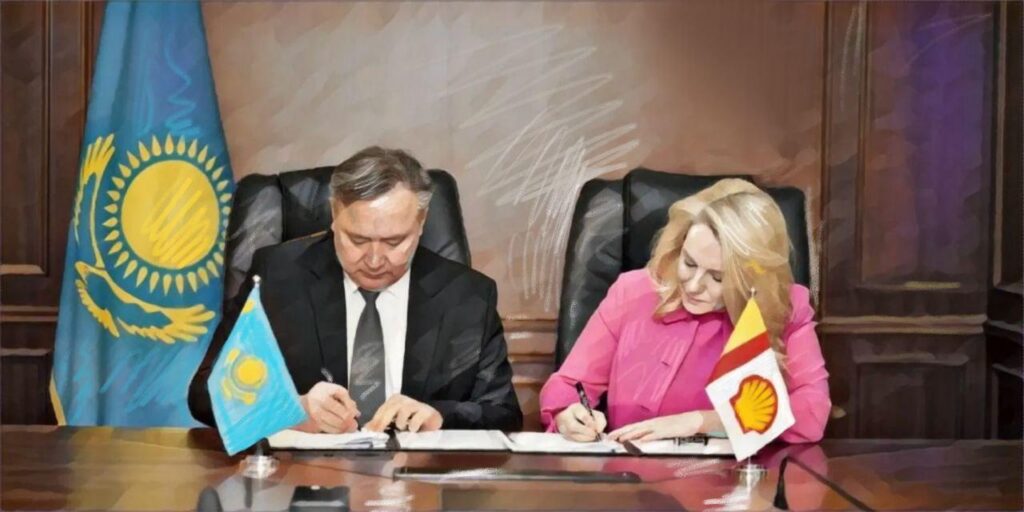
British energy company Shell has launched a new exploration project in Kazakhstan despite previously announcing that it would pause new investments in the country. On March 5, it was announced that Shell had signed a contract for geological exploration in the Aktobe region. The company has been involved in several legal disputes with Kazakhstan over subsoil use and had stated that it did not plan to invest further in the country’s energy sector. Geological Exploration Contract The Zhanaturmys site, which has attracted Shell’s interest, covers an area of 1,377 square kilometers and is located in one of Kazakhstan’s most actively developed oil and gas basins. The document was signed by Kazakhstan’s Deputy Energy Minister, Yerlan Akbarov, and Shell’s Senior Vice President and Chair in Kazakhstan, Suzanne Coogan. The contract provides for seismic exploration, data collection, and technical assessments. “The signing of today’s contract for geological exploration is further confirmation of Shell’s commitment to long-term cooperation with the Republic of Kazakhstan. Drawing on our global experience and advanced technologies, we intend to continue contributing to geological exploration and the expansion of the country’s resource base,” Coogan said. The agreement will remain in force until 2032. The project will be implemented under the terms of an improved model contract. According to Kazakhstan’s Energy Ministry, the company will allocate at least 100 million tenge (about $200,000) to finance socio-economic development in the region where the site is located. Shell is currently involved in three projects in Kazakhstan: the North Caspian Production Sharing Agreement (NCOC, 16.81% stake); the Karachaganak Production Sharing Agreement (29.25% stake); and the Caspian Pipeline Consortium (7.4% stake). Kazakhstan produces around 1.8–1.9 million barrels per day and hosts some of the world’s largest offshore reserves in the Caspian Sea. Western energy majors, including Shell, Chevron, ExxonMobil, and Eni, have operated in the country for decades through complex production-sharing agreements. Legal Disputes In February, Shell CEO Wael Sawan said the company would suspend new investments in Kazakhstan while legal proceedings with the government were ongoing. Numerous lawsuits filed by Kazakhstan, with claims amounting to billions of dollars, have reduced the company’s willingness to invest in the country, he said. “This affects our desire to continue investing in Kazakhstan. Although we see many opportunities for investment in the future, we will wait until we have a clearer picture of how things will turn out,” Sawan stated. Karachaganak and Kashagan Kazakhstan is currently involved in several legal disputes with Western oil companies, both in national courts and international arbitration. The cases concern two major oil and gas projects. One of them is Karachaganak. In 2023, the Kazakh government filed a lawsuit against the field's developers over cost deductions. The initial claim amounted to $3.5 billion but later increased to $6 billion after additional claims were filed. The project is operated by a consortium led by Eni and Shell, each holding a 29.25% stake. Other partners include Chevron (18%), Lukoil (13.5%, which has agreed to sell its stake), and KazMunayGas (10%). In January, it was...

Gold and Copper Exploration in Kazakhstan Gets Boost from Australian Joint Venture

Australian mining firm C29 Metals Limited has entered into a joint venture agreement with Bask International Group Ltd, a company registered in Astana. The newly established joint venture (JV) aims to explore promising copper and gold deposits across Kazakhstan. C29 Metals is not a newcomer to Kazakhstan’s mineral sector. In the spring of 2024, the company obtained a geological exploration license for its Ulytau project, which includes several solid mineral deposits, notably uranium. It has since submitted two additional applications for uranium exploration. However, according to a recent company announcement, the new JV will focus exclusively on copper and gold and will not be involved in C29 Metals’ uranium interests in the country. The joint venture, registered at the Astana International Financial Center (AIFC), will concentrate on identifying and acquiring exploration projects with significant geological potential. According to the agreement, C29 Metals will hold a 75% stake in the venture, with Bask International Group retaining 25%. C29 will fully finance the geological exploration, thereby relieving its Kazakh partner of any financial burden. The board of directors will comprise two representatives from the Australian company and one from the Kazakh side. “The conclusion of this joint venture agreement marks another important milestone in our strategic growth plans,” said Shannon Green, Managing Director of C29 Metals. “The partnership with Bask International Group in Kazakhstan will give us access to opportunities beyond our typical reach. Bask’s network and capabilities will enable us to move at an unprecedented pace as we scale operations.” Yerlan Issekeshev, head of Bask International Group Ltd, emphasized Kazakhstan’s untapped mining potential: “Kazakhstan is on the cusp of a new era in resource development. While exploration slowed during the post-Soviet period, the country’s mineral wealth remains vast and underexplored.” As previously reported by The Times of Central Asia, Kazakhstan is set to auction off 50 gold and rare metal deposits in June 2025, offering electronic tenders for exploration and development rights.