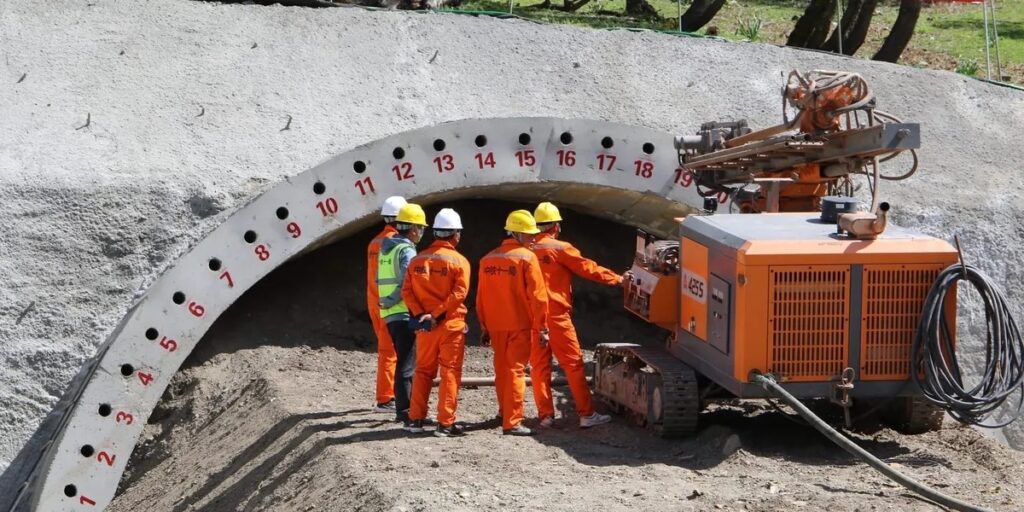
Kazakhstan has granted its state-controlled uranium producer Kazatomprom six-year exploration rights to the Kyzyltu block in the Kyzylorda region, where preliminary resources are estimated at around 10,000 metric tons.
Kazatomprom announced the exploration license on September 21 and said geological exploration would begin shortly to determine the block’s commercial potential.
Kazakhstan remains the world’s largest uranium producer, accounting for roughly 40% of global mine production. Kazatomprom reported output of 25,839 metric tons in 2025 on a 100% basis, including its partners’ shares.
The new exploration rights follow a wider effort by Kazatomprom to replenish its resource base. In March, the company outlined six prospective exploration areas covering more than 1,000 square kilometers, with planned exploration spending through 2030 of $155 million to $176 million. The company is also pursuing longer-term supply agreements with overseas buyers.
An August outlook from Bloomberg Intelligence expects Kazatomprom and Canada’s Cameco to provide much of the increase in global uranium mine production during the remainder of this decade. Bloomberg estimates mined supply could rise 23% from 2025 levels to around 193 million pounds of U₃O₈ annually during 2028–2031. It estimates Kazatomprom could reach around 80 million pounds of U₃O₈ annually if sufficient sulfuric acid is available.
In this base scenario, the uranium market could remain in surplus through 2031 before moving into deficit from 2032, as demand rises and depletion of low-cost reserves in Kazakhstan and Canada constrains supply. New mines generally require long development periods, limiting the ability of supply to respond quickly to higher demand.
China is the largest near-term source of additional demand, accounting for 45% of nuclear capacity currently under construction or planned and has set a target of 110 gigawatts of nuclear capacity by 2030.
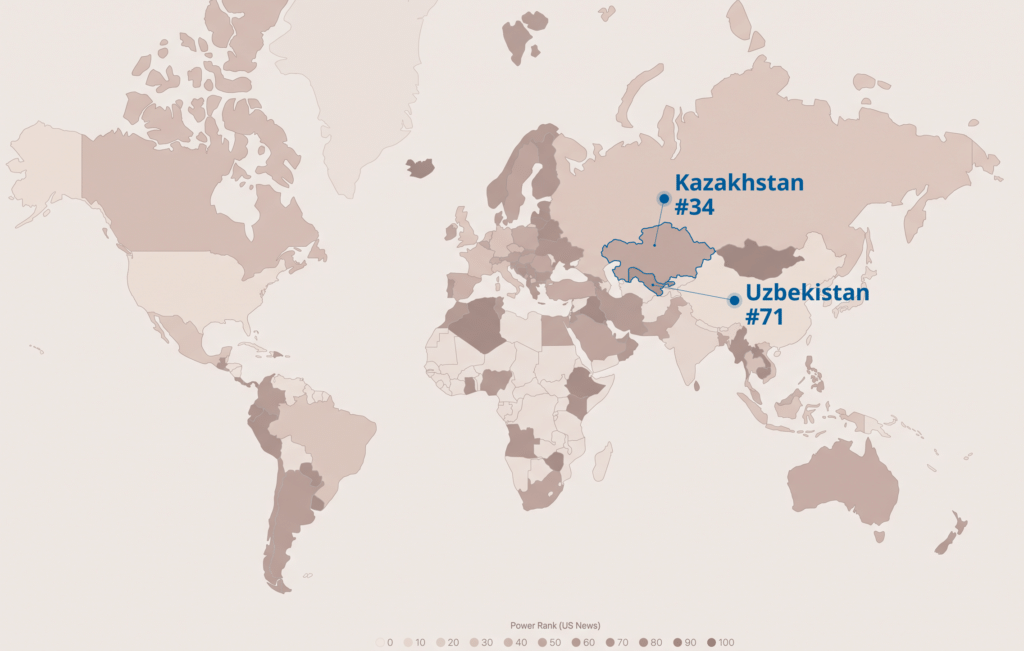
The United States and European Union are also major markets for Central Asian uranium. U.S. civilian reactor operators purchased 46.9 million pounds of U₃O₈ equivalent in 2025, with Kazakhstan accounting for 28% of deliveries and Uzbekistan 7%, according to the U.S. Energy Information Administration.
EU utilities purchased 14,678 metric tons of natural uranium in 2025, with Kazakhstan accounting for 20.3% of deliveries and Uzbekistan 10.4%, according to the Euratom Supply Agency. The European Commission’s nuclear investment assessment projects EU nuclear capacity rising from 98 gigawatts in 2025 to around 109 gigawatts by 2050.
Kazakhstan also retains a production-cost advantage. Bloomberg attributes this largely to the widespread use of in-situ recovery, which allows uranium to be extracted without conventional open-pit or underground mining.
Sulfuric Acid Supply Remains a Constraint
Kazatomprom’s September 21 announcement also addressed Russian sulfuric-acid deliveries, an important issue because the chemical is used extensively in Kazakhstan’s in-situ uranium operations.
The company said Russian measures introduced on September 12 had changed export approval procedures through the end of 2026, but had not prohibited exports. Russian suppliers had confirmed their intention to fulfill existing 2026 contracts and were seeking the necessary approvals.
Kazatomprom said it did not expect the changes to have a material effect on its 2026 operations or production guidance. Talks over supplies for 2027 are continuing.
The company’s 2026 production guidance remains 27,500 to 29,000 metric tons on a 100% basis, including the shares attributable to partners in its joint ventures.
The TQZ sulfuric-acid plant in the Turkestan region is designed to produce 800,000 metric tons annually. Kazatomprom said in its August 21 results that commissioning had been postponed from early 2027 to between the third quarter of 2027 and the first quarter of 2028 after potential fossils were found during construction. The company said it did not expect the delay to materially affect uranium mining operations.
At the Zhalpak deposit, Kazatomprom’s Ortalyk venture commissioned a processing plant on July 29 with annual capacity of up to 500 metric tons. Expansion to 900 metric tons is planned for 2027.