• KGS/USD = 0.01144 0%
  • KZT/USD = 0.00205 0%
  • TJS/USD = 0.10429 0.29%
  • UZS/USD = 0.00008 0%
  • TMT/USD = 0.28571 0.28%
  • KGS/USD = 0.01144 0%
  • KZT/USD = 0.00205 0%
  • TJS/USD = 0.10429 0.29%
  • UZS/USD = 0.00008 0%
  • TMT/USD = 0.28571 0.28%
  • KGS/USD = 0.01144 0%
  • KZT/USD = 0.00205 0%
  • TJS/USD = 0.10429 0.29%
  • UZS/USD = 0.00008 0%
  • TMT/USD = 0.28571 0.28%
  • KGS/USD = 0.01144 0%
  • KZT/USD = 0.00205 0%
  • TJS/USD = 0.10429 0.29%
  • UZS/USD = 0.00008 0%
  • TMT/USD = 0.28571 0.28%
  • KGS/USD = 0.01144 0%
  • KZT/USD = 0.00205 0%
  • TJS/USD = 0.10429 0.29%
  • UZS/USD = 0.00008 0%
  • TMT/USD = 0.28571 0.28%
  • KGS/USD = 0.01144 0%
  • KZT/USD = 0.00205 0%
  • TJS/USD = 0.10429 0.29%
  • UZS/USD = 0.00008 0%
  • TMT/USD = 0.28571 0.28%
  • KGS/USD = 0.01144 0%
  • KZT/USD = 0.00205 0%
  • TJS/USD = 0.10429 0.29%
  • UZS/USD = 0.00008 0%
  • TMT/USD = 0.28571 0.28%
  • KGS/USD = 0.01144 0%
  • KZT/USD = 0.00205 0%
  • TJS/USD = 0.10429 0.29%
  • UZS/USD = 0.00008 0%
  • TMT/USD = 0.28571 0.28%

Viewing results 1 - 6 of 19

L’Étranger: Paris Hosts the Reclusive Leader of Turkmenistan

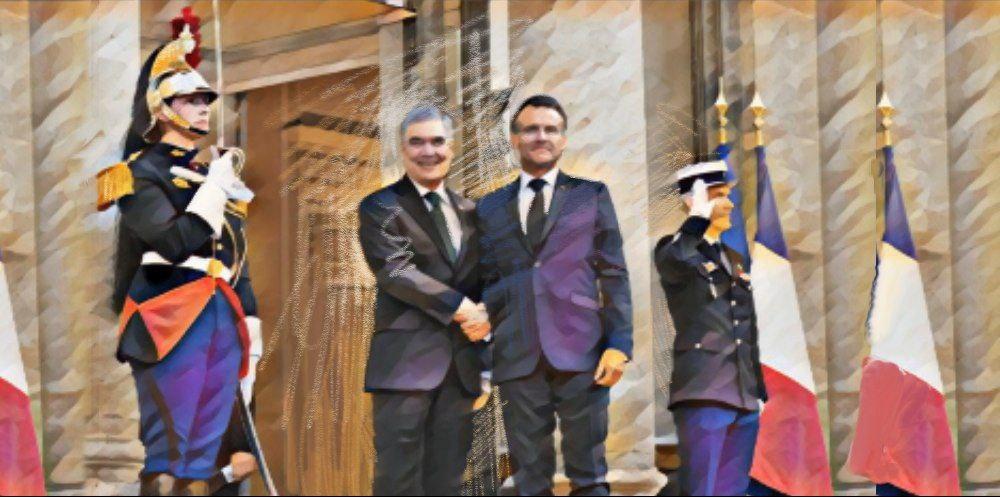
Gurbanguly Berdimuhamedov, Turkmenistan’s longtime ruler, no longer holds the title of president; that has been passed, along with much of the public burden, to his son. He now reigns from the shadows as Hero-Arkadag (“Hero-Protector”), but he retains the ability to open doors. Nearly 14 years after his last official visit, Berdimuhamedov landed at Paris’ Orly airport last Monday. He was in France ostensibly to attend the Franco-Turkmen Economic Forum, but the visit also saw him ushered into the Élysée Palace for an audience with President Emmanuel Macron. Characteristically, his presence in Paris was kept quiet, receiving very little coverage even in the French media. “It was much less discussed than the near-concurrent visit of the Syrian leader, Ahmed Al-Charaa,” Michaël Levystone, co-founder of l'Observatoire de la Nouvelle Eurasie, a Paris think tank told The Times of Central Asia. “You have to understand that Turkmenistan is a country that is virtually unknown to the general public in France – and for good reason: it goes out of its way to remain extremely discreet!” Nevertheless, the visit marks a rare moment of high-level Western diplomacy with one of the world’s most opaque regimes, as well as an extremely uncommon public diplomatic appearance from Berdimuhamedov Senior since ceding formal power in 2022. The questions are why France? And why now? What Was Discussed The two readouts of the encounter were notably different. The Élysée offered a terse summary on its website, noting vaguely that the meeting “provided an opportunity to review the bilateral relationship between Turkmenistan and France as well as regional issues.” Macron then followed this up with an equally laconic post on X, noting that the two had “signed several agreements between Turkmenistan and France in the areas of energy transition, infrastructure, education, and culture. They demonstrate the strengthening of our cooperation. We also took stock of major regional and international crises, including Russia's war of aggression against Ukraine and the situation in the Middle East.” On the other hand, the state-run news service Turkmenistan Today provided what can only be described as a detailed travelogue, noting the many dignitaries who had the pleasure of meeting the Hero-Arkadag on his whistle-stop tour of the City of Lights. According to the Turkmens, the visit yielded a flurry of agreements. A memorandum of understanding was inked between state-owned Türkmengaz and French tech firm Kayrros SAS, while France’s Thales Alenia Space Group signed a framework deal to provide Ashgabat with a second communications satellite. There were further promises of joint work on green energy, education, and archaeological research. A Foot in the Door One French company in particular is responsible for much of the engagement between the two countries. As part of his trip to Paris, Berdimuhamedov met with construction magnate Martin Bouygues, CEO of the firm that bears his family’s name. [caption id="attachment_31644" align="aligncenter" width="2560"] The Presidential Palace and ministries complex, built by the French company Bouygues; image: TCA, Stephen M. Bland[/caption] “Bouygues has built numerous monumental buildings in Ashgabat since Turkmenistan's independence,” Levystone told...
Uzbekistan Aims to Save 1.1 Billion Cubic Meters of Gas in 2025

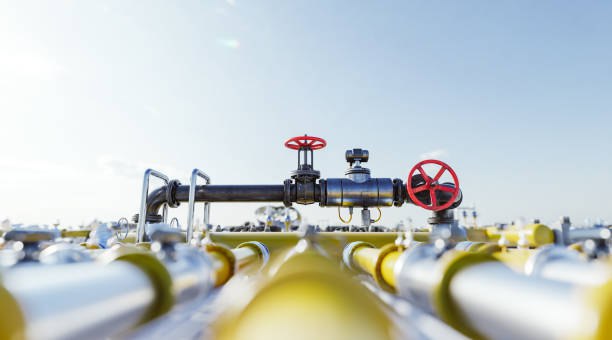
Uzbekistan’s Statistics Committee has released data on industrial production for January and February 2025, revealing a continued decline in natural gas output. During this period, the country produced 7.37 billion cubic meters of gas, down 329 million cubic meters (4.2%) from the same period in 2024 and 781 million cubic meters compared to 2023. Depleting Reserves and Rising Demand Azim Ahmadkhadjayev, head of the state nuclear agency Uzatom, attributed the decline to the depletion of existing gas fields and delays in developing new ones. Simultaneously, Uzbekistan’s industrial production is accelerating, driving up energy demand. “The existing fields are running out. Discovering and developing new reserves requires substantial investment. Work is underway, but the transition takes time,” Ahmadkhadjayev told the Alter Ego project. He also emphasized that the future expansion of nuclear energy would reduce reliance on gas. Amid these challenges, the government is prioritizing energy conservation. At a March 26 meeting, President Shavkat Mirziyoyev outlined ambitious goals: saving 1.1 billion cubic meters of natural gas and 2.6 billion kilowatt hours of electricity in 2025. Outdated Infrastructure and Industrial Modernization Many of Uzbekistan’s industrial facilities date back several decades and were not designed with energy efficiency in mind. This outdated infrastructure consumes disproportionate amounts of electricity and gas, leading to regional shortages during peak demand. To address this, the government is modernizing key industries and implementing a dedicated energy-efficiency program for large enterprises. With the population projected to reach 41 million by 2030 and, energy demand expected to grow by 1.5 times, long-term planning is critical. Researchers in Samarkand, Syrdarya, and Jizzakh have identified potential energy savings of 870 million kilowatt hours of electricity and 420 million cubic meters of gas. One proposed measure is replacing 35,000 outdated machines in small and medium-sized factories. Local Energy Initiatives Energy savings are also being pursued at the community level. The government plans to install small solar power plants in 300 neighborhoods, aiming to save 45 million cubic meters of gas in 2025. Additionally, over 1,000 micro hydropower stations are planned on canals and streams to generate supplemental electricity. Street lighting is another major energy consumer, using 200 million kilowatt hours annually. Transitioning to solar-powered lights could halve this consumption. President Mirziyoyev stressed the need for factories to adopt energy-efficient technologies and reduce waste. A new monitoring system will ensure the proper implementation of these energy-saving measures. Focus on Renewables and Public Awareness The government is also promoting energy-conscious behavior among citizens. Simple actions, like turning off unused lights or installing solar panels, can collectively contribute to national energy goals. Particular attention is being paid to the densely populated Fergana Valley. A tailored energy plan is being developed for the region, with successful strategies to be expanded nationwide.

Uzbekistan Looks to Turkmen Gas to Tackle Winter Energy Crisis

Uzbekistan has faced persistent gas and electricity shortages for over 25 years, leaving many citizens to rely on stoves and makeshift heating systems to stay warm during harsh winters. In 2024 alone, 82 people have died, and another 80 remain in serious condition due to carbon monoxide poisoning. The situation could improve if Uzbekistan shifts to importing natural gas from Turkmenistan. Turkmenistan recently declined to renew its gas contract with Russia, citing its strategy to diversify exports and secure better prices. With natural gas reserves estimated at 17.5 trillion cubic meters, Turkmenistan is a regional energy powerhouse, supplying significant volumes to China while maintaining domestic stability. Meanwhile, Uzbekistan’s gas production has declined, exacerbating its energy crisis. Despite ranking 17th globally in terms of gas reserves, Uzbekistan produced only 33.48 billion cubic meters of natural gas between January and September 2024 - 4.8% less than during the same period last year. At the same time, energy demand is rising due to population growth and a 6% economic expansion. Experts suggest that prioritizing imports from Turkmenistan could alleviate Uzbekistan’s energy woes. Former Energy Minister Anvamirzo Khusainov highlights the 1,500-kilometer border shared by the two countries and the existing pipeline infrastructure that could facilitate Turkmen gas imports. However, such a decision would require Uzbekistan to reduce its historical reliance on Russia - a move that carries significant political implications. The approaching winter may force Tashkent to make this critical choice. Reliable and cost-effective gas supplies from Turkmenistan could provide much-needed relief and help Uzbekistan address its longstanding energy shortages.

Work Begins on Afghan Section of the TAPI Gas Pipeline

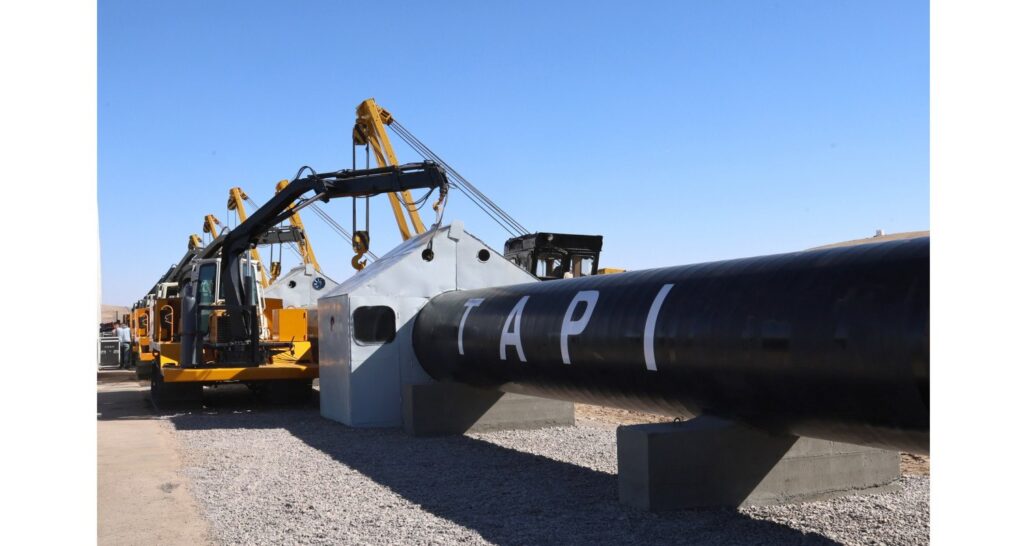
Turkmenistan and Afghanistan have now begun construction of the Afghan section of the Turkmenistan-Afghanistan-Pakistan-India (TAPI) natural gas pipeline. To mark the launch of work on the pipeline’s Serhetabat-Herat section, Chairman of the Halk Maslahaty (People’s Council) of Turkmenistan, Gurbanguly Berdimuhamedov, and Mullah Mohammad Hassan Akhund, the Prime Minister of the Taliban-led Afghan government, attended a ceremony  at a checkpoint on the Turkmen-Afghan border on September 11. The staged installation of the TAPI pipeline, already completed in Turkmenistan, will eventually transfer 33 billion cubic meters of Turkmen natural gas annually to Afghanistan, Pakistan, and India. At an estimated cost of $10 billion, the TAPI pipeline will span 1,814 kilometers.  With 816 kilometers running through Afghanistan, the project will meet the country's gas needs, generating around $450 million in annual transit fees, before continuing on to Quetta and Multan in Pakistan and Fazilka in India. Gas-rich Turkmenistan currently exports natural gas to China and Russia but once completed, the TAPI project will enable the country to diversify its export routes and help realize far-reaching plans to transport its gas across the Caspian Sea to Azerbaijan, Turkey, and Europe. Mullah Mohammad Hassan Akhund stated that the commencement of work on the TAPI project on Afghan soil would strengthen relations between Afghanistan and Turkmenistan, whilst speaking from Ashgabat via videoconferencing, Turkmenistan President Serdar Berdimuhamedov, announced, "The commencement of the TAPI project [on the Afghan territory] and other projects is beneficial not only for Afghanistan but also for the countries in the region." In addition to TAPI, the ceremony opened a 177-meter-long railway bridge at the Turkmen-Afghan border on Serhetabat-Turgundi railroad, launched the construction of the Serhetabat-Herat (Afghanistan) fiber-optic communication line, a warehouse complex in the dry port of the Turgundi railway station at the Turkmen-Afghan border, and the Turgundi-Sanabar section of the Turgundi-Herat railway. The event also marked the commission of the Nur-el-Jahad power plant in Afghanistan's Herat province,  as part of the first phase of the Turkmenistan-Afghanistan-Pakistan (TAP) power transmission line project.

Turkmenistan and Iran to Expand Cooperation in Natural Gas and Transport

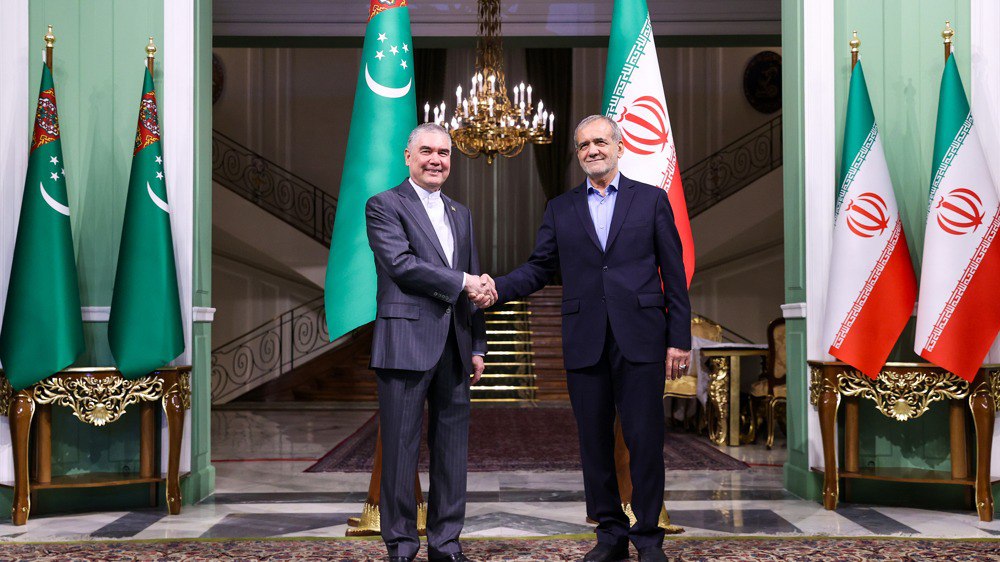
On August 28, the chairman of the Halk Maslahaty (People’s Council) of Turkmenistan, the country's former president Gurbanguly Berdimuhamedov, visited Iran and held talks with the Iranian president Masoud Pezeshkian. Iran’s Press TV news agency quoted Pezeshkian as describing four memorandums of understanding signed during Berdimuhamedov’s visit as “strategic,” saying that a document signed between Iran's state gas companies and Turkmenistan will turn Iran into a regional gas transfer hub. No details of the document have been released. Turkmen media reported that Gurbanguly Berdimuhamedov proposed implementing joint projects with Iranian companies to increase the volume of gas supply to Iran to 40 billion cubic meters per year. The Turkmen side also reported that the talks in Tehran discussed exporting Turkmen electricity to Iran. Concerning cooperation in the transport sector, Berdimuhamedov urged increasing cargo transportation along the Kazakhstan-Turkmenistan-Iran railway route, while the Iranian president proposed increasing cargo flows along the Armenia-Iran-Turkmenistan-Kazakhstan route. Turkmenistan and Iran have agreed to start negotiations for a comprehensive deal on transportation issues. The talks, expected to kick off next month, will be part of an intergovernmental committee chaired by Iran’s transportation minister.

Turkish Vice President: Turkmen Gas Supplies Via Turkey Will Help Ensure Energy Security in Europe

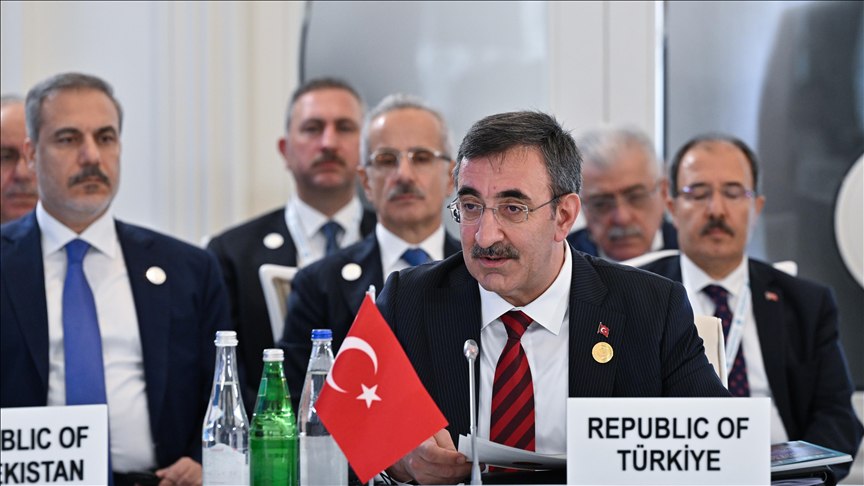
Turkish Vice President Cevdet Yilmaz has said that Turkmen gas supplies through Turkey will contribute to the country's national welfare and ensure Europe's energy security. This was said during his speech at the informal summit of member states of the Organization of Turkic States (OTS) in Azerbaijan. "The transportation of trans-Caspian resources, especially Turkmen natural gas, to Turkey and Europe will contribute to our national welfare and security. We are pleased with establishing an energy mechanism within the framework of the OTG and the publication of contact projects," Yılmaz said. According to him, the Organization will further strengthen ties between Turkic states as the world's economic centers of gravity change and the importance of Turkic geography increases. "The work that will be done in our countries to develop the Middle Corridor will both strengthen our cooperation and show the global role of the Turkic world," the Vice President emphasized.