• KGS/USD = 0.01144 0%
  • KZT/USD = 0.00201 0%
  • TJS/USD = 0.10567 -0.09%
  • UZS/USD = 0.00008 0%
  • TMT/USD = 0.28571 0%
  • KGS/USD = 0.01144 0%
  • KZT/USD = 0.00201 0%
  • TJS/USD = 0.10567 -0.09%
  • UZS/USD = 0.00008 0%
  • TMT/USD = 0.28571 0%
  • KGS/USD = 0.01144 0%
  • KZT/USD = 0.00201 0%
  • TJS/USD = 0.10567 -0.09%
  • UZS/USD = 0.00008 0%
  • TMT/USD = 0.28571 0%
  • KGS/USD = 0.01144 0%
  • KZT/USD = 0.00201 0%
  • TJS/USD = 0.10567 -0.09%
  • UZS/USD = 0.00008 0%
  • TMT/USD = 0.28571 0%
  • KGS/USD = 0.01144 0%
  • KZT/USD = 0.00201 0%
  • TJS/USD = 0.10567 -0.09%
  • UZS/USD = 0.00008 0%
  • TMT/USD = 0.28571 0%
  • KGS/USD = 0.01144 0%
  • KZT/USD = 0.00201 0%
  • TJS/USD = 0.10567 -0.09%
  • UZS/USD = 0.00008 0%
  • TMT/USD = 0.28571 0%
  • KGS/USD = 0.01144 0%
  • KZT/USD = 0.00201 0%
  • TJS/USD = 0.10567 -0.09%
  • UZS/USD = 0.00008 0%
  • TMT/USD = 0.28571 0%
  • KGS/USD = 0.01144 0%
  • KZT/USD = 0.00201 0%
  • TJS/USD = 0.10567 -0.09%
  • UZS/USD = 0.00008 0%
  • TMT/USD = 0.28571 0%
23 February 2026

Viewing results 1 - 6 of 124

Kazakhstan Proposes ‘Expert Alliance’ to Reform Global Governance

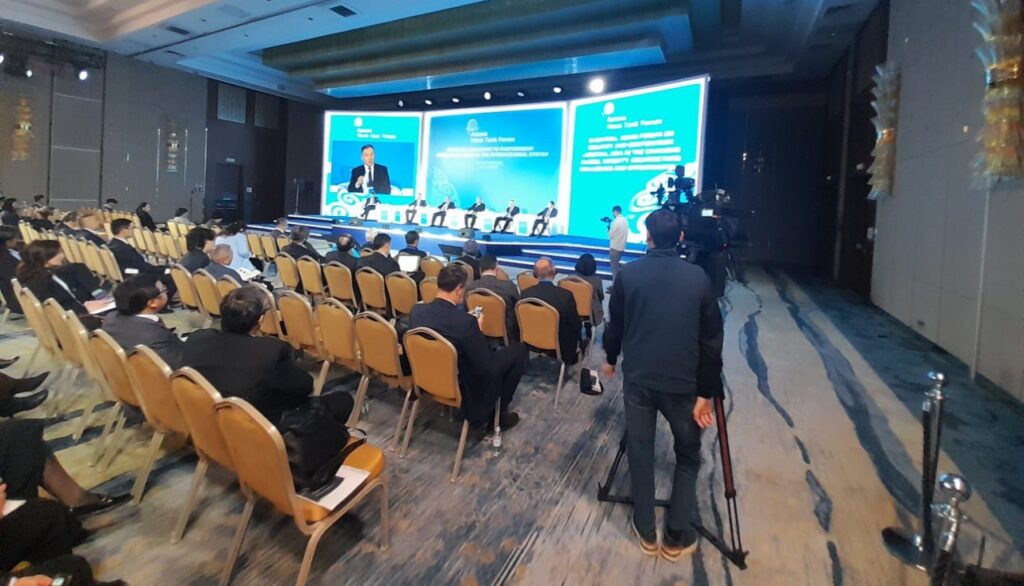
Zhandos Shaimardanov, director of the Kazakhstan Institute for Strategic Studies (KazISS) under the President of the Republic of Kazakhstan, has called for the formation of an international network of think tanks to act as an intellectual capacity for reforming the global governance architecture. He said the proposal stems from lessons learned in regional cooperation efforts across Central Asia. Speaking at the session “Central Asia in the Changing Architecture of Global Security: Challenges and Opportunities” during the Astana Think Tank Forum 2025, Shaimardanov said the world is experiencing a period of geopolitical flux. The old global rules no longer function effectively, while new norms have yet to take shape. “History is giving our region a chance to show leadership,” he said. “Central Asia is realizing its agency and unity, ready to formulate collective responses to global challenges and offer a positive agenda. Trust and mutual respect have made us resilient, and now this political capital must be transformed into institutional resources.” Shaimardanov stressed that the existing global security architecture is in crisis, with mechanisms such as the UN Security Council and arms control frameworks losing effectiveness. “In September, at the UN General Assembly, the President of Kazakhstan rightly observed that serious violations of international law have become the new norm. This is a sign that global institutions need intellectual renewal. When multilateral mechanisms fail, it is the regions that retain the potential for agreement,” he said. From Regional Unity to Global Contribution Shaimardanov recalled that at the sixth Consultative Meeting of the Heads of State of Central Asia, held in Astana last August, regional leaders adopted the "Central Asia 2040" concept, which sets out a long-term vision for cooperation across the region. “Now is the time not just to implement this document without slogans,” he said, “but to present this regional experience to the broader world.” He said that Central Asia’s cooperative model could help redefine the principles of global governance. As a bloc of “middle powers,” the region can offer a constructive and non-hegemonic voice. “In this context, Kazakhstan proposes creating an expert alliance of middle powers, a global network of think tanks and institutions that could help rethink international systems,” Shaimardanov said. He suggested that such a body could cooperate with international organizations, including the United Nations, to develop joint strategies on security, sustainable development, and institutional accountability. “Central Asia can not only adapt to new realities but also offer new ideas that security can be built not on fear but on trust,” he said. Focus Areas: Digital Trust, Water Security, Human Capital Shaimardanov noted that an expert network would help Central Asian countries coordinate on key development challenges, including digitalization, water management, and innovation. He highlighted the example of Kazakh startup Higgsfield AI, which recently achieved unicorn status with a valuation exceeding $1 billion. The company developed a generative AI tool that creates videos from text prompts. “This is a major milestone not only for Kazakhstan but for the entire region,” he said. “It reflects Central Asia’s growing...
Digital Geopolitics and AI Strategy in Central Asia

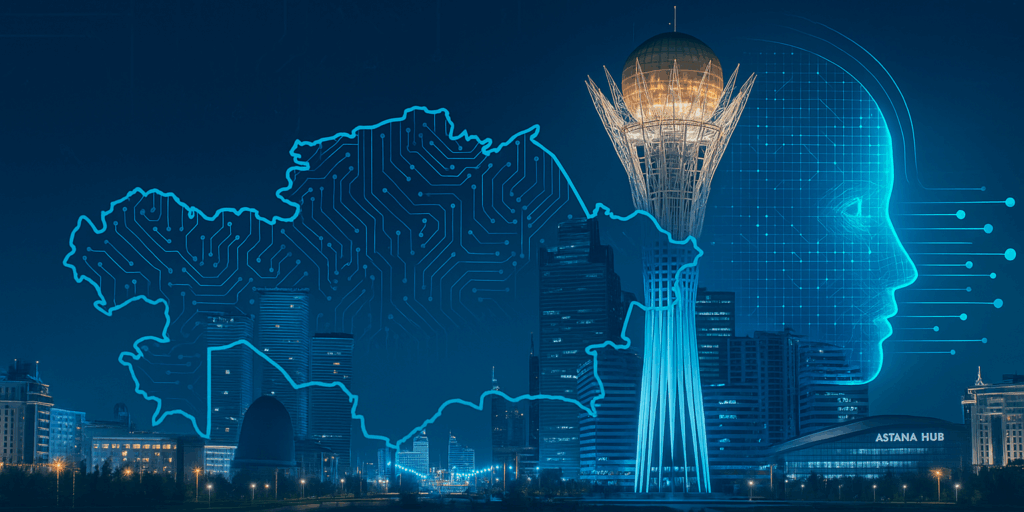
Central Asia, long known as a crossroads of global trade routes, is once again emerging as a stage for strategic competition. This time, the old caravan routes have been replaced by digital highways. The new contest is over technologies and data flows. For countries in the region, especially Kazakhstan, choosing a digitalization model and an AI development strategy is no longer just a technical matter. It is a fundamental decision tied to national security and long-term competitiveness. Equally important is the “digital ideology” behind these choices, something clearly illustrated today by two giants of the Global South: China and India, each with over a billion people and very different approaches to digital growth. The Dragon's Shadow: China's Systematic Expansion in Central Asia China’s ongoing real estate crisis, rising debt, and slowing domestic demand have pushed Beijing to look outward for growth. One major tool is the Digital Silk Road, announced in 2015 as part of the Belt and Road Initiative. This long-term program aims to export Chinese digital technologies. For Central Asian states, it brings an appealing “one-stop shop” of turnkey solutions: everything from 5G mobile and 10G-PON fixed networks to smart city systems (Huawei, ZTE), surveillance platforms (Hikvision), and fintech tools (Ant Group, Tencent). The benefits come with risks. A heavy reliance on one supplier creates the danger of vendor lock-in. When an entire digital ecosystem is tied to a single foreign provider, questions of security and long-term debt become inevitable. Kazakhstan has shown flexibility by experimenting with mixed models rather than relying exclusively on Chinese systems. Competing Models: China's "Walled Garden" and India's "Digital Public Infrastructure" China: The model is centralized, built on state corporations and giant platforms. It delivers speed and scale of growth, but at the cost of strict control and regulation. The Chinese government has tightened its grip on big tech companies (Alibaba and Tencent), imposed stricter rules on the collection and use of personal data under the Personal Information Protection Law (2021), and limited the fintech divisions of major firms to prevent systemic risks. India: The state has developed India Stack, a package of open digital platforms (Aadhaar, UPI, DigiLocker) that serve as the rails for thousands of startups and services. This gave India global leadership in digital payments and created a model of open digitalization. Central Asia is already partially repeating this experience (Kazakhstan’s eGov.kz, Kaspi.kz, and the digital tenge), though without the depth and openness that made the Indian approach unique. Today, Central Asia is forming a pragmatic hybrid: Chinese hardware for rapid infrastructure, Indian logic in public services (GovTech, eGov.kz), and European regulatory standards under the GDPR (in force since 2018), which serves as a global benchmark of trust in data. This “three-axis” hybrid allows a balance between speed of implementation and regulatory control. Europe's Alternative: Global Gateway and the Digital Silk Way Europe seeks to strengthen its position in Central Asia and the South Caucasus by offering an alternative to Chinese expansion. Its key tool is the EU Global Gateway...

Tianjin SCO Summit Signals a Shift: China’s Long Game and the Rise of a New Power Bloc

The notion of a bipolar world, once defined by the Cold War rivalry between the United States and the Soviet Union, is being reimagined. At the recent Shanghai Cooperation Organisation (SCO) summit in Tianjin, China, signs emerged of a new geopolitical alignment centered around the so-called “Global South.” Chinese President Xi Jinping invoked this framing during the August 31 banquet, positioning the SCO as a counterweight to what he referred to as the “collective West.” According to state news agency Xinhua, Xi expressed confidence that “with the concerted efforts of all parties, the current summit will be a complete success,” and that the SCO would play “an even more significant role” in global affairs. He framed the organization as a mechanism for uniting emerging economies in the Global South and for advancing “human civilization.” Founded in 2001 by six countries, the SCO now includes 10 full members, two observers, and 14 dialogue partners, spanning Asia, Europe, and Africa. “Bringing together major emerging market economies and developing countries such as China, Russia, and India, the SCO represents nearly half of the world’s population and a quarter of the global economy,” Xinhua noted. This framing signals that Beijing sees a new geopolitical pole coalescing around China, Russia, and India, a convergence of financial, technological, and military capacities within the SCO framework. Symbolic Alignments on Display Group photos from the summit offered a symbolic illustration of emerging alignments. In one image preceding the SCO banquet, Xi Jinping stands flanked by Russian President Vladimir Putin and Kazakh President Kassym-Jomart Tokayev, with other Central Asian leaders, including Shavkat Mirziyoyev (Uzbekistan), Emomali Rahmon (Tajikistan), and Sadyr Japarov (Kyrgyzstan), grouped closely behind. Another image, taken before the Council of Heads of State meeting, shows Indian Prime Minister Narendra Modi positioned directly behind Tokayev, reflecting the summit’s broader geopolitical weight. Xi and Modi also met one-on-one, where they agreed to define China and India as partners rather than rivals. Xi reportedly called for both countries to “become good neighbors, good friends, and partners who contribute to each other’s success,” referring to the cooperation as a “dragon and elephant pas de deux.” Modi, in turn, employed the term “Global South” during his address to the Council of Heads of State, urging reforms to global institutions such as the United Nations. “Constraining the aspirations of the Global South within an outdated framework is a gross injustice to future generations,” he said. UN Secretary-General António Guterres, who attended the summit, was the implicit target of such reformist appeals. The presence of Tokayev, a former senior UN official, added another layer of diplomatic nuance. Some speculate that Tokayev could be put forward as a future UN Secretary-General by Global South nations. Putin’s Narrative on Ukraine In his address, Putin reiterated a narrative long promoted by the Kremlin regarding the war in Ukraine. He described the conflict not as an invasion, but as the result of a “coup d’état in Ukraine” supported by the West and claimed that NATO’s expansion posed a direct...

Kazakhstan Looks East: What’s at Stake at the SCO Summit in China?

On Saturday, Kazakhstan’s President, Kassym-Jomart Tokayev, along with other Central Asian leaders, will travel to China for the Shanghai Cooperation Organization (SCO) summit. The visit comes amid China’s accelerating influence in the region, highlighting the summit’s growing geopolitical significance. Four Strategic Days in China Tokayev will visit China from August 30 to September 3 at the invitation of President Xi Jinping. High-level talks are planned, during which the two leaders will discuss deepening the Kazakh-Chinese strategic partnership. Tokayev will also attend the SCO Plus summit in Tianjin from August 31 to September 1. On September 2, he will speak at a meeting of the Kazakhstan-China Business Council in Beijing and hold talks with the heads of major Chinese companies. On September 3, he will take part in commemorations marking the 80th anniversary of Victory in World War II. Who Will Attend the Tianjin Summit? This year’s gathering marks the 25th anniversary of the SCO. Leaders from over 20 countries and representatives from ten international organizations are expected to participate. The SCO currently includes ten member states: Kazakhstan, China, Kyrgyzstan, Belarus, India, Iran, Pakistan, Russia, Tajikistan, and Uzbekistan. Particular attention is focused on Indian Prime Minister Narendra Modi, whose visit to China will be his first in seven years. Russian President Vladimir Putin also plans to attend. Leaders from Turkey, Malaysia, Indonesia, Mongolia, Azerbaijan, Armenia, Turkmenistan, and several other countries are also expected. According to China’s Foreign Ministry, this will be the largest SCO summit since the organization’s inception. Why Tianjin? A Strategic Choice Chinese analysts describe Tianjin as a strategic hub for the Belt and Road Initiative. They note its position where sea and land routes converge, the starting point of the China-Mongolia-Russia corridor, and a key link in the New Eurasian Land Bridge connecting China, Central Asia, and Europe. Its advanced infrastructure, experience in hosting international events, and open policies are seen as transforming it into a “super-hub.” Tianjin has long contributed to SCO activities, particularly through the “Lu Ban Workshop” international education initiative. Currently, ten such workshops operate across SCO countries, training skilled technical personnel in fields aligned with labor market demands. Analysts' Perspectives Western analysts quoted by Reuters say the summit will project a message of “Global South solidarity” and offer Russia an opportunity to achieve a “diplomatic coup” amid ongoing sanctions. “Xi Jinping will want to use the summit to demonstrate how the American-led international order is weakening,” said Eric Olander, editor-in-chief of The China-Global South Project. “It’s a moment to show that all the White House’s efforts since January to counter China, Iran, Russia, and now India have not had the desired impact.” China's Expanding Role in Central Asia On June 16-17, President Xi Jinping visited Kazakhstan, where leaders of the five Central Asian states, Kazakhstan, Kyrgyzstan, Uzbekistan, Tajikistan, and Turkmenistan, signed the Astana Declaration at the second China-Central Asia summit. They also concluded an agreement on eternal good-neighborliness, friendship, and cooperation. In total, over 35 memoranda worth more than $17 billion were signed. According...

Opinion: Washington Meeting and the Shifting Geopolitics of the Caspian

The Washington meeting between Armenia and Azerbaijan, hosted by President Donald Trump on August 8, 2025, may go down as a pivotal moment in the geopolitics of the Caspian and the wider Eurasian space. While on the surface the talks aimed to normalize relations between the two South Caucasus neighbors, the ripple effects extend far beyond bilateral reconciliation. For Azerbaijan, the meeting is not only about ending three decades of conflict with Armenia but also about positioning itself as a central bridge linking the Caspian Basin, Central Asia, and even Europe. The Caspian region has always been a security crossroads, where energy interests, military presence, and trade routes overlap. Russia’s war in Ukraine, the Iran-Israel conflict, and shifting Western engagement have made the region more volatile. In this context, a potential Armenia-Azerbaijan settlement offers a chance to stabilize the South Caucasus - the natural gateway between the Caspian and Europe. For Azerbaijan, peace with Armenia would solidify its position in the region where Baku has promoted several important transregional projects such as the Baku-Tbilisi-Ceyhan oil pipeline, the Southern Gas Corridor, and the Baku-Tbilisi-Kars railway. Azerbaijan is heavily investing in the development of the Caspian trade routes, energy infrastructure, and regional connectivity projects such as the Middle Corridor. Stability in the South Caucasus also makes it harder for external actors to exploit divisions - an especially significant factor given the previous attempt to exploit Armenia against Azerbaijan and Türkiye. That strategy brought no tangible results to Armenia, which remained regionally isolated and dependent on Russia. After the military defeats in 2020 and 2023, the Armenian leadership realized that peace and respect for the principle of territorial integrity is a much greater opportunity for the country rather than an irredentist project, which Prime Minister Nikol Pashinyan dubbed “mythical.” At the same time, a peace framework reduces the risk of military escalation spilling into the Caspian region. Naval modernization efforts by Russia and Iran in recent years have heightened anxieties. In short, normalization indirectly enhances Azerbaijan’s capacity to act as a stabilizing actor within the Caspian basin. Increasingly, Iran has also spoken about peace and cooperation, especially with Azerbaijan. Relations were tense a few years ago, but the incumbent President, Masud Pezeshkian, questioned the strategy employed previously by the Iranian clerics regarding Azerbaijan, which failed to gain any benefits. Perhaps the most significant geopolitical dividend for Azerbaijan lies eastward, across the Caspian. The Central Asian states - Kazakhstan, Uzbekistan, Turkmenistan, Kyrgyzstan, and Tajikistan - have long sought secure, diversified links to Europe. Russia’s war has made northern routes through its territory unreliable, while instability in the Red Sea undermines the traditional supply route. That leaves the Trans-Caspian link through Azerbaijan as promising. The Washington meeting, by promoting the peace agenda, reassures Central Asian partners that Baku is a reliable hub. Azerbaijan, Kazakhstan, and Uzbekistan signed an MOU about the transfer of alternative energy sources to Europe through another potential project – a Black Sea electricity cable from Georgia to Romania and Hungary. Azerbaijan...

Opinion: Why Russia May Stop Oil Supplies via the CPC

The global confrontation between the West and East could, quite literally, devastate the economies of Central Asian countries in the near future. Some experts argue that the position Kazakhstan and its regional neighbors now occupy, four years into the war between Russia and Ukraine, has spiraled beyond anyone’s control. The disruption began with Ukrainian drone strikes on Russian infrastructure used by the Caspian Pipeline Consortium (CPC), which indirectly impacted oil flows from Kazakhstan to Europe. On August 2, several media outlets, citing sources within the Ukrainian military, reported an attack on the Central Asia-Center (SAC) gas pipeline running through Kazakhstan. The attack allegedly caused an indefinite halt in gas deliveries that Russia had been sending in reverse flow to Uzbekistan. Kazakhstan also uses this gas domestically. Shortly after, the energy ministries of both Uzbekistan and Kazakhstan denied reports of any damage to the pipeline. Nonetheless, Ukraine’s classification of the SAC pipeline as a legitimate target remains on record. Notably, although Kazakhstan’s Foreign Ministry has issued a formal protest to Kyiv over the CPC attacks, it has yet to reveal any official response from the Ukrainian side. Kazakhstan thus finds itself in an extremely vulnerable position: its national budget is heavily dependent on oil exports, while its southern infrastructure increasingly relies on imported gas. For example, the planned conversion of Almaty’s TPP-2 to gas is unfeasible without stable fuel supplies. In other words, Kazakhstan has become fully dependent on developments in the Russian-Ukrainian war. Compounding the geopolitical tension, U.S. President Donald Trump has pursued an aggressive and often unpredictable foreign policy approach. He has threatened sanctions against Russia’s economic partners if they continue buying oil from President Vladimir Putin. This pressure is primarily directed at China and India, both of which have already signaled they do not intend to comply with Trump’s ultimatum. In response, Russia may adopt symmetrical countermeasures targeting American companies, specifically, by halting oil flows via the CPC. That’s the view of JPMorgan analysts, who suggest that such a move could drive global oil prices up to $80 per barrel. This would benefit Russia but would deal a serious blow to Kazakhstan, which relies on CPC to export up to a million barrels of oil per day. Unfortunately, Kazakhstan lacks viable alternatives. The Baku-Tbilisi-Ceyhan (BTC) pipeline, often cited as a backup route, depends heavily on Caspian Sea shipping, which is increasingly hindered by shallow waters. Heavier oil barges dispatched from Aktau to Baku risk running aground. As a result, Kazakhstan's oil volume transported via BTC is expected to increase by only 300,000 tons this year, from 1.4 to 1.7 million tons. It's worth noting that CPC exports oil produced by American firms Exxon and Chevron, the British company Shell, Italy's ENI, and France’s TotalEnergies. These are the very firms Russia could target in retaliation. As Trump’s statements deepen the appearance of a Russia-versus-West conflict, energy infrastructure could increasingly become a battlefield. Hints of Moscow’s readiness to act have already emerged. In mid-July, President Putin signed a decree mandating...