• KZT/USD = 0.00211
  • TJS/USD = 0.10810
  • UZS/USD = 0.00008
  • TMT/USD = 0.29760
  • KZT/USD = 0.00211
  • TJS/USD = 0.10810
  • UZS/USD = 0.00008
  • TMT/USD = 0.29760
  • KZT/USD = 0.00211
  • TJS/USD = 0.10810
  • UZS/USD = 0.00008
  • TMT/USD = 0.29760
  • KZT/USD = 0.00211
  • TJS/USD = 0.10810
  • UZS/USD = 0.00008
  • TMT/USD = 0.29760
  • KZT/USD = 0.00211
  • TJS/USD = 0.10810
  • UZS/USD = 0.00008
  • TMT/USD = 0.29760
  • KZT/USD = 0.00211
  • TJS/USD = 0.10810
  • UZS/USD = 0.00008
  • TMT/USD = 0.29760
  • KZT/USD = 0.00211
  • TJS/USD = 0.10810
  • UZS/USD = 0.00008
  • TMT/USD = 0.29760
  • KZT/USD = 0.00211
  • TJS/USD = 0.10810
  • UZS/USD = 0.00008
  • TMT/USD = 0.29760
01 August 2026

Viewing results 1 - 6 of 108

The Iran War Is Repricing Central Asia’s Connectivity

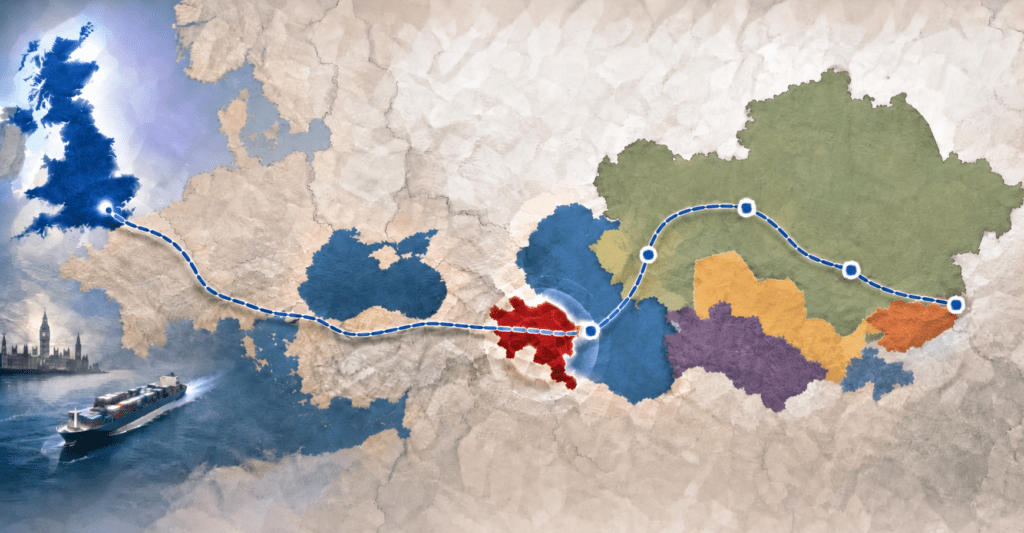
Europe’s aviation regulator has extended its current conflict-zone bulletin for the Middle East and Persian Gulf through April 10 and continues to advise operators to avoid Iranian and adjacent airspace at all altitudes. Reuters reported soon after that the squeeze on normal flight paths was pushing more traffic into narrower routes, notably over Azerbaijan and Central Asia. The Strait of Hormuz, meanwhile, has not returned to normal commercial use. A limited number of exempted vessels have crossed, but passage remains selective, politicized, and uncertain rather than routine. The question, consequently, is no longer only whether Central Asia has alternatives to single-route dependence but whether those alternatives remain commercially usable, taking into account the increased risk, delay, insurance, fuel burn, and congestion. What has changed is the cost of maintaining reliable connectivity. The Cost of Reliability The Iran conflict imposes higher operating costs on the wider Eurasian air corridor that is now taking displaced traffic. EUROCONTROL estimates that about 1,150 flights a day continue to be affected by re-routing linked to the Middle East crisis. These add roughly 206,000 kilometers of flying and 602 tons of extra fuel burn per day. Maritime trends are similar. In March, war-risk premiums in or near the Gulf had risen more than tenfold in some cases, with hull war premiums moving from about 0.25% of vessel value to as much as 3%. Air-freight rates on some routes rose by as much as 70% as shippers redirected urgent cargo away from disrupted sea lanes and restricted airspace. Higher surcharges and narrower margins for operational error can make routes lose commercial value even if they remain formally open. The wider macroeconomic setting has also made resilience more expensive. Higher oil prices make every detour costlier, raising freight charges, power costs, and production costs across the region’s trading partners. Even where Central Asian cargo does not move through Iranian waters, the same pattern is still present. Asian policymakers were already confronting a combined oil-price and currency shock at a moment when roughly 80% of the oil shipped through Hormuz normally goes to Asia. The World Bank’s March food and nutrition security update notes that around 20% of global oil supplies and about one-third of global fertilizer trade transit the Strait of Hormuz. Urea prices, for example, surged by nearly 46% month on month between February and March 2026. Importers in Central Asia, as well as in Europe and the South Caucasus, remain under pressure from higher household food costs and tighter producer margins. The price of resilience is now showing up in increased costs for farm inputs, food costs, and household budgets. How the Burden Falls Kazakhstan remains the best placed in the region to absorb the shift. The CPC pipeline still carries about 80% of Kazakhstan’s oil exports; oil income contributes 52% of the state budget. Earlier disruptions had constrained Kazakhstan to reroute 300,000 tons of crude, and the country continues to rely on supplementary outlets such as Ust-Luga, the Baku–Tbilisi–Ceyhan pipeline, and China when its main...

India–Central Asia: Connectivity, Security, and Sustainable Partnerships in a Multipolar World

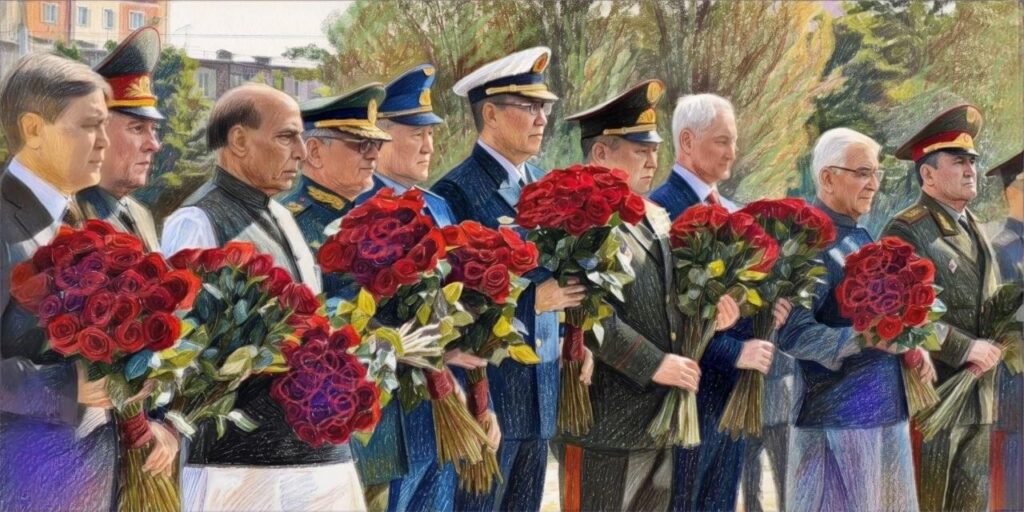
A widening conflict in West Asia is forcing India and Central Asia to reassess trade routes, diplomacy, and regional security, with key projects such as Iran’s Chabahar port now facing growing uncertainty. These risks framed discussions in New Delhi on March 25–26, where experts gathered under the banner of “India–Central Asia: Connectivity, Security, and Sustainable Partnerships in a Multipolar World,” with The Times of Central Asia in attendance. The conference unfolded against the backdrop of two active Eurasian wars—the Russo-Ukrainian and the Israel/U.S.-Iran conflict. Central Asian and Indian participants agreed that the West Asian crisis is widening, putting not only ports and logistics routes but also economies across the globe under serious threat. India's Chabahar link to Afghanistan and Central Asia is now a high-risk, uncertain investment, weakening overall continental strategic thinking across Eurasia, including efforts to consolidate new trans-Caspian trade corridors. If the conflict cripples or destroys Chabahar, years of progress, hard-won partnerships, and millions in strategic investment would be erased. On the sidelines, some participants suggested that India could help cool what's becoming a dangerously global conflict. Unbeknownst to them, India had already held an all-party meeting on March 25 on the West Asia crisis. External Affairs Minister S. Jaishankar's message: India will not mediate. The revelation surprised some participants—others, not at all. In any event, Central Asian states, in principle, have backed any diplomatic push for peace. With West Asia in turmoil and platitudes in abundance, conference participants emphasized the need to rethink geopolitics, trade, security, and cultural ties beyond stale frameworks at a time of conflict. Four themes defined the Central and South Asian moment: the dangers of bloc politics, even as regional organizations continue to evolve and expand their influence, the ascendancy of national interests over external pressure, and the emergence of a firm refusal to pick sides in the midst of frictions between competing global pressures. Dr. Raj Kumar Sharma, a member of the India Central Asia Foundation, stated: “The conference provided an important platform to move beyond theoretical discussion and toward practical engagement. With Central Asia’s ambassadors to India present, we focused on exploring concrete mechanisms to promote peace through sustained diplomatic efforts. Despite the proximity of the conflict in West Asia to both Central Asia and India, participants expressed confidence that dialogue and restraint – buttressed by trade and investment – will ultimately guide outcomes, with particular concern for civilians and those enduring hardship. Notably, the crisis did not overshadow the conference’s primary agenda or its scholarly contributions. Overall, the gathering can be seen as a constructive step in reinforcing diplomatic initiatives dedicated to peace and stability in a conflict-affected region.” The conference witnessed the release of three significant publications on India–Central Asia relations: India – Kazakhstan Partnership in a Changing Geopolitical Order (eds. Ramakant Dwivedi, Lalit Aggarwal, Kuralay Baizakova), Manas: Kirgiz Vir Gatha Kavya by Ramakant Dwivedi & Hemchandra Pandey and India and Central, East and Southeast Asia: Enhancing the Partnership (eds. Ramakant Dwivedi & Lalit Aggarwal). [caption id="attachment_46364" align="aligncenter" width="1379"]...

EAEU Trade Frictions Deepen Despite Shymkent Integration Push

The Eurasian Economic Union (EAEU) met in Shymkent on March 26-27 with a long agenda and a familiar promise: deeper integration, smoother trade, and a more modern common market. Kazakhstan, which holds the bloc’s 2026 chairmanship, used the meeting to push artificial intelligence, digital logistics, industrial cooperation, and the removal of internal barriers. Twelve documents were signed, covering areas including industrial cooperation, transport, and digital integration. “Kazakhstan aims to become a fully-fledged digital country. We have built a modern ecosystem, including Astana Hub and the Alem.ai AI center, and are ready to share experience with EAEU partners on digital regulation and economic transformation,” Kazakh Prime Minister Olzhas Bektenov stated. That sounds ambitious, but it also highlights the bloc’s central weakness. The EAEU has no shortage of plans; it has a shortage of trust between its members, and that matters more. The dynamics extend across the bloc, but are most visible in Kazakhstan and Kyrgyzstan. The EAEU was built to ensure the free movement of goods, services, capital, and labor across Armenia, Belarus, Kazakhstan, Kyrgyzstan, and Russia. But the reality keeps drifting away from the treaty. Kazakhstan’s chairmanship agenda calls for a barrier-free internal market, yet the bloc is entering a new phase of tighter controls, retaliatory measures, and disputes over who really benefits. Shymkent made that contradiction impossible to miss. Prime Minister Olzhas Bektenov promoted an AI-based system to coordinate cargo flows across the union and speed up transit. He also backed the full electronic handling of veterinary and phytosanitary checks, all of which are practical ideas. Central Asia needs faster, cheaper, and more predictable logistics, but digital tools do not solve a political problem. A system becomes more efficient only if its members want it to be open. When they want leverage instead, technology can only make the controls smarter. [caption id="attachment_46024" align="aligncenter" width="1920"] Image: primeminister.kz[/caption] Kazakhstan’s priorities already show where the friction lies. President Kassym-Jomart Tokayev opened his chairmanship by calling for digital transformation, better transport links, and the elimination of internal trade barriers. He also pushed a stronger external profile for the EAEU, with wider links across Asia, the Arab world, and the Global South. That is a serious agenda for a bloc trying to present itself as a Eurasian logistics hub. That push for external expansion comes at a time when internal frictions are becoming harder to manage. It sits uneasily beside everyday trade practice inside the union, where growing trade disputes have become part of the EAEU’s normal life, not an exception to it. The clearest recent example is Russia’s SPOT import-control system, which takes effect for road shipments from EAEU countries on April 1. Importers must submit shipment information two days before trucks reach the border and receive a QR code. Moscow has presented the change as a tax-compliance and anti-fraud measure, with additional financial guarantees expected in later phases of its implementation. In practice, it adds cost, time, and uncertainty before goods even reach the border, the opposite of what a customs union...

Kazakhstan Seeks to Expand Oil Exports Amid Geopolitical Uncertainty

Kazakhstan is seeking to reinforce its status as a stable oil supplier while accelerating the diversification of export routes and revising the terms of cooperation with foreign investors amid growing geopolitical uncertainty. These priorities were outlined by Energy Minister Yerlan Akkenzhenov during a speech at the CERAWeek conference in Houston and in a series of meetings with major international oil and gas companies. Discussions focused on structural changes in the global oil industry, ranging from geopolitical instability to the reconfiguration of logistics chains. According to the minister, Kazakhstan remains resilient while adapting to evolving conditions. Energy security continues to be a central concern for the sector, particularly the reliable operation of the Caspian Pipeline Consortium (CPC), through which the majority of Kazakhstan’s oil exports are transported. This route remains the most cost-effective and strategically important option. Authorities have openly acknowledged its critical role in the national economy, stressing the need to ensure uninterrupted transit. At the same time, efforts to develop alternative routes, including the Trans-Caspian corridor and increased shipments to China, are part of a strategy to reduce logistical and political risks. On the sidelines of the forum, government officials held talks with leading energy companies including Chevron, ExxonMobil, and Shell, all key investors in Kazakhstan’s oil and gas industry. Discussions with Chevron focused on expanding production at the Tengiz and Karachaganak fields, as well as developing export infrastructure. ExxonMobil reaffirmed its interest in increasing output at Tengiz and Kashagan, where localization levels are high, with Kazakhstani specialists accounting for more than 90% of the workforce. Talks with Shell focused on boosting production and expanding refining capacity, including refinery modernization and the production of winter-grade diesel fuel. In addition to operational issues, the discussions addressed the question of redistributing roles within joint projects. Kazakhstan is considering independently implementing certain gas-processing initiatives after partners failed to reach a final investment decision on the Karachaganak project. The development of the petrochemical industry and the expansion of refining capacity have been identified as separate priorities. Kazakhstan plans to double its oil-refining capacity to meet domestic demand and increase exports of petroleum products. To attract investment, the government has introduced a revised model contract offering tax incentives and encouraging geological exploration. Experts say Central Asia’s role in the global energy sector is increasing, with Kazakhstan playing a key part in regional stability. The minister said the country’s strategic objective is to maintain the sector’s investment appeal while ensuring maximum economic returns for the national economy. “Kazakhstan remains a predictable and reliable supplier of energy resources and is ready to translate the trust of its partners into the development of technological projects within the country,” Akkenzhenov said. The Times of Central Asia previously reported that Italian energy company Eni is accelerating the expansion of its projects in Kazakhstan. The company plans to complete construction of a hybrid power plant in Zhanaozen, one of the country’s main oil and gas hubs, by the end of the year.

Iran Warns of Military Action Over Iran International Broadcasts via Turkmenistan Satellite

Iran has warned of potential military consequences for countries and organizations cooperating with the independent television channel Iran International, raising concerns about infrastructure linked to satellite broadcasting, including resources connected to Turkmenistan. Iranian officials said that “certain institutions and countries” that continue to support the broadcaster could face serious repercussions. According to a statement released by Iran International, facilities and infrastructure involved in transmitting its signal “may be included on the list of targets for the Iranian military.” The channel cited reports in Iranian state media quoting a representative of the Iranian Armed Forces’ Khatam al-Anbia Air Defense Base. In remarks reported by the semi-official Tasnim news agency, the military representative accused Iran International of seeking to “create tension, spread false information and rumors, and conduct psychological warfare against the Iranian people in pursuit of the goals of the U.S. and Israel.” The statement also included a warning that continued support for the broadcaster could result in those cooperating with it being placed on a list of potential targets. Iran International broadcasts from the United Kingdom using the TürkmenÄlem 52E / MonacoSAT satellite. The same satellite platform carries a range of international media services, including the BBC’s Persian-language programming, Radio Farda, a project of Radio Free Europe/Radio Liberty, as well as numerous other television and radio channels. According to the broadcaster, direct warnings had previously been sent to Turkmenistan and Monaco, which host infrastructure enabling signal transmission.

Soft Power in Times of Geopolitical Turbulence: Kazakhstan’s Strategy as a Middle Power

For Kazakhstan, deeply embedded in global supply chains and international investment flows, soft power is evolving from an image-building asset into a strategic instrument of resilience. In an era of globalization, when even geographically distant conflicts can directly threaten national infrastructure and economic security, Astana’s ability to leverage institutional initiatives and investment interdependence as a form of diplomatic protection has become a decisive advantage. Over the long term, stability tends to characterize states whose infrastructure and economic interests are deeply interconnected with those of major global centers of power. A middle power and rational diplomacy Kazakhstan’s status as a middle power is not a matter of ambition, but a deliberate choice in favor of rational diplomacy, where flexibility and institutional engagement serve as key resources. Multilateral dialogue with the U.S., Russia, China, the EU, Turkey, and countries of the Middle East is being developed not as situational maneuvering but as a core strategy for minimizing external risks and preserving sovereignty. It is precisely the combination of proactive soft power, political neutrality, and economic openness that allows Kazakhstan to transform geopolitical turbulence into a strategic advantage, positioning the country as an indispensable hub of international stability. Ultimately, the rational diplomacy of a middle power transforms the country’s geographical position from a potential zone of conflict into a platform for dialogue, where pragmatism and institutional mediation become the principal guarantees of national sovereignty. The Ukrainian case: infrastructure protection as an element of soft power Developments surrounding Russia's war in Ukraine illustrate how Kazakhstan’s soft power can function as a form of economic protection. The attacks on infrastructure in the Novorossiysk area, through which the Caspian Pipeline Consortium exports oil, highlighted a distinctive mechanism for safeguarding national interests through investment interdependence. Strikes near the Black Sea hub posed a direct threat not only to logistics but also to the assets of major American investors in Kazakh energy projects, including Tengiz. According to reports cited in public discussions, the U.S. urged Ukraine to take into account the interests of American investors in Kazakhstan. If confirmed, such a step would represent an important precedent: even amid an intense military conflict, global actors remain attentive to protecting the economic interests tied to Kazakhstan’s energy infrastructure. For Astana, this episode illustrates how decades of building strategic relations with Western partners have created a significant layer of economic security. In this context, soft power manifests itself as a form of “investment protection,” discouraging actions that could damage oil production or transport infrastructure linked to global stakeholders. Institutionalizing neutrality: why Kazakhstan needs a Board of Peace The creation of the Board of Peace by U.S. President Donald Trump and Kazakhstan’s active participation signals Kazakhstan’s transition from ad hoc mediation toward a more structured institutional architecture of soft power. The signing of the Board of Peace Charter by President Kassym-Jomart Tokayev formally embeds peacebuilding activities within the state’s foreign policy framework. Kazakhstan’s developing participation in this initiative is also linked to its experience hosting the Congress of Leaders of World...