• KZT/USD = 0.00211
  • TJS/USD = 0.10810
  • UZS/USD = 0.00008
  • TMT/USD = 0.29760
  • KZT/USD = 0.00211
  • TJS/USD = 0.10810
  • UZS/USD = 0.00008
  • TMT/USD = 0.29760
  • KZT/USD = 0.00211
  • TJS/USD = 0.10810
  • UZS/USD = 0.00008
  • TMT/USD = 0.29760
  • KZT/USD = 0.00211
  • TJS/USD = 0.10810
  • UZS/USD = 0.00008
  • TMT/USD = 0.29760
  • KZT/USD = 0.00211
  • TJS/USD = 0.10810
  • UZS/USD = 0.00008
  • TMT/USD = 0.29760
  • KZT/USD = 0.00211
  • TJS/USD = 0.10810
  • UZS/USD = 0.00008
  • TMT/USD = 0.29760
  • KZT/USD = 0.00211
  • TJS/USD = 0.10810
  • UZS/USD = 0.00008
  • TMT/USD = 0.29760
  • KZT/USD = 0.00211
  • TJS/USD = 0.10810
  • UZS/USD = 0.00008
  • TMT/USD = 0.29760

Viewing results 1 - 6 of 28

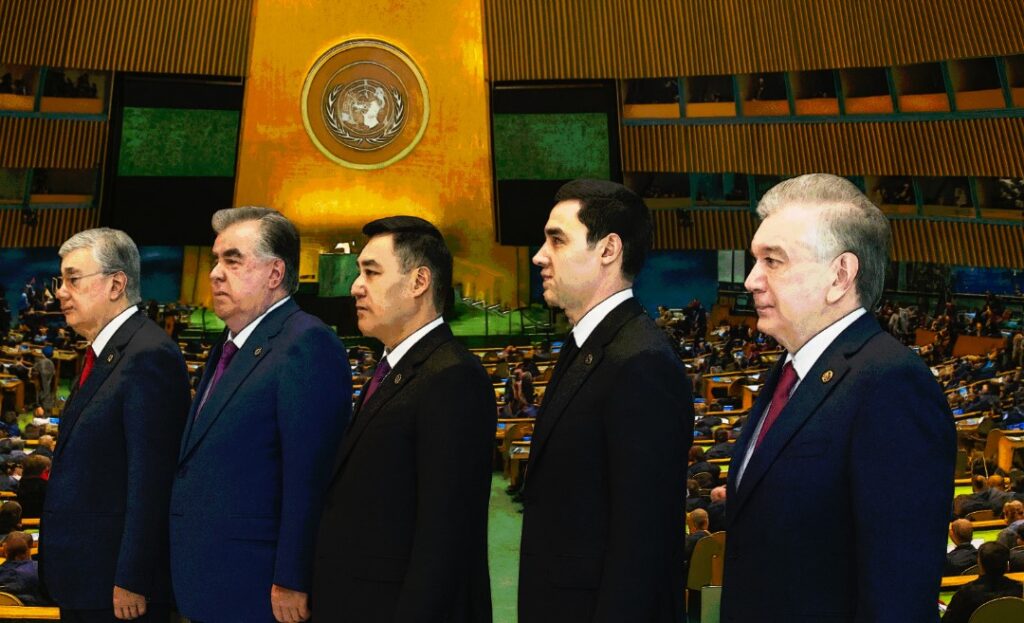
Central Asian Presidents at UNGA-80: All Five Confirmed

New York, Sept 22, 2025 – Central Asia will have a strong presence at the 80th United Nations General Assembly (UNGA-80), with four of the region’s presidents confirmed to attend in person. One leader’s participation, however, remains unannounced. From Kazakhstan, President Kassym-Jomart Tokayev is scheduled to be in New York from September 21 to 23. The Kazakh presidency confirmed that he will deliver his country’s national statement and meet with other heads of state on the sidelines of the high-level week. Kyrgyzstan’s President Sadyr Japarov is officially confirmed to be in New York from September 22 to September 25, where he is scheduled to deliver a speech in the General Debate. Japarov will also join a UN Security Council discussion on AI and a high-level climate event, while holding bilateral meetings with Secretary-General António Guterres and leaders from multiple regions. In Tajikistan, the presidential press service announced on September 21 that President Emomali Rahmon departed Dushanbe for New York to attend UNGA-80. He is accompanied by senior officials and is expected to speak during the General Debate. From Turkmenistan, President Serdar Berdimuhamedov left Ashgabat on September 21 for a working trip to New York. Turkmen state media confirmed his participation in UNGA-80, marking his direct representation of the country at the session. Uzbekistan’s President Shavkat Mirziyoyev arrived in New York on September 20 for a visit lasting through September 24. His agenda includes addressing the General Debate on its opening day and holding bilateral meetings with UN Secretary-General António Guterres and other world leaders. With the General Debate opening on September 23, Central Asia is set to be represented at the highest level by all five of its nations: Kazakhstan, Kyrgyzstan, Tajikistan, Turkmenistan, and Uzbekistan.

Opinion: Almaty as a Model for the Future: Central Asia’s Role in the Global Agenda

Almaty is gradually becoming a hub for resolving issues of not only regional but also global significance. The recent opening of the UN Regional Center for Sustainable Development Goals (SDGs) for Central Asia and Afghanistan here was an event no less significant than the 80th anniversary session of the General Assembly in New York. This is no coincidence: the global agenda at the UN today is increasingly focused on the regional level. Central Asia is not a periphery, but a kind of “model for the future,” where climate, water resources, and security challenges are intertwined. For example, the Tian Shan glaciers have shrunk by more than 25% over the past decade and continue to melt faster than predicted, directly threatening the Amu Darya and Syr Darya rivers. These rivers are increasingly failing to reach the Aral Sea, and its dried-up bed is turning into a giant source of dust and salt. Air pollution levels in the region's cities, as measured by PM2.5, exceed World Health Organization guidelines by an average of 4–6 times. Extreme heat and drought are leading to the loss of agricultural land and the degradation of ecosystems, which affects not only regional but also global food security. Central Asia has already become a unique “testing ground for the future.” The region is testing mechanisms for cross-border cooperation. The CASA-1000 energy project connects Kyrgyzstan and Tajikistan with Afghanistan and Pakistan, creating a “green energy corridor.” Meanwhile, Afghanistan’s Qosh Tepa Canal is altering the balance of water usage on the Amu Darya, forcing neighboring countries to seek new models of agreement. The question is whether these nations can develop a system of joint water and energy management. The outcome will shape not only regional but also global processes. At the same time, the United Nations itself is grappling with a deficit of trust and effectiveness. The Security Council is paralyzed, while General Assembly resolutions often carry only advisory weight. In the face of nuclear risks, environmental upheavals, and the threat of epidemics, the global community is stalling. Even large-scale initiatives such as the Glasgow Financial Alliance for Net Zero (GFANZ) remain largely declarative rather than actually limiting “dirty” investments. Therefore, reform proposals are becoming increasingly vocal, in particular, to strengthen regional UN divisions that are capable of responding more quickly to crises and ensuring practical cooperation between countries. Another way to overcome the trust deficit could be to involve independent expert councils – scientists, NGOs, think tanks – more widely in the decision-making process, which would reduce the influence of political gridlock at the global level. Overall, Almaty can be seen as a model of a “UN in miniature” – a regional center capable of promptly addressing issues that may seem “too small” for New York, yet are critically important for the countries of the region. For instance, the SDG Center could initiate the creation of a regional water monitoring system with unified measurement standards and transparent data sharing. Such decentralization could form the basis for future UN reform....

South Caucasus Peace Push Faces Political and Regional Roadblocks

This past weekend, discussion of the “historic joint declaration for peace” was nearly impossible to avoid. Optimism ran high, with many expressing hope that peace and cooperation might finally take hold in the South Caucasus. But how realistic is that vision? What was signed in Washington on August 8, 2025, was not a binding treaty but a declaration of intent. That is a meaningful step, but for now it remains a symbolic document. Turning it into lasting peace will require a full treaty with specific commitments. One major hurdle is Armenia’s constitution, which still contains territorial claims to land recognized as part of Azerbaijan. Amending this will be politically difficult. The day after the signing, the opposition Armenian Revolutionary Federation (ARF) issued a sharply critical statement. It accused the declaration of harming Armenia’s sovereignty, legitimizing an Azerbaijani-favored corridor, and violating Armenia’s territory. The ARF demanded the withdrawal of Azerbaijani forces, the release of Artsakh’s political prisoners, and guarantees for the safe return of displaced Armenians. Of the 69 seats in Armenia’s parliament, 28 belong to the “Armenia” faction, 15 of them held by ARF members, giving the party significant influence over this debate. Azerbaijani President Ilham Aliyev has also said that the wording of Armenia’s constitution blocked the signing of a treaty in Washington. Alongside the declaration, the leaders of Armenia and Azerbaijan signed economic agreements with the United States to boost trade, transit, energy, infrastructure, and technology in the South Caucasus. Yet these too face obstacles. Iranian official Ali Akbar Velayati vowed to prevent the creation of an “American corridor” in the region and rejected reports of a US-Armenian lease deal for land along Iran’s border, warning it would become “a graveyard for the mercenaries of Donald Trump.” Proponents argue that if such a corridor opens, it could strengthen the Trans-Caspian International Transport Route. However, no study has yet confirmed whether the 43-kilometer stretch in question could handle a major traffic increase. After a weekend of high expectations, political realities have brought a more cautious mood. The week ahead promises further developments. President Trump has  announced a meeting with Russian President Vladimir Putin in Alaska. Some reports claim Putin has proposed a Ukraine ceasefire in exchange for significant territorial concessions and recognition of Russia’s claims. In response, European leaders issued a joint statement affirming Ukraine’s right to decide its own future, calling for robust security guarantees, and insisting that any peace process must begin with a ceasefire or reduced hostilities. Ukrainian President Zelensky reiterated that the constitution already answers the territorial question and that no land will be surrendered. Diplomatic exchanges have been intense. Kazakh President Kassym-Jomart Tokayev spoke with both Zelensky and Aliyev, urging a balanced approach and recalling the saying that “a bad peace is better than a good war.” Putin called the president of Tajikistan, and Zelensky spoke again with Aliyev. Behind the brief official readouts lies a broader search for ways forward. International politics is a delicate process, and disputes built over decades or centuries...

CICA Headquarters Officially Inaugurated in Astana

Kazakhstan marked a milestone in its diplomatic history with the official opening of the headquarters of the Conference on Interaction and Confidence-Building Measures in Asia (CICA) in Astana. President Kassym-Jomart Tokayev presided over the ceremony, calling it a moment of “symbolic and strategic importance.” CICA, a multilateral forum aimed at enhancing peace, security, and cooperation across Asia, was founded on October 5, 1992, at the initiative of Kazakhstan’s first President, Nursultan Nazarbayev. He proposed the creation of a pan-Asian platform during the 47th session of the UN General Assembly. Today, CICA comprises 28 member states, with 10 additional countries and five international organizations, including the United Nations, holding observer status. Its executive body, the CICA Secretariat, is now permanently based in Kazakhstan’s capital. Speaking at the June 2025 inauguration, President Tokayev highlighted the organization’s enduring relevance amid rising global tensions. “More than three decades ago, Kazakhstan initiated the creation of the CICA, an initiative that received broad international support as a timely step towards strengthening regional stability and security,” he said. “Today, when geopolitical tensions are intensifying, the principles of trust, mutual understanding, and dialogue are becoming particularly relevant. The CICA, covering almost 90% of Asia's territory and representing more than half of the world's population, plays an important role in shaping the new architecture of international relations.” Tokayev emphasized the need for a renewed commitment to multilateralism and the rules-based international order. “Force is increasingly replacing legal principles. In these circumstances, it is particularly important that all states unconditionally adhere to international law and the UN Charter, without resorting to selective interpretation,” he stated. He also reaffirmed Kazakhstan’s domestic reform agenda and its vision for regional integration. “We are actively modernizing our transport and logistics infrastructure, railways, highways, and seaports, in cooperation with international partners. This is critically important both for domestic growth and for ensuring the sustainability of regional supply chains,” he noted. Digital transformation was another focal point of Tokayev’s address. “We are striving to build a digital state in which AI will be a driver of innovation, growth, and digital sovereignty. Kazakhstan is forming a sustainable, environmentally responsible economy integrated into global value chains,” he said. The broader geopolitical climate, including ongoing instability in the Middle East, has further highlighted the need for cooperative mechanisms like CICA. As The Times of Central Asia previously reported, the escalating conflict between Iran and Israel, both CICA members, risks disrupting vital trade and transport routes in Central Asia’s southern corridor. The opening of CICA’s headquarters thus reinforces Kazakhstan’s longstanding ambition to serve as a platform for dialogue and diplomacy in an increasingly polarized world.

Middle Power Policy in Global Confrontation Environment

The current polycrisis fundamentally damaged the whole architecture of the Modern World Order, in particular, the Economics and Global Governance. Global tensions peaked during the 2019 pandemic crisis, and the 2022 war in Ukraine not only reduced the post-Cold War dynamics of international cooperation but changed its very nature. The Global Risks Report, issued by the 2023 Davos World Economic Forum, explains that a polycrisis dominated by the cost-of-living crisis, climate crisis, and political instability threatens to reverse hard-fought gains in development and growth, “The biggest turmoil is geopolitical... We have already entered a multipolar world in which each region has its own issues and role in global politics” (Jeffrey Sachs, The New World Economy, January 10, 2023). The era of a favorable climate for international trade, investment promotion in emerging markets, and the liberalization of international cooperation—beginning with the breakdown of the socialist bloc—is likely coming to an end.  We have now entered a poly-crisis in which multiple risks exert force equally. The increasing number and dynamics of these crises are of deep concern for global governance actors, as unresolved old threats are now compounded by new ones, creating additional difficulties. What is essential is the widening imbalance between crisis management and development in global governance. Global management today focuses primarily on crisis regulation while playing a diminishing role in development programs. This is evident in the financial resource allocation for the Ukrainian crisis and UN funds for sustainable development: total bilateral aid from the US and EU for Ukraine between January 24, 2022, and June 30, 2024, amounts to $75.1 billion and $39.38 billion, respectively. In contrast, as of January 2017, only 22 joint UN programs had been approved with a total budget of $69.36 million. Global governance priorities are increasingly skewed toward security, while the socio-economic component steadily declines due to rising global conflicts. We have entered a fragmented, polarized world that lacks consensus on many critical international issues. Globalization is taking on features of deglobalization. The war in Ukraine has divided the world into two camps—the Global North (Western nations) and the Global South (Eastern nations)—each with differing visions for the contemporary world order. This division now permeates nearly all aspects of international and national life. The return of President Trump’s Administration in January 2025 raises several new questions and expectations regarding the future status of global partnerships. The updated American strategy urgently requires a deep and comprehensive political and academic analysis. This includes recent US actions such as withdrawing from certain UN institutions (e.g., the UN Human Rights Council and the World Health Organization, with UNESCO possibly following), imposing trade tariffs among major global trading partners, and introducing other new initiatives. These changes have already become a reality. At the same time, we observe a decline of the United Nations' effectiveness in resolving the acute problems of Global Security and Sustainable Development. Consequently, new global development initiatives have emerged, spearheaded by the United States and the European Union (PGII), as well as China (GDI, GSI,...

Jackson-Vanik: One Step Away from Repeal

The U.S. Senate has confirmed Marco Rubio as Secretary of State, raising hopes among Central Asian leaders - particularly in Kazakhstan - that his recent comments regarding the Jackson-Vanik amendment may soon translate into concrete action to repeal this outdated policy, which continues to hinder mutual trade. Passed in 1974 as part of the Trade Act under President Gerald Ford, the Jackson-Vanik amendment was designed to penalize countries with non-market economies that restricted emigration, particularly targeting the Soviet Union. The amendment specifically sought to pressure the USSR to allow its Jewish population to emigrate freely, while also protesting the suppression of Judaism and other religious practices. The amendment achieved a measure of success by 1989, when the Iron Curtain fell and Soviet Jews were permitted to emigrate in large numbers, primarily to Israel and the United States. However, the policy remained in place, even after the dissolution of the USSR, applying to the newly independent Central Asian republics despite their vastly different political and economic landscapes. On January 15, Rubio delivered a nearly five-hour confirmation speech during a Senate hearing for his nomination as Secretary of State under the Donald Trump administration. Among the topics discussed was the Jackson-Vanik amendment. Senator Steve Daines specifically asked Rubio for his position on the amendment, emphasizing that its repeal could normalize U.S. trade relations with Kazakhstan and Uzbekistan. Rubio described the amendment as “an absurd relic of the past,” asserting that it no longer serves any meaningful purpose in pressuring Central Asian countries on human rights. He warned that continued use of such measures could push nations like Kazakhstan and Uzbekistan closer to Russia’s sphere of influence. Rubio singled out Kazakhstan, noting that the country had “successfully met the conditions” to transition to a market economy, as evidenced by its accession to the World Trade Organization several years ago. He pledged to work with lawmakers to repeal the Jackson-Vanik amendment, signaling a shift in U.S. policy toward fostering deeper economic ties with the region. Why Central Asia Was Left Behind The continued application of the Jackson-Vanik amendment to Central Asia can be partially explained by the differing domestic policies of its key players - Kazakhstan and Uzbekistan. Under Nursultan Nazarbayev, Kazakhstan quickly abandoned Soviet-era restrictions on emigration and took steps to promote religious tolerance and interfaith harmony. By contrast, Uzbekistan under Islam Karimov maintained many of the Soviet Union’s repressive practices, including restrictions on religious minorities. This disparity in policies contributed to Washington’s perception of the region as monolithic and resistant to reform, discouraging efforts to lift the amendment. Recent Developments and Challenges In recent years, there have been efforts to lower trade barriers between the U.S. and Central Asia, particularly through initiatives like the B5+1 dialogue, which aims to attract greater Western investment to the region. However, the Jackson-Vanik amendment complicates these efforts, as countries must secure an annual waiver from the U.S. President to maintain normal trade relations. Kazakhstan has emerged as the frontrunner in advocating for the amendment’s repeal. An...