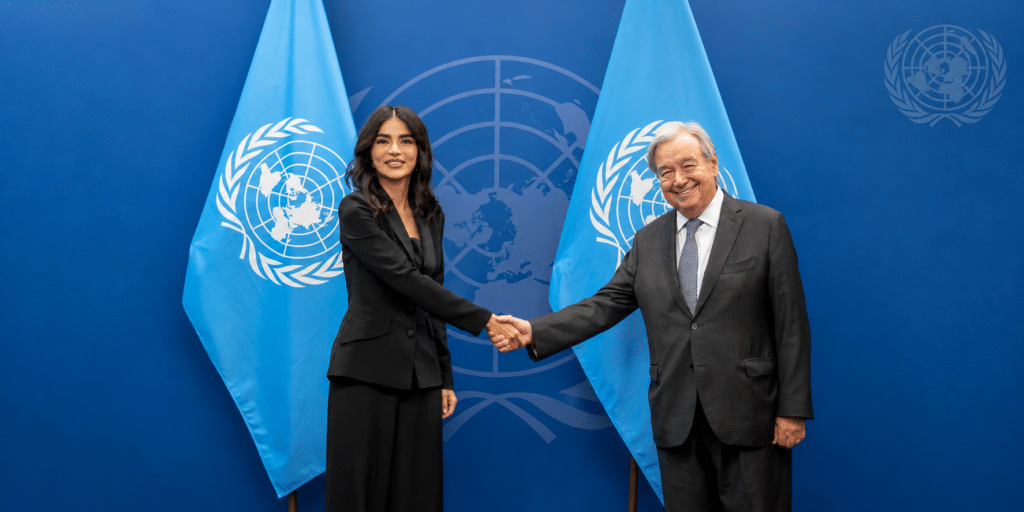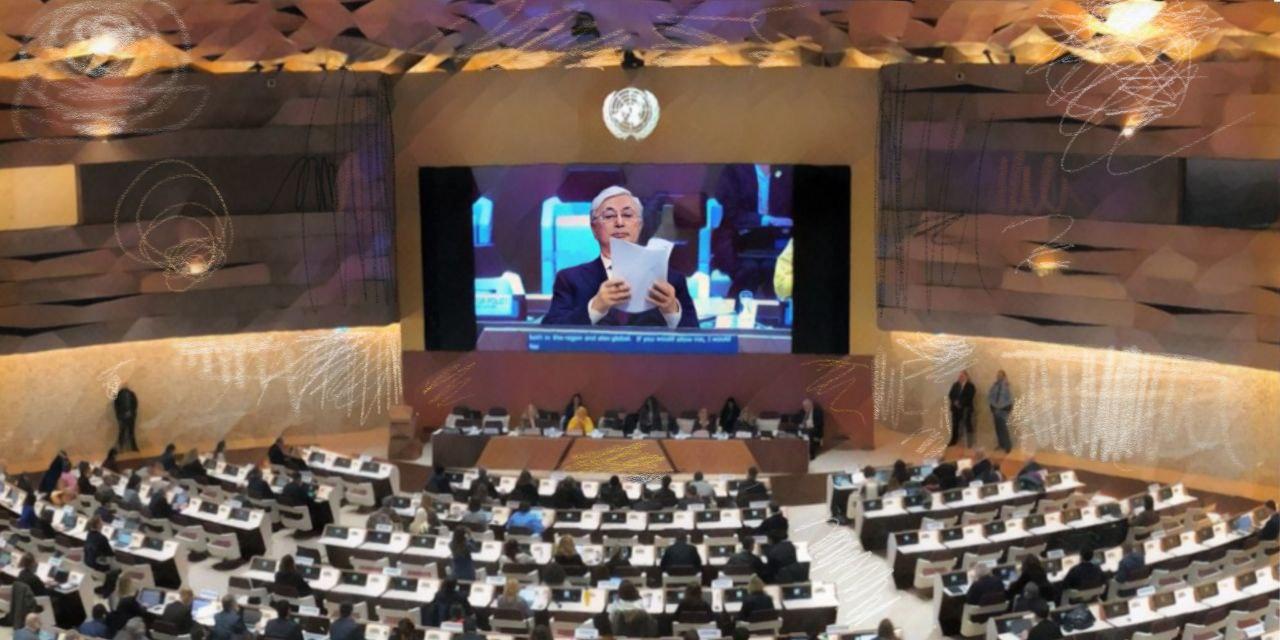
Kazakhstan’s international visibility is reaching a peak this late summer and early autumn of 2025. In August, UN Secretary-General António Guterres visited Astana, praising the country’s role as a stabilizing influence in Central Asia and a supporter of multilateral institutions.
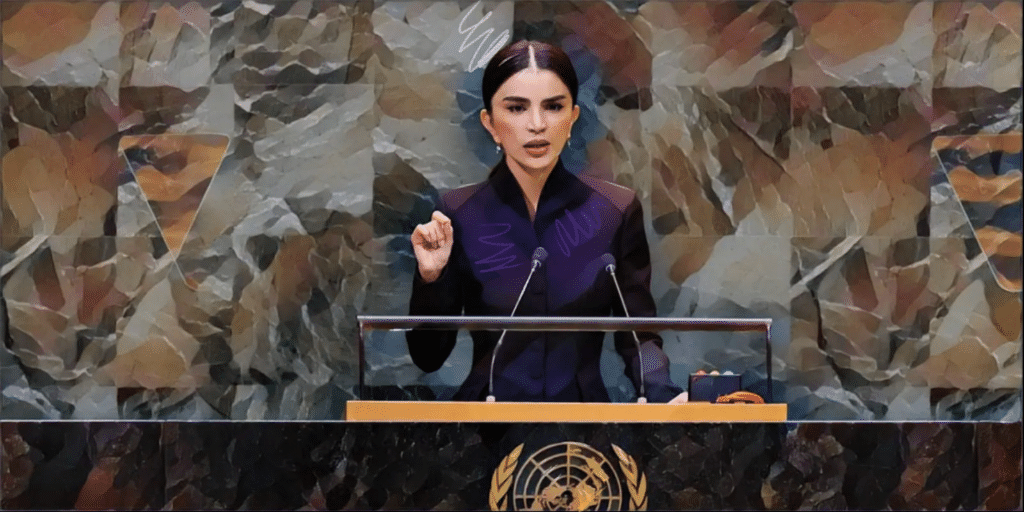
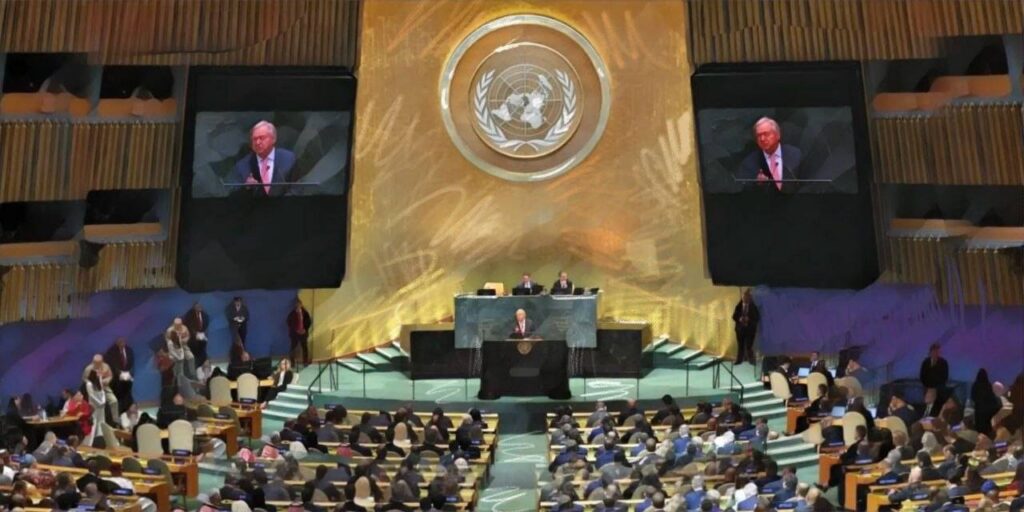
In a few days, President Kassym-Jomart Tokayev will address the UN General Assembly in New York, presenting Kazakhstan as a reliable partner in peacekeeping, sustainable development, and nonproliferation. This upcoming UN speech marks a departure from past appearances, signaling Astana’s intent not only to balance powers but also to set global agendas. Together, these events signify the country’s ascent as a state no longer defined solely by the art of survival between great powers, but one that now seeks to set agendas, convene adversaries, and project norms beyond its borders.
This dual UN moment illustrates the broader transformation of Kazakhstan’s foreign policy over the past year: the shift from multi-vector balancing, an inheritance of the Nazarbayev era, toward a more assertive mode of multi-actor entrepreneurship. Framed through the UN stage, Kazakhstan’s diplomacy now aspires to translate regional initiatives into a global narrative. Rather than oscillating between Moscow, Beijing, Brussels, and Washington, Astana has begun to use its accumulated diplomatic capital to initiate, mediate, and institutionalize regional and global frameworks.
From Balance to Initiative
For three decades after independence, Kazakhstan’s “multi-vector” foreign policy served as a model of survival in a region shaped by the clash of external rivalries. The doctrine emphasized equidistance between Russia, China, and the West, with an overlay of pragmatic economic engagement.
In practice, this often meant leveraging one relationship to offset pressure from another while securing steady inflows of trade and investment. Today, however, the war in Ukraine, the erosion of European security, and the sharper contest between Beijing and Washington have undermined the viability of simple balancing.
In response, Tokayev’s government has shifted its approach, seeking to overlay a more agenda-setting dynamic on multi-vectorism by positioning Kazakhstan as a regional hub for diplomacy and connectivity. At the UN, this shift might be presented as Kazakhstan’s evolution from passive survival to a more proactive approach to international diplomacy. Astana’s task is to transform such declarations into a durable strategy.
Central Asia and the South Caucasus
The clearest evidence of Kazakhstan’s new role comes from Central Asia itself. Relations with Uzbekistan, once characterized by rivalry, have been recast as a cornerstone of functional regionalism. Over the past twelve months, Astana and Tashkent have concluded demarcation agreements, expanded electricity grid interconnections, and coordinated positions on water resource management.
The consultative meetings of Central Asian leaders, which Kazakhstan has championed, now serve as regularized platforms for joint initiatives, from infrastructure to practical economic integration, with attempts to reduce Russian and Chinese influence. At the UN, this shift may be framed as Kazakhstan’s evolution from mere survival to actively pioneering new approaches in international diplomacy. For Kazakhstan, the partnership with Uzbekistan provides buffering against external pressure and multiplies regional influence. Astana has also made use of the UN Regional Centre for Preventive Diplomacy for Central Asia (UNRCCA), grounding its convening authority in both international law and practical problem-solving.
The past year also saw Kazakhstan deepen its engagement in the South Caucasus. Economic ties with Azerbaijan have grown rapidly, with bilateral trade surpassing $330 million in the first half of 2025 alone. Transport and logistics have been at the core of this cooperation.
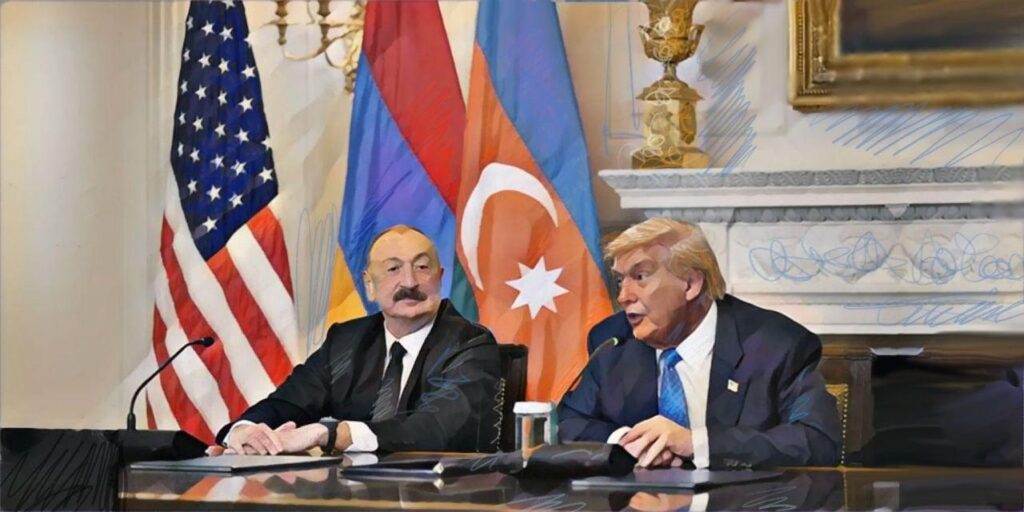
In August, Almaty served as one of the trusted platforms for discussions leading to the U.S.-backed Armenia–Azerbaijan declaration. By hosting these talks, Astana demonstrated its capacity to act as an intermediary in one of Eurasia’s most contentious disputes. These mediation efforts will bolster Tokayev’s UN narrative of Kazakhstan as a neutral broker capable of contributing to peace beyond Central Asia.
The European Union and the United States
Kazakhstan’s outreach to the European Union has combined commercial pragmatism with strategic signaling. In 2024, EU–Kazakhstan trade approached $50 billion, making Astana the EU’s leading oil supplier and a pivotal partner in critical raw materials. Less visible were discussions on renewable energy and regulatory standards, where Kazakhstan pressed to move beyond transactional deals. European counterparts welcomed the ambition but voiced caution about Astana’s capacity to implement, just as they did with Uzbekistan and other Central Asian states at the Samarkand summit.
Calls for a new EU–Central Asia summit and participation in the bloc’s green hydrogen initiative highlight aspirations, but realization is far from guaranteed. Tokayev is expected to reference these initiatives at the UN as part of Kazakhstan’s contribution to global climate and energy agendas. Cooperation with the United States represents a complementary vector. Through the C5+1 dialogue and expanding trade – now surpassing $4 billion annually – Washington and Astana have pursued supply chain and critical mineral projects. The Middle Corridor, advanced through the Trans-Caspian Trade and Transit Partnership (TRIPP), has become central to this agenda, while Kazakhstan’s role in brokering the Armenia–Azerbaijan declaration has opened discussion of a new Armenia corridor – still tentative, but reinforcing Astana’s image as both mediator and connector. Together, the European Union and the United States are also Kazakhstan’s largest cumulative foreign investors, accounting for well over 40% of total FDI – far outweighing contributions from Russia and China.
American officials have tied this relationship to explicit support for Kazakh sovereignty, particularly in light of the Ukraine war. Tokayev’s government has courted these ties while keeping one eye on the turbulence of U.S. domestic politics. How far this engagement can withstand shifting U.S. priorities remains an open question. At the UN, however, Astana will likely frame U.S. and EU partnerships as part of its multilateral credentials, linking bilateral gains to global governance priorities.
Russia and China
Russia and China remain the delicate fulcrum of Kazakhstan’s foreign policy. Relations with Moscow have grown more complicated as Astana, emphasizing territorial integrity, has refused to recognize Russia’s annexation of Ukrainian territories. Yet economic dependence on Russian transit remains entrenched, and Kazakhstan cannot easily disentangle itself from inherited supply chains. Defense integration is discouraged even as the national economy stays deeply exposed to Russian markets, a vulnerability that hardens structural limits on autonomy.
China has meanwhile become Kazakhstan’s largest trading partner. Infrastructure, energy, and manufacturing dominate the bilateral agenda, with railroad connectivity under the Belt and Road remaining a backbone of the corridor. Astana has welcomed Chinese investment while insisting on sovereign decision-making. Official Chinese sources frame the relationship in sweeping terms, while Kazakh policymakers present it more cautiously. Beijing is accepted as a necessary partner, but concerns over dependency linger. By stressing peace in Ukraine and UN reform, Tokayev is signaling that his UN speech will present Kazakhstan not just as a regional balancer between Moscow and Beijing, but as a middle power anchoring its diplomacy in sovereignty and international law.
Kazakhstan, Central Asia, and the UN Stage
From the vantage point of 2025, Kazakhstan’s foreign policy no longer resembles a defensive maneuver, as multi-vectorism once did. Its current diplomacy is closer to an entrepreneurial project, improvised in parts yet directed toward shaping outcomes across Eurasia. In the South Caucasus, Astana has mediated talks; in Central Asia, it has convened neighbors; with the European Union, it has pressed for frameworks as well as trade. This initiative, while uneven in implementation, signals a shift in posture from survival through balance to influence through engagement, and it reflects Tokayev’s effort to project Kazakhstan as a professionalized “middle power” with a distinct diplomatic identity that links domestic reform to external strategy.
The strategy is ambitious, but its foundations remain fragile. Moscow may tighten pressure if Astana is perceived as drifting too far from Russian security structures; the domestic reform process may stall under bureaucratic resistance or political hesitation; commodity markets may again swing violently, exposing vulnerabilities in the national economy. Yet the initiative is taking root in agency, network-building, and institutional reform. The Bertelsmann Transformation Index estimates that this new diplomatic dynamism positions Kazakhstan to do more than merely survive among larger powers, though the actualization of this potential will depend on consolidating reforms at home and carefully managing external pressures.
Kazakhstan’s activism has raised Central Asia’s profile in the United Nations. Guterres’s August visit underlined the region’s role in preventive diplomacy, while Astana’s initiatives are now shaping how the UN views Central Asia: not as peripheral, but as a zone of governance experiments with global resonance. Tokayev wants the world to see Kazakhstan not as a passive buffer, but as a rising middle power. By convening Central Asia’s leaders, mediating in the South Caucasus, and championing new corridors to Europe, he has already begun to redefine his country’s role. His UNGA address now offers the chance to show that Kazakhstan is no longer surviving between powers, but stepping forward to give Central Asia a voice with global resonance.