• KGS/USD = 0.01144 0%
  • KZT/USD = 0.00210 0%
  • TJS/USD = 0.10553 0.19%
  • UZS/USD = 0.00008 0%
  • TMT/USD = 0.28530 0%
  • KGS/USD = 0.01144 0%
  • KZT/USD = 0.00210 0%
  • TJS/USD = 0.10553 0.19%
  • UZS/USD = 0.00008 0%
  • TMT/USD = 0.28530 0%
  • KGS/USD = 0.01144 0%
  • KZT/USD = 0.00210 0%
  • TJS/USD = 0.10553 0.19%
  • UZS/USD = 0.00008 0%
  • TMT/USD = 0.28530 0%
  • KGS/USD = 0.01144 0%
  • KZT/USD = 0.00210 0%
  • TJS/USD = 0.10553 0.19%
  • UZS/USD = 0.00008 0%
  • TMT/USD = 0.28530 0%
  • KGS/USD = 0.01144 0%
  • KZT/USD = 0.00210 0%
  • TJS/USD = 0.10553 0.19%
  • UZS/USD = 0.00008 0%
  • TMT/USD = 0.28530 0%
  • KGS/USD = 0.01144 0%
  • KZT/USD = 0.00210 0%
  • TJS/USD = 0.10553 0.19%
  • UZS/USD = 0.00008 0%
  • TMT/USD = 0.28530 0%
  • KGS/USD = 0.01144 0%
  • KZT/USD = 0.00210 0%
  • TJS/USD = 0.10553 0.19%
  • UZS/USD = 0.00008 0%
  • TMT/USD = 0.28530 0%
  • KGS/USD = 0.01144 0%
  • KZT/USD = 0.00210 0%
  • TJS/USD = 0.10553 0.19%
  • UZS/USD = 0.00008 0%
  • TMT/USD = 0.28530 0%

Viewing results 1 - 6 of 112

Marked by Tragedy: Why Kazakhstan’s Independence Day Is a Day of Reflection

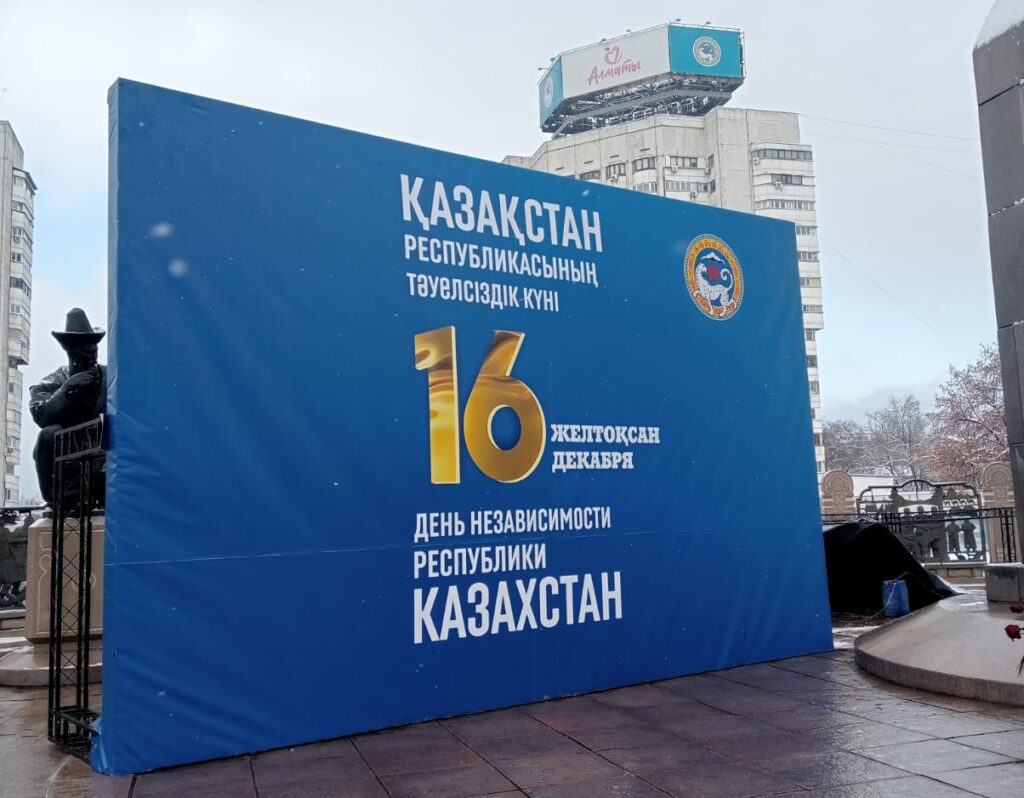
On December 16, Kazakhstan marks Independence Day, commemorating the adoption of the Law on Independence and State Sovereignty of the Republic of Kazakhstan in 1991. Until 2022, the country observed this holiday over two days - December 16 and 17 - but recent legislative changes have reduced the celebration to a single day. The amendments to the Law on Holidays in the Republic of Kazakhstan, adopted in September 2022, redefined the country’s official holidays. Republic Day on October 25 regained its national holiday status, while December 1 - Day of the First President - was removed as a public holiday. Independence Day, while still classified as a state holiday, was given a more somber tone, with official emphasis placed on honoring the sacrifices that paved the way to sovereignty. [caption id="attachment_26631" align="aligncenter" width="1204"] @TCA, Askar KubaizhanovIndependence monument[/caption] From Republic Day to Independence Day The roots of Republic Day lie in Kazakhstan’s Declaration of State Sovereignty, adopted on October 25, 1990, as the Soviet Union was nearing its collapse. The declaration symbolized Kazakhstan’s first step toward independence. However, following the country’s full independence in 1991, December 16 became the primary national holiday. Republic Day lost its significance in 2009 but was reinstated as a national holiday in 2022. President Kassym-Jomart Tokayev, in his proposal to restore Republic Day, emphasized its role as the foundation of Kazakhstan’s independence journey. He suggested that Independence Day, while significant, should serve as a time for mourning and remembrance to honor those who contributed to the country’s sovereignty. [caption id="attachment_26632" align="aligncenter" width="1600"] @TCA, Askar Kubaizhanov[/caption] The Legacy of December 1986: Zheltoksan Protests December 16 carries weighty historical significance for Kazakhstan. On this day in 1986, protests erupted in Alma-Ata (now Almaty) after Moscow appointed Gennady Kolbin - a Soviet official with no prior ties to Kazakhstan - as head of the Kazakh SSR. Young Kazakh protesters demanded the application of the Korenization principle, which advocated for local leadership in Soviet republics. The protests, often viewed as a precursor to Kazakhstan’s independence movement, were violently suppressed by Soviet authorities. The operation reportedly codenamed “Blizzard,” was designed to provoke unrest and then crush it through bloodshed. Controversially, Nursultan Nazarbayev, who would later become Kazakhstan’s first president, was aligned with Soviet power at the time. In his memoir "Without Right and Left, "Nazarbayev claimed he led one of the protest columns during the demonstrations. For many Kazakh citizens, particularly those who participated in or were affected by the events, December 16-17 remain days of mourning. Almaty’s Peace Street was renamed Zheltoksan Street to honor the memory of the victims. December 2011: The Zhanaozen Tragedy The somber tone surrounding Independence Day was reinforced by the events of December 16, 2011, in Zhanaozen. For months prior, oil workers in the Mangystau region had been on strike, demanding better wages. The protests escalated when workers occupied the city’s central square. On Independence Day, clashes broke out between protesters and local officials during holiday celebrations. The situation turned violent when a group of...
Archaeologists Uncover Rare Silk Road Artifacts in Uzbekistan

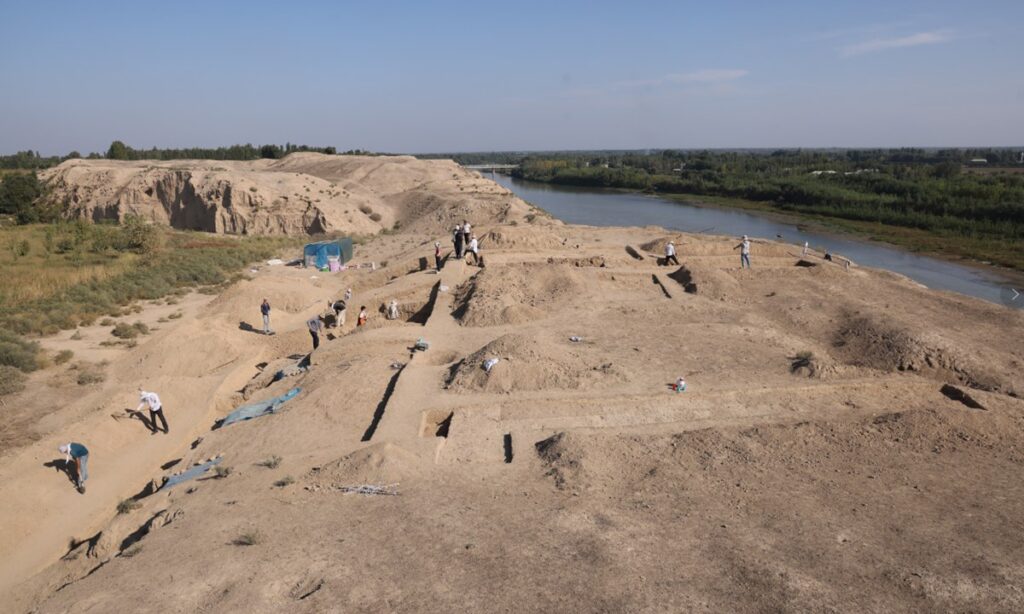
A joint archaeological expedition from China and Uzbekistan has made remarkable discoveries at Mengchaktepa, a key Silk Road site located on the northern bank of the Syr Darya River. Known as the “Living Fossil of the Silk Road,” the site has been under investigation by the Chinese Academy of Social Sciences (CASS) and Uzbekistan’s Institute of Archaeology since 2012. The team, led by CASS archaeologist Liu Tao, unearthed seven tombs, two buildings, and numerous artifacts, including silk fabrics, leather goods, bronze mirrors, square-holed coins, and beads. Among the most significant finds are silk fragments, the first such discovery in the region since 1986, which bridges a 40-year gap in the study of ancient silk in the Ferghana Valley. According to Liu, these silk fragments highlight the advanced weaving techniques of antiquity. Abdulhamidjon Anarbayev, a professor at Uzbekistan's National Center for Archaeology, praised the Chinese team’s contributions to advancing Uzbekistan’s field archaeology through modern excavation and preservation methods. He noted that the research underscores the high standards of Chinese archaeology globally. Mengchaktepa holds immense value for studying cultural connections along the Silk Road. Ancient Chinese chronicles from the Qin and Han dynasties (221 BC–220 AD) describe how Zhang Qian, an emissary of the Western Han dynasty, established trade links between China and Central Asia. Through Dayuan, the ancient region corresponding to the modern Ferghana Valley, silk, paper, and Chinese technology reached Europe, while grapes and alfalfa were introduced to China. Excavations at Mengchaktepa have been ongoing since 1986. Early discoveries included nine cave tombs containing well-preserved remains, silk garments, and jewelry from the 5th to 8th centuries. This year, researchers are focusing on the necropolis’s scope, tomb structures, and their artifacts, with special attention to preserving organic materials like silk, leather, and reeds for laboratory analysis. Liu explained that the findings provide new insights into the region’s early medieval funerary practices, belief systems, and architectural traditions. Artifacts such as Han-style objects and relics linked to Zoroastrianism affirm Mengchaktepa’s pivotal role in East-West cultural exchanges along the Silk Road.

Turkmen Scientists Acquire Over 100 Rare Manuscripts from the UK

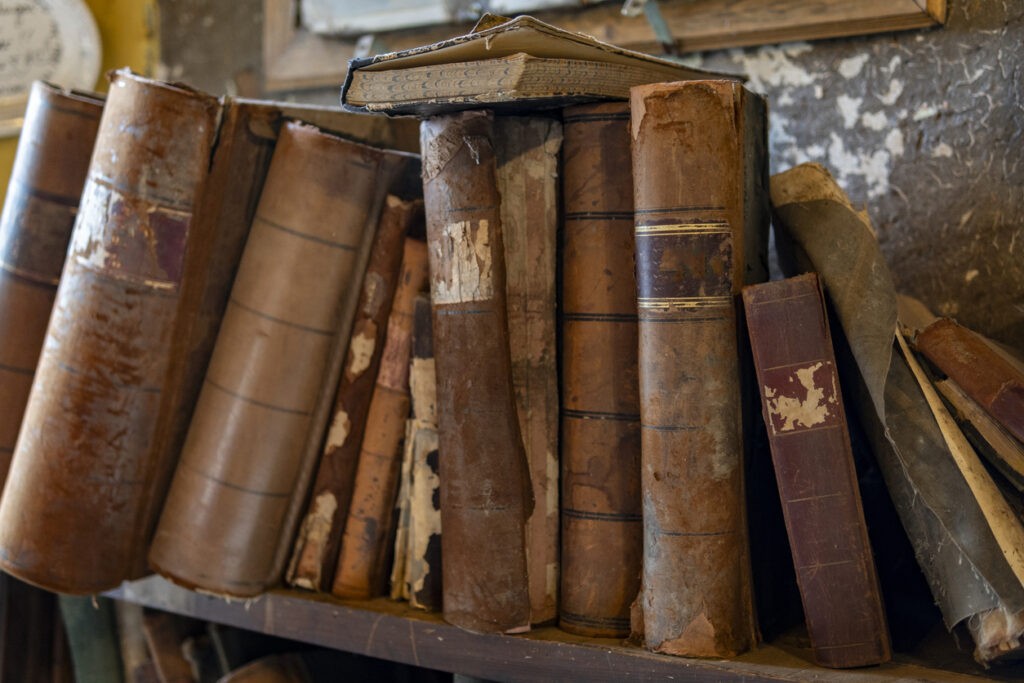
Researchers from the Institute of Language, Literature, and National Manuscripts at the Academy of Sciences of Turkmenistan have returned from the United Kingdom with 107 electronic copies of valuable manuscripts. These acquisitions enrich the collection of historical materials documenting the cultural heritage of the Turkmen people. From November 2 to 23, researchers Amandurdy Nuraev and Guichmyrat Changliyev conducted studies at two of the UK’s most renowned repositories: the British Library in London and the John Rylands Research Institute and Library in Manchester. These archives house extensive collections of historical documents, including rare manuscripts with significant relevance to Turkmenistan’s history and culture. The expedition culminated in the transfer of electronic copies of key documents to Turkmenistan. Among the manuscripts are works by prominent authors such as Makhtumkuli Fraghi, Alisher Navoi, Fizuli, and Hussein Baygara, along with other renowned oriental poets and scholars. Special emphasis was placed on uncovering works previously unknown to the Turkmen academic community. In addition to literary compositions, the manuscripts provide unique insights into the history and traditions of the Turkmen people. These materials offer new opportunities for studying the heritage of Makhtumkuli Fraghi, a celebrated figure and symbol of Turkmenistan’s national culture. This significant achievement enhances the preservation and understanding of Turkmenistan’s rich literary and historical legacy, contributing to broader academic and cultural exploration.

London Hosts Celebration for the 300th Anniversary of Turkmen Poet Makhtumkuli Fraghi

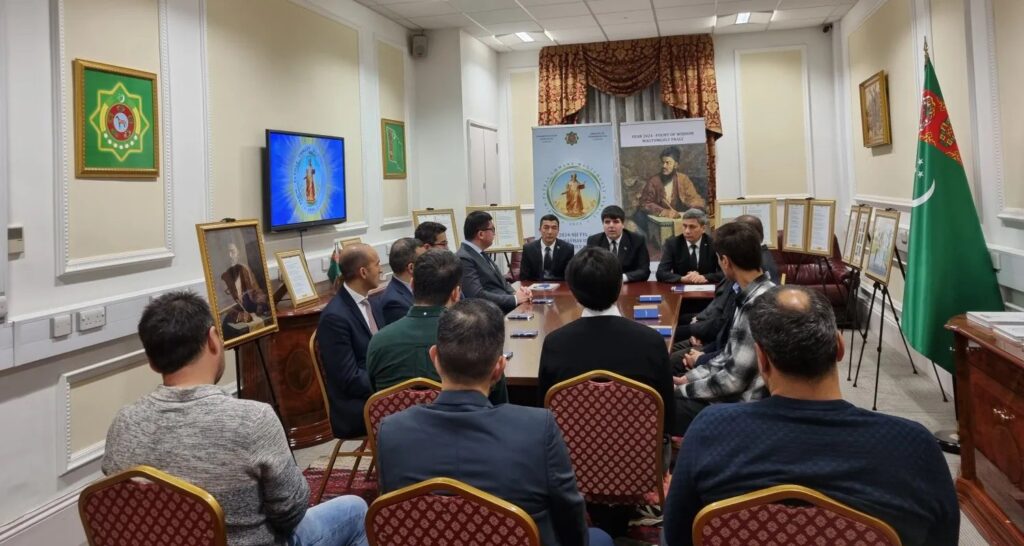
Makhtumkuli Fraghi, a revered Turkmen poet and philosopher, whose writings have profoundly shaped Turkmenistan’s national identity and enriched global cultural heritage, was celebrated in London on November 22, 2024. Known for his deep reflections on life, justice, and humanism, Makhtumkuli’s works have become an integral part of the world’s cultural heritage, emphasizing universal values and profound human insight. The Embassy of Turkmenistan in London hosted a gala evening to mark the 300th anniversary of the poet’s birth. Organized in collaboration with the Makhtumkuli Institute of Language, Literature, and National Manuscripts of the Academy of Sciences of Turkmenistan, the event welcomed diplomats, scholars, students, and members of the Turkmen diaspora. Turkmenistan's Ambassador to the UK, Yazmurad Seriaev, along with scientists Nuraev and Changliyev, delivered speeches celebrating the poet’s profound contributions to world culture and his enduring significance for the Turkmen people. Attendees were treated to a documentary on Makhtumkuli Fraghi’s life and work as well as an exhibition of his writings translated into English. Special attention was given to the early phase of his literary journey, its influence on public thought, and its role in the evolution of literature. The London celebration was part of a series of global events commemorating Makhtumkuli’s tricentennial. These tributes not only honor his literary legacy but also serve to strengthen cultural ties between nations, reaffirming the timeless relevance of Makhtumkuli Fraghi’s work in global literature.

Turkmenistan Pays Tribute to the Founder of Modern Turkey in Ashgabat Ceremony

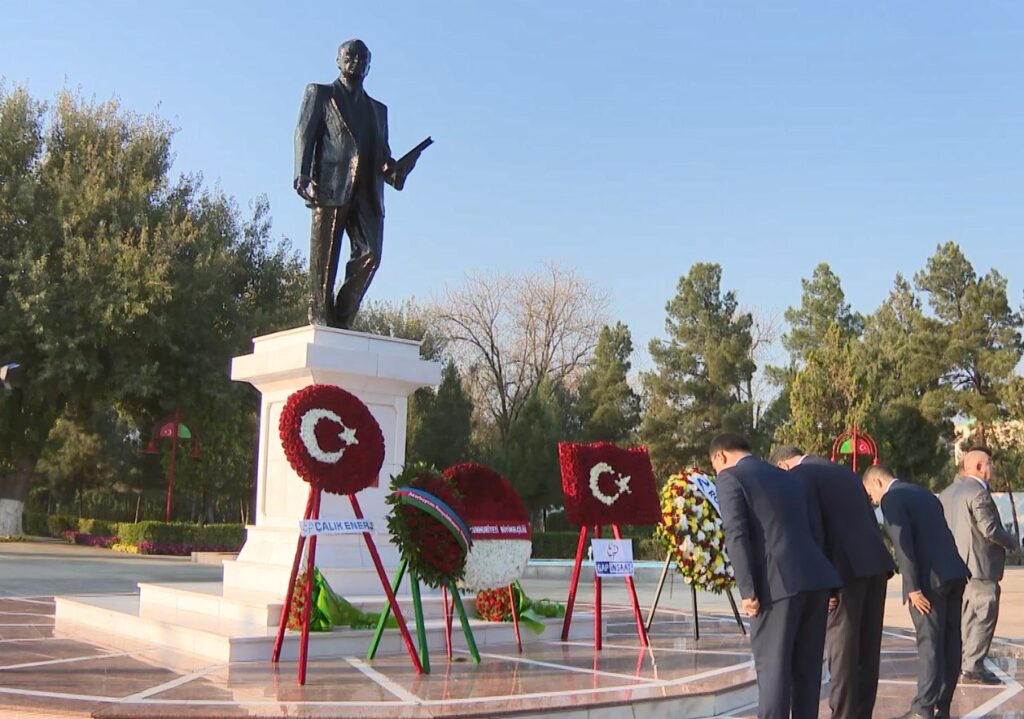
On November 10, Ashgabatex, Turkmenistan’s capital, hosted a memorial event to honor Mustafa Kemal Atatürk, the founder and first president of the Republic of Turkey. Held at the park named in his memory, the ceremony was attended by Turkish Ambassador to Ashgabat, Togan Oral; Deputy Head of the Ashgabat Municipality, Bayrammurat Gurbanov; teachers and students from the Turkmen-Turkish School; Turkish citizens residing in Turkmenistan; and members of the media. The Turkish diplomatic mission organized the event, beginning with a moment of silence and followed by the playing of the national anthems of Turkmenistan and Turkey. A wreath-laying ceremony at the Atatürk Monument provided an opportunity for diplomats and distinguished guests to pay tribute to Atatürk’s profound impact on modernizing Turkey. Mustafa Kemal Atatürk’s leadership led to the establishment of the Republic of Turkey in 1923. His sweeping reforms transformed key sectors of Turkish society, including education and the economy. November 10 marks the anniversary of his passing in 1938.

Min-Kush — The Kyrgyz Time Capsule

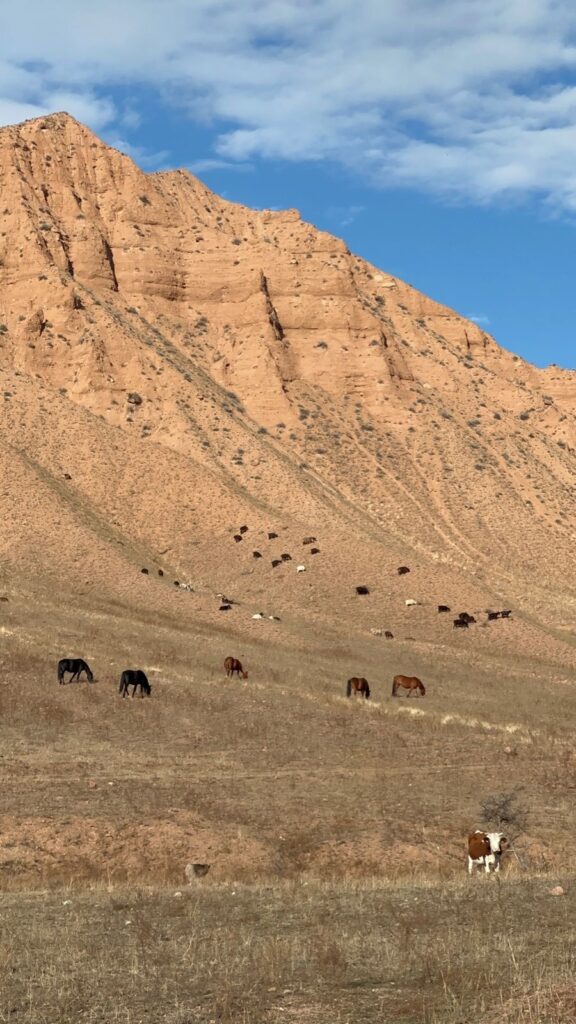
Although Min-Kush is only about 100 miles from Bishkek, as the crow flies, the mountains make us travel 250 miles. We reached a scenic viewpoint along the road, and I stopped to take a picture. I exited the truck and approached a horse with dramatic snow-capped mountains peeking through the clouds. A man came and invited us to ride his horse around his farm. This is his farm, his 75 sheep, and his horse. The horse and I galloped around the farm, chatted with the farmer, and got back on the road. This was my first time on horseback after a year and a half in Central Asia. Min-Kush, once a prosperous town nestled in the Kyrgyz mountains known for its bustling uranium mining industry, has hit the end of the road literally and figuratively. Coming down the A367 highway, a nondescript road sign says “Min-Kush” with an arrow pointing left. We turned, and the road seamlessly transformed from pavement to dirt. It is the last and only settlement on this road off of the highway. The only other vehicles we pass are semi-trucks carrying tons of coal destined for Kyrgyzstan and China.   [caption id="attachment_25324" align="aligncenter" width="1200"] @TCA H.Kuvin[/caption] The city peaked at around 20,000 in the 1980s, but today’s number hovers around 3,500. Established in 1955, the apartments and houses are built in the Stalinist architectural style. The vibrant blue paint that once covered the wooden panels is faded, and sections of the buildings are caved in, but people still live here. The contrast in one building is stark. On the top floor, there are broken windows and unhinged shutters. On the bottom floor, there are new window frames and flowers on the windowsill. The blossoming life on the windowsill is far from what it once was. We stopped and chatted with some locals and asked about their lives. “When Moscow supported us, we had everything: stores, schools, factories, and a hospital. Now…nothing, but we cannot dwell on things. Life is better now than it was after the fall of the USSR.” The man asks for a cigarette and a light; my French friend complies with his request. The main draw of Min-Kush for me is an abandoned felt pen factory. I’ve seen pictures online of some incredible Soviet banners that serve as a time capsule in the mountains. We asked if anyone knew where to find it, and a man told us it was torn down and replaced by a soccer field. As night set in, we looked for a guesthouse of sorts. I had read online that there is one, but there are no signs or information about it anywhere. We stop by a man fixing his Soviet Chaika car on the side of the road. He tells us the hotel is right up the road. We drive to an unlit building where two men are fixing another truck. We chatted, and he made a phone call. Ten minutes later, a lady shows up, unlocks the...