US-funded broadcaster under scrutiny for enabling Tajikistan’s strongman rule
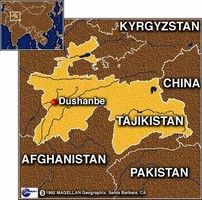
DUSHANBE (TCA) — RFE/RL’s Tajik service, Radio Ozodi, is facing Washington’s scrutiny, as critics say it is ineffective in performing its watchdog responsibilities in Tajikistan and overly accommodating to the country’s strongman president. We are republishing the following article on the issue, written by Peter Leonard*, originally published by Eurasianet: Since its founding at the outset of the Cold War, U.S.-funded news broadcaster Radio Free Europe/Radio Liberty has sought to promote press freedoms and advance an American vision of democracy in some of the world’s most hardened dictatorships. RFE/RL’s mission – to “provide what many people cannot get locally: uncensored news, responsible discussion, and open debate” – often puts its reporters in the way of harassment from undemocratic governments. As modern authoritarian regimes become more adept at muddying the waters with false narratives, that goal has never felt more urgent. And yet, in Tajikistan, an economically wrecked and profoundly corrupt former Soviet republic on Afghanistan’s doorstep, RFE/RL’s Tajik service, Radio Ozodi, is facing Washington’s scrutiny. Critics see Radio Ozodi as overly accommodating to the strongman president, unintentionally enabling him to gloss over his abuses. Over the course of a months-long investigation into Radio Ozodi, Eurasianet has heard multiple accounts, from almost a dozen current and former staffers, about contacts between Tajik officials and Ozodi editors. According to Eurasianet’s sources, that communication has over several years led to Prague-based senior editors at RFE/RL quashing or watering down stories – especially those that reflect badly on President Emomali Rahmon and his extended family. As a result, critics say, Ozodi is ineffective in performing its watchdog responsibilities: to hold Tajikistan’s regime to account for its myriad human rights violations and report on the unbridled nepotism suffocating economic development. This evaluation is echoed in an internal U.S. State Department memo that has been obtained by Eurasianet. The authors of that document argue that when Ozodi “parrots an authoritarian government’s messaging to its own people,” it risks undermining Washington’s standing across a strategically important region. “The United States cannot risk further staining the American brand in an information space already dominated by anti-American disinformation and anti-democratic norms,” the memo reads. While declining to comment on the contents of the memo, a spokesman for the State Department told Eurasianet that it is in “close communication” with RFE/RL about issues of concern. “We will continue to track the situation, and to support RFE/RL as they investigate the matter,” the spokesman said. For its part, the U.S. Agency for Global Media – or USAGM, the former Broadcasting Board of Governors, the entity that oversees RFE/RL’s work and guarantees its editorial independence – confirmed to Eurasianet that it had recently asked the State Department’s Office of the Inspector General “to aid in investigating Tajik Service programming and management.” RFE/RL representatives at its Prague headquarters have pushed back on multiple accounts detailed below, but nonetheless acknowledged that some problems do exist and that they are working to address them. Most of the people who have spoken to Eurasianet for this...