• KGS/USD = 0.01143 0%
  • KZT/USD = 0.00205 0%
  • TJS/USD = 0.10433 0.1%
  • UZS/USD = 0.00008 0%
  • TMT/USD = 0.28577 0%
  • KGS/USD = 0.01143 0%
  • KZT/USD = 0.00205 0%
  • TJS/USD = 0.10433 0.1%
  • UZS/USD = 0.00008 0%
  • TMT/USD = 0.28577 0%
  • KGS/USD = 0.01143 0%
  • KZT/USD = 0.00205 0%
  • TJS/USD = 0.10433 0.1%
  • UZS/USD = 0.00008 0%
  • TMT/USD = 0.28577 0%
  • KGS/USD = 0.01143 0%
  • KZT/USD = 0.00205 0%
  • TJS/USD = 0.10433 0.1%
  • UZS/USD = 0.00008 0%
  • TMT/USD = 0.28577 0%
  • KGS/USD = 0.01143 0%
  • KZT/USD = 0.00205 0%
  • TJS/USD = 0.10433 0.1%
  • UZS/USD = 0.00008 0%
  • TMT/USD = 0.28577 0%
  • KGS/USD = 0.01143 0%
  • KZT/USD = 0.00205 0%
  • TJS/USD = 0.10433 0.1%
  • UZS/USD = 0.00008 0%
  • TMT/USD = 0.28577 0%
  • KGS/USD = 0.01143 0%
  • KZT/USD = 0.00205 0%
  • TJS/USD = 0.10433 0.1%
  • UZS/USD = 0.00008 0%
  • TMT/USD = 0.28577 0%
  • KGS/USD = 0.01143 0%
  • KZT/USD = 0.00205 0%
  • TJS/USD = 0.10433 0.1%
  • UZS/USD = 0.00008 0%
  • TMT/USD = 0.28577 0%

Viewing results 1 - 6 of 117

UNDP and Japan Launch Initiative in Uzbekistan to Reduce Emissions and Boost Energy Efficiency

Uzbekistan has launched a new international initiative aimed at cutting greenhouse gas emissions and improving energy efficiency in public infrastructure. Spearheaded by the United Nations Development Programme (UNDP) in partnership with the Government of Japan and Uzbekistan’s Ministry of Economy and Finance, the project targets key sectors including schools, hospitals, kindergartens, and public transportation.z According to UNDP Uzbekistan, the initiative seeks to bolster the country’s resilience to energy-related challenges driven by increasingly extreme weather conditions. Many public buildings in Uzbekistan suffer from outdated infrastructure and significant energy loss, resulting in elevated emissions and burdensome utility expenses. The project will focus on upgrading facilities with thermal insulation, energy-efficient windows, heat pumps, and solar panels to address these inefficiencies. A central objective is to enhance indoor comfort throughout the year, particularly in regions experiencing extreme seasonal temperatures. The installation of modern heating and cooling systems is expected to make classrooms and hospital wards more sustainable and livable. The initiative will also extend to green mobility, supporting the introduction of electric buses, the development of charging infrastructure, and the deployment of air pollution monitoring systems along urban transport routes. A distinctive feature of the program is its use of the Joint Credit Mechanism (JCM), which provides Uzbekistan with access to advanced Japanese technology and investment. This mechanism facilitates international collaboration on carbon reduction and supports the country's transition toward cleaner technologies. The initiative aligns with Uzbekistan’s climate commitments under the Paris Agreement. The government has pledged to cut greenhouse gas emissions by 35 percent and raise the share of clean energy to 25 percent by 2030. According to UNDP representatives and officials from the National Agency for Energy Efficiency, the project is not only designed to meet environmental targets but also to improve public health and alleviate the financial strain caused by inefficient energy systems. This latest endeavor builds on previous sustainable development projects in Uzbekistan. Notably, a European Union and UNDP-backed program has supported the country’s fish farming industry by providing eco-friendly equipment to enhance water quality and reduce energy consumption.

Extreme Heat Warps Roads Across Kazakhstan

Kazakhstan is experiencing widespread road damage due to an intense heatwave, with asphalt and cement concrete surfaces warping in both southern and northeastern regions of the country. The national road operator KazAutoZhol has stated that such deformation is a normal response to extreme heat conditions. Air temperatures have soared above 35°C across most regions, prompting meteorologists to advise residents to avoid going outdoors during peak daylight hours. The most affected areas are inter-city highways, where the heat has caused significant stress on infrastructure. The first reports of road warping emerged from the Pavlodar Region in northeastern Kazakhstan. On June 13, local authorities conducted emergency repairs at kilometer 1,265 of the Astana-Shiderty-Pavlodar-Uspenka-Russian border highway. Concrete slabs had buckled following a sharp temperature increase to 33-35°C. Notably, this highway is a toll road, and the damage drew criticism from motorists. Shortly thereafter, similar issues were reported in the south. On June 19, KazAutoZhol announced repairs on the Shymkent, Uzbekistan border highway, specifically at kilometer 763, another toll section. The pavement there had deformed due to air temperatures reaching 40-45°C. On the same day, further damage was reported on the Astana-Pavlodar highway in central Kazakhstan, where several consecutive days of temperatures between 32-35°C contributed to the melting and lifting of concrete slabs. "Cement concrete pavements are particularly sensitive to sudden temperature changes," experts from KazAutoZhol explained. "In hot conditions, the slabs expand. If gaps between them are insufficient or joints are compromised, internal stress can cause the slabs to suddenly lift, a phenomenon commonly referred to as a 'blow-up.' This is typical in regions where daytime temperatures exceed 35°C, which includes much of southern and central Kazakhstan." KazAutoZhol also cited similar challenges in other countries, noting that in the United States, states like Minnesota, Wisconsin, and Illinois report comparable incidents nearly every summer. The organization operates under the Ministry of Transport of Kazakhstan, which recently saw a leadership shake-up. In mid-May, President Kassym-Jomart Tokayev reprimanded then-Minister Marat Karabayev for multiple failings within the transport sector. Karabayev was dismissed in early June, and his deputy, Maksat Kaliakparov, was appointed acting minister. As previously reported by The Times of Central Asia, construction began this month on the strategic Center-West highway corridor, part of the Trans-Caspian International Transport Route (TITR), a key freight link connecting China and Europe via Kazakhstan.

ADB Finances 90% of Road Projects in Tajikistan’s Regions

The Asian Development Bank (ADB) has financed the construction and reconstruction of 90% of all roads in Tajikistan outside the capital, Dushanbe. This was announced by Evgeny Zhukov, ADB Director General for Central and West Asia, during the 58th Annual Meeting of the Bank’s Board of Governors in Milan. Tajikistan’s Largest Transport Infrastructure Investor According to Zhukov, Tajikistan has long been a key partner for the ADB. Since the start of cooperation, the bank has invested approximately $2.7 billion in the country, with the majority of funds directed toward public sector development. “If you travel outside Dushanbe, there is a 90% chance the roads you are on were built or modernized with ADB support. This confirms the effectiveness of our investments,” Zhukov stated. Laziza Sabirova, Head of Regional Cooperation and Integration at the ADB’s Central and West Asia Department, emphasized the bank’s commitment to quality control. An independent unit evaluates whether project outcomes align with initial objectives and ensures efficient use of funds. “These specialists assess each project’s relevance and effectiveness, checking if goals were achieved, whether there was overspending, and evaluating construction quality. Post-completion, they also analyze facility use, maintenance, and any further funding needs,” Sabirova explained. Zhukov also highlighted the ADB’s intent to strengthen cooperation with other international financial institutions, including the World Bank and the Asian Infrastructure Investment Bank. One of the largest upcoming joint initiatives will involve funding the Rogun hydroelectric power plant. The ADB plans to allocate up to $500 million for this project in the coming years. Future Development Plans Earlier announcements indicated that the ADB is planning around 20 major projects in Tajikistan between 2025 and 2029. These initiatives span agriculture, social services, urban development, and energy. Particular emphasis will continue to be placed on improving transport infrastructure to enhance domestic logistics and boost economic ties with neighboring countries. Currently, the ADB’s portfolio in Tajikistan includes 19 ongoing public investment projects valued at about $1 billion. These cover key sectors such as energy, healthcare, water supply, irrigation, environmental protection, and tourism. In support of these efforts, the ADB has also provided 12 technical assistance grants totaling $11.2 million. Supporting Economic Stability Ko Sakamoto, the ADB’s permanent representative in Tajikistan, affirmed the bank’s ongoing partnership with the government to reinforce economic stability and improve living standards. “Our collaboration with local partners is already producing tangible results, and we are confident that upcoming projects will contribute to sustainable development,” Sakamoto said. Tajikistan remains one of the largest recipients of ADB grants in Central Asia. Since the beginning of their partnership in 1998, the ADB has delivered significant financial support for vital infrastructure projects, helping lay the groundwork for long-term economic progress.

Top Kyrgyz Heart Surgeon Warns of Critical Infrastructure Shortfalls Costing Lives

Prominent heart surgeon Kaldarbek Abdramanov has issued a stark warning about the dire state of cardiac care in Kyrgyzstan, stating that thousands of lives are being lost due to the lack of adequate medical infrastructure. His urgent appeal, posted on Facebook, has sparked widespread public concern. Abdramanov emphasized that while Kyrgyz cardiac surgeons have performed more than 70,000 heart surgeries since the country’s first operation in 1959, systemic failures are now threatening the field’s progress. “Although we do not yet perform heart transplants, which is every cardiac surgeon’s dream, this is due to a lack of proper infrastructure and equipment, not knowledge,” he wrote. The surgeon recalled a fire last winter at the Research Institute of Heart Surgery and Organ Transplantation, which left the facility severely damaged. Since then, staff have been working in makeshift, substandard conditions not suited for complex procedures. He criticized the international aid programs targeted at the center as largely symbolic, offering little real assistance. “We are the students and followers of the great Isa Akhunbaev. We’ve conducted 70,000 heart surgeries and perform nearly all procedures that clinics in Europe and the U.S. do. We have the expertise and the specialists, but not the environment to support our work,” Abdramanov stated. He called for the urgent construction of a new, modern cardiology complex with at least 250 beds. “Yes, such facilities are expensive. But no cost is higher than the lives of hundreds or thousands of citizens who die each year due to the absence of this kind of center,” he warned. Abdramanov also voiced frustration with foreign medical missions, accusing them of offering superficial support. “They come and perform basic surgeries that our young specialists could handle. They don’t teach us new technologies and they don’t leave behind any equipment. This is not real help,” he said. His remarks come amid political fallout in the health sector. President Sadyr Japarov recently publicly criticized Health Minister Erkin Chechebaev for failing to manage the country's hospitals effectively. The president was informed that 24 children with critical heart conditions are awaiting surgery, with three deaths reported in recent days.

Japanese Company to Build Tunnel on Kyrgyzstan’s Strategic Bishkek-Osh Highway

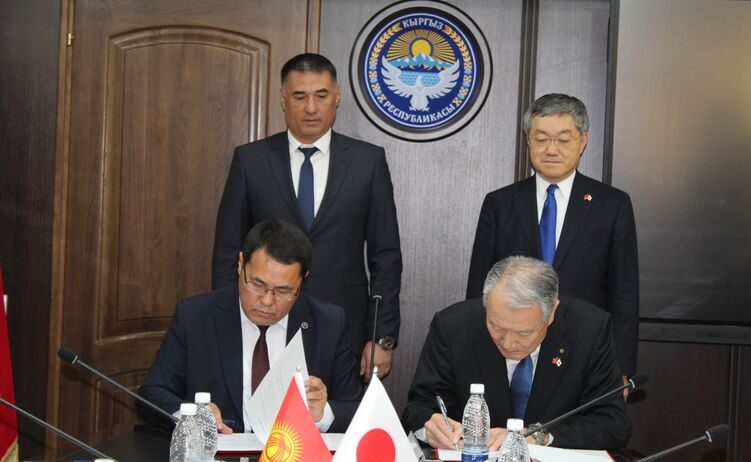
Kyrgyzstan’s Ministry of Transport and Communications has signed a contract with Japan’s Takenaka Civil Engineering Co. for the construction of a 750-meter tunnel along the critical Bishkek-Osh highway. The project will be carried out at the highway’s 400-kilometer mark and is scheduled to begin in June 2025. The signing ceremony on April 15 was attended by Kyrgyz Transport and Communications Minister Absattar Syrgabayev, Japanese Ambassador to Kyrgyzstan Hideki Goda, and Kawamoto Hiroyuki, Permanent Representative of the Japan International Cooperation Agency (JICA) in Kyrgyzstan. Minister Syrgabayev expressed gratitude to the Japanese government and JICA for their ongoing support in developing Kyrgyzstan’s transport infrastructure. Strategic Significance The Bishkek-Osh highway is the only overland route linking Kyrgyzstan’s north and south, making it vital to the country’s economic, social, and political cohesion. The 655-kilometer artery cuts through four western regions, Chui, Talas, Jalal-Abad, and Osh, connecting the capital Bishkek with Osh, the country’s second-largest city. In addition to its domestic role, the Bishkek-Osh highway is a key part of several international transport corridors, linking Kyrgyzstan to Kazakhstan, Uzbekistan, Tajikistan, and China. Enhancing the reliability and safety of this route is a top infrastructure priority for the Kyrgyz government. Delays to Alternative Route As reported by The Times of Central Asia, Kyrgyz authorities have postponed the opening of the long-anticipated North-South alternative highway to 2026. Originally set for completion in May 2025, the 433-kilometer project has been delayed to allow for additional infrastructure development.

Transit of Russian Gas to Uzbekistan Through Kazakhstan Continues to Grow

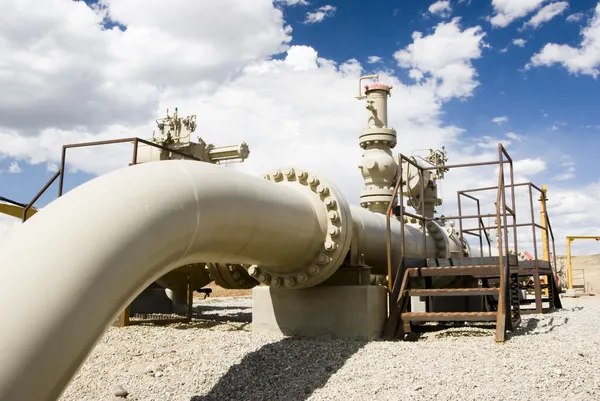
The volume of Russian natural gas transiting through Kazakhstan to Uzbekistan is on the rise, reflecting deepening regional energy cooperation. Kazakhstan’s Deputy Minister of Energy, Alibek Zhamauov, shared the update during a speech at the international Energy Trends forum, according to Interfax. Gas transit to Uzbekistan via Kazakhstan began in October 2023. In 2024, 5.6 billion cubic meters of Russian gas were delivered through Kazakhstan, surpassing earlier forecasts of 3.8 billion cubic meters. The volume is projected to increase to 7.3 billion cubic meters in 2025, with further plans to reach 11 billion cubic meters per year starting in 2026. The growing volumes highlight Kazakhstan’s emerging role as a vital transit hub for Central Asia. In 2023, the initial year of operation, 1.28 billion cubic meters of gas were transported along this route. Zhamauov stated that the project is part of a broader strategy to enhance regional energy security and develop cross-border gas infrastructure. Kazakhstan’s Ministry of Energy has committed to expanding and upgrading the country’s gas transportation network to accommodate long-term supply agreements with neighboring states. Uzbekistan’s Production Decline Raises Concerns The rising reliance on imported gas comes amid a continued decline in Uzbekistan’s domestic natural gas production. In the first two months of 2025, output fell by 4.2% compared to the same period in 2024. This trend follows a steep drop in production from 61.59 billion cubic meters in 2018 to 44.59 billion in 2024. The shrinking output has sparked concerns over Uzbekistan’s energy security and its broader economic implications. The country’s increasing dependence on regional gas flows highlights the strategic importance of projects like the Russia-Kazakhstan-Uzbekistan transit corridor.