• KGS/USD = 0.01144 0%
  • KZT/USD = 0.00197 -0%
  • TJS/USD = 0.10904 0%
  • UZS/USD = 0.00008 0%
  • TMT/USD = 0.28490 0%
  • KGS/USD = 0.01144 0%
  • KZT/USD = 0.00197 -0%
  • TJS/USD = 0.10904 0%
  • UZS/USD = 0.00008 0%
  • TMT/USD = 0.28490 0%
  • KGS/USD = 0.01144 0%
  • KZT/USD = 0.00197 -0%
  • TJS/USD = 0.10904 0%
  • UZS/USD = 0.00008 0%
  • TMT/USD = 0.28490 0%
  • KGS/USD = 0.01144 0%
  • KZT/USD = 0.00197 -0%
  • TJS/USD = 0.10904 0%
  • UZS/USD = 0.00008 0%
  • TMT/USD = 0.28490 0%
  • KGS/USD = 0.01144 0%
  • KZT/USD = 0.00197 -0%
  • TJS/USD = 0.10904 0%
  • UZS/USD = 0.00008 0%
  • TMT/USD = 0.28490 0%
  • KGS/USD = 0.01144 0%
  • KZT/USD = 0.00197 -0%
  • TJS/USD = 0.10904 0%
  • UZS/USD = 0.00008 0%
  • TMT/USD = 0.28490 0%
  • KGS/USD = 0.01144 0%
  • KZT/USD = 0.00197 -0%
  • TJS/USD = 0.10904 0%
  • UZS/USD = 0.00008 0%
  • TMT/USD = 0.28490 0%
  • KGS/USD = 0.01144 0%
  • KZT/USD = 0.00197 -0%
  • TJS/USD = 0.10904 0%
  • UZS/USD = 0.00008 0%
  • TMT/USD = 0.28490 0%
08 December 2025

Viewing results 1 - 6 of 130

Kuwaiti Companies Invited to Participate in Privatization of State-Owned Companies in Uzbekistan

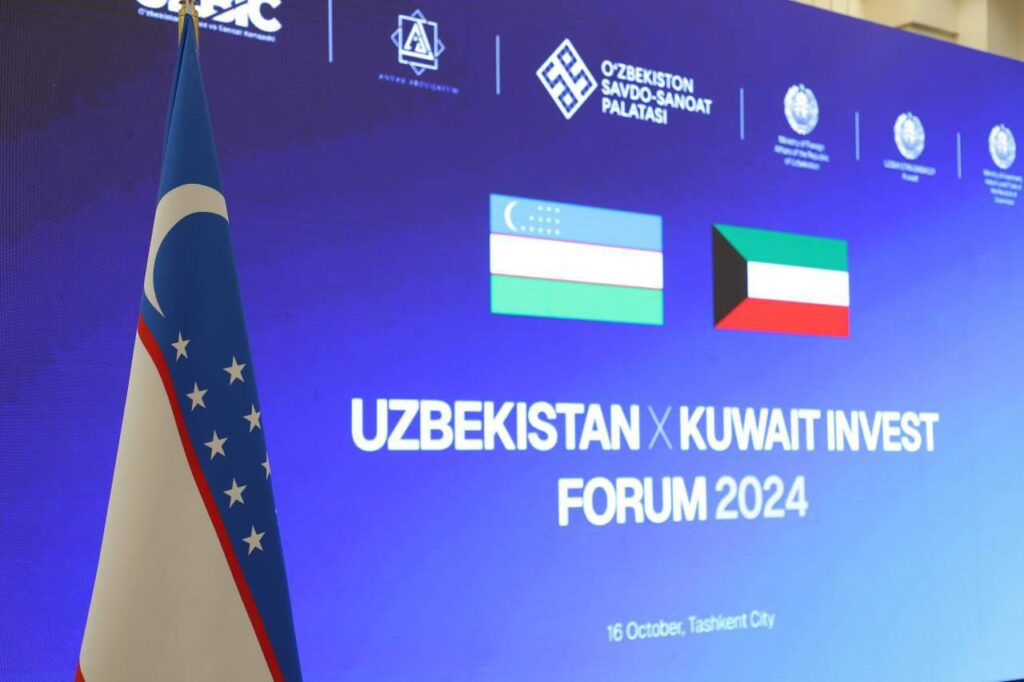
At a business forum dedicated to strengthening ties between Uzbekistan and Kuwait, in Tashkent on October 16, Deputy Minister of Investment, Industry, and Trade of Uzbekistan Akram Aliyev noted the importance of partnership with Kuwaiti businessmen, especially in healthcare, agriculture, and tourism. The forum focused on prospects for joint projects mining, energy, textile industry, and logistics. Proposals were also mooted for Kuwaiti investors to participate in the privatization program of over 1,000 state-owned companies in Uzbekistan and improve logistics infrastructure to turn Central Asia into an international trade hub. Over recent years, there have been several developments in cooperation between Uzbekistan and Kuwait. At an investment and trade forum hosted by Kuwait in August and attended by business and ministry representatives from both countries, Uzbek Foreign Minister Bakhtiyor Saidov encouraged Kuwaiti investors to explore prospects for partnership in agriculture, light industry, medical products, and renewable energy. The foreign ministers then met again, in New York in September 2024, to discuss further steps to strengthen bilateral cooperation, including the establishment of joint trade committees and new initiatives in logistics and infrastructure.

Turkic Investment Fund to Begin Financing Projects

Following the participation of its head, Temir Sariev, in a meeting of the Chambers of Commerce and Industry of the Turkic states in Istanbul on October 16, Kyrgyzstan’s Chamber of Commerce and Industry announced that from January 2025, the Turkic Investment Fund, with an authorized capital of $1 billion, will begin financing major joint projects of member countries of the Organization of Turkic States. The Organization of Turkic States, currently comprising Azerbaijan, Kazakhstan, Kyrgyzstan, Turkey, Uzbekistan, and Turkmenistan, with Hungary and the Turkish Republic of Northern Cyprus as observers, was founded in 2009 to foster comprehensive cooperation among Turkic-speaking nations. The Turkic Investment Fund, aimed to mobilize the economic potential of the Organization of Turkic States member states, strengthen trade and economic cooperation, and implement joint projects in infrastructure, renewable energy, agriculture, tourism, and IT, was established at the extraordinary summit of the Organization of Turkic States in March 2023 in Ankara. Founding members include Azerbaijan, Kazakhstan, Kyrgyzstan, Turkey, and Uzbekistan. Hungary joined in June 2024, and Turkmenistan has an observer status. After the inaugural meeting of the Fund's Board of Governors in Istanbul in May 2024, the Turkish Ministry of Finance declared that by the end of 2024, the Turkic states are poised to play to an important role in the world economy, reaching an economic volume of $1.9 trillion and a population of 178 million.

Kazakhstan Establishes Coordination Council of Partners for Water Sector Development

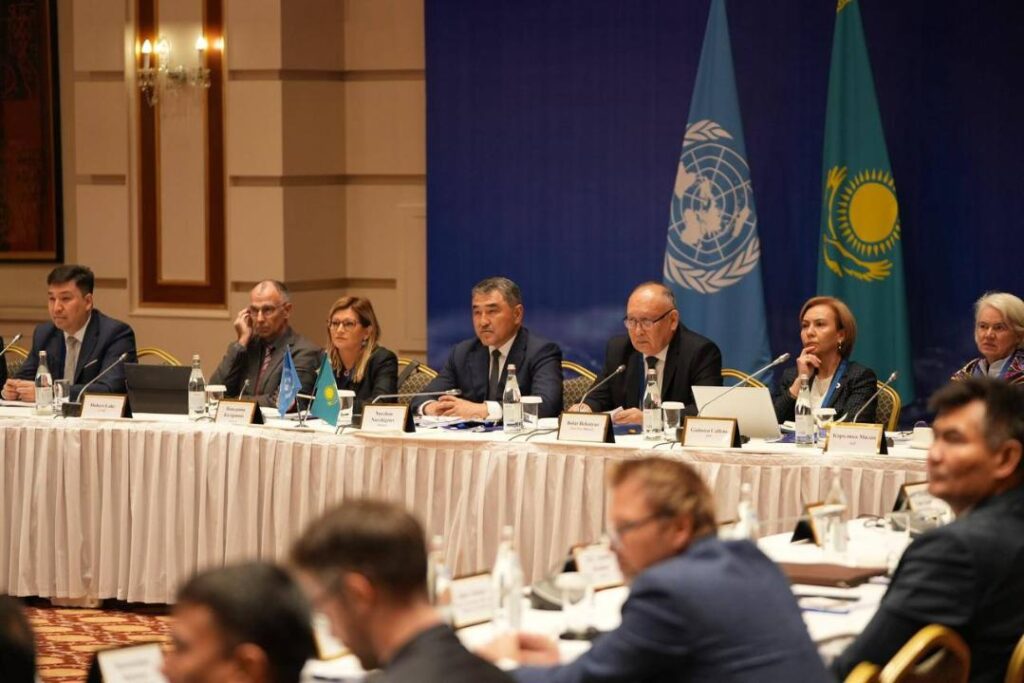
Kazakhstan has established a Coordination Council of Partners for the Development of the Water Sector. It includes the Kazakh Ministry of Water Resources and Irrigation representatives, the United Nations Development Programme (UNDP), and other international organizations and financial institutions. According to the ministry, the Coordination Council will coordinate the actions of government agencies, UNDP, international financial organizations, and donor communities according to national priorities in the water sector. The Council will mobilize and effectively distribute financial and technical resources to achieve the goals. The Council will support developing and implementing strategic documents, such as the Water Code, the Concept for the Development of the Water Resources Management System, and the Comprehensive Water Sector Development Plan, as well as strengthening the legislative framework and institutional mechanisms for sustainable water management. By implementing best international practices and innovative solutions in water resources management, the Council will organize the exchange of knowledge and experience, increase the capacity of specialists, and inform citizens about sustainable water resources management principles. Another key task for the Council is strengthening regional cooperation in water resources management and increasing resilience to climate change and natural disasters such as droughts and floods. Minister of Water Resources and Irrigation Nurzhan Nurzhigitov commented: “The establishment of the Coordination Council is an important step for the water sector in Kazakhstan. By coordinating the efforts of the Ministry, international organizations, and donor communities, the Council will play an important role in promoting the country's long-term environmental stability and economic development. The Coordination Council will help mobilize resources, strengthen governance, expand regional cooperation, and promote sustainable water resource management practices. These collective efforts will address growing climate challenges and ensure a stable future for Kazakhstan and Central Asia.” On September 30, the Coordination Council held its first meeting in Astana. The meeting discussed partnerships in managing Kazakhstan's water resources and presented a Water Partnership Initiative for 2024-2030, a joint proposal between the Ministry of Water Resources and Irrigation and UNDP. The document outlines specific activities, such as developing an information system for water resources, the modernization of water infrastructure to respond to climate challenges, implementing modern irrigation systems, and transboundary water cooperation. Katarzyna Wawiernia, UNDP Resident Representative in Kazakhstan, stated at the meeting: "Given the complexity of the water agenda, it is clear that no single government or organization can tackle these issues alone. Therefore, addressing these challenges requires combining resources, investments, technical expertise, and innovations. I hope that the Partnership Initiative proposed today by UNDP and the Ministry of Water Resources and Irrigation will be an important catalyst in this process." For decades, Kazakhstan has faced a host of water-related challenges, such as the shrinking Aral Sea, largely caused by decreasing water flows in transboundary rivers, devastating spring floods, and irrigation water shortages in the country’s southern regions.

Kazakhstan to Cooperate with China and Russia in Combating Floods

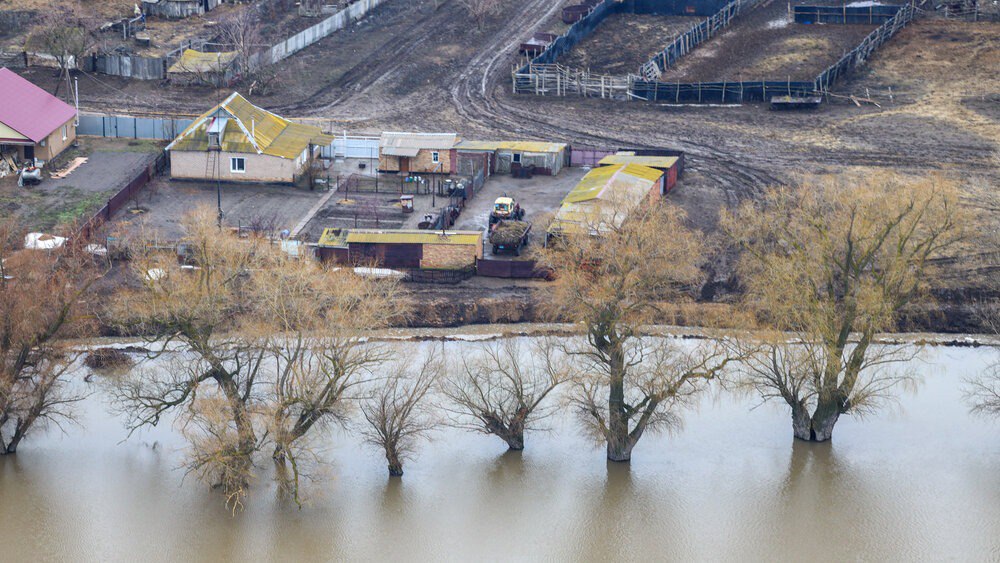
Kazakhstan’s Ministry of Water Resources and Irrigation will sign a memorandum of cooperation with the Ministry of Water Resources of China to combat future spring floods together. The Kazakh ministry has also agreed with Russia to create a joint working group to coordinate actions during spring flood periods. Kazakhstan’s Minister of Water Resources and Irrigation, Nurzhan Nurzhigitov, announced this at a government meeting on September 24. The conference addressed eliminating the consequences of unprecedented spring floods in the country’s northern and western regions and preparing for future spring floods. Massive floods in the spring of 2024, caused by the rapid snow-melt, destroyed thousands of homes and forced almost 100,000 people to evacuate from flood zones. Much of the spring flood water comes to Kazakhstan via trans-boundary rivers flowing from Russia and China. "To ensure the collection and safe passage of flood water in the future, the ministry plans to build 42 new reservoirs with a total capacity of 2.6 billion cubic meters, as well as to reconstruct 37 reservoirs with a total capacity of 3.7 billion cubic meters and about 14,500 km of irrigation canals. This year, the construction of two reservoirs in the Turkestan region and the reconstruction of three reservoirs in the Aktobe, Turkestan, and West Kazakhstan regions began," Nurzhigitov stated, adding that the spring floods led not only to negative consequences, but also allowed reservoirs to collect more than twelve billion cubic meters of water used for economic needs. As of the beginning of September 2024, 8.4 billion cubic meters of that water were used for agricultural purposes. Nurzhigitov reported that the reservoirs of Kazakhstan's northern, central, eastern, and western regions are now 80% full and added that the spring floods have also helped improve the environmental situation by directing excess water to places where it had not flowed for a long time. For example, 80 million cubic meters of flood waters were directed to the Kamysh-Samar lakes of the West Kazakhstan region. For the first time in decades, water arrived in the lakes of the Kyzylorda region through the Sarysu River. Since the beginning of the year, twelve billion cubic meters of water have been sent to Lake Balkhash, and 7.4 billion cubic meters to the Caspian Sea. Nurzhigitov also stated that, together with the Ministry of Digital Development, Innovation, and Aerospace Industry, work is underway to create an information system for forecasting and modeling floods, which will be launched before the end of the year. "This information system will allow for flood forecasting to make strategic decisions. It will show potential flood risk zones on the map," Nurzhigitov explained. At the same meeting, Deputy Prime Minister Kanat Bozumbayev reported that the 2024 spring floods had affected more than 120,000 people across 12 regions. Bozumbayev emphasized that new housing for families affected by the flood was constructed in an unprecedentedly short space of time. In under four months, 2,576 new houses were built, and 5,767 houses and apartments were purchased on the secondary market. In addition,...

Turkmenistan Strengthens Anti-Corruption Mechanisms With Kazakh Experience

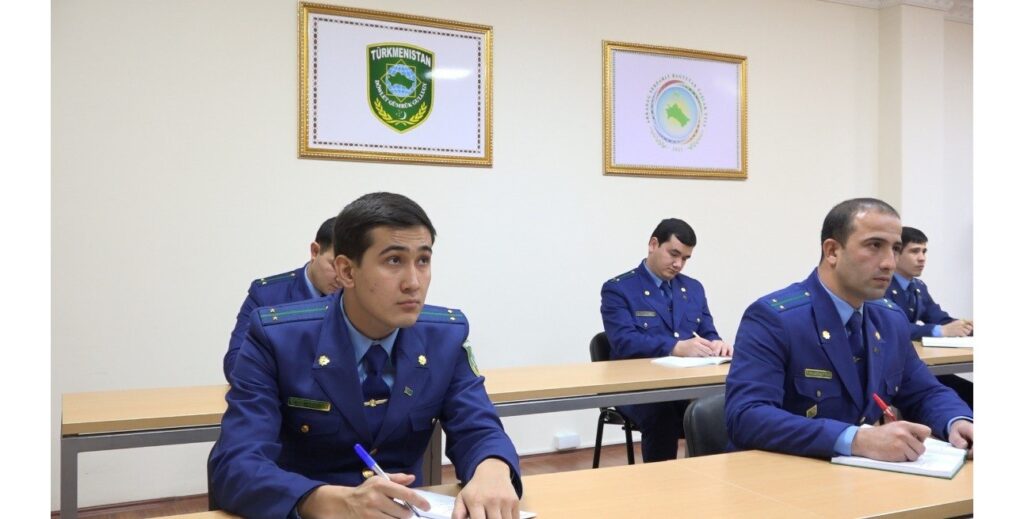
Turkmenistan is actively enhancing its anti-corruption framework by drawing on international expertise. A delegation of senior officials from key ministries recently visited Kazakhstan to learn from its financial practices. This visit, facilitated by the USAID "Governance in Turkmenistan" project with support from the OSCE Center in Ashgabat, aimed to explore best practices in financial monitoring, investigations, and the regulation of virtual assets at the Astana International Financial Center. Therein, Turkmen officials studied national risk assessments, inter-agency cooperation, and preventive measures against corruption, with a particular focus on asset recovery and identifying beneficial owners. The GAT project underlines Turkmenistan's stated commitment to fostering transparent, inclusive governance and advancing socioeconomic development.

Crew of Record-Breaking Cosmonauts Land in Kazakh Steppe

The descent vehicle of the Soyuz MS-25 spacecraft has successfully landed in the steppe of Kazakhstan, near the town of Zhezkazgan. Russian cosmonauts Oleg Kononenko, Nikolai Chub, and NASA astronaut Tracy Dyson were on board. Cosmonauts Kononenko and Chub spent 374 days in space, making their mission one of the longest in International Space Station (ISS) history. This is second only to the flights of Valery Polyakov and Sergey Avdeev, who spent 438 and 380 days in space, respectively, on the Mir station. Tracy Dyson stayed in orbit for 184 days. During their mission, Kononenko and Chub participated in several scientific experiments, took four Progress MS cargo ships, and conducted two spacewalks. The flight was an important contribution to the development of applied and fundamental research on the ISS. The spacecraft landed yesterday at 14:59, Moscow time. Kononenko and Chub's flight was a significant event for the space programs of Roscosmos and NASA. Despite completing their mission, the crew of the 72nd long-duration expedition, including Russian and American cosmonauts and astronauts, continues to work on the ISS. The station crew includes Roscosmos cosmonauts Alexei Ovchinin, Ivan Wagner, and Alexander Grebenkin, and NASA astronauts Donald Pettit, Matthew Dominick, Michael Barratt, Jeanette Epps, Barry Wilmore, and Sunita Williams. The International Space Station (ISS) is one of mankind's most impressive engineering projects. It was launched in 1998, and is the product of 16 countries. The station revolves around the Earth every 90 minutes, allowing the crew to observe 16 sunrises and sunsets daily. In addition, the ISS is the largest object ever built in space, measuring about 109 meters long. The ISS is also considered the most expensive object built by humans, costing an estimated $120 billion by 2014, alone. According to NASA, the ISS "costs about $3 billion a year, roughly a third of NASA’s annual human space flight budget."